
Oil & Energy
‘Deregulation’ll Unlock Investment Potential In Downstream Sector’

Stakeholders in the oil and gas industry say total deregulation of the downstream sector will unlock huge private investment potential in the sector.
The stakeholders, who made the assertion in seperate interview, said that deregulation would stimulate sustainable growth in the oil sector.
They expressed worry over the huge amount of money spent annually by the Federal Government on subsidy payment, saying such sum could be used to develop other sectors of the economy.
They urged the Federal Government to liberalise the downstream sector to attract investors and boost the country’s economy.
The Minister of State, Petroleum Resources, Dr Ibe Kachikwu, had said that subsidy on Premium Motor Spirit (PMS), otherwise known as petrol, stood at over N1.4 trillion.
The stakeholders said it was imperative for government to embark on total deregulation of the downstream sector to attract investors, while the country saved funds.
The Director-General, Lagos State Chambers of Commerce and Industry (LCCI), Mr Muda Yusuf,said the biggest burden on the economy might be regarded as the petroleum subsidy regime.
Yusuf said that government should encourage private sector players to take over the downstream sector of the petroleum business.
He said: “When this is done, most of the challenges we see as regard subsidy, refineries and others will be adequately addressed.
“The government should only play the regulator and not an operational role.
“Government has no business refining petroleum products, retailing or distributing fuel as well as the marketing of these products.
“We cannot continue to carry that kind of burden in the oil sector.’’
Yusuf also said that subsidy remained a big hole in the finances of government and puts pressure on the foreign exchange market.
According to him, it has downward impact on the foreign reserves, just as it exerts immense stress on the nation’s treasury.
He said one of the critical elements of the oil and gas sector reform, particularly the downstream sector, was the complete deregulation of the sector.
An energy expert, Mr Felix Andrew, said that continuous payment of subsidy would not be sustainable and urged government to liberalise the market and encourage “free entry, free exit’ to attract investors in the sector.
Andrew, who is also the Executive Director, Blue-Sea Energy Ltd., said that currently, Nigeria spent about N1.7’trillion on fuel subsidy annually, while its education and health sector could only access a paltry budget of N300 million and N400 million, respectively.



-

 News2 days ago
RSG Targets Nine Million Residents in Mosquito Net Distribution Campaign
-

 Oil & Energy2 days ago
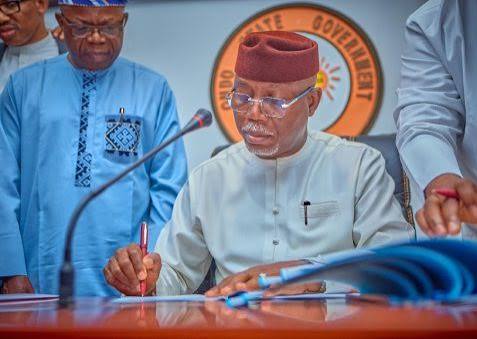
Aiyedatiwa Signs New Electricity Bill
-

 Oil & Energy2 days ago
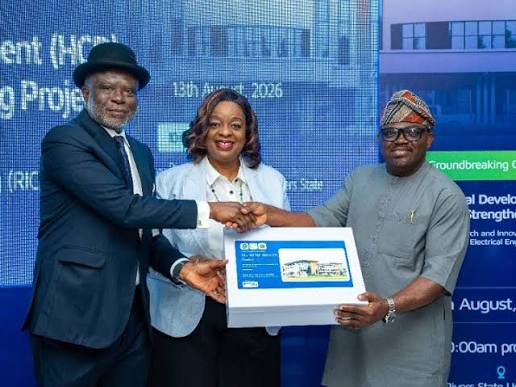
NLNG Commissions Research And Innovation Centre In RSU
-

 Maritime2 days ago
Marine Minister Commends President Tinubu On NPERA Bill Assent
-

 News2 days ago
KenPoly Holds Eight Convocations, August 29
-

 News2 days ago
RSG Begins Another Phase of Projects Commissioning Today
-

 News2 days ago
RMAFC Completes Revenue Sharing Review, Proposes New Pay
-

 Maritime2 days ago
NAGAFF Petitions IGP Over Alleged Maritime Police Harassment