
News
Magu, Malami Manipulating Legal System – Reps …Demands Sack Of IGP …As Senate Rejects Biased Panel Report On Benue Killings

The House of Representatives yesterday condemned alleged manipulation of Nigeria’s legal system by Attorney-General of the Federation (AGF) and the Acting Chairman of Economic and Financial Crime Commission (EFCC).
The House also summoned the AGF, Abubakar Malami, for explanation on alleged manipulation of Code of Conduct Tribunal case involving the president of the Senate, Bukola Saraki.
This was sequel to a motion under matters of urgent public importance by Yakubu Barde (Kaduna-PDP).
Moving the motion, Mr. Barde expressed concern that the chairman of Code of Conduct Tribunal, Danladi Umar, had been charged with corruption at the Federal Capital Territory (FCT) High Court by the EFCC.
He said the same EFCC and Mr. Malami had previously cleared Mr. Umar of the same allegations that formed the basis of the fresh two-count charge.
“Any possible convictions or findings which the CCT may make from the same Danladi Umar, may be rendered null and void by the Court of Appeal, thereby frustrating the course of justice.
“The House should also recall that this same EFCC and AGF are equally prosecuting cases such as the case against the Senate President before the same CCT, which Umar sits as chairman,’’ Mr. Barde said.
Taking turns, other lawmakers condemned the actions of the AGF and EFCC after the presiding officer, Yakubu Dogara, asked lawyers among the members, to educate their colleagues on the issue.
Razak Atunwa (Kwara-APC) said, “the shenanigans and intrigues in the CCT and the trial of senate president is laughable. No doubt, there is connivance between the AGF and the EFCC against the senate president.”
Also, Aliyu Pategi (Kwara-APC) said the case against Mr Saraki was an instance of political manipulation.
“EFCC and CCT are political tools used by the present government to witch-hunt perceived enemies,’’ he said.
However, Mohammed Monguno (Borno-APC) said, “the presumption of innocence gives the judge the right to go ahead to preside over the matter.’’
The motion was therefore, adopted by members when it was put to a voice vote by the Speaker.
Consequently, the Committee on Judiciary was mandated to interact with the AGF to ensure that sanity was brought back to the legal system.
Meanwhile, The House of Representatives yesterday unanimously called for the immediate sacking of the Inspector General of Police (IGP), Ibrahim Idris. The resolution followed the adoption of a motion by Abubakar Nuhu Danburam (APC, Kano) at a plenary presided over by Speaker Yakubu Dogara.Danburam had alleged that the IGP, in cahoots with the Kano State Commissioner of Police, Rabiu Yusuf, turned a blind eye to the spate of thuggery in the state.
The ensuing debate, however, pitted the supporters of Senator Rabiu Musa Kwankwaso, former Kano State governor, and his successor Abdullahi Umar Ganduje, against one another before the House turned the heat on the IGP, adopting an amendment proposed by John Dyegh (APC, Benue).Dyegh said the House needed to prevail on President Muhammadu Buhari to sack the IGP, alleging the police boss ignored the directive to relocate to Benue State in the wake of attacks by herdsmen.
He claimed that the IGP not only ignored intelligence report indicating where the herdsmen were camped, but also chose to stay in neighbouring Nasarawa State for unknown reasons. He called for the appointment of a “professional” IGP able to discharge duties effectively.
Dyegh’s motion was seconded by Ali Sani Madaki (APC, Kano) who had earlier accused the IGP and Yusuf of trampling on the constitutional rights of members of the Kwankwasiyya group to freedom of association and movement. Madaki particularly cited the refusal to allow Kwankwaso hold a rally on January 31, 2018.
But the Chief Whip of the House, Alhassan Ado Doguwa (APC, Kano) and Abdullahi Mahmoud Gaya (APC, Kano), both members of the Gandujiyya movement in their state, described the claims by Damburam and Madaki as misleading and mischievous.Doguwa explained that the Kwankwasiyya rally coincided with the one by the Kano APC chapter which had the approval of the state police authorities.Before passing the vote of no confidence on the IGP, the House adopted a motion sponsored by Mark Tersee Gbillah (PDP, Benue).
Gbillah demanded an unreserved apology from the IGP over disparaging remarks by Police Spokesperson, Jimoh Moshood, against the Benue State Governor Samuel Ortom.
during a television programme.The House urged the police authorities to strip Moshood of his role. The spokesperson had described Ortom’s position on the clashes between farmers and herdsmen as the action of a “drowning man”.
Emmanuel Agbonayinma (APC, Edo), however, faulted calls for the IGP’s sacking. He told journalists: “Rumours cannot give us the right opinion. It is wrong to take a decision after hearing from one side of the divide.”
Also yesterday, the Senate rejected a report by its Committee on Police Affairs detailing failings of the Nigeria Police at curbing killings in Benue and other states.It asked the committee to withdraw the report, do a more objective investigation, and submit its findings within one week.
The Senate was particularly unhappy that the committee failed to get Ortom’s views, even after it had met Idris, who spoke against Ortom.While presenting the report, Senator Abu Ibrahim, an APC member from Buhari’s home state of Katsina, highlighted the IGP’s “achievements” on the crisis, saying they deserved commendation.
The report notes partly: “The Nigeria Police is grossly underfunded. Therefore, it is recommended that a percentage of excess crude oil fund should be made available through appropriation to the police in order to beef up their operations.”It called on politicians and opinion leaders to desist from statements capable of inciting violence, and recommended the disarming of all armed militias in Benue State and in the country.
Deputy Senate President Ike Ekweremadu, pointed out the defects in the report, saying: “I didn’t see where the committee made an effort to speak with the governor of Benue. This is sad because if in the circumstance they did not interview the governor and his name has been mentioned in respect of certain statements and actions, it would only be fair to him, to be invited by the committee to state his own side of the story, so that we have a balanced view of what transpired.”
Senator (and former Benue State governor) George Akume, also noted: “This report would have been more rounded if the governor who has been so massively accused by the IGP was also invited to make input.”The Nigerian Army, meanwhile, has announced it would begin a new operation in Benue, Taraba, Nasarawa, Kaduna, Kogi and Niger States.Tagged: “Exercise Ayem Akpatuma” (Tiv Language) or “Cat Race”, it would hold Thursday, February 15, to Saturday, March 31, 2018.
At a press briefing in Abuja, yesterday, the Chief of Army Staff (COAS), Lt. Gen. Tukur Buratai, said the exercise would target killer herdsmen, cattle rustlers, armed bandits, kidnappers, armed militias and other criminal elements.The COAS refrained from saying the exercise was a presidential directive. Emphasis would be placed on raids, cordon and search operations, anti-kidnapping drills, roadblocks, checkpoints, show of force and humanitarian activities, he said.
He enjoined citizens of the affected states not to panic, adding that governors have been put on notice.The Army Chief who was represented by the Chief of Training and Operations, Army Headquarters, Major General David Ahmadu, said other participants are the Department of State Service, the Nigeria Police Force, the Nigerian Immigration Service, the Nigerian Security and the Civil Defence Corps (NSCDC).Still on insecurity, the Swiss government expressed worry about the incessant clashes between farmers and herdsmen in the country.
The Regional Advisor on Migration and Development under the Swiss Agency for Development and Cooperation, Fabrice Fretz, spoke on the sidelines of the First Quarter Coordination meeting of the Technical Working Group (TWG) on “Migration: Post 2017 National Migration Dialogue” in Abuja.He said: “Herders and farmers clash is certainly a thing of concern to the Swiss government and we are partnering Nigeria on this issue.”


Rivers State Deputy Governor, Prof. Ngozi Odu, has called for renewed commitment, transparency, and collaboration among stakeholders in the health sector in the State.
The deputy governor particularly urged synergy between the Rivers State Contributory Health Protection Programme (RIVCHPP) and the Primary Health Care Management Board towards improved healthcare delivery in the State.
?Prof. Odu made this call during the 2026 First Quarter Review Meeting of the Task Force on Primary Health Care at the Government House, Port Harcourt, on Wednesday.
?She stressed the importance of honesty and urged all parties to be truthful and open in addressing challenges within the system.
?According to her, transparency remains critical to identifying and resolving underlying issues affecting healthcare delivery, noting that “if we are not truthful, we will not cure the disease, but merely cover it up.”
The deputy governor recounted a personal experience at a Primary Health Center where a patient, despite being duly registered under the RIVCIPP scheme with completed biometric capture, was still asked to make payment for services.
According to her, intervention by relevant authorities later confirmed the patient’s eligibility, exposing a communication gap between the scheme and healthcare providers.
Odu warned that such incidents could discourage community members from enrolling in the scheme, thereby undermining its objectives.
“When this happens, we are disenfranchising our people. The message that goes back to the community is that even when you register, you are still made to pay,” she stressed.
?While commending the leadership and staff of the Primary Health Care Management Board, Ministry of Health, Development Partners as well as other supporting units, for their efforts, ty deputy governor stressed that performance should not lead to complacency.
She urged stakeholders to continuously strive for improvement, raise standards, and leave lasting positive impacts within the system.
?
?
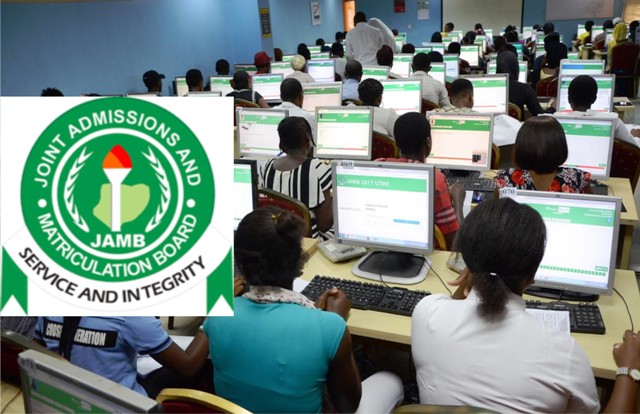
The Joint Admissions and Matriculation Board (JAMB) has announced the opening of examination slip printing for candidates registered for the 2026 Unified Tertiary Matriculation Examination (UTME).
JAMB made the announcement yesterday, urging candidates to visit its website to download their slips ahead of the examination.
“Examination Slip Printing is now available. The slip contains details of the venue, date and time of your examination and gives you access to the examination hall,” the board said.
Candidates are to visit jamb.gov.ng and click on “2026 Slip Printing” to print their slips.
The development comes after JAMB dismissed a viral press release falsely claiming the examination had been postponed.
The board described the notice as “malicious and fake” and urged candidates to disregard it.
The 2026 UTME is scheduled to hold from Thursday, April 16, to Saturday, April 25, 2026.
The examination follows a mock test conducted on Saturday, March 28, which recorded technical difficulties at some Computer-Based Test centres.
Of the 224,597 candidates who registered for the mock, 152,586 sat for the test across 989 CBT centres nationwide.
JAMB said over 20 centres were delisted for technical inadequacies.
The board also warned candidates against fraudsters on WhatsApp claiming to facilitate score inflation, describing such claims as “false and criminal”, and threatening cancellation of registration or withholding of results for any candidate found involved.
Over two million candidates, according to JAMB Registrar, Prof. Ishaq Oloyede, registered for this year’s UTME.
News
RSU Unveils Five-Year Strategic Dev Plan …Calls For Collective Commitment To Institutional Excellence


In a decisive step towards redefining its future, the Rivers State University, Port Harcourt, has formally unveiled its Third Five-Year (2026-2030) Strategic Development Plan.
The development plan is a comprehensive roadmap designed to strengthen the university’s position as a leading institution in Nigeria and beyond.
The unveiling took place during a high-level engagement with the Governing Council, Principal Officers and the university congregation, at the Convocation Arena, recently.
Delivering his remarks at the unveiling ceremony, the Pro-Chancellor of the university and Chairman of Council, Hon. Okey Wali, SAN, charged all members of the university community to align their activities with the strategic direction of the institution, emphasizing that the success of the plan depends on collective commitment.
He noted that the plan is not merely a document, but a working framework that requires discipline, accountability and unity of purpose.
According to the Pro-Chancellor, only through coordinated efforts from all stakeholders can the university fully realize its vision.
“I hereby invite the Visitor to the University, donor agencies, friends and well-wishers, and all stakeholders to support and fund the implementation of this strategic plan. We are confident that this plan will take RSU to greater heights in the comity of higher institutions,” he said.
The Vice-Chancellor of the University, Prof. Isaac Zeb-Obipi, described the Strategic Development Plan as a document that would enhance the university’s corporate strengths, mitigate current weaknesses, leverage its corporate opportunities and address perceived existential threats.
“This Five-Year Strategic Plan sets out RSU’s goals, strategic objectives, expected outcomes and impact, including intervention strategies,” he said.
On his part, the Chairman of the Strategic Development Planning Committee, Prof. Emeritus Joseph A. Ajienka, noted that the 2026-2030 Strategic Development Plan represents a bold reaffirmation of the university’s founding ideals of excellence, creativity, innovation and inclusivity, aimed at positioning the institution to respond effectively to contemporary challenges in higher education.
Prof. Ajienka, who is also a member of the Governing Council, disclosed that the plan was developed through an extensive and inclusive consultative process, which he said reflects contributions from Faculties, Departments, Satellite Campuses and Administrative Units.
At its core, the plan seeks to advance the university’s vision of becoming a “unique and uncommon” institution that is structurally and philosophically oriented towards solving practical societal problems and ranking among the top ten universities in Nigeria.
The strategic framework identifies six key challenges confronting the university, including funding constraints, infrastructure deficits, limited research collaboration, and service delivery inefficiencies.
A statement by the university’s Acting Director, Corporate Affairs, Victor G. Banigo, further stated that the university has articulated four broad strategic goals supported by eight targeted objectives.
A central priority of the plan, according to him, is the strengthening of governance and administrative systems, alongside deliberate efforts to expand the university’s funding base. Others include enhanced alumni engagement, strategic partnerships and innovative fundraising initiatives aimed at ensuring long-term financial sustainability.
“Equally significant is the commitment to upgrading physical infrastructure across all campuses. Plans are underway to modernize lecture halls and laboratories, expand student accommodation, improve campus security and deploy advanced ICT systems to support teaching, learning and research.
“Recognizing that human capital is the backbone of institutional success, the university has placed strong emphasis on staff development, recruitment and productivity enhancement. Through targeted training programmes, mentorship initiatives and performance management systems, the plan aims to foster a highly skilled and motivated workforce.
“In addition, the university is poised to deepen its focus on research, innovation and entrepreneurship. By reviewing academic curricula, strengthening industry partnerships and establishing innovation incubation centers, Rivers State University seeks to translate research outputs into practical solutions that address societal needs and drive economic growth,” he said.
The PRO disclosed that the implementation of the strategic plan is projected at ?110 billion, reflecting the scale of transformation envisioned.
“While the university is committed to funding a significant portion internally, additional resources will be mobilized through government support, donor agencies, alumni contributions, and public-private partnerships.
“This multi-channel funding strategy aligns with the university’s broader goal of building a resilient and self-sustaining financial model capable of supporting long-term development,” he explained.
To ensure effective implementation, he said, “the plan incorporates a comprehensive monitoring and evaluation framework, complete with performance and impact indicators. A mid-term review is scheduled within the first two years to assess progress and make necessary adjustments.
“Furthermore, the establishment of a dedicated Strategic Planning Office will provide oversight, coordination and accountability in executing the plan across all units of the university.”
According to the statement, “As the university embarks on this transformative journey, the message from leadership is clear: the Strategic Development Plan is a collective mandate.
“For staff, students, alumni and stakeholders, it represents an opportunity to contribute meaningfully to the growth and advancement of the institution. For the university, it is a pathway to consolidating its legacy while embracing innovation and global relevance.
“With a clear vision, defined priorities and a united community, Rivers State University stands poised to translate this strategic blueprint into measurable progress, advancing knowledge, empowering people and shaping the future of higher education in Nigeria.”
-
 Editorial4 days ago
Domesticate FG’s Exit Benefit Scheme
-

 News4 days ago
RSU Unveils Five-Year Strategic Dev Plan …Calls For Collective Commitment To Institutional Excellence
-

 News4 days ago
DHQ Confirms Deaths Of Terrorists, Soldiers In Borno Attack
-

 News4 days ago
Tinubu Commissions Bayelsa Gas Turbine, Other Projects Today
-
Business4 days ago
Niger Delta Investment Summit Targets $5bn Inflows, 500,000 Jobs
-
Sports4 days ago
Full Draw For 2026 U-17 AFCON
-
Nation4 days ago
Rumuji Youth Leader Condemns Protest, Disowns Alleged Government Empowerment Claim
-

 Nation4 days ago
Haniel Jack Foundation Awards Five Rivers Indigenes Scholarship