
Featured
NIGERIA AT 57: A Union Under Threat?

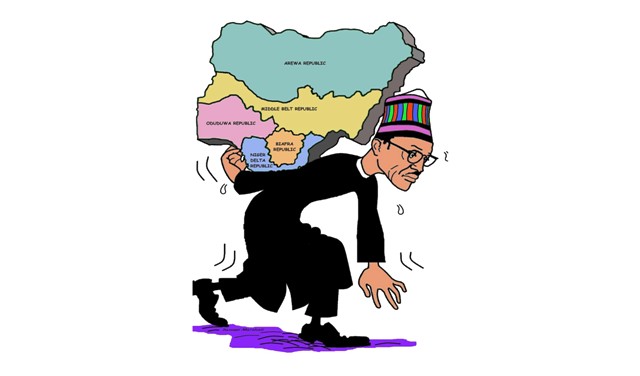
As Nigeria marks 57 years of political Independence today, the union appears to be facing threats to its unity, territorial integrity and sovereignty. These threats have become increasingly palpable with the crescendo of rising agitations from various ethnic nationalities and aggrieved groups across the country reaching almost breaking point. And never in the history of this union since the amalgamation of the federating protectorates in 1914, has Nigeria witnessed this level of pressure and threat to its corporate existence.
From the Niger Delta militants to the Odua Peoples Congress (OPC) and from the Boko Haram insurgents to the new Biafra forerunners, Movement for the Actualisation of the Sovereign State of Biafra (MASSOB) and the Indigenous People of Biafra (IPOB), the plethora of anti-state, anti-unity voices is accelerating to the rooftop, and not only posing serious irritation to, but also exerting enormous pressure on governance and the economy. And honestly, all the restive groups have different agenda for their agitation.
While the Niger Delta militants merely revived pre-independence fears of neglect marginalization by the dominant ethnic groups, and insist on resource control, fair share of the commonwealth and political inclusion; the OPC has promoted radical interest aimed at asserting the stranglehold of the Yoruba on the economy, and to a very large extent, the political firmament. Indeed, since their emergence, both Niger Delta militants and the forebears of the OPC never nursed the ambition of cessation from the Nigerian state, until most recently when the violent agitations of Boko Haram and IPOB jolted the national livewire like a farcical hurricane.
In contrast, however, the Boko Haram terrorists have opaque, aggressive and violent approach to their demands: abolition of Western education, establishment of Islamic Caliphate and forceful conversion of all non-Moslems to Islam, annihilation of non-conformists to their ideology, abandonment of democracy as a form of government and reversion to primitive oligarchy, abduction, rape, arson, drug trafficking, and murderous campaign against innocent civilian population, and of course, the state, resulting in hundreds of thousands of deaths while millions have been displaced.
Similarly, IPOB has re-enacted the old and long defeated Biafra’s quest for own identity. Although with ambiguous messaging and mixed dance steps, IPOB’s baptism of hate and violence against other Nigerians appears to be the icing that has revived national discourse on referendum to wit cessation, restructuring, and if you like, fiscal federalism. The radical momentum brought to bear on the agitation for self-determination by IPOB has suddenly changed the citizens’ psyche and understanding of unity and cohesion. And this is already causing incremental irritation for the Federal Government. Indeed, IPOB’s agenda seems to juxtapose that of MASSOB, which presently is at odd with the violent momentum wrapped around the Biafra agitation.
As Nigerians celebrate this epochal landmark, The Tide explores the various strands of this discordant collective on peace and unity that appears to have threatened national coexistence from various fronts. Stakeholders from different backgrounds, creeds, tribes and religions, adumbrate their take on the thread holding Nigeria together, and what could be done to consolidate on this unity and peace that so dearly bind citizens as one indivisible.
A former Director, News/Current Affairs, Rivers State Broadcasting Corporation (RSBC) and a retired civil servant, Dame Lizzy Wilfred Fombo, said: “Actually, any threat to lives and property in any society is not an easy thing, and does not calm any nerves at all. So, let me first of all commend the Governor of Rivers State, Chief Nyesom Wike for his giant strides in enhancing the security architecture of the state. I listened to him attentively when he was addressing the 12th Edition of the General Synod of the Church of Nigeria (Anglican Communion), and he did mention the lofty and robust efforts he has made to address the security challenges in Rivers State. I think those efforts are commendable.
“On the other hand, restructuring means different thing to different zones. For instance, the South-East is clamouring and talking of marginalization, no proper representation at the centre. They are talking about inequality, injustice, among others, which has led to this IPOB that has just been disbanded.
“My advice is that those clamouring for restructuring of the nation should exercise restraint and pursue the path of dialogue; just as the retired president of Nigeria, former President Olusegun Obasanjo said: ‘I think I support they should toe the path of dialogue’.
“My advice for the Federal Government is that using force will not solve the issue. I remember the case of late Kenule Saro-Wiwa of blessed memory, who died, trying to make sure that human and environmental rights were actually respected, but today, the militancy assumed a different dimension. If not for the amnesty offered by our former president, late Umaru Musa Yar’Adua, Nigeria would have been different today. I think the Federal Government should listen to the agitators, and look at the report of the 2014 National Conference. Even though the Presidency has asked the National Assembly to handle the issue of restructuring, but I think both the Executive and Legislative Arms of government should work as a team with a view to stemming the tide of endless agitations in Nigeria.
“Also, our democracy is still fragile, and all that the executive needs to do is to toe the path of dialogue, listen to the people; call them to a roundtable to discuss the thorny issues agitating the various sections of the population. I think that when you are able to address the grievances, the unity of the nation would no longer be under threat.
“I also strongly add my voice to those of others who call on the Army to pull out from the South-East. ‘The Operation Python Dance II,’ should be withdrawn to stem the rising tide of tension in that region. I also think that there is no need for the proposed ‘Operation Crocodile Smile 11’ being brandied by the military for the South-South. It would not help matters at all.”
Sir Chuks Boms said: “This is the time for us to be more united than ever. I hear some groups talk about restructuring, but I think that for us to move forward, we must be one indivisible entity, so that our economy and everything about us can improve.
“I am not in support of those clamouring for division of Nigeria. It is not necessary. It is not our problem, but what I think as the major thing we need to do for ourselves is ensure unity. If we are united, we will achieve a lot of things in this country. All of us would be happy at last.
“Yes, Nigeria is a union under threat definitely, because it is housing people from different political, ethnic, and religious leanings. There is no structure that houses different groups of people that will not be prone to threat. So, if you say threat in that perspective, yes because of our divergent backgrounds.
“On the activities of Boko Haram, IPOB, MASSOB, Niger Delta militancy, OPC, among others, I would describe them as disgruntled elements, because I have not seen a clear vision of what they want. You cannot just wake up and begin to kill people or say you want this and that! And if you don’t get what you want, you start killing people. It doesn’t happen like that. No sane leader of a sovereign nation would listen to such people!
“What are your reasons for killing people? For instance, if they have come out to give their reasons by saying we are doing this because we want this to happen, and we are fighting to achieve that, it is understandable. But for people to take the laws into their hands, and just kill innocent people? No. I think it is wrong and the government must not let that happen. I like to advise these groups that feel agitated, to clearly define their goals and objectives, and state clear roadmap for achieving their goals, generally agreed by majority of the people affected.
“It is so discouraging that these groups of people have caused more harm than good to the society. Take the militancy in the Niger Delta for instance. In fact, Rivers State is suffering it so much because the multinational companies have left the state due to increasing unfriendly operating environment.
“For good businesses to thrive, we must have the enabling environment. But the activities of these militants are to our detriment as a people because millions of youth no longer have good jobs because of insecurity, armed robbery and kidnapping. Agitations must have a focus: present your issue and when that is done, you follow it with dialogue.”
Ven. Simeon Ariye, Diocese of Western Izon: “If you remember the atrocities of the Civil War that began in 1966 in Nigeria, no one would expect any agitation for breakaway today. This country has fought an annihilating war that took millions of people’s lives, and I don’t think we want to go through that hallowing experience again in our lifetime. I am not in support of cessation. I am not in support of those clamouring and agitating for disintegration of the country.
“All we need to do is to come to a common understanding as people united by one destiny. If we are able to do that, then we would move the nation forward. But if we are able to identify what is causing this disunity and we come together, it will help us go forward. We should also know that whatever we do now is not just for ourselves, but for generations yet unborn. This is the reason why everyone should continue to fight for the unity of Nigeria, and not its break-up.
“I would advise that the groups causing threat to the unity of the country should seek for ways of sorting out their challenges. Also, I suggest that those greedy Nigerians who, at all times, indulge in efforts to sabotage the good intentions of government should be cautioned to look for alternative ways of enriching themselves by doing meaningful things that would not negatively affect the generality of the people.
“If this class of people can put self interest aside, and think of building an egalitarian and non-violent society, I think this country would be good for all of us. So, I still insist that the unity of Nigeria is non-negotiable.”
Reverend Canon Gideon Genka: “Yes, actually Nigeria is a union under threat, but I think the church has a great role to play in ensuring that Nigeria does not break-up. This is because the church, based on its focus on the word of God, there is no Jewish and there is no Greek. So, the church gives us a platform that reminds us that there is no division in humanity. As Christians, therefore, we should hold unto that. I think there is still hope for Nigeria’s unity.
“The church has a big role to play in ensuring that these groups agitating for breakaway or restructuring have peace by providing them with the needed platforms. Now, one thing that is missing in the church today is discipleship. People are not propagating the word of God. If you see Christians of old, they brought up their younger ones in the way of the Lord, and the younger ones grew with that mentality. But now, there is a gap in discipleship, and that gap has created what we are facing today.
“So, if as Christians, we hold onto the teachings of our fathers, no matter where we find ourselves, we can transmit it to the oncoming generation. Also, another thing that is important too is sports. If the church can come together to provide avenues for sporting activities, it will bring about unity among the people.
‘I would advice that the restive groups look unto God for guidance and direction. If we do that, the much talked about injustice and inequality will fizzle out, and we won’t be worried about the need for separation.’
President, Anglican Communion, Children Ministry, Rev’d Canon Umegbewe Eugene Jerome: “All the threats Nigeria is undergoing now are usual and normal. It is part of the development process. Just like an infant, the process of growing teeth and new dentition can be problematic. Our political process is in its nascent stage, and most of our problems are being over-exaggerated. To tell the truth, our politicians are not helping us. Here in Nigeria, we don’t have national disasters such as hurricane, tornado, or earthquake, but what politicians are doing to people is creating artificial disaster and dislocation in the system.
“I must tell you that the agitations are illegal. If there are problems or challenges, what I think they should do for peace to reign is for them to pass their grievances through the National Assembly instead of causing tension and unleashing violence on the society.
“As we all know, the church is not in support of instability and acts of destibilisation of the polity. As the body of Christ is humble, peace-loving and respectful, we support a heavenly agenda that guarantees peace and unity of Nigeria.
“Also, if you look at all these agitators, how many of them are educated or have good paying job? No child of God or engineer, doctor, oil worker, professor in the university, nurse, teacher, among others, would be ready to give his/her life up as suicide bomber or violent protester on the streets asking for Biafra or whatever.
“My candid advice to them is that our youth should go to school and look for meaningful things to do to eke out a living. Some of them are not experts on social issues, they are just politicians looking for vulnerable people to deceive, but end up creating more problems. Like the issue of IPOB and people dying because of street protests and acts of civil disobedience. It is not the fault of the soldiers because the military respects authority. A people following an aimless and purposeless person as leader should expect to die carelessly.
“If we have influential people, let them give scholarship to our people. All these affluent people should help the people in need. It is not everything that government will do.
“In the Niger Delta, all our wealthy men should stop building big hotels and start generating employment by building factories that would massively employ the youth. So, we should focus more on internal unity. Also, most of these areas seeking for cessation and break-up of this country, don’t even love themselves as they are not united. Lets tell ourselves the truth, we need more of education and exposure than break-up. Nigeria’s problem is more of spiritual than physical. We need intellectual reawakening. So, our youth should go to school and stop behaving like hooligans and rascals.”
A business man in the state, Mr. Chijoke Nwalozie Ebereonwu says the various dissenting actions in the county have affected the development and wellbeing of every Nigerian. He opined that the reason the economy is in recession is as a result of the destabilising actions of the various insurgent groups across the country.
According to him, the militants in the Niger Delta region, the Indigenous People of Biafra (IPOB), the Odua Peoples’ Congress as well as the Boko Haram in the North-East have crippled the economic activities in these respective zones. The business mogul, however, urged the Federal Government to urgently do something in other to ensure that economic activities are restored across the country.
“The oil is gotten from the Niger Delta region, the food the country almost come from the North the East occupy majority in the commercial activities all these put together make Nigeria great”, he stated.
Also speaking, a businessman, Mr. Benjamin Nwata, said that one of the reasons for the social vices in Nigeria is unemployment. “Unemployment leads to militancy, robbery, kidnapping, cultism to mention but a few,” he said, adding that people are afraid to say the truth because of insecurity in the country.
He said that “The activities of these gangs are affecting the economic growth of the country, since they are destroying things that are fetching the country money. Government should provide job opportunities for the youth so that they will not have chance to engage in social vices.”
In his contributions, Mr. Chima Obi, said that “The agitations by these people are a disservice to the economy of the country. The Niger Delta militants started this problem. Then, Boko Haram joined them. Today, IPOB has worsened the situation.
“Although the militants are fighting for their rights, just to get what belongs to them”, the Boko Haram and IPOB are just nuisance causing problem for the country. The Federal Government should promote equity because that is the only way to restore peace and security in the country”, he added.



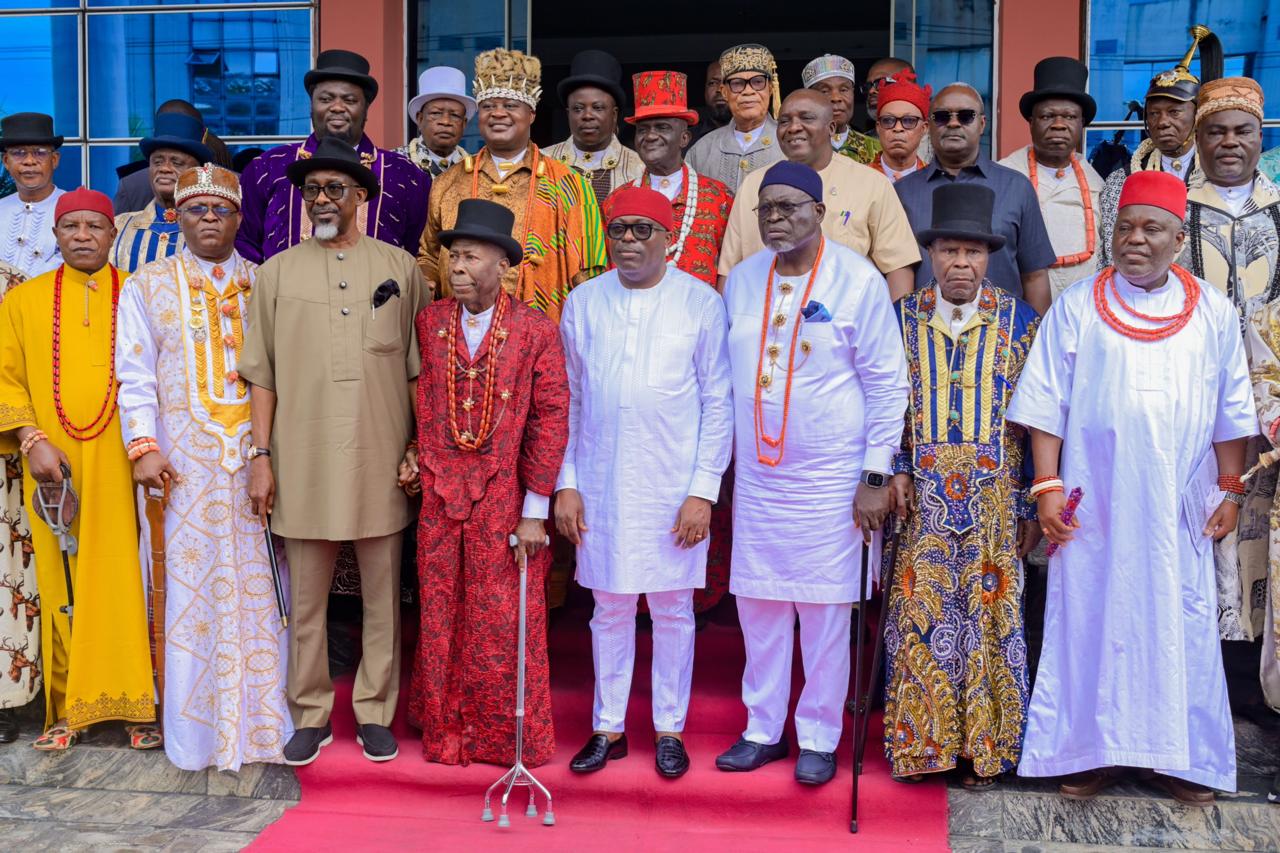
Rivers State Governor, Sir Siminalayi Fubara, has charged traditional rulers in the State to maintain neutrality, ensure fairness and uphold peace in their domains as the country prepares for the 2027 general elections.
Fubara gave the charge on Wednesday while declaring open the 126th, 127th and 128th Combined Quarterly Meeting of the Rivers State Traditional Rulers Council, in Port Harcourt.
The governor said the primary function of traditional rulers is to administer justice and ensure fairness, saying their conduct must not lead to division and unmanageable crises.
“Let me therefore, request, if that is the right word to use, that please, as we are entering into this political season actively, everyone should ensure that your conduct promoted peace in your place. Your actions should not be what would lead to the division and multiple crisis that we cannot manage as a government.
“I think with that, we can all live as one and we can also continue to make this progress that we are trying with all our mind, our body and our soul, to ensure that we deliver to our dear State,” he said.
Fubara urged the royal fathers to abide by the oath and constitution they swore to before ascending their respective stools, in the interest of stability and progress of the State.
He also enjoined them to set aside individual sentiments and place the interest of Rivers State above personal considerations, noting that this principle has guided his own day-to-day governance of the State.
“I want to enjoin everyone to keep aside issues of individual sentiments and ensure that the interest of our state supersedes whatever thing that we have in our mind. This is not just what I’m saying here, it is what I’ve also practiced and displayed in my day-to-day life in the governance of our dear State,” he said.
On the appeal for improved welfare for traditional rulers, the governor clarified that the delay in actualising some of the requests they made in the past was not from the government but from the inability of the Council to put its house in order.
Fubara explained that the issue of stipends paid to the traditional rulers by the local government councils, was a statutory benefit provided for in the constitution and not what a state governor can change by mere verbal pronouncements.
He assured that he remains a man of his word and will fulfill his promises to the traditional rulers before leaving office, next year.
He reaffirmed his respect for the traditional institution as custodians of culture and the closest link to the people, thanking them for their prayers and support.
The governor urged the royal fathers to ensure that the combined quarterly meeting featured fruitful deliberations that will strengthen peace and development in the State.
Earlier, the Chairman of the Rivers State Council of Traditional Rulers and Paramount Ruler of Apara Kingdom, His Royal Majesty, Eze Chike Amadi Worlu Wodo, expressed profound gratitude to the State Government for its efforts in maintaining a cordial relationship with the traditional institution.
Wodo highlighted the importance of traditional rulers in conflict resolution, noting that their closeness to the people places them in a strategic position to mediate in disputes involving chieftaincy matters, family disputes and land ownership in their respective communities.
The royal father drew the attention of the State Government to some challenges affecting the performance of the traditional institution, particularly the lack of official utility vehicles and logistical support needed to discharge its responsibilities effectively.
He also appealed for improved monthly stipends and better welfare provisions to reflect prevailing economic realities.

President Bola Tinubu yesterday departed Abuja for Makkah in Saudi Arabia, to perform Umrah (lesser Hajj), an Islamic spiritual exercise involving a pilgrimage to the holy city.
The Airbus A330-200 carrying the president took off at 2:20 pm local time, yesterday.
Tinubu was seen off at the airport by the Governors of Kwara, AbdulRahman AbdulRazaq; Borno, Babagana Zulum; Kaduna, Uba Sani; Sokoto, Ahmad Aliyu; Jigawa, Umar Namadi; and Yobe, Mai Mala Buni.
Also present were the Secretary to the Government of the Federation, George Akume; the Attorney-General of the Federation and Minister of Justice, Lateef Fagbemi; and Nigeria’s Ambassador to Mexico, Reno Omokri, alongside other government officials.
Special Adviser to the President on Information and Strategy, Bayo Onanuga, had revealed this in a statement signed Wednesday titled ‘President Tinubu departs Abuja for Makkah to pray for the nation.’
According to the statement, the visit will afford the President an opportunity for spiritual reflection, devotion, and prayers for Nigeria’s peace, unity, stability, and continued progress.
“While in Makkah, President Tinubu will perform the religious rites associated with Umrah, seeking Allah’s guidance and blessings for Nigeria and its people,” the statement said.
Before departing Abuja, Tinubu commissioned some equipment acquired by the Nigerian Air Force for its operations at the Presidential Wing of the Nnamdi Azikiwe International Airport.
The President is expected to return to the country next week after completing the spiritual exercise.
Thursday’s visit to Makkah marks the second time Tinubu is performing Umrah since assuming office.
The President had previously visited the holy city in November 2023, shortly after the Saudi-African Summit held in Riyadh, where he also prayed for divine guidance in leading Nigeria.
The trip to Saudi Arabia is the latest in a series of foreign engagements by the President since he was sworn in on May 29, 2023.
Tinubu has visited more than 30 countries in over 50 unique and recurrent trips.
They include countries across Africa, Europe, Asia, the Americas, and the Middle East, including France, the United Kingdom, the United States, China, India, Germany, the United Arab Emirates, Qatar, South Africa, Kenya, Ghana, Ethiopia, Tanzania, Senegal, and several others, on a combination of bilateral, multilateral, and diplomatic assignments.
Meanwhile, Tinubu has unveiled PenCare, a national healthcare initiative designed to provide free medical services to pensioners, beginning with low-income retirees.
Tinubu, who was represented by the Secretary to the Government of the Federation, Senator George Akume, at the opening of the National Pension Week in Abuja, yesterday, said the initiative formed part of his administration’s welfare package for senior citizens.
PenCare is designed as a national retiree well-being programme aimed at improving access to essential healthcare, particularly for pensioners with limited financial resources.
In his address, themed “Pensions for All: Building a Secure Future Together,” the President said a strong pension system was both a social protection necessity and a pillar of economic transformation under the Renewed Hope Agenda.
He said the pension system could also mobilise long-term domestic savings, deepen financial markets and support productive investments.
Tinubu described pensions as an obligation to workers who had served the country, rather than a favour from the government.
“A pension is not a favour granted by Government. It is a wage earned, deferred and held in trust. It is a promise. And this Administration has resolved that the promise will be kept,” he said.
He added that the success of the pension system should be measured by the security and dignity it provided retirees, rather than the volume of funds accumulated.
“Above all, no Nigerian who has served this nation will be forgotten in retirement. Nigeria will keep faith with those who kept faith with Nigeria,” he said.
The President said his administration had taken steps to restore dignity, security and value to the Contributory Pension Scheme.
He also said he had approved a N758 billion Federal Government Pension Bond to settle accrued pension rights and strengthen the Pension Protection Fund.
“That was not an accounting exercise. It was an act of restitution to Nigerians who served their country and were made to wait for what they had earned,” Tinubu said.
Meanwhile, the Director-General of the National Pension Commission (PenCom), Omolola Oloworaran, has insisted that the June 30, 2027 deadline for pension fund administrators and custodians to complete their recapitalisation remains unchanged.
Oloworaran said the exercise was necessary to strengthen institutions responsible for safeguarding the retirement savings of millions of Nigerian workers.
“We are not changing our minds. The industry must move beyond the growth in pension assets to building institutions strong enough to safeguard the savings of millions of Nigerian workers.
“Size is what we have achieved. Strength is what we now demand,” she said.
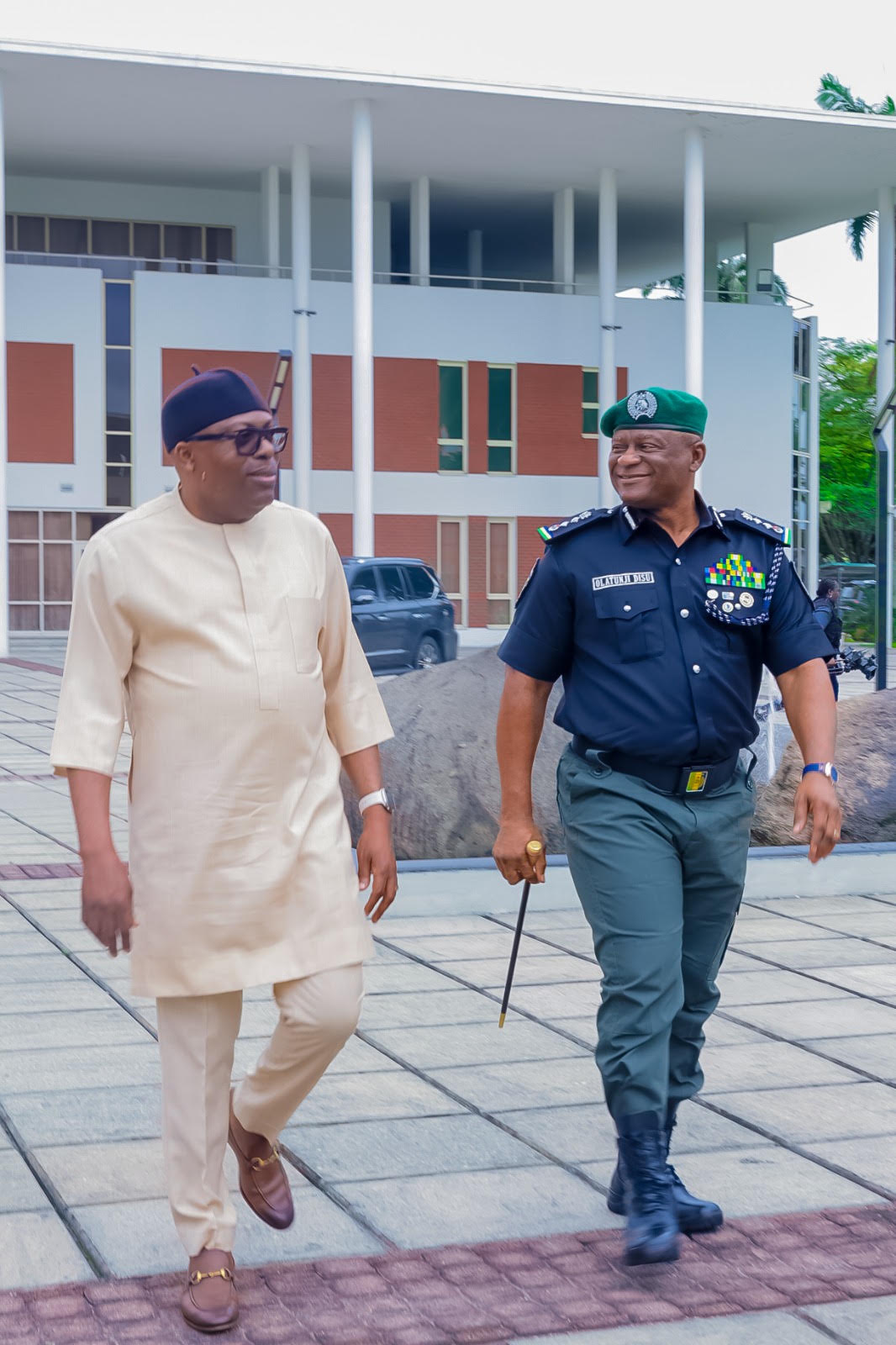
The Rivers State Government has called on stakeholders, community leaders, parents and relevant education authorities to intensify efforts to identify and enrol out-of-school children across Nigeria, stressing that every child deserves access to quality and inclusive education.
Governor Siminalayi Fubara made the call, yesterday, during the regional campaign on engaging community structures to promote the enrolment of out-of-school children and the regional flag-off of the 2026/2027 enrolment drive for southern states, held in Port Harcourt.
Represented by the Secretary to the State Government, Dr Dagogo Wokoma, Governor Fubara reaffirmed that education remains a fundamental pillar of sustainable development and emphasised the need to ensure that no child is left behind because of economic hardship, social background or other barriers to schooling.
He noted that expanding access to education was essential to promoting sustainable development, social inclusion and equal opportunities, enabling children to reach their full potential and contribute meaningfully to society.
The governor urged participating states and communities to translate their commitments into concrete and measurable actions by reaching vulnerable children, strengthening community engagement and encouraging parents and guardians to make their children’s education a priority.
He reiterated the state government’s commitment to initiatives aimed at expanding access to education, particularly for children excluded from formal schooling.
“Rivers State remains committed to supporting initiatives that expand access to inclusive and quality education, particularly for vulnerable children who may have missed the opportunity to attend formal schools,” Fubara stressed.
Also speaking, the Executive Secretary of the Universal Basic Education Commission (UBEC), Aisha Garba, described the growing number of out-of-school children as one of the major challenges confronting the education sector.
She called for a collective and collaborative approach among governments, communities, parents and other stakeholders to address the problem, stressing the need to ensure that no Nigerian child is denied the fundamental right to education.
The programme was organised by the Universal Basic Education Commission in collaboration with the Rivers State Government, as part of efforts to strengthen community participation and promote school enrolment across the southern states for the 2026/2027 academic session.
-
Rivers3 days ago
Don Seeks Repositioning Of Tech Education For Dev
-

 Education3 days ago
PAMO MEDICAL UNIVERSITY -Nullifies Arrest warrant on VC
-
Niger Delta3 days ago
PANDEF Seeks 50% Oil Derivation Allocation Increase
-

 Education3 days ago
IAUE MOVES TO END GHOST WORKERS SYNDROME AS 400 NEW NON-TEACHING STAFF UNDERGO MANDATORY ETHICS TRAINING
-

 News3 days ago
Fresh Ebola Scare As NCDC Records Two Cases
-
News3 days ago
Customs Partners EFCC, NDLEA, Others To Tackle Money Laundering, Terrorism Financing
-

 Politics3 days ago
2027: RIVERS GUBER CANDIDATES SIGN CHARTER TO PRIORITIZE CITIZENS’ DEMANDS
-
 Politics3 days ago
2027: South-East Govs Insist On Tinubu’s Re-election