
Business
FG to Improve MSMEs Access To Business Support

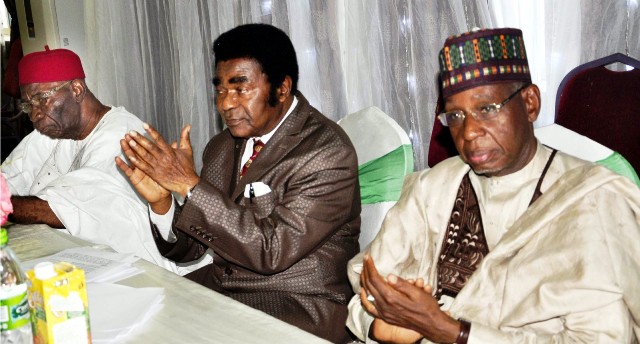
The Federal Government says it is committed to addressing the challenges faced by Micro, Small, and Medium Enterprises (MSMEs) in the country.
It said it would do that through interaction with entrepreneurs with relevant business regulations in form of clinic sessions.
The Special Adviser to the President on Economic Matters, Dr Adeyemi Dipeolu, said this in Abuja at the recently two-day Nationwide MSMEs Clinic for the FCT, with theme “Nationwide MSME Clinics for Viable Enterprises”.
Dipeolu said the clinic was to address the challenges of MSMEs doing businesses in Nigeria, adding that similar clinics had been held in seven states.
He advised the participants to take the advantage of the clinic to discuss with government agencies in charge of business issues.
Dipeolu said that the clinic was to understand the challenges faced by MSMEs and also to create awareness on the standards of producing goods both for local consumption and exportation.
According to him, the MSMEs clinics is an initiative of the Presidency, aimed at addressing problems of enterprises across Nigeria.
The Managing Director, Abuja Enterprise Agency, Muhammed Arabi, said the clinic was not only bold but timely in view of the myriads of bottlenecks that MSMEs were encountering while starting up or growing.
Arabi said until the government started seeing itself as agent for the growth of the MSME sector, it could not realise the expected potentialities of providing the needed result of jobs creation and poverty reduction.
He said that the universal belief was that small and medium enterprise sector was a major driver of the economy.
Arabi said the convergence of all relevant ministries, departments and agencies to give solutions to the problem, respond to inquiries and provide the needed information would definitely lead to the success of the initiative.
He said the country was lagging behind in spite of the MSME sector holding 96 per cent of the business sector in Nigeria compared to 53 per cent in the U.S. and 65 per cent in Europe.
Arabi added that with the employment capacity of about 33 million people, it only contributed 48 per cent of the Gross Domestic Product of Nigeria, compared to nations on the same status in Asia.
“We therefore owe this nation a duty and the MSME sector in particular, as stakeholders, to move from this poor status to catch up with the fast moving would.”
At the interactive session, participants complained of lack of finance and that most banks asked for impossible collateral.
He also complained of lack of patronage from Nigerians who preferred to buy imported products.
The Deputy Director, Development Finance Department, Central Bank of Nigeria (CBN), Mr Osita Nwanisobi, advised entrepreneurs to always pay back loans collected from banks.
Nwanisobi said most banks faced the challenges of people not returning the loans they borrowed to give other customers.
He said that CBN always sanctioned banks that failed to do the right things concerning loans for MSMEs.
“We monitor the commercial banks because there are guidelines for the interventions,” he said.
According to him, CBN is ready to provide avenues for upcoming entrepreneurs to easily access funds to either set up or expand their various enterprises.
“CBN is focused on enhancing capacity utilisation, increasing output of goods and services, boosting job creation and increasing foreign exchange earnings,” he said.



Business
Jonathan, Diri, Others Laud Firm’s Milestone in Bayelsa …Says Project Will Drive Industrialisation, Create Jobs



-

 Oil & Energy5 days ago
Aiyedatiwa Signs New Electricity Bill
-

 Oil & Energy5 days ago
NLNG Commissions Research And Innovation Centre In RSU
-

 Maritime5 days ago
Marine Minister Commends President Tinubu On NPERA Bill Assent
-

 Maritime5 days ago
NAGAFF Petitions IGP Over Alleged Maritime Police Harassment
-

 Education5 days ago
UNIPORT VC Hails Postgraduate School Over Planned International Conference
-
Rivers5 days ago
Journalist Pledges To Build On Father’s Legacies
-

 Sports5 days ago
Arsenal Fans Converge, Interact In PH
-

 Niger Delta5 days ago
Publisher Hails Diri On Security, Peace