Business
…Approves Nigeria’s Industrial Council
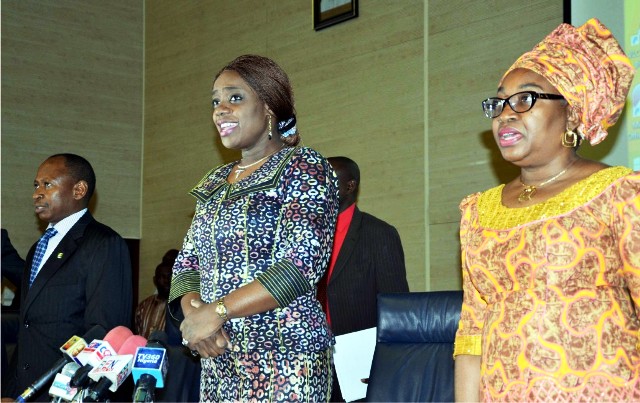
The Federal Executive Council has approved the establishment of the Nigeria Industrial Policy and Competitiveness Advisory Council to enhance the performance of the Nation’s industrial sector.
The Minister of Trade, Industry and Investment, Mr Okechukwu Enelamah, made this known in Abuja on Wednesday at the end of the council meeting presided by President Muhammadu Buhariý.
Enelamah said the Advisory Council, to be chaired by Vice-President Yemi Osinbajo, would assist the government in formulating policies and strategies for enhancing the Nation’s industrial sector.
“We received approval for the establishment of Nigeria Industrial Policy and Competitiveness Advisory Council.
“The main aim of this council is to assist the government in formulating policies and strategies that will enhance the performance of the industrial sector in furtherance of the country’s industrialisation programmes.
“So, the purpose of the Industrial Council is to create platform for partnering with the private sector and other interests to work together to make sure that we achieve our industrialisation goals.
“The Council will be chaired by the Vice-President and it will include a number of ministers and also leading members of the private sector.”
SImilarly, the minister of Health, Prof. Isaac Adewale, said that the council approved a bill for the Legal Framework for the Centre for Disease Control and Prevention.
“At today’s FEC meeting we took a conscious decision to move the agenda of public health intervention forward.
“What is known internationally is that there always is an epidemic or another disease outbreak.
“But what we do not know is when and where it will happen and for most countries what we need to do is to get ourselves prepared for the next epidemic.
“As you might be aware, the National Council on Health’s meeting in Lagos in 2007 took a resolution to establish a Nigeria Centre for Disease Control.
‘’The Centre became operational in 2012 and actually constituted a major force in combating Ebola and has been very operational in handling the issue of Lassa fever in different parts of the country.
“So, what we have done today is to provide the legal framework for this agency so that it can validly perform the role that is expected of such a front line intervention agency.’’
He said that the council’s approval would allow the ministry work with the National Assembly for a legislative action so that it can formally become an Act of Parliament.”
In his contribution, the Minister of Information and Culture, Alhaji Lai Muhammad, said his ministry informed the council of Nigeria’s bid to host the 2018 IPI World Congress.

Business
FIRS Clarifies New Tax Laws, Debunks Levy Misconceptions
Business
CBN Revises Cash Withdrawal Rules January 2026, Ends Special Authorisation
The Central Bank of Nigeria (CBN) has revised its cash withdrawal rules, discontinuing the special authorisation previously permitting individuals to withdraw N5 million and corporates N10 million once monthly, with effect from January 2026.
In a circular released Tuesday, December 2, 2025, and signed by the Director, Financial Policy & Regulation Department, FIRS, Dr. Rita I. Sike, the apex bank explained that previous cash policies had been introduced over the years in response to evolving circumstances.
However, with time, the need has arisen to streamline these provisions to reflect present-day realities.
“These policies, issued over the years in response to evolving circumstances in cash management, sought to reduce cash usage and encourage accelerated adoption of other payment options, particularly electronic payment channels.
“Effective January 1, 2026, individuals will be allowed to withdraw up to N500,000 weekly across all channels, while corporate entities will be limited to N5 million”, it said.
According to the statement, withdrawals above these thresholds would attract excess withdrawal fees of three percent for individuals and five percent for corporates, with the charges shared between the CBN and the financial institutions.
Deposit Money Banks are required to submit monthly reports on cash withdrawals above the specified limits, as well as on cash deposits, to the relevant supervisory departments.
They must also create separate accounts to warehouse processing charges collected on excess withdrawals.
Exemptions and superseding provisions
Revenue-generating accounts of federal, state, and local governments, along with accounts of microfinance banks and primary mortgage banks with commercial and non-interest banks, are exempted from the new withdrawal limits and excess withdrawal fees.
However, exemptions previously granted to embassies, diplomatic missions, and aid-donor agencies have been withdrawn.
The CBN clarified that the circular is without prejudice to the provisions of certain earlier directives but supersedes others, as detailed in its appendices.
Business
Shippers Council Vows Commitment To Security At Nigerian Ports
-
Featured4 days agoOil & Gas: Rivers Remains The Best Investment Destination – Fubara
-
Nation5 days ago
Hausa Community Lauds Council Boss Over Free Medical Outreach
-
Nation4 days ago
MOSIEND Calls For RSG, NDDC, Stakeholders’ Intervention In Obolo Nation
-
Nation5 days agoOgoni Power Project: HYPREP Moves To Boost Capacity Of Personnel
-
Nation5 days ago
Association Hails Rivers LG Chairmen, Urges Expansion Of Dev Projects
-
Nation5 days ago
Film Festival: Don, Others Urge Govt To Partner RIFF
-
News4 days agoNDLEA Arrests Two, Intercepts Illicit Drugs Packaged As Christmas Cookies
-
News4 days agoInvestment In Education Remains Top Priority For Gov Fubara – SSG