
Business
Reps Warns Against Corruption In Petrol Distribution Chain

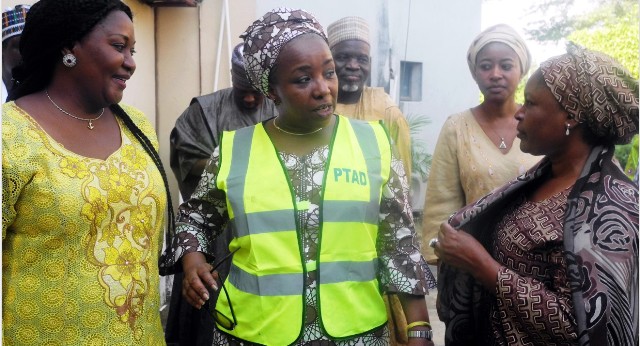
The House of Representatives Adhoc Committee on Review of Pump Price of Petrol has said that it will not relent in recommending sanctions against any entity found involved in corruption in the petroleum distribution chain.
The Chairman of the Committee, Rep. Raphael Igbokwe, made the remark in an interview with The Tide source in Lagos.
Igbokwe spoke on the sidelines of the committee’s visit to some government agencies and private sectors involved in transportation and distribution of petrol from the ports to the consumers.
He said that the committee would not relent in recommending any defaulter to the parliament to enable Nigerians to know those frustrating government’s efforts in making fuel available and affordable.
According to him, the committee would also commend the efforts of operators who were adding value in the value chain.
“We want to see that operators at every level are adding value to the value chain.
“At the tail end, we want Nigerians to be getting value for the money they are paying.
“One thing that clear is that subsidy had been removed but we believe that subsidy had been transferred from the government now to the people.
“People are paying for the cost differential from their own pocket. So people should be seen as getting value for their money,’’ Igbokwe said.
The law maker said that both the Nigerian Ports Authority (NPA) and the Nigerian Maritime Administration and Safety Agency (NIMASA) had some international obligations they have to sort out.
According to him, NPA and NIMASA said they usually buy their equipment with foreign currency and render certain obligations to some clients, who paid in foreign exchange.
Igbokwe said that “to the committee, such explanation from NPA and NIMASA did not hold water at this point until the committee carry out its studies.’’
“Our committee intends to carry out economic study of what are the charges and related costs around Africa, especially in West African coast.
“To see if these charges are commensurate with what is obtainable in other areas.
“You will agree with me that such charges in foreign currency put pressure and this is one of the complaints we got from oil marketers in sourcing foreign currency.
“The charges put pressure on our local currency because these are operations taking place within the geographical areas of Nigeria,’’ Igbokwe told newsmen.
He said that all Nigerian economic activities should be naira-based, adding that the committee had challenged the government agencies for charging operators in dollars while their budgets before the parliament were reflected in naira.
The committee chairman said that government agencies charging operators foreign currency were putting pressure on the naira and creating room for devaluation and inflation.
He said that the committee would also make further findings to make comparison of what is obtainable in other places.
Igbokwe said that the monetary law did not in any way permit the dollarisation of transactions in Nigeria.
He said that all transactions in Nigeria should be domiciled in naira.
“If the price of a barrel of crude oil could be determined in consultation with the parliament and the volume of crude product daily which is standing at N2.2 million barrels per day now can be determined with the representatives of the people.
“We are thinking why the price of the product from the crude oil cannot be determined in consultation with the representatives of the people.
“Looking at the cost structure of the price template, we approached each cost element and operators at that level from the jetty charges, jetty owners, storage fees, to look at what value each player is adding in the value chain.
“We have identified possible causes of changes in price such as scarcity arising from operational inefficiency and scarcity created by players in the industry.
“Most marketers have complained of lack of access to foreign exchange.
“CBN sells the foreign exchange directly to players in the downstream sector to bring in the products and yet we found out that there were no enough products coming in.
“Our clue is pointing to the forex being released to some marketers and they are applying them for other purposes different from what they had specified the forex for.
“This is given room for lesser quantity of products coming in as per the quarterly planning of the Petroleum Products Pricing Regulatory Agency (PPPRA), ‘’ Igbokwe said.
Reports have it that the committee had visited NPA, NIMASA, Department of Petroleum Resources (DPR), Pipelines and Products Marketing Company (PPMC), Sahara Energy, Masters Energy Oil & Gas, NIPCO Oil and Gas, among others.



-
News4 days ago
Rivers Court Jails Man Seven Years For Defiling Minor …Directs N5 Million Upkeep For Victim
-
News4 days ago
Alleged Coup Plot: DSS Docks Five For Hiding Sylva’s Whereabouts
-
 Politics4 days ago
Atiku Names Kenneth Okonkwo As Spokesperson
-
Niger Delta4 days ago
24 Nigerian Universities Make 2026 THE Rankings … 4 S’South Versitieis Pull Through
-

 News4 days ago
FG To Replace NYSC Khaki With Adire
-
News4 days ago
BOI Unveils Maiden Impact Report, Disburses N644.9bn In 2025
-

 News4 days ago
Fubara Seeks Full Resolution Of Bille Gas Leakage …Pledges Upgrade Of Community Health Centre
-
Women4 days ago
NAWOJ Seeks Partnership With Hotel Presidential On Summit