
Oil & Energy
Ambode Assures Retirees On Pensions

Governor Akinwunmi
Ambode of Lagos State says his administration will be in the forefront of ensuring efficient and effective pension scheme administration to make life comfortable for retirees.
Ambode, who was represented by the Deputy Governor, Dr Idiat Adebule, made the pledge at the 18th Retirement Benefit Bond Certificate Presentation Ceremony in Lagos on Thursday.
He said that Lagos was the only state government that was up-to-date in pension contribution remittances.
‘’Our employees are our greatest assets and this is why we are not only committed to ensuring that they enjoy good conditions of service, but to also ensuring that their entitlements are paid promptly when they retire.
‘’We are aware that some parastatals have not fully complied with the provisions of the State Pension Reform Laws in terms of regular remittances of contributions into employees’ Retirement Savings Account.
‘’This will not be tolerated by this administration as the resultant effect of non-conformity is that many will retire without any provision made for the payment of their terminal entitlements.
‘’We are also aware that we still have backlog of retirees who are yet to receive their entitlements, especially at Local Governments and SUBEB.
‘’This administration is a people-oriented government. We understand that you have spent the better part of your lives in service of this state and you deserve to live in peace and comfort in retirement, ‘’ he said.
Ambode said that the government would ensure that retirees get paid their terminal entitlements as and when due.
Also speaking, Director-General, Lagos State Pension Board, Mrs Folashade Onanuga, said that the gesture was a continued testimony of the successful administration by the state government.
Onanuga said that the government had taken the bull by the horn by first releasing the sum of N11 billion to immediately bring succour to those retirees on the waiting list.
‘’It is your right to live in comfort at retirement, having utilised the better part of your active lives serving the state government.
‘’Today, a total sum of N2.2 billion has been paid into the Retirement Savings Account of 658 retirees. The rest of the fund will be paid accordingly to systematically clear the outstanding pension shortfall.
‘’This, in essence, brings the total number of retirees under the Lagos State Government Pension Scheme to 7, 099, ‘’ she said.
Onanuga also urged retirees and beneficiaries to spend their money wisely.
In her remarks, Mrs Grace Uzoro of the National Pension Commission (Pencorn) said that pension scheme was aimed at putting smiles on the faces of those who had laboured to serve the country.
Uzoro commended the Lagos State Government for being at the forefront of championing the scheme.
According to her, Lagos State has made Nigeria proud as the government is a government of action in terms of retirees’ welfare.
Uzoro urged other state governments to emulate Lagos State to ensure their employees retire with peace of mind.
Mr Leo Onayemi, who spoke on behalf of the retirees, said that the gesture was unexpected as most of them thought they would never get their entitlements.
‘’It is a great day for all of us. Gov. Ambode has not spent up to four months in office and he has been able to achieve this.
‘’We will continue to support him in every way for making us reap the fruit of our labour, ‘’ he said.
The Tide source reports that 658 retirees were presented with the Retirement Benefit Bond Certificates.
It would be recalled that on Aug. 5, Gov. Ambode directed that pension cash assets in the sum of N11billion be immediately deployed to offset pension liabilities in arrears since year 2010.



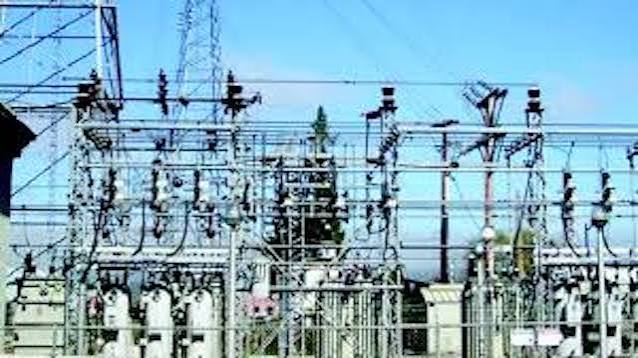
Utilities built a total of over 21,000 km of new transmission lines last year, the International Renewable Energy Agency reported this week at COP31, citing data from a group called the Utilities for Net Zero Alliance. This is 50% more than the new transmission lines installed during the previous year, IRENA noted in its report.
“Power grids will make or break not only the energy transition but also the world’s ambition to raise global electrification to 35% by 2035, as championed by the Turkish COP31 Presidency,” said the director-general of IRENA, Francesco La Camera. “IRENA’s analysis shows that global grid investment must more than double, reaching a cumulative USD 10 trillion by 2035,” he added, noting that ambition would not be enough and that “We must move from targets to implementation, from individual projects to system-wide transformation, and from commitments to delivery at scale.”
Transmission line capacity has become one of the biggest obstacles in the path of the energy transition. Due to their weather-dependent, variable output nature, wind and solar installations generate electricity intermittently. Because the best locations for such installations are often far from electricity demand centers, having to waste output in times of low demand is a frequent occurrence with both. Called curtailment, wind and solar electricity waste increases costs for the alternative energy sources.
The solution, net-zero proponents such as the International Energy Agency believe, is to expand the grid by building new transmission lines connecting wind and solar installations with demand centers. Back in 2023, the IEA said utilities needed to add or replace some 50 million km of transmission lines by 2040 if Paris Agreement signatories were to meet their commitments.
Forecasting how many millions of kilometers of cable need to be built or replaced, however, is one thing, while paying for it is quite another. Last year, the European Commission estimated that the European Union alone needs to cough up between $2 trillion and $2.3 trillion on grid upgrades by 2050 to achieve the Commission’s climate goals. For context, EU investment in the grid in 2024 stood at $90.5 billion. This would need to rise to over $100 billion annually, according to energy think tank Bruegel.
$100 billion in grid buildout investment is no small potatoes, yet some believe this investment would be inevitable as energy security takes priority over climate change concerns. Wood Mackenzie said this week that countries that prioritize energy security over emission-reduction plans could achieve lower emissions through faster electrification, replacing hydrocarbon import dependence.
“The energy transition has arrived at a genuine crossroads,” Prakash Sharma, Wood Mackenzie’s head of scenarios and technologies, said. “The world is no longer moving in one direction. Nations are making fundamentally different choices about how to power their economies, and those choices are producing outcomes that confound conventional wisdom.”
Energy security has indeed come to the fore since February, with emission reduction taking the back seat as governments struggle to keep energy relatively affordable without emptying state coffers and slipping into a recession. This has proven hard for many that depend on imports of oil and gas, with the effects of this dependence especially obvious in most of Asia and the European Union.
Reducing this dependence on imports has become an obvious path for many of these governments, as much as it is possible. And the most obvious way of reducing this dependence has been electrification, wherever possible. According to Wood Mackenzie, the impact of the war in Iran on energy prices would drive a shift to electrification, a wind and solar buildout, and nuclear generation expansion to produce more energy locally. This, in turn, would inevitably lead to lower emissions, even though, ironically, these lower emissions are not the priority.
COP31 host Turkey has proposed that participants commit to electrification, aiming for electricity to account for 35% of final energy. That would be up from some 20% today, with most of the world’s final energy still coming from hydrocarbons despite the net-zero rush from the last ten years. What is interesting, however, is that the proposal does not include a stipulation for reducing the use of hydrocarbons. Based on Wood Mackenzie’s scenario for inadvertent emission reduction, the lower use of hydrocarbons would happen organically rather than by means of government regulation enforcement.
Such developments would be an interesting departure from what has become the standard modus operandi of pro-transition governments: regulation, emission-cutting mandates, and penalties for using hydrocarbons, such as credit offsets. Instead, the energy ramifications of geopolitical events could lead to what one could describe as an organic shift away from imported hydrocarbons, while countries with their own mineral resources exploit those more fully. Whether such an organic shift would indeed reduce the consumption of oil, gas, and coal, however, remains to be seen.
By: Irina Slav
-
News3 days ago
Parents Protest Scholarship Scheme Suspension At PAMO Varsity
-
 News3 days ago
US Hails Nigerian Military For Rescuing 125 Kidnap Victims
-
Business3 days ago
Reps Raise Alarm Over N2trn Agricultural Loan Diversion
-

 Featured3 days ago
Presidents Xi, Trump, Putin Commit To Global Stability, Denuclearisation
-
Politics3 days ago
ADC Faults INEC’s Alleged Limited Capacity To Upload Election Result On IREV
-
Politics3 days ago
Tinubu Expands 2027 Campaign Tour To 19 States
-
Politics3 days ago
Rivers INEC Set To Begin PVCs Distribution Amidst Residents’ Complaints
-
Business3 days ago
Ibom Airlines Hits 52 Percent Of N147.03billion Financial Year, -FAAN