
Business
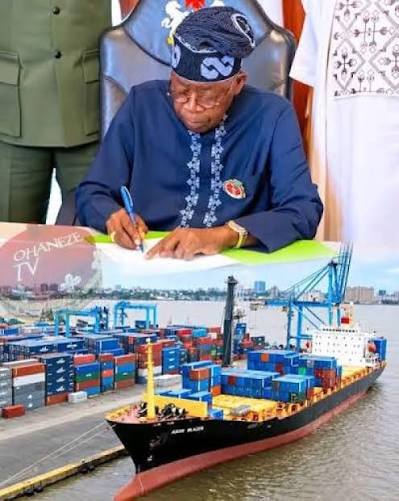
Minister Assures Of Reforms In Transport Business

The Minister of Trans
port, Alhaji Idris Umar, has said that the existing laws governing the transport sector did not provide for adequate private sector participation, but mainly public sector driven, hence the need to be reviewed so as to take care of the conflicting and overlapping functions.
Umar, who made this known to journalists in Abuja, said that consequent on that, a new legal and regulatory framework was required to support the reform programme.
He said that a bill which, according to him, is the Transport Commission Bill, which would seek to establish the National Transport Commission, designed to be a multi-sector model covering the road, rail and marine transport systems would be sent to the National Assembly.
According to him, the commission would introduce synergy and inter-modalism in the sector that had in the past operated in an uncoordinated manner.
He said that the Ports and Harbour Authority Bill would broaden the scope of operations of the authority to make it more fundamental, manage ports and habour, promote port competitiveness, and boost revenue collection in off-shore activities.
Umar said that the Inland Water-Ways Bill was to cover wider areas not covered by the existing law and to generate revenue devoid of ambiguity especially from the oil companies.
He said that the Railway Bill was to repeal the 1955 Act to rebrand the Nigeria Railway Corporation to Nigeria Railway Authority to enable private sector participate in running and ownership of rail track, empower states and local governments own and operate rail facilities.




-
 Niger Delta15 hours ago
Diri Restates Stance On Lagos-Calabar Coastal Highway
-

 Niger Delta15 hours ago
C’River, NUJ Pay Tribute To Late Guardian Editor
-

 News17 hours ago
NDLEA Recovers Tons Of Illicit Drug Consignments In Nine States
-

 Opinion15 hours ago
Checking Voter Apathy In Nigeria’s Electoral Process
-

 Sports12 hours ago
Nigerian Trio Target Titles At PFL Africa Finals
-
 Education13 hours ago
FCE Yola Graduates 3,555 Teachers , Seeks Upgrade to University
-
 Politics13 hours ago
2027: DICKSON’S EX-ALLY VOWS TO WORK AGAINST NDC INTEREST IN BAYELSA
-

 Politics13 hours ago
2027: GROUP PLEDGES 40,000 SUPPORTERS FOR COALITION CANDIDATES IN RIVERS