
Politics
Much Ado About Rivers 2014 Budget

Tuesday, January 7,
2014 will no doubt go down in the annals of the history of legislation on Rivers State, nay Nigeria, especially against the background of events that preceded the passage of the state’s 2014 Appropriation Bill by the Rivers State House of Assembly.
Expectedly, the presentation and subsequent passage of the 2014 Appropriation Bill by the House had elicited mixed reactions from individuals, lawyers and lawmakers.
One of them is the Chief Whip of the Rivers State House of Assembly, Hon Ikwuiyi Ibani, who criticised the manner in which the budget was quickly passed into law.
“I couldn’t have attended any sitting outside the Chambers of the Rivers State House of Assembly. What my colleagues did was unconstitutional in the first instance because it is a known fact that the Rivers State House of Assembly sits at Moscow Road, we have our official office which is the Assembly complex, so any business of the House conducted outside the premises of the Assembly is null and void”, Hon Ibani said.
Also, the member representing Obio/Akpor constituency 1, Hon. Martin Amaewhule, said it was illegal for the Assembly to sit outside the complex. According to him, “The standing order of the Rivers State House of Assembly is very clear, you cannot, and it is not possible for a Governor to present a budget and have it passed on the same day.
“The standing order is very clear, go to order 50, it is very clear, you cannot, in fact, the debate on the presentation of the budget cannot take place on the same day”, Hon Amaewhule stated.
The state Chapter of the PDP, on its part, described the action to present the 2014 budget outside the Hallowed Chambers of the Assembly as “illegal, criminal and of no effect”.
Speaking to journalists in Port Harcourt shortly after Governor Amaechi presented the budget before the House, the state Chairman of the PDP, Chief Felix Obuah also described the presentation as “an illegality that will not stand”.
In an obvious response to the above, the State interim APC Chairman, Davies Ibiamu Ikanya, described the Felix Obuah-1ed PDP in the state as a “bunch of ignoramuses who expose their total ignorance of law making shamelessly”.
According to him, the stand of Rivers State PDP on the budget presentation only further “exposes their hatred for the development of Rivers State, knowing very well that without budget, the government can’t finance most of its projects or pay salaries.
“What PDP does not understand is that first, it is the Speaker that designates where the House sits as far as the Mace, which is the symbol of authority is present. The Speaker, Otelemaba Amachree, as the Head of Legislature in Rivers State designated the venue of sitting in line with his powers.
“In other words, based on the fact that the Rivers State House of Assembly is under siege, coupled with the fact that it is still under renovation, the House did the proper thing. Besides, the House has powers under the rules, and with necessary quorum and number, to designate any place as its chambers as in this case”, Ikanya explained.
Earlier, the Speaker of the State Assembly, Rt. Hon. Ote1emaba Dan-Amachree, had said the Assembly took the decision to carry out its legislative functions in a “makeshift chamber” in the Government House.
These claims and counter claims as to the legality of the venue of the plenary session, the presentation of the budget, and its passage as law raises a lot of questions which seem to have been inadvertently down p1ayed in the whole saga. Pitiably, it is done with such impunity that makes the interest of the common man seem unimportant. Ironically, they all claim to seek to protect the same interest.
The key questions that easily come to mind are: “ Does the Assembly have the right to pick another venue different from the Hallowed Chambers for its plenary?” “Is there any law that clearly states the number of days the budget must take to pass through the various stages before becoming a law?” “Did members of the Assembly form a quorum, including key officers, during the plenary?” “Was the Mace, which is the symbol of authority present during the session?”
Specifically, the Constitution of the Federal Republic of Nigeria did not state that plenary must always hold in the Hallowed Chambers. Section 121(i) of the 1999 Constitution (as amended), which is to the effect that the Governor shall cause to be laid before the Assembly, “at any time before the commencement of any fiscal year”, the estimates of revenue and expenditure, clearly did not state venue for sitting. This is unlike Judges who must sit in the court.
In essence, if there is a lacuna in the constitution, should the Assembly be blamed for it when it acts, based on the exigencies of the moment, with the sole purpose of moving the State forward rather than letting it remain stagnant?
Naturally, every well-meaning individual should know at this point that the events leading to the passage of the 2014 budget should be an eye-opener to those that make our laws at all levels.
They should know by now that what is required of them is for them to make laws that can stand the test of time, for the sole benefit of the populace rather than a few privileged persons fortunate to be in power at any given point in time. Anything different will only create more lacunas that can create problems, and no one can tell who will be the recipient of whatever action that will emanate from it.
As the Governor explained while presenting the budget to the 23 lawmakers present, he proposed to spend N485.5bn this fiscal year, explaining that the budget was 0.98 per cent lower than the N490.32bn he presented in 2013.
He said the focus of the budget was the completion of ongoing projects in the health, education, roads, transport, power, water, agriculture and other critical sectors. According to him, capital to recurrent ratio is 76.24 for the 2014 as against 70.30 achieved as of September 2013.
The Governor also noted that “In the light of the 2014 budget, we will not accommodate new projects. This is in the light of current realities and out of a resolve to guarantee efficient service delivery.
“The economic realities arising from already dwindling resources since mid 2013 suggest a need for prudence and good sense this year. Government will continue to demonstrate good sense of management by making more money available to complete projects this year”.
If the whole hullabaloo over the passage of the 2014 budget is for the interest of the common man in the state, how would it be to his interest if the numerous road projects embarked upon by the present administration, for instance, are not completed and finally abandoned by subsequent government, knowing what usually happens to inherited projects? The same thing goes for all other uncompleted projects, which the 2014 budget seeks to complete.
It is noteworthy that for the first time in the history of the state a government has decided to complete projects before the expiration of its tenure. Considering the fact that this administration has less than eighteen months left, should it not be fair for everything to be done to ensure the completion of the projects? If for nothing else, for the sake of the populace we claim to protect?

Politics
Alleged Coup: Protests Rock N’Assembly As Detained Officers’ Children, Wives Demand Justice

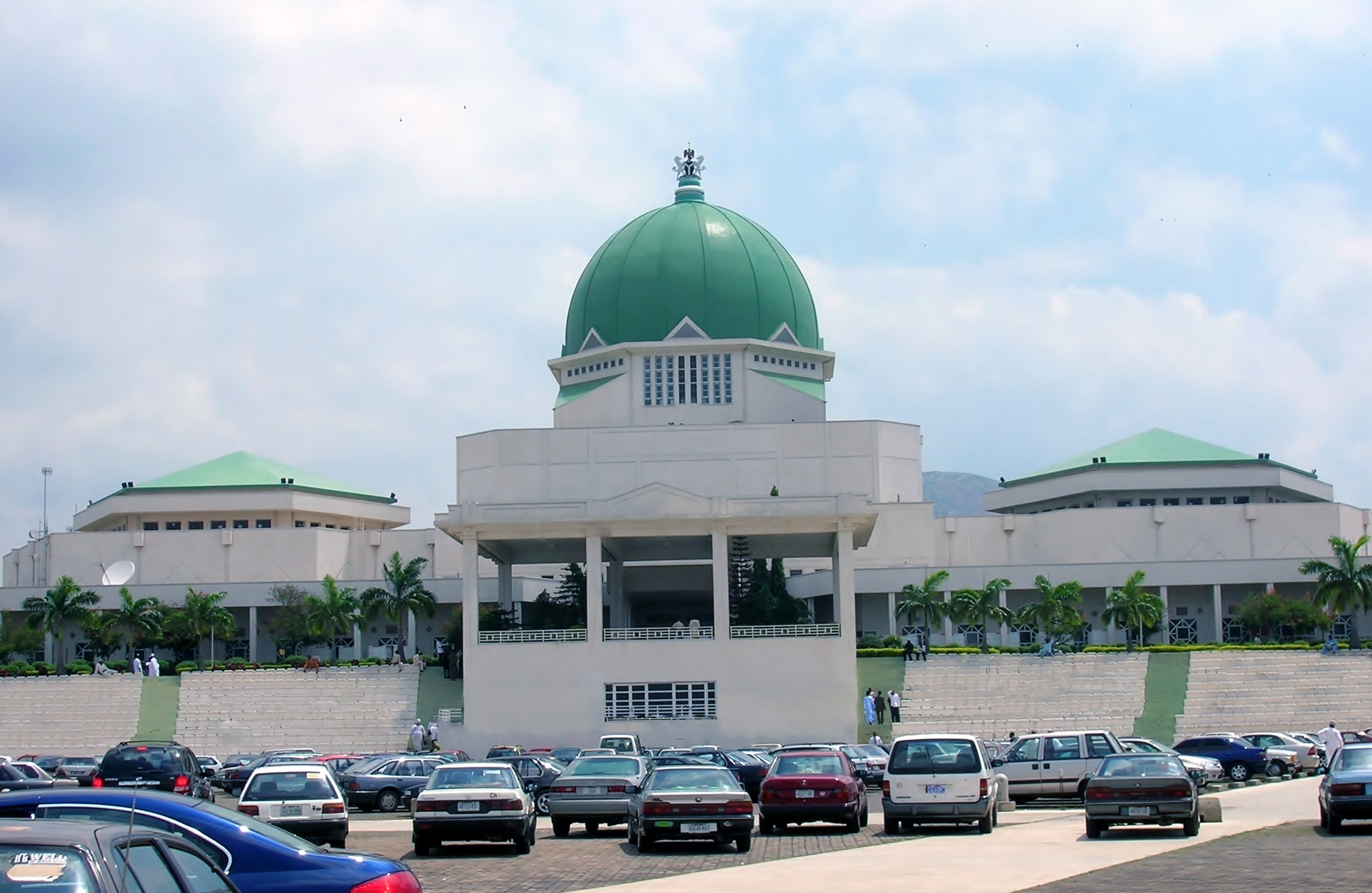
Scores of children and wives of military officers detained over an alleged coup plot yesterday staged a peaceful protest at the National Assembly, demanding a speedy trial and the release of the accused officials.
The protesters who gathered at the entrance of the National Assembly complex, moved in a slow procession while clutching placards with inscriptions such as “Don’t Kill Our Daddies,” “Detention Without Trial is Injustice,” and “Six Months of Torture: Enough Is Enough.”
Amid tears and trembling voices, the children appealed for justice and access to their detained fathers, many of whom they said they had not seen for months.
The appeal was made during a press briefing in Abuja attended by no fewer than 20 wives and several children of the detained officers, including a two-month-old baby.
The families were accompanied by human rights lawyer, Deji Adeyanju and activist Omoyele Sowore.
At the briefing, the families lamented that the officers had been held for over 160 days without trial or contact with their relatives, describing the situation as a violation of their fundamental rights.
Speaking on behalf of the families, Memuna Bashiru said the prolonged detention had thrown their households into uncertainty and emotional distress, noting that while allegations had been widely publicised, families remained in the dark about the fate of their loved ones.
The arrest of the indicted officers was first announced on October 4, 2025, by the then Director of Defense Information, Brigadier General Tukur Gusau, who disclosed that 16 officers were taken into custody for alleged breaches of military regulations and acts of indiscipline.
However, an interim investigation later suggested the existence of a clandestine network of officers, allegedly coordinated by a senior Army officer, which had begun preliminary planning for a coup.
According to the report, the alleged plot involved surveillance of key national assets, including the Presidential Villa, Armed Forces Complex, Niger Barracks in Abuja, and major international airports, with October 25, 2025, cited as the planned date for the operation.
Those reportedly in custody include Brig Gen M. A. Sadiq, Col M. A. Maaji, Lt Col S. Bappah, Lt Col A. A. Hayatu, Lt Col P. Dangnap, Lt Col M. Almakura, Maj A. J. Ibrahim, Maj M. M. Jiddah, Maj M. A. Usman, Maj D. Yusuf, Capt I. Bello, Capt A. A. Yusuf, Lt S. S. Felix, Lt Cdr D. B. Abdullahi, Sqn Ldr S. B. Adamu and Maj I. Dauda.
The alleged plot, according to findings, targeted senior government officials, including President Tinubu and Vice President Kashim Shettima.

In a statement issued yesterday, the party’s National Publicity Secretary, Mr Felix Morka, said the exercise would take place in all wards and designated centres nationwide.
He called on existing members to update their records, while encouraging new entrants to join the party through the digital platform.
“As the electronic membership registration exercise resumes in all wards and designated locations nationwide, we urge existing members to validate their membership while new members are encouraged to register and join the progressive family,” Mr Morka said.
According to him, eligibility for registration is limited to individuals aged 18 and above who possess a valid National Identification Number (NIN).
The party said the initiative is part of efforts to modernise its operations by transitioning to a digital database that would enhance record accuracy and accessibility.
Mr Morka noted that the e-registration would “digitise the party’s membership register, ensure the integrity of records, and enhance efficient access to membership data for planning and management decisions.”
He added that the move is also aimed at promoting internal democracy within the party and strengthening its commitment to democratic innovation.
The APC had previously introduced electronic registration as part of broader reforms to streamline its membership system and improve organisational efficiency.
-
Business1 hour ago
IGR Firm Applauds Akpe’s Appointment As New D’Gov
-
Sports1 hour ago
NFF Reacts As Flying Eagles Laments Unpaid N1.5bn Bonuses
-
Sports56 minutes ago
Eagles To Open 2026 For Unity Cup
-
Niger Delta1 hour ago
Okpebholo Urges Edo Youths To Join Nigerian Army Recruitment
-
Sports56 minutes ago
Full Draw For 2026 U-17 AFCON
-
Niger Delta1 hour ago
Otu Launches Grassroot Security Network In C’River
-

 Entertainment1 hour ago
Nigerian DJ Association Bans Burna Boy’s Songs
-

 Entertainment59 minutes ago
“AI Is About To Retire Music Producers’ – DJ Neptune Predicts