Environment
NESREA Moves To Enforce Environmental Laws
The National Environmental Standard and Regulation Enforcement Agency (NESREA), says it will begin to enforce environmental regulations in the country.
NAEREA Deputy Director and Lagos Coordinator of the agency, Mrs Eunice Eze, stated this in an interview with newsmen on Thursday in Lagos.
Speaking on the sideline of a workshop on “Operationalising the Implementation of the National Environmental Regulations”, Eze explained that the workshop was aimed at sensitising the public and operators in the key sectors that would be affected by the 24 environment regulations currently in place.
The deputy director said the strategy would help prevent the spread of diseases in the country.
She said some diseases could be prevented if the public could keep the environment clean in line with stipulated regulations.
“Our government is really serious this time in tackling environmental problems, because we found out that prevention is better than cure; that some diseases can be prevented if our environment is kept clean.
“That’s why NESREA’s vision is to ensure a cleaner and healthier environment for all Nigerians. So, if everybody can put heads together and work with the regulation on ground, very soon, Nigeria will be reckoned with – clean environment, healthy environment, healthy people.’’
Eze said that 11 and 13 pieces of regulation gazetted in 2009 and 2011 respectively, were on noise pollution, erosion and flood, and waste from manufacturing companies.
She said it became necessary to invite the stakeholders to sensitise them on the importance of complying with the regulations.
“There are key players. So, we’ll make sure that all of them are invited to sensitise them to comply with the regulation stipulated for them.
“We have regulation on noise; we have regulation on erosion and flood; we have regulation for manufacturers of beverages and tobacco, pharmaceuticals, chemicals, electrical, electronics, sanitation, emissions that has to do with air pollution.”
Eze said that penalties for offenders were categorised with some attracting fines or imprisonment on conviction.
She added that with the regulation in place, it would be a crime for people to throw things out of their cars, saying that anyone caught would be fined N20,000 or one year imprisonment.
“The same thing those who are just discharging effluent, like textile industries, they discharge it into the water body, which contaminates the water even the fish in the stream that people catch and we eat is contaminated. So they can’t go free; they’ll be prosecuted and if found guilty, they will pay penalty.”

Environment
Rivers State Government Suspend Fire Service Collection Levies
Environment
Environment ministry validates plan to tackle climate-related challenges
The Ministry of Environment on Thursday in Abuja, advanced its National Adaptation Plan (NAP) process, validating a comprehensive plan aimed at tackling climate-related challenges in the country.
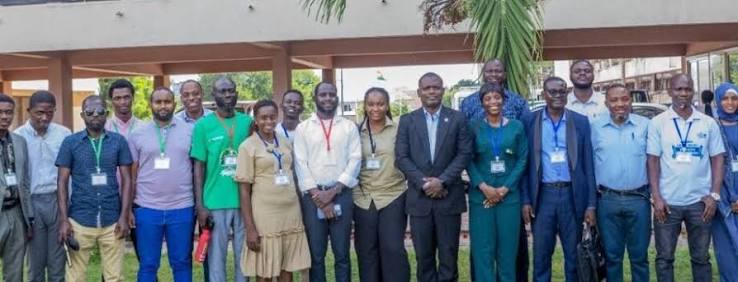
The Permanent Secretary in the Ministry, Alhaji Mahmud Kambari, said this at the Stakeholders Consultative Workshop on the Development of the concept notes to the Green Climate Fund (GCF) for NAP in Nigeria.
Kambari, who was represented by Mrs Victoria Pwol, the Deputy Director in the Department of Climate Change (DCC) in the ministry, said that the workshop is a collective resolve to confront the realities of climate change with purpose, strategy, and coordinated action.
“Over the past years, the Federal Government of Nigeria, with crucial support from the Green Climate Fund (GCF) and the United Nations Environment Programme (UNEP), has made significant progress in advancing the NAP process.
“As a nation, we stand at a critical juncture where climate risks ranging from extreme weather events to environmental degradation continues to threaten our socio-economic stability, food systems, public health, infrastructure, and national development aspirations.
“Through extensive technical work, we have completed a Climate Risk Assessment across all geopolitical and agro-ecological zones, developed an Economic Appraisal, an Adaptation Finance Strategy, and a robust Monitoring and Evaluation Framework.”
Kambari said that these foundational elements now guide Nigeria to identify priority adaptation needs and investment opportunities.
“Let me mention that we are at the tail end of this NAP Formulation Process and looking forward to the implementation phase.
“This workshop therefore serves as a strategic purpose to harmonise perspectives across key MDAs; refine project ideas into strong, evidence-based concept notes.
“It will ensure that proposed interventions align with national priorities and the investment criteria of the GCF and position Nigeria to competitively access the resources required to strengthen resilience across vulnerable sectors,” he said.
Dr Iniobong Abiola-Awe, the Director DCC in the Ministry said that the engagement would enhance achievements by collaboratively developing bankable, climate-resilient concept notes that align with national priorities and meet the GCF’s investment requirements.
Abiola-Awe who was represented by Dr Jonah Barde in the Ministry said that the workshop represented an important step in Nigeria’s ongoing efforts to strengthen climate resilience.
She added that the workshop would advance sustainable development, and mobilise the climate finance needed to safeguard Nigeria’s communities, ecosystems, and economy from the growing impacts of climate change.
Environment
Science-based risk assessment cornerstone of Nigeria’s approach to GMOs–NBMA DG
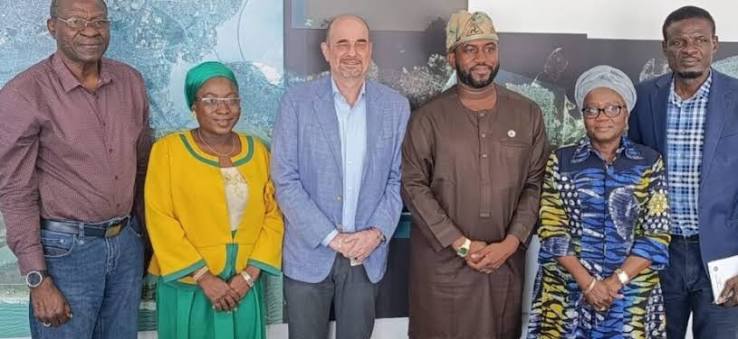
Effective communication, transparency, and science-based risk assessments are the cornerstones of Nigeria’s approach to Genetically Modified Organisms (GMOs).
Mr Bello Bwari, the Director-General, National Biosafety Management Agency (NBMA), gave the assurance during a media interaction in Abuja on Friday.
“Where there is communication, you reduce conflict. Effective communication is key, effective engagement with stakeholders is paramount and key to making Nigeria better.
Bwari said anti GMO’s critics keep participants and practitioners on their toes.
“We value them and we expect that their criticisms, suggestions and recommendations will make our operations in the entire spectrum better.
“Where we are not doing so well, we will hear from them, where we can advance explanations, we will advance explanations. Where they are not doing well, we will tell them. We will not run away from doing that.
“But I want to assure you that we are bold enough to face anybody who is not fact-based,” he said.
He reassured that sometime before the end of the second quarter of 2026 there would be a retreat where all stakeholders would be invited.
“And also, the impact we are bringing is going to be measurable by the end of 2026. And going forward, what we do by the end of 2026 will form the basis of our five-year plan.
“There’s a five-year plan which will start at the end of 2026. So, I enjoin the media to please report what you know as a matter of fact, not as a matter of opinion.
“We all have different opinions, but some of our opinions are not facts. From the quality of what I see on papers, reportage, I think largely I’m impressed with what the press is doing in Nigeria so far,” he said.
Bwari stated that Nigerians deserved to understand what NBMA regulates, why they regulate it, and how decisions were made.
“Part of my focus going forward will be strengthening engagement with the media, researchers, policymakers, and the public because regulation works best when it is understood.
“We are not promoters of any technology, and we are not opponents of innovation. We are regulators.
“But at its core, biosafety is about prevention, caution, and preparedness. It is about ensuring that innovation does not outpace safety, and that national development never compromises public health or environmental integrity,” he said.
He promised to uphold the law without fear or favour, communicate more clearly with the public and ensure that every regulatory decision was transparent, evidence-based, and accountable
“NBMA is not an advocacy agency. Our duty is to assess risks, enforce safeguards, and ensure compliance with national and international biosafety standards.I also want to emphasise that public trust matters.
He further urged the media to help Nigerians understand biosafety and biosecurity in a better way.
-
Sports4 days agoArsenal Women End Man City’s Invincibility
-
Sports4 days agoU-20 WWC: Falconets claim qualifier win
-
Sports4 days agoInsurance Deepen Enyimba’s Trouble
-
Sports4 days agoYouth Olympics preparation Gears up
-
Sports4 days agoCologne Youth Team Set Crowd Record
-
Sports4 days agoTornadoes Set For NPFL exit over Stadium Ban
-
Sports4 days agoBarca Pull Out Of Super League Project
-
Sports4 days agoPalmer Stars As Chelsea Compound Wolves Woes