Connect with us

Oil & Energy

Drought Dims Hydropower’s Promise

Published

on

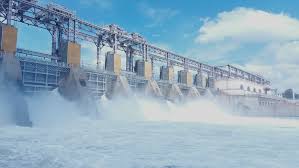
Hydropower is the world’s single largest source of green energy. On a global scale, hydropower plants produce more energy than all other renewable power sources combined.
However, the growth rate of new hydropower capacity has tapered off in recent years, and the sector is plagued by serious current and future problems, from increased incidents and intensity of droughts in a changing climate, and major negative environmental externalities associated with mega-dams.
Hydropower offers a critical benefit that other renewable energies don’t. It creates energy around the clock unlike solar and wind energy, which are dependent on weather patterns and therefore highly variable.
For this reason, hydropower is an extremely attractive option for river-endowed nations that want to boost their clean energy production levels without compromising grid stability or energy security. But in recent years, investment in expanded hydro has dropped off.
“In the last five years the average growth rate was less than one-third of what is required, signaling a need for significantly stronger efforts, especially to streamline permitting and ensure project sustainability”, the International Energy Agency (IEA) reported last year.
It continued that “Hydropower plants should be recognised as a reliable backbone of the clean power systems of the future and supported accordingly”.
But in recent years hydropower has not proved to be as reliant as its investors had hoped. Widespread droughts associated with climate change have caused rivers to run lower or even dry up entirely, causing seriously negative (literal) downstream effects for hydropower production plants.
In 2022, intense droughts in China’s Yangtze River basin slashed developed hydropower potential (DHP) by 26%, causing critical shortages and spurring an uptick in coal-fired power production.
In the last few years similar problems have cropped up in Brazil, Ecuador, the United States, and the Mediterranean region, too.
Critically, these are not isolated or one-off incidents; the risk of similar extreme droughts in the future rises by nearly 90% in a number of climate change scenarios, notably SSP585.
“Since September, daily energy cuts have lasted as long as 14 hours”, the New York Times recently reported from Quito, Ecuador.
“Highways have turned an inky black; entire neighborhoods have lost running water, even internet and cell service”, it added.
Not only does this have enormous implications for day-to-day life, these blackouts reverberate through the national economy. It is estimated that for every hour of blackout, Ecuador loses $12 million in productivity and sales.
Climate scenarios are just one of the factors deterring investors away from new hydropower mega-projects.
In the United States, investments in large hydropower plants all but drief up due to the simple fact that “there are no suitable river locations in the US for new ones”, according to recent reporting from CleanTechnica.
And the ones that do exist are associated with major ecological disruptions, changing flood patterns and blocking salmon runs for tens of millions of fish, among other environmental issues.
“There are certainly rivers in other countries which could be tapped using conventional hydropower technology, but not in the US”, Frederick Hasler wrote for CleanTechnica.
“Going forward, current US hydro needs to be maintained, but cannot be significantly increased”, he said.
And there are indeed major projects being planned in the rivers of other countries, but these are not without their own problems.
In the Congo, plans for the world’s largest hydropower project have been stalled for years after much enthusiasm at the outset. Some blame the Democratic Republic of the Congo’s poor governance for the Grand Inga dam’s failure to launch, while others point to a revolving door of international partners, a blisteringly high up-front cost of around $80 billion in one of the world’s poorest nations, and “deep concerns about the project’s environmental and social impact” according to reporting from the BBC.
But the need for the Grand Inga is enormous and impossible to ignore. Around 600 million people in Sub-Saharan Africa lack access to power completely, making electrification a critical step for economic and social development in the region.
But Africa does not have the luxury of emitting greenhouse gases indiscriminately as the developed world has done over the past 150 years.
Instead, the continent is under enormous international pressure to “leapfrog” over fossil fuels and straight to the development of clean energy systems.
It’s hard to imagine how this will be possible without large-scale hydropower.

By: Haley Zaremba

Continue Reading

Oil & Energy

NERC, OYSERC  Partner To Strengthen Regulation

Published

on

THE Nigerian Electricity Regulatory Commission (NERC) has stressed the need for strict adherence to due process in operationalizing state electricity regulatory bodies.
It, however, pledged institutional and technical support to the Oyo State Electricity Regulatory Commission (OYSERC).
The Chairman, NERC, Dr Musiliu Oseni, who made the position known while receiving the OYSERC delegation, emphasised that the establishment and take-off of state commissions must align fully with the law setting them up.
Oseni said that the NERC remains committed to partnering with State Electricity Regulatory Commissions (SERC) to guarantee their institutional stability, operational effectiveness and long-term success.
He insisted that regulatory coordination between federal and state institutions is critical in the evolving electricity market framework, noting that collaboration would help to build strong institutions capable of delivering sustainable outcomes for the sector.
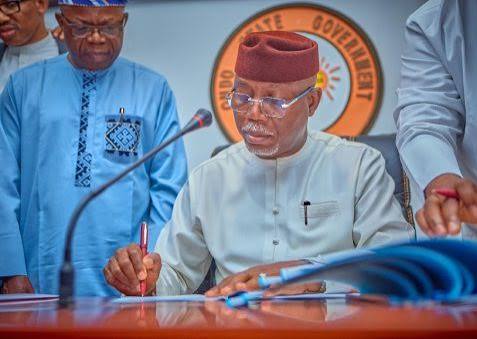
Also speaking, the Acting Chairman, OYSERC and leader of the delegation, Prof. Dahud Kehinde Shangodoyin, said that the visit was aimed at formally introducing the commission’s acting leadership to the NERC and laying the groundwork for a productive working relationship.
Shangodoyin said , the acting members were appointed to provide direction and lay a solid foundation for the commission during its transitional period, pending the appointment of substantive members.
“We are here to formally introduce the acting leadership of OYSERC and to establish a working relationship with NERC as we commence our regulatory responsibilities,” he said.
He acknowledged NERC’s readiness to provide technical and regulatory support, particularly in the area of capacity development, describing the backing as essential for strengthening the commission’s operations at this formative stage.
“We appreciate NERC’s willingness to support us technically and regulatorily, especially in building our capacity during this transition,” he added.
Continue Reading

Oil & Energy

NLC Faults FG’s 3trn Dept Payment To GenCos

Published

on

The Nigeria Labour Congress and the Association of Power Generation Companies have engaged in a showdown over federal government legacy debt.
NLC president Joe Ajaero has faulted the federal government’s move to give GenCos N3 trillion from the Federation account as repayment for a power sector legacy debt, which amounts to N6.5 trillion.
In a statement on Thursday, Ajaero said the Federal Government proposed the N3 trillion payment and the N6 trillion debt as a heist and grand deception to shortchange the Nigerian people.
“Nigerians cannot and should not continue to pay for darkness,” Ajaero stated.
Meanwhile, the Chief Executive Officer of the Association of Power Generation Companies, APGC, Dr. Joy Ogaji, said Ajaero may be ignorant of the true state of things, insisting that the federal government is indebted to GenCos to the tune of N6.5 trillion.
She feared the longstanding conflict could result in the eventual collapse of the country’s power.
According to her, the federal government’s N501 billion issuance of power sector bonds is inadequate to address its accumulated debt.
Continue Reading

Oil & Energy

PENGASSAN Rejects Presidential EO On Oil, Gas Revenue Remittance  ……… Seeks PIA Review 

Published

on

The Natural Gas Senior Staff Association of Nigeria(PENGASSAN) Festus Osifo, has faulted the public explanation surrounding the Federal Government’s recent oil revenue Executive Order(EO).
President of the association, Festus Osifo, argued that claims about a 30 per cent deduction from petroleum sharing contract revenue are misleading.
Recall that President Bola Ahmed Tinubu, last Wednesday, February 18, signed the executive order directing that royalty oil, tax oil, profit oil, profit gas, and other revenues due to the Federation under production sharing, profit sharing, and risk service contracts be paid directly into the Federation Account.
The order also scrapped the 30 per cent Frontier Exploration Fund under the PIA and stopped the 30 per cent management fee on profit oil and profit gas retained by the Nigerian National Petroleum Company Limited.
In his reaction, Osifo, while addressing journalists, in Lagos, Thursday, said the figure being referenced does not represent gross revenue accruing to the Nigerian National Petroleum Company Limited.
He explained that revenues from production sharing contracts are subject to several deductions before arriving at what is classified as profit oil or profit gas.
Osifo also urged President Bola Tinubu to withdraw his recently signed Presidential Executive Order to Safeguard Federation Oil and Gas Revenues and Provide Regulatory Clarity, 2026.
He warned that the directive undermines the Petroleum Industry Act and could create uncertainty in the oil and gas industry, insisting that any amendment to the existing legal framework must pass through the National Assembly.
Osifo argued that an executive order cannot override a law enacted by the National Assembly, describing the move as setting a troubling precedent.
“Yes, that is what should be done from the beginning. You can review the laws of a land. There is no law that is perfect,” he said.
He added that the President should constitute a team to review the PIA, identify its strengths and weaknesses, and forward proposed amendments to lawmakers.
“When you get revenue from PSC, you have to make some deductibles. You deduct royalties. You deduct tax. You also deduct the cost of cost recovery. Once you have done that, you will now have what we call profit oil or profit gas. Then that is where you now deduct the 30 per cent,” he stated..
According to him, when the deductions are properly accounted for, the 30 per cent being referenced translates to about two per cent of total revenue from the production sharing contracts.
“In effect, that deduction is about two per cent of the revenue of the PLCs,” he added, maintaining that the explanation presented in the public domain did not accurately reflect the structure of the deductions.
Osifo warned that removing the affected portion of the revenue could have operational implications for NNPC Ltd, noting that the funds are used to meet salary obligations and other internal expenses.
“That two per cent is what NNPC uses to pay salaries and meet some of its obligations.The one you are also removing from the midstream and downstream, it is part of what they use in meeting their internal obligations. So as you are removing this, how are they going to pay salaries?” he queried.
Beyond the immediate impact on the company’s workforce, he cautioned that regulatory uncertainty could affect investor confidence in the sector.
“If the international community and investors lose confidence in Nigeria, it has a way of affecting investment. That should be the direction. You don’t put a cow before the horse,” he added.
According to him, stakeholders, including labour unions and industry operators, should be given the opportunity to make inputs at the National Assembly as part of the amendment process saying “That is how laws are refined,”
Continue Reading

Trending