
Opinion
Nigeria Too Fragile For An Uprise

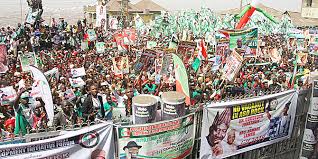
Following widely circulating rumours on social media about a looming protest tagged ‘#EndBadGovernance Protest,’ purportedly against the current hardships in the country, there is need for the Federal Government of Nigeria, and in deed, all Nigerians to co-operate in finding amicable solutions that would avert the breakdown of law and order. Aside from the rumours, notable Nigerians had earlier warned of possible unrests as many Nigerians face daily hunger. A Senior Advocate of Nigeria, Olisa Agbakoba, had warned that hunger riots might break out in Nigeria if government does not act fast to save the masses from being pushed to the point of taking to the streets. On July 8, 2024, out of anxiety and fear, one Mr Shuaibu Yushau attempted suicide by climbing the Aso Radio mast in protest against hunger, insecurity and hardship in the country and was later arrested. Following the understanding of security officials, he was later released on bail to receive psycho-social care and support, from where, however remains the question.
Admittedly, so many Nigerians are going through tough economic times due to unabating inflation, insecurity and hunger, amidst widespread unemployment in a country where public officials have been perceived to rather live in affluence. Indeed, it is easy to feel alienated in such situations. In as much as protests remain the fundamental rights of every citizen, the protagonists of nationwide protests should be warned not to play into the hands of criminally-minded elements, who would want to hijack a genuine desire to initiate mass-action towards drawing government’s attention to the sufferings of many. This warning is in view of past experiences when such protests derailed with bitter consequences, and were alleged to have been infiltrated by hoodlums who hid under the guise of genuine protesters to unleash criminality against innocent Nigerians, whose interests protests were intended to serve.
During the #EndSARS protests in October, 2020 for instance, a peaceful protest that genuinely demanded an end to the brutality of some bad eggs in the police, acting especially in the then Special Anti-Robbery Squad (SARS), finally degenerated into general anarchy that led to shops being looted and many being killed. The Nigerian Micro, Small and Medium Enterprises (MSMEs) sector, a key driver of the nation’s economic growth, remains collateral victim during such civil unrests as shops are usually targeted for looting and vandalism. During the #EndSARS crises, criminal arsonists looted, vandalised and burnt shops of innocent traders in Lagos especially. With no compensations paid whatsoever to revive adversely affected MSMEs, the national economy in the face of other external, economic factors, have not recovered since that incident.
Experience has also shown that some unenvisaged and mismanaged outcomes tend to tilt protests towards tribal conflicts. Again, in some states during the #EndSARS crises, the killing of innocent passers-by led to ethnic reactions that spiralled away from the core of main protests and degenerated into tribal misunderstandings that created the ‘Unknown Gunmen’ saga which the nation still contends with. This is not to mention the controversy over the horrorful number of deaths and the involvement of the Nigerian Army in the regrettable October 20, 2020 shootings at the Lekki Toll Gate in Lagos, in which unconfirmed reports claimed hundreds died. But while an Amnesty International report says 12 people were killed in the incident, Lagos State Governor, Mr Babajide Sanwo-Olu, who initially denied any deaths in the incident, later admitted to the CNN report that only two persons died, yet the state’s Judiciary Panel of Inquiry reported that nine persons were killed with 48 other casualties. But to the dismay of many on July 24, 2023, the Africa News exposed a plan by the Lagos State Government to conduct mass burials for 103 victims who had remained unclaimed at the morgue since the 2020 Lekki toll-gate shootings.
While the wounds from those events remain unhealed, the increasing level of hunger in Nigeria may be fanning the embers of anger and desperation occasioned by grim hunger and abject want, to the point of another protest being plotted. According to social media rumours, a nationwide protest is imminent in the early weeks of August, 2024 which, if it ensues at the scale of the #EndSARS movement, might be more catastrophic. Moreso, the increasing rate at which arms and psychotrophic substances are being intercepted at the nation’s ports is a cause for concern, and a pointer that something sinister may be going underground, especially with the alarming seizure at Onne Port on June 21, 2024, of 844 assault riffles and 112,500 live ammunition. Government should move early enough to peacefully disarm a looming anarchy, rather than delay to create a situation where the military would have to quench charged mobs with the barrel of guns.
But, opting to hunt and arrest suspected planners of peaceful protests or pointlessly victimising frontline politicians would rather be counter-productive as many may perceive such moves as attempts to gag and shutdown free speech and genuine expressions. Such treatments as recently meted-out at the Senate, to Senator Ali Ndume of Borno State, may embolden the resolve of protest plotters to carry-on without any cooperation with the authorities, and would be a pitiable setting towards anarchy. The federal government should therefore urgently summon a conference of stakeholders involving youth bodies, unions, traditional and religious leaders and civil society organisations, towards finding short-term and long-term solutions to mass hunger. While the current distribution of 20 trucks of grains by the federal government to each state of the federation is commendable, government needs to engage the people more towards achieving sustainable solutions, because while 20 trucks might look gigantic on the surface, it is merely a drop of water compared to the oceans of needs of Nigerians. Even if equitably distributed, 20 trucks per state cannot provide a square meal to all Nigerians taken at a time. Nigerians want to see themselves being able to sustainably provide their needs, and not the mirage of palliatives being dangled.
By: Joseph Nwankwor



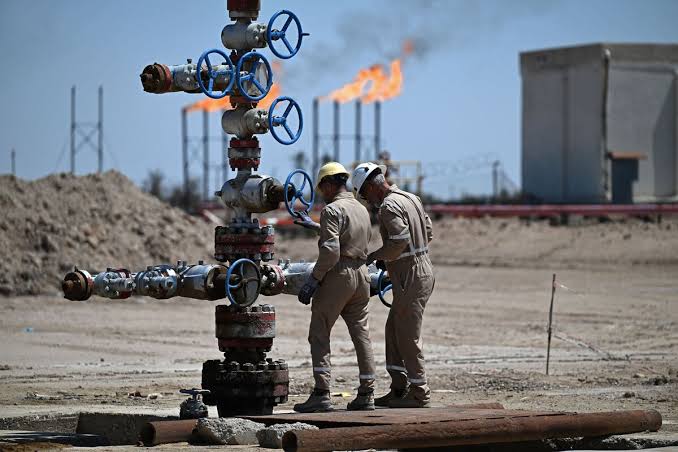
Quote: “No oil vessel, commercial contract or operational deadline is worth the loss of innocent lives; where environmental grievances are ignored and dialogue gives way to confrontation, the entire society pays a price that no compensation can adequately erase.”

Quote:”The value of wealth is
Will and gifts are subjects
A Will is an important legal
Where documentation is
This does not mean every
Properly completed lifetime
Property owners must also
My appeal is simple: let us
-

 Education1 day ago
FCE Yola Graduates 3,555 Teachers , Seeks Upgrade to University
-

 Sports1 day ago
Nigerian Trio Target Titles At PFL Africa Finals
-

 Niger Delta1 day ago
Diri Restates Stance On Lagos-Calabar Coastal Highway
-

 Niger Delta1 day ago
C’River, NUJ Pay Tribute To Late Guardian Editor
-

 News1 day ago
NDLEA Recovers Tons Of Illicit Drug Consignments In Nine States
-

 Opinion1 day ago
Checking Voter Apathy In Nigeria’s Electoral Process
-

 Politics1 day ago
2027: DICKSON’S EX-ALLY VOWS TO WORK AGAINST NDC INTEREST IN BAYELSA
-

 Politics1 day ago
2027: GROUP PLEDGES 40,000 SUPPORTERS FOR COALITION CANDIDATES IN RIVERS