
Politics
Shekarau, Kwankwaso Team Up Against Ganduje In Kano

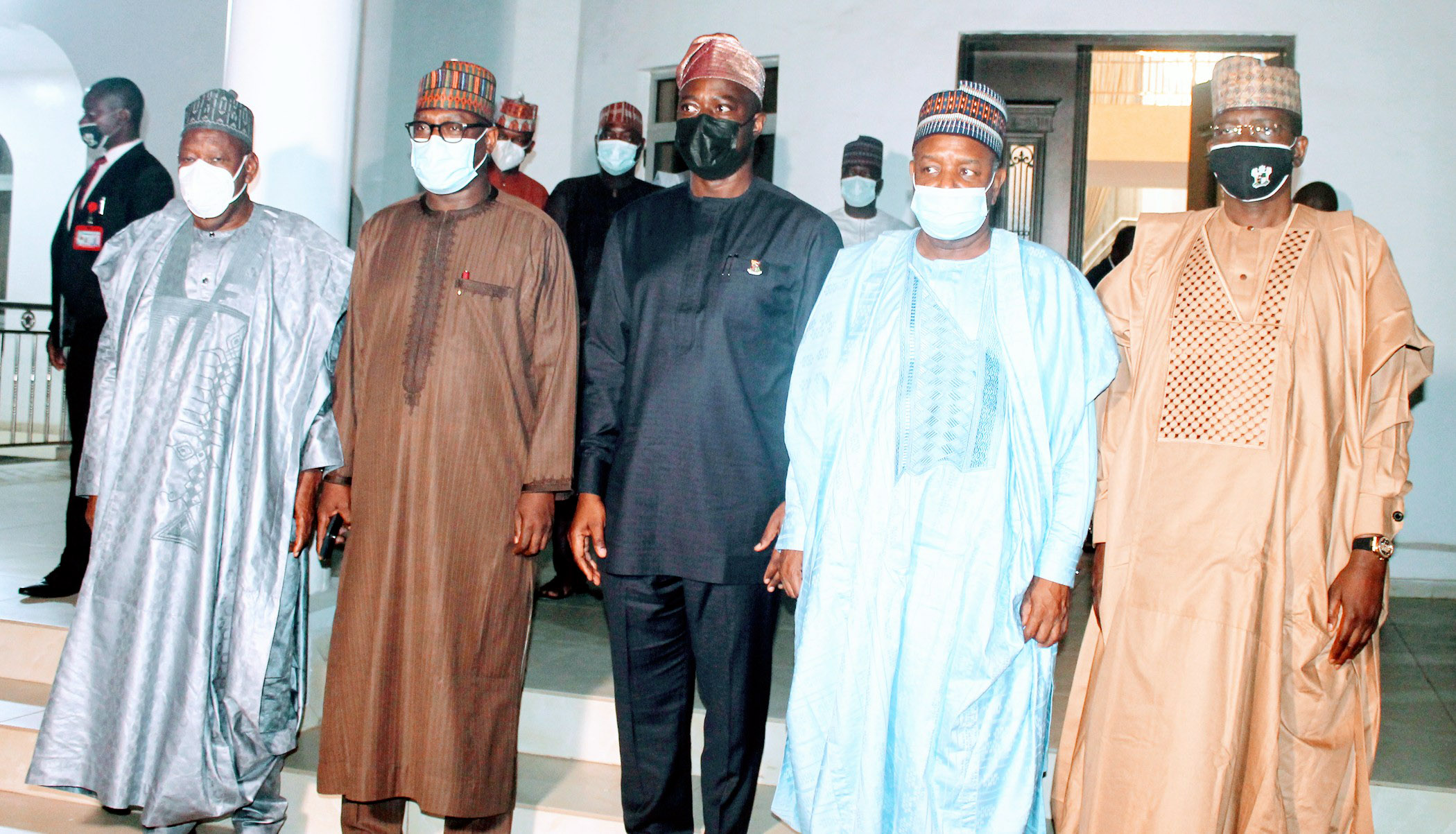
Following the formal defection of former Kano State Governor, Malam Ibrahim Shekarau, from the ruling All Progressives Congress (APC) to the New Nigeria Peoples Party (NNPP), the political alignment in the state has taken a different shape, TheTide source reports.
Shekarau, the Senator representing Kano Central, picked up his NNPP membership card at his Giginyu Ward on Wednesday after several days of back and forth on the defection.
The National Leader of NNPP and its presidential aspirant, Rabiu Musa Kwankwaso, also a former Governor of Kano State, was among the bigwigs of Kano politics that were at the event to receive Shekarau into NNPP; a union some political analysts described as a marriage of convenience.
Our source further reports that Kwankwaso personally handed over Shekarau’s membership card, with the Shura Council, Shekarau’s political structure’s highest decision-making body, also in attendance.
This is the first time that Shekarau and Kwankwaso will go into general elections as members of the same party, and with both of them considered as two of three strongest politicians in the state, their alignment is being seen as a game changer.
Since the crisis within Kano APC led to the emergence of the G-7 faction led by Shekarau in late 2021, observers had forecast that as long as the crisis is left to be resolved via the court system where only one winner would emerge, it would be impossible to have Shekarau and the current Governor, Abdullahi Umar Ganduje in the same party come 2023.
This forecast became evident days before the Supreme Court decided the matter in favour of Governor Ganduje as Shekarau was reported to have said that if the apex court’s decision did not favour them (G-7), they will stop over at the famous Yan Lemo fruits’ market at the entrance of Kano. The insignia of the new but fast growing NNPP is a variety of fruits.
After the apex court’s judgment, a lot of politicking took place, most of them in the dead of the night, to broker peace between Ganduje and Shekarau and convince the latter to rescind his decision to leave the APC, but all were to no avail as both sides could not come to agreement on demands made from each other.
But before Shekarau’s formal defection, some other members of G-7 had all defected to the NNPP and were seen at the forefront of convincing Shekarau to also join them in the new party.
Before this chain of defection, at least 17 members of Kano State House of Assembly had defected from both the Peoples Democratic Party (PDP) and the APC to the NNPP.
All these defections, which culminated with Shekarau’s move on Wednesday, has now changed the permutations and political alignment in Kano State ahead of the 2023 general elections.
Political analysts observed that before the emergence and sudden growth of the NNPP, PDP was hitherto considered as the main opposition in Kano and was expected to provide a formidable competition to the APC in 2023 as it did in 2019.
But with the party (PDP) engrossed with its own leadership problem between the camps of its chairman, Shehu Sagagi (a loyalist of Kwankwasiyya Movement) and that of a former Minister of Foreign Affairs, Aminu Wali, the party has continued to struggle to put its house in order.
In 2019, when the opposition (PDP) was coasting to victory before the election was declared inconclusive, the party had its major strength from Kwankwaso and his Kwankwasiyya Movement, which marshalled supports and votes for its then candidate, Abba Yusuf (popularly known as Abba Gida-Gida) against Ganduje.
Unlike in 2019 when Governor Ganduje had the support of Shekarau to defeat his major challenger, Yusuf, the governor’s candidate in 2023 will not only not be able to call on Shekarau’s support but will now have to contend against the joint force of the NNPP, filled majorly by politicians that felt slighted by him (Ganduje) and APC.
Recall that Ganduje-led APC stakeholders had endorsed the current deputy governor, Nasir Yusuf Gawuna and former Commissioner for Local Government and Chieftaincy Affairs, Murtala Sule-Garo to clinch the joint governorship and deputy governorship ticket of the party.
This decision was one of the developments that led to the mass exodus of APC bigwigs, especially from Kano South to the NNPP.
Kano South is believed to be central to the permutations of all the parties in Kano, and the battle is expected to come from that axis, especially with the latest alignment.
Alhassan Rurum, who is currently a House of Representatives member for Rano/Kibiya/Bunkure, was among those hoping to clinch the governorship ticket of APC before it was handed over to Gawuna, and he was hinging his ambition on the fact that his zone (Kano South) has not produced a governor or deputy since 1992.
Abdulrahman Kawu Sumaila, a former legislative aide to President Muhammadu Buhari, is also targeting the Kano South senatorial ticket, currently held by Senator Kabiru Gaya. This is even as the immediate past Commissioner for Budget and Planning, Nura Dankadai, is planning to unseat the House Leader, Alhassan Doguwa, as representative of Doguwa/Tudunwada at the green chamber.
The ambition of Dankadai, who is believed to be a major local mobiliser in Kano South, may also change permutations at the federal level for APC as the Doguwa is believed to be prepping up to become the Speaker of the House of Representatives in 2023.
Elsewhere, in Kano North, the recent peace parley between Ganduje and Senator Barau Jibrin, another leader of the G-7, seems to have doused the tension in the axis, especially as it was reported that the governor has agreed to step down his senatorial ambition for Barau’s return to the red chamber. Barau was a front runner for the governorship seat until the endorsement of Gawuna. He thereafter abandoned his gubernatorial ambition.
But there are still fears within the APC that unless the party is able to resolve the animosity between Barau and Sule-Garo (the anointed deputy governorship aspirant), the party may still implode, especially with talks of dissatisfaction in the camp of Sule-Garo over the peace parley between Ganduje and Barau.
In Kano Central, Senator Bashir Lado, Abdulkarim A. Zaura and Barrister Ismaeel Ahmed, all in the camp of the governor, are expected to test their popularity at the party’s primaries to know who will contest against Shekarau of the NNPP for the senate seat.
The Kano central has always been seen as a stronghold of Kwankwasiyya while Kano north and south belong to governor Ganduje and APC as evidenced during the 2019 elections. However, many observers see the Kwankwaso/Shekarau merger and the recent high-profile defection to NNPP from Kano south as a serious threat that could lead to the defeat of the ruling APC.
But some APC insiders believe that Ganduje’s reconciliation with Senator Barau of Kano north and the fact that Gawuna hails from Kano central as well as the incumbency factor will help them retain Nigeria’s most populous state.
Commenting, Dr Aminu Hayatu, a political analyst and lecturer at the Department of Political Science, Bayero University, Kano, (BUK), is of the opinion that as much as Kwankwaso and Shekarau’s union has changed the political alignment and permutations in Kano, the real challenge will come after the party’s primaries or shortly after the party retains power.
He said, “His NNPP is no doubt an alternative force that has the promise of neutralising the arrogance of the ruling party, basically in Kano, and the incompetence of the PDP as a supposed opposition.
“But Kwankwaso’s major dilemma is that, most of those defecting to the NNPP are just after what they can personally gain from the party’s elective positions and appointments.”
Hayatu, therefore, believes that while NNPP has the potential to “capture power at least in Kano and some few Northern states maybe, but it may, if care is not taken, run into post-victory crises arising from different kinds of grievances.”



The Independent National Electoral Commission (INEC) and security agencies in Rivers State have pledged to strengthen collaboration to ensure peaceful, free, fair and credible elections in the State.
The commitment was made during a meeting of the Inter-Agency Consultative Committee on Election Security (ICCES) at the INEC State Headquarters in Port Harcourt.
The Resident Electoral Commissioner (REC), Dr Johnson Alailibo Sinikien, said election security required the collective efforts of all relevant institutions, noting that INEC could not guarantee a successful electoral process without the support of security agencies and other stakeholders.
Dr Sinikien called for continuous cooperation, timely sharing of information and proper coordination among the agencies to identify and address potential security threats before, during and after elections.
He stressed the need for all stakeholders to remain committed to their responsibilities, particularly in ensuring that electoral activities were conducted in an atmosphere devoid of intimidation, violence and other forms of disruption.
Also speaking, the Rivers State Commissioner of Police, CP Olugbenga Adepoju, assured INEC of the Police Command’s readiness to provide adequate security throughout the electoral process.
CP Adepoju emphasised the importance of proper deployment of personnel, protection of election materials and stakeholders, as well as effective security coverage across the State.
The Police Commissioner called for increased attention to security challenges at the grassroots, urging security agencies to strengthen intelligence gathering and surveillance to prevent electoral violence.
He also stressed the need to protect INEC facilities and personnel, noting that security arrangements must be comprehensive enough to address emerging threats and ensure public confidence in the electoral process.
The meeting provided an opportunity for participating agencies to assess their preparedness, exchange ideas and develop strategies for preventing electoral violence, security breaches and disruptions.
Participants also discussed the importance of effective communication and inter-agency cooperation in responding to security concerns that could threaten the conduct of peaceful elections.
The Administrative Secretary of INEC in Rivers State, Dr. Angela Ebhodaghe, delivered the vote of thanks.
The ICCES platform brings INEC, security agencies and other government institutions together to coordinate efforts towards ensuring peaceful, free, fair and credible elections.
King Onunwor
Bayelsa State Governor, Senator Douye Diri, has said that majority of the Ijaw people were in support of President Bola Tinubu’s re-election bid.
He also stated that as governor of Bayelsa State and the Governor-General of the Ijaw nation, he had the confidence that his people would give the President overwhelming votes in the January 16, 2027 presidential poll.
Governor Diri spoke during the High Chief Government Ekpemupolo (Tompolo)-led PBAT Door-To-Door Movement’s rally/inauguration in Yenagoa, the state capital.
According to the Bayelsa helmsman, Ijaw people and the president were in the same political boat and that because they were master mariners and navigators, the boat would not sink but will sail to victory.
Earlier, during a courtesy visit of the leadership of the PBAT Door-To-Door Movement to Government House, Yenagoa, Governor Diri commended the support group for championing the president’s re-election bid across the country.
He said President Tinubu’s footprints in Bayelsa, including ongoing construction of phase two of the Nembe-Brass road, tax waivers for the state’s independent power plant and the coastal highway project were some of the benefits from his administration.
He commended Tompolo’s commitment to the president’s re-election bid, noting that it was the first time an Ijaw citizen was at the forefront of such a national political campaign.
“This is the fist time an Ijaw son is carrying a presidential campaign across states on this magnitude and as a people, who over the years have been talking about injustice and recognition, we are proud of Tompolo”, the governor said..
He also thanked the support group’s leader for presenting 25 vehicles for the president’s campaign in the state and dismissed claims that a certain party was an Ijaw party.
According to him, “the real Ijaw party in Nigeria is the APC, which I as Governor General of Ijaw nation and Tompolo as well as other prominent Ijaw sons and daughters belong to”, he said.
Managing Director of Tantita Security Services Limited, Engr Kestin Pondi, who represented Tompolo, said the visit was to inaugurate the state chapter of the PBAT Door-To-Door Movement.
Engr Pondi acknowledged the role of Governor Diri in the president’s re-election bid and expressed the confidence that working together, President Tinubu would emerge victorious in the election.
He described the president as a bold and courageous leader who put Nigeria first in his reform agenda, stressing that he deserves a secomd term to consolidate on the gains so far recorded.
Present during the visit were the Deputy Governor, Dr. Peter Akpe, Speaker of the House of Assembly (represented by the Deputy Speaker), Michael Ogbere, the state APC Chairman, Hon. Warman Ogoriba, legislators and members of the state executive council as well as other political office holders.
Ariwera Ibibo-Howells,
Yenagoa
President Bola Ahmed Tinubu has expanded his personal campaign schedule for the 2027 presidential election, increasing the number of states he plans to visit from 12 to 19, alongside the Federal Capital Territory (FCT).
The revised timetable, released on Wednesday, November 18, 2026, provides for the President to attend 20 campaign rallies between October 24, 2026 and January 13, 2027, reflecting an expanded role in the All Progressives Congress (APC)’s nationwide mobilisation.
The new schedule includes Katsina, Taraba, Zamfara, Imo and Kwara states, while Akwa Ibom, Jigawa and Kebbi have also been incorporated following the President’s recent campaign appearances in those states.
President Tinubu has already attended rallies in Uyo, Akwa Ibom State, on November 6; Port Harcourt, Rivers State, on November 7; Dutse, Jigawa State, on November 10; and Birnin Kebbi, Kebbi State, on November 17.
Under the revised programme, the President is expected to visit Katsina on December 2, Kano on December 17, Jalingo on December 19 and Abuja on December 21.
Other scheduled rallies include Gusau, Zamfara State, on December 28, and Owerri, Imo State, on December 30.
The campaign will resume in January with appearances in Yola, Adamawa State, on January 4; Sokoto on January 5; Ilorin, Kwara State, on January 8; and Asaba, Delta State, on January 11.
The President is expected to conclude his campaign tour with a major rally in Lagos on January 13.
The revised timetable also changes some previously announced dates, including the postponement of the Sokoto rally from December 5 to January 5 and the movement of the Lagos finale from January 9 to January 13.
However, Bauchi State, which was initially scheduled to host President Tinubu on November 29, has been shifted to December 1, without a presidential appearance indicated in the updated programme.
Although the APC has scheduled 37 rallies across the 36 states and the FCT, President Tinubu is expected to personally attend 20, leaving other party leaders to lead the remaining engagements.
The North-West has the largest share of the President’s planned campaign visits, covering seven States: Kaduna, Jigawa, Kebbi, Katsina, Kano, Zamfara and Sokoto.
The North-East and South-South have three states each, while the North-Central, South-West and South-East have two states each.
The expanded itinerary marks a shift from President Tinubu’s earlier position that he would not personally attend every campaign rally because of the demands of governance and other national responsibilities.
Speaking during the inauguration of the APC Presidential Campaign Council in Abuja on October 14, the President explained that he would have to balance campaign activities with the country’s financial and governance obligations.
He was quoted as saying: “So, you will excuse me from going everywhere with you; we have bills to pay. The American creditors cannot wait.”
The initial decision to limit his personal campaign appearances to 12 States generated political debate, with opposition figures questioning why a sitting President seeking re-election would not personally campaign across the country.
Among those who criticised the arrangement were SDP presidential candidate Adewole Adebayo, Peter Obi Media Reach and the Makinde/Daura Presidential Campaign Organisation.
They argued that party representatives could not replace the President in directly addressing Nigerians on his administration’s policies, performance and promises.
Mr Adebayo alleged that the decision was an attempt to avoid confronting Nigerians over economic hardship and unmet expectations, while the Makinde/Daura group challenged the President to campaign nationwide or withdraw from the race.
Mr Peter Obi Media Reach also maintained that Nigerians deserved direct engagement with the President rather than relying solely on party representatives.
However, the APC defended President Tinubu’s position, insisting that there is no legal requirement for a presidential candidate to visit all 36 states during an election campaign.
The revised itinerary now provides for a wider presidential presence across the country’s six geopolitical zones as the APC intensifies preparations for the 2027 general election.
-
Business5 days ago
BSG Partiner American Coy To Invest $100m In Gas Processing
-

 Oil & Energy5 days ago
FG To Double Oil, Gas Reserves, Moves To Intensified fresh Exploration
-
News19 hours ago
Parents Protest Scholarship Scheme Suspension At PAMO Varsity
-
Business5 days ago
Seme Customs Intercepts Live Pacific Ridley Sea Turtle
-
 News17 hours ago
US Hails Nigerian Military For Rescuing 125 Kidnap Victims
-
Sports5 days ago
Fernandes Turns Down Man Utd Offer
-
Business5 days ago
159m small businesses registered on database in three years – SMEDAN boss
-
Sports5 days ago
Rivers To Host National Table Tennis Championship