
Business
‘Fuel Crisis: Inflation Imminent’

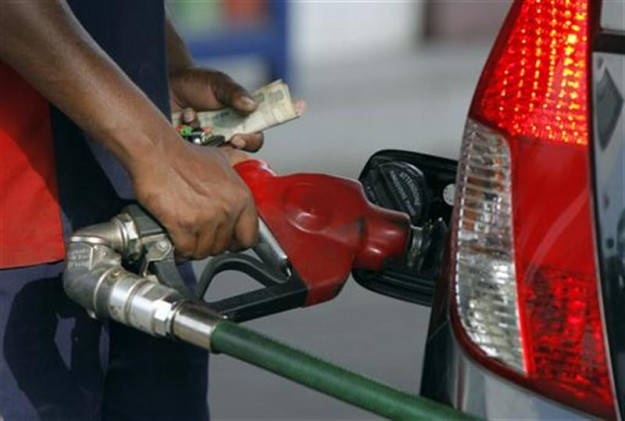
The Statistician-General of the Federation, Mr Simon Harry, says the present fuel crises being experienced across the nation may have adverse effect on inflation rate.
He said this yesterday in Abuja at a media conference to announce the January 2022 Consumer Price Index (CPI).
Harry said that the fuel crisis would create an artificial shock in the economy and that the shock was capable of shaking the economy.
“Whether we like it or not, transporters will be taking advantage of the situation, thereby, increasing the costs of transportation.
“As you are bringing your commodities to the market for sale, you will be thinking of adding some amount on the selling costs so that you will be able to recover the costs of transportation.
“So that gives us a negative signal that is capable of affecting not just inflation rate, but also other macro-economic variables such as the Gross Domestic Product (GDP) and even the unemployment rate.
“I can however, assure you that certainly it is not the best for the economy and if we must maintain a stable macroeconomic environment, this kind of crisis certainly is not the best for it is not needed.’’
He added that because the economy was strongly being driven by the private sector, the shock may affect a good number of private businesses as they may not be able to run effectively as expected.
He, however, said that the February inflation rate could not be predicted based on the present fuel crisis as the numbers were still being collected.
On the present rate, the statistician-general said that CPI for January was 15.60 per cent from 15.63 per cent recorded in December 2021.
However, on year-on-year basis, it was 0.87 per cent points lower than the rate recorded in January 2021 (16.47) per cent.
Harry said that the headline index increased by 1.47 per cent in January, 0.34 per cent points lower than 1.82 per cent recorded in December 2021.
According to Harry, core inflation for January was 13.87 per cent, the same with that of December 2021, while food inflation for January was 17.13 per cent compared to 17.37 per cent in December.
He also said that urban inflation rate stood at 16.17 per cent year-on-year in January, same with that of December 2021.
“On the other hand, rural inflation was 15.06 per cent and 15.11 per cent in and December, 2021 respectively.
“On state by state comparison, all items inflation on year-on- year basis was highest in Abuja with 18.59 per cent followed by Kogi with 18.28 per cent and Bauchi 17.61 per cent.
“On the other hand, Kwara recorded the lowest with 12.94 per cent followed by Niger with 14.10 per cent and Oyo, 14.19 per cent.’’
Harry added that composite food index rose by 17.13 per cent in January 2022, compared to 20.57 per cent in January, 2021.
The rise in the food index was caused by increases in prices of bread and cereals, food product such as potatoes, yam and other tuber, soft drinks, oils and fats, and fruits.
“On month-on-month basis, the food sub-index increased by 1.62 per cent in January,, which was down by 0.57 per cent points from 2.19 per cent recorded in December, 2021.



Business
Jonathan, Diri, Others Laud Firm’s Milestone in Bayelsa …Says Project Will Drive Industrialisation, Create Jobs



-

 News2 days ago
RSG Targets Nine Million Residents in Mosquito Net Distribution Campaign
-

 Oil & Energy2 days ago
Aiyedatiwa Signs New Electricity Bill
-

 Maritime2 days ago
Marine Minister Commends President Tinubu On NPERA Bill Assent
-

 Oil & Energy2 days ago
NLNG Commissions Research And Innovation Centre In RSU
-

 News2 days ago
KenPoly Holds Eight Convocations, August 29
-

 News2 days ago
RSG Begins Another Phase of Projects Commissioning Today
-

 News2 days ago
RMAFC Completes Revenue Sharing Review, Proposes New Pay
-

 Maritime2 days ago
NAGAFF Petitions IGP Over Alleged Maritime Police Harassment