
Business
PIB: S’South Govs Demand 10% As Host Community Trust Fund

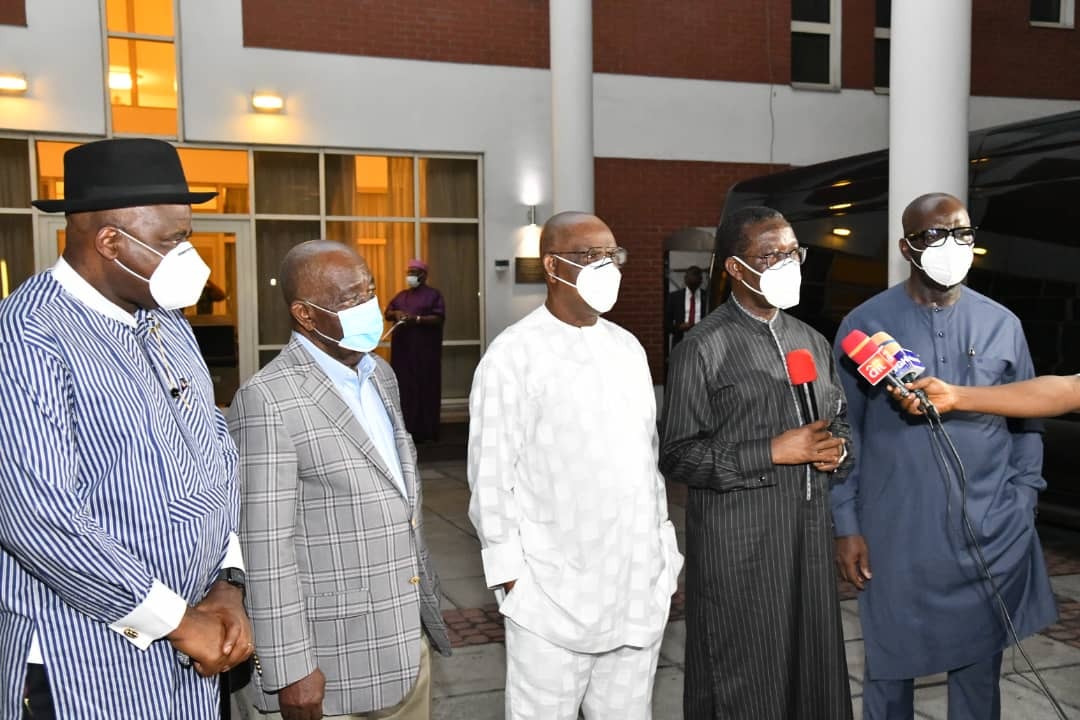
Governors of the South-South states have demanded an upward review of the provision of 2.5 percent as Host Community Trust Fund in the Petroleum Industry Bill (PIB) to 10 per cent in the best interest of oil communities and the nation.
The governors have also advised President Muhammadu Buhari, that in the absence of the board of the Niger Delta Development Commission (NDDC), funds for the commission beyond the payment of salaries should be put in an escrow account until he constitutes the substantive board.
The Chairman of the South-South Governors’ Forum and Governor of Delta State, Senator Ifeanyi Okowa, made this assertion at the end of the forum’s meeting, which held at the Government House, Port Harcourt, last Monday night.
“We took up the issue of the Petroleum Industry Bill (PIB), which is already before the House and having compared notes with ourselves, we are of the view that while we welcome the Host Community Trust Fund, we do believe that the 2.5 percent that is appropriated in that bill for the purpose of host community fund is inadequate.
“We have discussed with our people and collectively as leaders of the people in our various states and as leaders standing in on behalf of our people, we urge that the National Assembly should increase the provision in the host community fund from 2.5 percent to 10 percent in the best interest of our communities, in the best interest of our nation.”
The governors maintained that the communities have a role to play in the surveillance of the nation’s oil facilities and pipeline network. They expressed the belief that if the communities feel satisfied with provision of funds for them in the PIB; they are more likely going to be watchdog on behalf of the Federal Government, the states and oil companies.
“And the peaceful environment that would be seen in the various oil communities would enable us to have greater production and a seamless production in which we do not have any form disruption in our oil productions going into the future.”
Okowa described as worrisome the running of the NDDC in over a year by an Interim Caretaker Committee, and now, an interim administrator.
According to him, this situation does not augur well for the people of the Niger Delta as opportunity for all states to be represented as they ought to be represented in the board of the NDDC does not exist
“So, it means that the NDDC is actually run in such a matter that it is actually not truly beneficial to our people, because there is no stakeholder input in the running of the affairs of the NDDC. We do know that there is a forensic audit taking place and if that reason the board has not been constituted, our advise is that monies being sent to the NDDC should be put in an escrow account until a board is constituted and then proper processes are followed in the expenditure of the money in a such a way it will be visibly accountable in the best interest of the peoples of the Niger Delta.”
The governors demanded that whenever the board of the NDDC is constituted, the advisory council must be called upon to play its role to ensure checks and balances in such a manner that the states will truly have value for money expended by the NDDC.



Business
Jonathan, Diri, Others Laud Firm’s Milestone in Bayelsa …Says Project Will Drive Industrialisation, Create Jobs



-

 News3 days ago
RSG Targets Nine Million Residents in Mosquito Net Distribution Campaign
-

 Oil & Energy3 days ago
Aiyedatiwa Signs New Electricity Bill
-

 Oil & Energy3 days ago
NLNG Commissions Research And Innovation Centre In RSU
-

 Maritime3 days ago
Marine Minister Commends President Tinubu On NPERA Bill Assent
-

 News3 days ago
KenPoly Holds Eight Convocations, August 29
-

 News3 days ago
RSG Begins Another Phase of Projects Commissioning Today
-

 News3 days ago
RMAFC Completes Revenue Sharing Review, Proposes New Pay
-

 Maritime3 days ago
NAGAFF Petitions IGP Over Alleged Maritime Police Harassment