
News
17th National Sports Festival: The Story of Adokiye Amiesimaka Stadium Complex

When Rivers State won the rights to host the 17th edition of the National Sports Festival, NSF in 2009, it nursed the dream to stage the biennial fiesta in a one stadium complex, where all the events would hold within the same environment.
According to authorities then, it would serve to give the fiesta the compactness of the Olympics, enhance the integration of the Nigerian youths and take the spirit of the game and athletes to a very good level.
Also, the dream of a one venue sports festival with ultra modem world class facilities tallied with the vision of Rivers State Governor, Rt. Hon. Chibuike Amaechi, for a new Port Harcourt City replete with first class infrastructure.
Furthermore, the need for a befitting sports facility that will provide the opportunity for sporting activities and recreation for the new Port Harcourt City, known as the Greater Port Harcourt City combined to influence the choice of the Adokiye Amiesimaka Stadium complex between the Igwurita, Aluu, Omagwa axis of the Greater Port Harcourt City.
A virgin land in Igwuruta was the choice for the Garden City Sports Complex. The facility is positioned on a 42-hectre piece of land within Rivers State’s new mega city, Greater Port Harcourt.
The sports arena comprises a 25 thousand seating capacity Stadium which is going to be the second largest fully covered main bowl in Nigeria when completed. Being constructed by Deux Nig Ltd, the stadium was proposed to be used for the opening ceremony but will not be used because project is still under construction.
The five thousand seating capacity natural grass football arena with eight synthetic track lanes, that will boost most of the field events such as the track and field sports was also built by Deux .
Deux handled the construction of the entire playing surfaces project such as the lawn tennis (2), volley ball (2), basket ball (2), hand ball (2), hockey (2), squash (4) indoor sports hall and a 50, 25, and 10 metre shooting range all built according to international regulations and standard has an average seating capacity of 800 on each court.
The arena has four Olympic size pools, two 50 by 25 metres swimming pools and two 15 by 25 metrres diving pools built according to international Olympic standard. The pools are built by Veltrop Nig Ltd and Vast Int.
Explaining the working of the pools, VAST International Nig. Manager, Mr Obiora Okoya, said there are three components of the pool; the Swimming Pool, the Balance Standard and the Technical Room.
The 10 lane swimming pool described as one of the best in Africa, contains the water were athletes can compete. The pool is surrounded by gutters with pipe connections underground into the Balance Standard.
A view of the underground Balance Stand is in the technical room, the Balance Stand, absorbs water from the pool to avoid overflow of pool water irrespective of the number of people in the pool at the same time. Through the underground pipes in the gutters surrounding the pool, pool water is transferred into the balance standard to maintain the stability of the pool water.
The Technical Room is the heart of the pool. Automatically aided by the pipes and tanks, the plant has the capability to automatically transfer water either from overflow or normal filtration process in Balance Tank to the Fibre Glass Filtration Tanks in the technical room.
Inside the filtration tanks, there are three compartments of filters. The smallest filter is at the top with a medium one and larger one at the bottom. Once water from balance tank gets into the filtration tank, the sand inside the tank holds back the dirt at each compartment before moving the water to another compartment of tanks and valves back to the pool clean and sparkling.
The process repeats itself over once electricity is supplied. The facility also has the capacity to ensure chemical treatment by automatically giving right dosage of chlorine, ph balance + and ph-.
The swimming pool site gallery seating about 1200 people also has compartments for team rooms, referee changing rooms and clinic.
The Garden City Sports Complex also boost of a mini standard clinic to provide immediate medical services for athletes and officials. Administration block, Stadium Manager Quarters, security maintenance quarters and four public toilets around the centre comprised of eight toilets.
The facility is built by COSPEC who only came on board in March 2011 because of the inability of previous contractor to deliver the project before the start of the festival.
The road construction around the centre is being handled by CICO Deux Nig Ltd handling major projects on the site is directed by Dr Walter Olatunde a Medical Doctor turned Engineer who brings in the softness of medical practice to the turf surface of engineering under the burning sun as most of the other contractors testified of Deux understanding and good relationship.
Deux have carried out major works in different part of the Nation before taking on the Garden City Sports Complex project.
Despite their experiences and proof of professional competence, the terrain proved challenging for Deux like all other contractors also complained of the terrain of consistent rain. According to Dr Walter, the consistent rain, flood and marshy ground slowed the project.
Deux has the highest number of employees including permanent and casual staff at a range of about three thousand persons. Expressing excitement to be a part of the Garden City Games 2011 and the light and opportunity the project has brought to the Igwuruta community and its surrounding.
VAST Intrn. Nig and VEL TROP Nig Ltd built the pools, each company on one swimming pool and diving pool on the same spec. VAST International Nig CENT ARC “Design Associate is the Consulting firm to Rivers State Government. The site Engineer is Engr. Isa Mohammed. The full work began in 2009 because of previous movement from two other sites allocated to the project.
The rainy terrain was emphasized as a major constraint to work progress. However, in about one year of work progress, the consultant affirmed the State Government, Ministry of Sports and the contractors, were up and doing to put in their best to deliver the project before the beginning of the National Sports Festival.
Engr. Isa said Rivers people especially people of Igwuruta and surrounding communities have acquired much skills through the project, stating that many workers who did not have a good knowledge of the their peculiar skills have not only improved on the job but have upgraded their skills to international standard working level because all the projects are of international standard while others have learnt project management and administration.
The Garden City Sports Complex completion empowered about five thousand permanent and casual workers.
Apparently, the choice of the name of the Complex was an effort to celebrate and recognize one of the illustrious sons of the state, Chief Adokiye Amiesimaka, MON, JP, a football administrator, an ex-international, who excelled in the national team, the Green Eagles in the 1970s and 80s.
By the name, it is expected that youths of the state and beyond, seeing Amiesikaka as a role model will be motivated to use the facility to develop and exploit their talent.
Having identified the site, it was handed over to the contractors, Deux Project, for the realization of the impressive facilities that are billed to host most of the 17th NSF events.
According to the Project Director of Deux Projects, Dr. Walter Olatunde, the site which was identified and chosen because it aligned with the master plan of the Greater Port Harcourt City was handed over to the company in April, 2010.
However, the site was not ready for work until June same year when Deux Project mobilised to site.
It has been a project that tasked the technical ability and ingenuity of the contractors as they tried to over come the challenges posed by the terrain.
“The terrain has been very very challenging”, said Dr Olatunde. “The condition of the soil was very difficult to deal with. It was a virgin land, fertile for planting and not solid or ideal for heavy construction work. Water and soil mixed to make the place muddy and difficult for us”, he explained of the major challenges they faced trying to deliver the stadium complex on time.
Also, the weather condition in the state, especially, the rains were a natural phenomenon that the contractors found difficult to deal with.
But special construction skills, suited to the weather and terrain of the area made it possible for them to make progress within the time.
“Though it has been very challenging; we have coped very well to make progress as you can see”. Said the Project Director.
“We employed special skills and machinery to cope with and over come the challenges, that is why you are seeing the impressive results barely one year after”.
“We are expecting that all the facilities will be ready this weekend before Rivers State hosts the nation. We have worked day and night to endure the completion of the projects.
“We have the capacity to ensure that the facilities for the games are ready. The facilities are world class and we want to showcase the site”.
“All the facilities are ready except the mainbowl which cannot be ready for the festival, the work to be done there is beyond the time line for the festival, said the Director.
Consequently, athletes are assured of the use of world class swimming pools, basketball courts, handball courts, tennis courts, volleyball courts, hockey pitch, tracks for athletics and terraces for spectators.
Indeed, the Adokiye Amiesimaka stadium complex is a statement in infrastructure development which will certainly bring fresh developmental angles to the state.


News
Rivers DPOs Receive Awards For Outstanding Performance In Crime Prevention …As Students, Media Group Honour CSP Worgu, CSP Yusuf


Two Divisional Police Officers (DPOs) in Rivers State have been honoured by separate groups for their contributions to security, crime prevention and improved community-police relations in their respective areas of responsibility.
The beneficiaries are the DPO of Afam Police Division, CSP Endurance Worgu and his counterpart at Oyigbo Police Division, CSP Bello Yusuf.
CSP Worgu was honoured by a group of students under the aegis of Rivers State Graduate Students Associations for what they described as his commitment and outstanding performance in the discharge of his duties.
The students, led by Chidi John Enyie, Esq. said CSP Worgu was selected based on his track record and status as one of the longest-serving young DPOs of Rivers State origin.
According to the group, CSP Worgu has made significant contributions to the protection of lives and property in the area since assuming office following the #EndSARS period.
The students said they were particularly impressed by the improvement in community-police relations under his leadership, noting that professionalism had remained a key feature of his service.
Enyie represented by Comrade Briggs Soku, said the students community was pleased to identify with a Rivers indigene who had distinguished himself in the police force.
He said the students considered it necessary to encourage and celebrate CSP Worgu because of his achievements as a young Rivers man excelling in a profession that many people from the state were often reluctant to join.
Receiving the award at his office in Afam, CSP Worgu expressed gratitude to God and the students for finding him worthy of the honour.
The DPO said the recognition had boosted his morale and encouraged him to sustain his efforts towards maintaining peace and security in the area.
He said he least expected the honour, particularly because it came from the students, adding that the recognition would further motivate him to serve the people better.
CSP Worgu assured residents of Afam that the police would sustain the existing peace in the area.
He appealed to members of the public to support the police by providing credible and timely information, stressing that useful information from residents would make the job of security personnel easier.
Meanwhile, the Ikwerre/Etche Media Association has also honoured the DPO of Oyigbo Police Division, CSP Bello Yusuf, for his efforts in tackling criminal activities in the area.
The media group presented the award following the swift tracking and arrest of five suspected kidnappers who had allegedly terrorised residents of the Kom-Kom axis and other parts of Oyigbo.
The group commended CSP Bello for what it described as his determined efforts to restore confidence and security in the affected communities, particularly Kom-Kom and Obeama.
According to the group, the arrest of the suspects demonstrated the DPO’s commitment to tackling criminality and safeguarding residents.
The media association said residents had received the development with relief, noting that the police action had sent a strong message to criminal elements operating in the area.
Responding, CSP Yusuf appreciated the group for the recognition and reaffirmed that there would be no room for criminality in Oyigbo.
He also commended the media for its role in disseminating credible information to the public, saying the media had remained supportive of the police in the fight against crime.
CSP Yusuf warned criminal elements operating in Oyigbo to leave the area or be prepared to face the full weight of the law.
He assured residents that the police would continue to pursue criminals and work to dismantle their hideouts, regardless of where they might be operating.
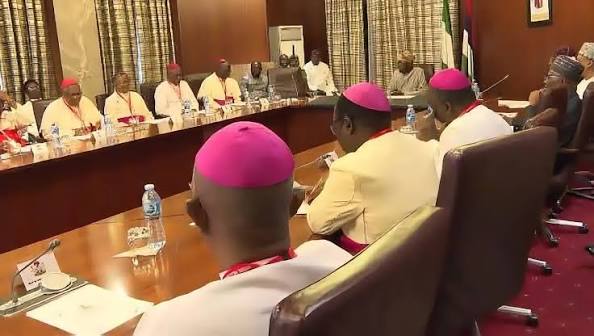
The 5000 Achievers Christian Forum and Colleges of Bishops, Archbishops and Apostles, a Christian interdenominational organisation, has endorsed President Bola Ahmed Tinubu and all candidates of the All Progressives Congress (APC) in Rivers State for the 2027 general elections.
International President of the forum, Archbishop Lucky Aroh, disclosed this during the ordination and consecration of three new Bishops, as well as an award ceremony held in Port Harcourt.
Aroh said the performance of the APC-led Federal Government had endeared the party to the organisation, prompting the forum to declare its support for President Tinubu and other APC candidates in Rivers State.
He said the forum would support all APC candidates in the state during the 2027 elections and urged Nigerians to vote for the party.
Aroh, who is also the General Overseer of Caring Peoples Church, Port Harcourt, charged the newly consecrated Bishops to see their new positions as a great responsibility and dedicate themselves to the advancement of the kingdom of God.
He cautioned them against conduct capable of bringing their offices into disrepute, stressing that their activities would be closely watched by members of the public.
“As Bishops, the eyes of the public are on your activities. You must therefore conduct yourselves in a manner worthy of your calling,” he said.
Also speaking, the International Coordinator of the forum, Bishop Saint Robinson, urged the newly consecrated Bishops to work diligently towards winning souls for the kingdom of God.
Robinson, who was the guest speaker at the event, stressed that the activities of Bishops must at all times be guided by godly principles.
He also called on members of the church to support and cooperate with the newly consecrated Bishops in the discharge of their responsibilities.
The Secretary of the College, Apostle Elizabeth Ayadi Abaye, said the organisation was established to advance the kingdom of God and promote spiritual development.
According to her, the forum has organised several crusades, conferences, prayer meetings, ordinations, consecrations, enthronements, empowerment programmes and other spiritual development activities across the country as part of efforts to win souls for Christ.
Abaye said the organisation has members across the world and disclosed that more programmes had been scheduled to promote the spiritual development and wellbeing of humanity.
The three Bishops consecrated at the ceremony were Prince Alban Chike, Testimony Omenihu Shedrach and Prince Ifemena.
Among those honoured at the event were the Chairman of the Community Development Committee (CDC), Abali Community, Port Harcourt City Local Government Area, Manuchimso Prince Lemmy Wopara, and Clifford Oko Jaja, Coordinator of the 5,000 House-to-House for President Tinubu.
By: John Bibor
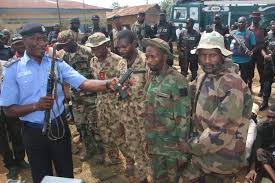
The Rivers State Police Command has arrested a 49-year-old suspected fake soldier, Andrew Atausi, and several other suspects in connection with various criminal activities, including kidnapping, armed robbery, cultism, one-chance robbery and the alleged murder of police officers.
The State Commissioner of Police, CP Olugbenga Adepoju, disclosed this in Port Harcourt, recently during a press briefing at the Command Headquarters, where he said the arrests formed part of the operational achievements recorded by the Command between June and August 2026.
Adepoju said Atausi was arrested on August 10 by police operatives along Ada George, Port Harcourt, while dressed in military uniform and driving a Toyota Hilux painted in Army colours.
The Commissioner said investigation revealed that Atausi was not a member of the Armed Forces, adding that he was suspected to be a serial car snatcher, with three suspected stolen vehicles recovered from him.
He said the recovered vehicles included three Toyota Hilux vehicles without registration numbers and a Toyota Corona Premio with registration number BNY 380 ES, noting that the chassis and engine numbers of the vehicles had allegedly been tampered with.
Adepoju added that an axe and military accoutrements were also recovered from Atausi, as investigation continued into the circumstances surrounding the vehicles and other items recovered from him.
On the June 29 attack on police officers at Aluu Division, the Commissioner said three members of the gang allegedly responsible for the incident had been arrested by operatives of the Violent Crime Response Unit, VCRU-AKU.
The suspects, identified as Maduabuchi Emeka, 34, alleged gang leader; Doctor Chinedu Owhor, 42, and Kamachi Joe, 28, alleged armourer, reportedly led operatives to their hideout at Omagwa where two AK-47 rifles stolen during the attack were recovered.
Adepoju recalled that two police officers were killed during the Aluu attack, while others were wounded and one officer had his leg amputated, stressing that efforts were ongoing to apprehend the fourth suspect.
On kidnapping, the Commissioner said five members of a suspected kidnapping syndicate were arrested in Oyigbo Local Government Area, adding that they allegedly confessed to operations in Kom-Kom, Railway, Obeama and Afam communities.
He said two other suspects from the same network, Anele Ogbogu, 35, alleged to be the gang’s armourer, and Kenneth Eke, 38, were arrested on July 27, with one AK-47 rifle and one SMG rifle recovered.
The Commissioner further disclosed the arrest of suspects in connection with alleged firearm offences, armed robbery, cultism and one-chance robbery, with firearms, ammunition and other exhibits recovered during the operations.
Adepoju assured residents that the Command would sustain intelligence-led, proactive and community-oriented policing in collaboration with other security agencies, while urging members of the public to continue providing credible information that would assist the police in combating crime across Rivers State.
By; King Onunwor
-

 News2 days ago
RSG Targets Nine Million Residents in Mosquito Net Distribution Campaign
-

 Oil & Energy2 days ago
Aiyedatiwa Signs New Electricity Bill
-

 Maritime2 days ago
Marine Minister Commends President Tinubu On NPERA Bill Assent
-

 Oil & Energy2 days ago
NLNG Commissions Research And Innovation Centre In RSU
-

 News2 days ago
KenPoly Holds Eight Convocations, August 29
-

 News2 days ago
RSG Begins Another Phase of Projects Commissioning Today
-

 News2 days ago
RMAFC Completes Revenue Sharing Review, Proposes New Pay
-

 Maritime2 days ago
NAGAFF Petitions IGP Over Alleged Maritime Police Harassment