
News
Anger As Labour Leaders Abort Mass Action Against Petrol, Power Tariff Hike

Anger and disappointment by workers and the public, Monday, trailed organised labour’s suspension of the proposed general strike and mass protest against the recent hike in the pump price of petrol and electricity tariff by the Federal Government.
It would be recalled that most Nigerians had gone to bed on Sunday, prepared that the strike, scheduled to start in the early hours of Monday, would be in full swing by daybreak.
But this was not to be as labour leaders reached a compromise with government even before the strike commenced.
From Port Harcourt to Calabar, Lagos to Ibadan, Benin to Makurdi and Birnin-Kebbi to Maiduguri, the general feeling of workers and other Nigerians was that of betrayal by labour leaders who had in the last three weeks, insisted that nothing would stop the strike and mass protest from holding, if government failed to reverse the hikes.
Pro-labour civil society organizations, CSOs, under the umbrella of Joint Action Front (JAF), some state councils of Nigeria Labour Congress (NLC), and Trade Union Congress of Nigeria (TUC), also rejected the suspension of the strike.
Similarly, some national officials of both the NLC and TUC, who spoke, on Monday, expressed disgust over the suspension without recourse to the organs of the two labour centres that gave the ultimatum for the strike.
The resolutions reached by both sides at the meeting include: ‘A fund to be accessed by 240,000 workers under the NLC and TUC for use in agricultural ventures through the Central Bank of Nigeria and the ministry of agriculture
‘No tax on minimum wage as a way of cushioning the effect of the pandemic on the lowest vulnerable
‘Federal Government to provide 133 compressed natural gas and liquefied petroleum gas mass transit buses to labour and provide to the major cities across the country on a scale-up basis thereafter to all states and local governments before December, 2021.
‘10% of the ongoing ministries of Housing and Finance initiative to be allocated to Nigerian workers through the NLC and TUC.
‘Nigerian National Petroleum Corporation (NNPC) to integrate the leadership of Nigeria Union of Petroleum and Natural Gas Workers (NUPENG) and Petroleum and Natural Gas Senior Staff Association (PENGASSAN) into an already established steering committee.
‘NNPC to expedite the rehabilitation of the four refineries in Port Harcourt, Warri and Kaduna.
‘Port Harcourt Refinery to reach 50 per cent by December, 2021, and a steering committee to determine completion date for Warri and Kaduna refineries.
‘After rehabilitation, NNPC to involve PENGASSAN and NUPENG in the process of establishing the operational model of the refineries.
‘NNPC to expedite work on the build, operate and transfer framework for the pipelines and depots network for transportation and distribution of petroleum products to match the delivery timelines of the refineries.
‘Federal Government to facilitate the delivery of licensed modular and regular refineries, involve upstream companies in petroleum refining and establish a financing framework in the downstream sector.
‘Federal Government to ensure delivery of one million CNG/LPG AutoGas conversion kits, storage skids and dispensing units under the Nigeria Gas Expansion Programme by December, 2021 for cheaper transportation and power fuel.
‘A team comprising the representatives of the NNPC, NUPENG, PENGASSAN, Nigeria Extractive Industries Transparency Initiative (NEITI) and Infrastructure Concession Regulatory Commission (ICRC), will be established to monitor the progress of the rehabilitation of the refineries and the pipelines/strategic depots network and advice the steering committee.
‘Federal Government, labour unions to set up a technical committee to examine the justification for a new cost-reflective tariff introduced by the NERC, advise Federal Government on the issues that have hindered the deployment of the six million meters, examine the tariffs imposed by DisCos in comparison to NERC’s order and examine the NERC act with a view of expanding its representation to include labour.
‘Suspension of new electricity tariff while the committee concludes its assignment.
‘Federal Government’s 40 percent stake in DisCos should be reflected in the composition of the board of the DisCos.
‘An all-inclusive and independent review of the power sector operations as provided in the privatisation MoU will be carried out before the end of 2020, with labour represented.
‘The moribund National Labour Advisory Council (NLAC), be inaugurated before the end of 2020 to institutionalise the process of dialogue on major socio–economic and labour matters to avoid crisis’.
Prior to Monday night’s meeting, the Federal Government had told organized labour that it would incur the wrath of the International Monetary Fund (IMF), the World Bank, and other international lending institutions to which Nigeria is indebted, should it reverse the hike in electricity tariff and petrol pump price to the old prices.
A source at last Thursday’s meeting between the Federal Government representatives and leaders of Nigeria Labour Congress (NLC), and Trade Union Congress of Nigeria (TUC), had said that the government representatives confided in the labour leaders that government’s hands were tied by international financial institutions that the country is indebted to.
The source, who pleaded anonymity, had said: “The disclosure confirmed the long-held belief that the Bretton Woods Institutions have been responsible for most of the economic policies of our government.
“They told us bluntly that Nigeria will incur the anger of IMF, the World Bank and other international lending institutions. In fact, they refused to discuss the issue of price reversal and rather, asked us to nominate representatives to discuss palliatives.
“It is obvious that they do not have mandate to discuss issue of price. We bluntly refused refuse to nominate which was the major cause of the stalemate of Thursday meeting.
“You could see that against the usual practice where it was the Petroleum Products Pricing and Regulatory Agency (PPPRA), that was announcing new prices of petroleum products, since the beginning of this so-called market-driven prices in March or thereabouts, it has been the Petroleum Products Marketing Company (PPMC), an arm of the Nigerian National Petroleum Corporation (NNPC), that has been doing so.
“Again, unlike the PPPRA where Labour and other stakeholders have representatives on the board, stakeholders are not on the board of PPMC. Only the Federal Government appoints the management team.
“As you aware, NLC has two representatives on the board of PPPRA, National Union of Road Transport Workers (NURTW), Nigeria Association of Road Transport Owners (NARTO), oil markers, NECA, Nigeria Union of Petroleum and Natural Gas Workers (NUPENG) and its Petroleum and Natural Gas Senior Staff Association of Nigeria (PENGASSAN), counterpart, are among the stakeholders in the board of PPPRA.
“On the issue of electricity tariff, we have insisted that the Nigeria Electricity Regulatory Commission (NERC) has become an agent of government and private capital in the power sector. We demanded that Labour and other critical sectors must be members of the commission”.
However, the communique announcing suspension of the strike, Monday, was read by the Minister of Labour and Employment, Dr Chris Ngige, who disclosed that the decision to suspend the strike followed an agreement reached between both parties.
According to him, the agreement was designed to stave off the industrial action which would have grounded economic activities in the country.
Organized labour, however, warned that the strike was suspended and not called off, adding that it could be recalled if government failed to fulfill its part of the agreement after two weeks.
Reacting to the suspension, some workers in Rivers State said that the action of labour leaders was suspect, arguing that they have disappointed many Nigerians who feel the negative impacts of the increases in petrol pump price and electricity tariff hike.
They said that as one of the most expensive states to live and work in, workers were being emasculated by the many anti-people policies off the Federal Government.
Rejecting the suspension, labour leaders and members of the civil society in Edo State expressed disappointment with the national leaders of NLC and TUC.
Led by the Chairman of the NLC, in Edo State, Comrade Sunny Osayande; and TUC counterpart, Comrade Marshall Ohue, the labour leaders and other aggrieved workers and activists, stormed the King’s Square Arena in Benin City, the state capital, in protest.
According to the displeased state labour leaders and their members, the decision to suspend the planned strike was hurriedly taken by the national leaders without consultation with NEC, members and key stakeholders across the country.
They chanted slogans such as “No to Electricity Hike”, “No to Fuel Hike”, “Kill Corruption”, among others, the protesters who assembled at downtown Ring Road, slammed the government for increasing the price of fuel and electricity tariff.
Speaking, former presidential candidate of the National Conscience Party (NCP), Dr. Osagie Obayuwana, and state Chairman of NLC, Comrade Sunny Osayande, insisted that they would embark on a total strike if the government refused to reverse the increment in two weeks.
Obayuwana said: “We say no to the increase in electricity tariff, fuel and VAT. We say no to privatization where our wealth is given to a few persons. They are just buying time but before you know it, two weeks will be over.’’
He said the union decided to embark on the peaceful march to express its displeasure over the manner the unions called off the strike.
On his part, NLC Chairman, Comrade Sunny Osunde, warned that in the event that the government refuses to listen to the grievances of organised labour in two weeks time, the union would have no choice but to embark on a total strike.
He added: “We took to the streets to tell the masses that what the Federal Government brought is nothing. The hike in VAT, fuel and electricity tariff should be reversed within two weeks, otherwise, we will go on strike.”
In Kogi State, workers described the last-minute decision by NLC and TUC to suspend the strike a colossal disappointment.
One of the workers, Mr. Philip Rotimi, said the labour leaders had with the latest development emboldened the people about perceived insinuations that they could easily be persuaded by government of the day to do its bidding.
Philip, a GL-09 officer in the state said: “The decision to suspend the strike is a colossal disappointment. In truth, we have lost trust in our labour leaders.
“We don’t even know the reasons behind calling off the strike, aside the insinuation that they have compromised. We hope they don’t call for any strike again because it will be an insult on us and we may not honour it.”
In Ibadan, Oyo State, residents joined the JAF, and Alliance on Surviving Covid-19 and Beyond (ASCAB), Oyo State branch, to protest suspension of the strike.
The protest, which began at the NLC secretariat in Ibadan, moved through Agodi-Gate, Oje, Yemetu and terminated at Government Secretariat.
Security personnel were, however, stationed in strategic locations within Ibadan metropolis to prevent a breakdown of law and order.
Addressing newsmen, ASCAB Vice-Chairman, Mr Femi Aborisade, said the group was against the resolution entered into by the leadership of the NLC and TUC.
Aborisade said the labour leaders had, with their actions, betrayed the general interest of the Nigerian masses.
He recalled that a Federal High Court had, in 2013 and 2016, declared the increment of petroleum pump price and electricity tariff illegal and unconstitutional, adding that government failed to obey the order.
Aborishade said the leaderships of TUC and NLC were supposed to have briefed Nigerians on the outcome of their meeting and gauge the feedback from them before announcing the suspension of the strike.
He called on the Federal Government to follow the rule of law and reverse the petroleum pump price and the electricity tariff for the benefit of the masses.
Also speaking on the suspension, Chairman of Kwara State, NLC, Comrade Issa Ore, said: “We had fully mobilised our members to storm the streets for the strike today (Monday) because our morale has already been dampened by the hike in the prices of petrol and electricity tariff.
“So, when we were directed to suspend the strike, we were surprised but we have no option than to suspend the already planned strike.”
One of the members of NLC’s Central Working Committee (CWC), who spoke to Vanguard on grounds of anonymity after the suspension, lamented: “We are all shocked and disappointed by the suspension because we had mobilized our members and Nigerians for the strike only for some few people, for whatever reason, to suspend the strike without even having the courtesy to refer back to the CWC and NEC (National Executive Council) that ordered the strike in the first place.
“It is wrong and unacceptable. Now, they have called an emergency CWC meeting for today (Monday). To tell us what? I am afraid we have created a crisis of confidence between labour and Nigerians.
“Nigerians were ready for the strike because the level of poverty, suffering, hardship and deprivation in the country at present are better imagined than experienced.
“Tell me, what did we achieve as organized labour? You said you are suspending hike in electricity tariff for two weeks, who cares about electricity? Even if you bring the tariff to N1, Nigerians will not have power.
“So, they will not feel the impact. But any increase or decrease in pump price of petrol will have effect on everybody. What Nigerians and workers were expecting was a drastic reduction in the pump price of petrol.
“I am ashamed with what happened. We have betrayed the trust of workers and Nigerian masses.”
Also, an official of TUC simply said: “This would have given labour the opportunity to save its face after the 2016 fiasco when similar hike in the pump price of petrol could not be challenged by organized labour because of internal wrangling within the movement.
“It is so disappointing for you to spend such energy to mobilize both workers and other Nigerians for a nationwide strike, only to suspend it at the last minute without achieving anything.
“Some of us do not agree with them, but that cannot change anything because the deed has been done by our leaders who represented us in the so-called meeting with government representatives.
Similarly, the Joint Action Front while reacting to the suspension, disowned organized labour and rejected the suspension.
The group also stormed the streets of Lagos in protest, calling on Nigerians to fight to liberate themselves.
JAF’s Secretary, Abiodun Aremu, lamented that by agreeing to suspend the strike, organized labour has accepted deregulation of the downstream sector of the petroleum industry.
He said: “It is a death pill on workers and poor masses. It is Nigeria for sale to IMF and World Bank. The point is that JAF entirely rejects the policy of privatization and deregulation because such policies are essentially designed to undermine the interest of workers and the poor masses.
“They are policies of hardship and underdevelopment imposed on us by the World Bank and International Monetary Fund, IMF. Experience has shown that if Nigeria enters into the trap of deregulation, it will be one economic crisis after another.”
Reacting to the development, the Conference of Nigeria Political Parties (CNPP) said it was “not disappointed that the Nigerian labour unions bowed to pressure at the last minute as usual as it has long become their trademark.”
The CNPP, in a statement by its Secretary General, Chief Willy Ezugwu, said: “We expected that this would happen and that was why the CNPP opted to rally civil society movements across the country.
“We are monitoring the situation and rejigging our plans in view of the now obvious reality that ordinary citizens who cannot travel to Abuja are on their own.
“In the last five years, the Nigerian Labour Congress (NLC), and the Trade Union Congress (TUC), have remained toothless bulldogs and compromised arm of the Federal Government.
“The suffering masses who believed the labour unions can now continue to suffer, while all voices are shut.
“Following the current compromise and sell out, we advise Nigerians never to take labour unions seriously until there is a rebirth when these current leaders of the unions are gone.
“We join the Nigerian people to clearly declare that we have completely lost confidence in the current leaders of the labour unions in Nigeria. For them, getting ‘palliatives’ for the unions is all they want, while the masses can continue to suffer.”
On its part, Resource Centre for Human Rights and Civic Education, described the suspension by labour as a sell out.
In a statement by its Executive Director, Dr. Ibrahim Zikirullahi, the group said: “We have carefully studied the excuses given by the Nigeria Labour Congress and the Trade Union Congress to shelve the general strike and protests, which had been slated to begin today (Monday).
“While we are not advocating strike for the fun of it, we make no mistake about the fact that the Nigerian people need to send a strong message to the government that its strangulating policies are unacceptable.
“It is apparent from the details of the agreement signed with the Federal Government that Labour has once again sold out cheaply.
“It is shameful that the leaders of the two labour centres have now reduced important and historic struggles of the Nigerian people for social and economic justice to opportunities to grab appointments in various government committees.
“It is yet another grand betrayal by labour to have allowed itself to be bought over by government’s empty promises to take steps to ostensibly cushion the effects of the harsh policies it has unleashed on citizens.
“As far as we can see, government has not offered any tangible road map to end dependence on fuel importation. Yet, labour lamely accepted the argument that price should be hiked in addition to the token of 133 buses to serve as palliatives.
“Ironically, the important question left unanswered is, if 133 buses would really cushion the multiplier effects of the hike in terms of galloping inflation, higher cost of basic necessities like food, transport, healthcare, school fees; cost of doing business and increase in the rate of unemployment as a result of the strangulating business environment.
“It is apparent that they went into negotiation with government using the workers as bargaining power for their selfish interests. And they, therefore, ended up inflicting further hardships on the Nigerian people in order to sit on the table with oppressors in government.”
Meanwhile, former chairman of the National Human Rights Commission (NHRC), Prof Chidi Odinkalu, has accused the NLC and TUC of sabotage, in its last minute move to suspend the planned labour strike which was to begin on Monday.
Expressing disappointment at the actions of the labour leaders, Odinkalu, in a series of tweets on his Twitter handle, @ChidiOdinkalu, said the meeting was done in what he described as willful orchestration.
Odinkalu, who is the senior team manager of the Africa Program of Open Society Justice Initiative, said: “The NLC/TUC bunch didn’t even pretend to negotiate. It was all done with willful orchestration – for the price of ‘review’ of downstream sector without benchmarks to end in rapt that does not promise action; suspension of electricity tariff for two weeks; and 133 buses.
“You cannot read this communique without marvelling at the criminal cynicism of the leadership of Nigeria’s organised labour. No, it’s not naivete; it is organised, criminal cynicism.”
Also, former TUC President, Comrade Peter Esele, said the current leadership of the various labour unions had been very patient with the government.
He noted that there had been a lot of infractions that would have warranted the industrial action of labour over the years.
Esele said: “The government should be grateful because this current labour leadership has been so patient with it because there are enough things that would have led to strikes in the country.
“So many things have happened, ranging from insecurity to devaluation of the naira, to privatization, to corruption and we are all just quiet about all these things. This would have just been a starting point.”


News
Rivers DPOs Receive Awards For Outstanding Performance In Crime Prevention …As Students, Media Group Honour CSP Worgu, CSP Yusuf

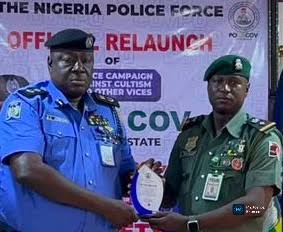
Two Divisional Police Officers (DPOs) in Rivers State have been honoured by separate groups for their contributions to security, crime prevention and improved community-police relations in their respective areas of responsibility.
The beneficiaries are the DPO of Afam Police Division, CSP Endurance Worgu and his counterpart at Oyigbo Police Division, CSP Bello Yusuf.
CSP Worgu was honoured by a group of students under the aegis of Rivers State Graduate Students Associations for what they described as his commitment and outstanding performance in the discharge of his duties.
The students, led by Chidi John Enyie, Esq. said CSP Worgu was selected based on his track record and status as one of the longest-serving young DPOs of Rivers State origin.
According to the group, CSP Worgu has made significant contributions to the protection of lives and property in the area since assuming office following the #EndSARS period.
The students said they were particularly impressed by the improvement in community-police relations under his leadership, noting that professionalism had remained a key feature of his service.
Enyie represented by Comrade Briggs Soku, said the students community was pleased to identify with a Rivers indigene who had distinguished himself in the police force.
He said the students considered it necessary to encourage and celebrate CSP Worgu because of his achievements as a young Rivers man excelling in a profession that many people from the state were often reluctant to join.
Receiving the award at his office in Afam, CSP Worgu expressed gratitude to God and the students for finding him worthy of the honour.
The DPO said the recognition had boosted his morale and encouraged him to sustain his efforts towards maintaining peace and security in the area.
He said he least expected the honour, particularly because it came from the students, adding that the recognition would further motivate him to serve the people better.
CSP Worgu assured residents of Afam that the police would sustain the existing peace in the area.
He appealed to members of the public to support the police by providing credible and timely information, stressing that useful information from residents would make the job of security personnel easier.
Meanwhile, the Ikwerre/Etche Media Association has also honoured the DPO of Oyigbo Police Division, CSP Bello Yusuf, for his efforts in tackling criminal activities in the area.
The media group presented the award following the swift tracking and arrest of five suspected kidnappers who had allegedly terrorised residents of the Kom-Kom axis and other parts of Oyigbo.
The group commended CSP Bello for what it described as his determined efforts to restore confidence and security in the affected communities, particularly Kom-Kom and Obeama.
According to the group, the arrest of the suspects demonstrated the DPO’s commitment to tackling criminality and safeguarding residents.
The media association said residents had received the development with relief, noting that the police action had sent a strong message to criminal elements operating in the area.
Responding, CSP Yusuf appreciated the group for the recognition and reaffirmed that there would be no room for criminality in Oyigbo.
He also commended the media for its role in disseminating credible information to the public, saying the media had remained supportive of the police in the fight against crime.
CSP Yusuf warned criminal elements operating in Oyigbo to leave the area or be prepared to face the full weight of the law.
He assured residents that the police would continue to pursue criminals and work to dismantle their hideouts, regardless of where they might be operating.
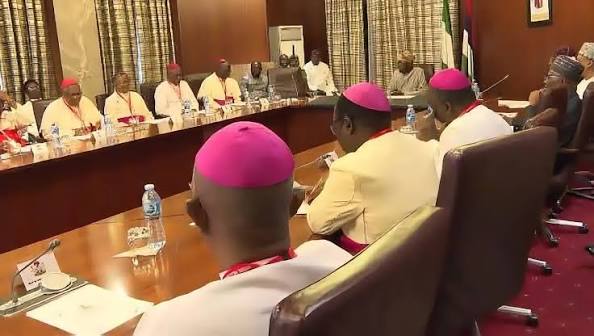
The 5000 Achievers Christian Forum and Colleges of Bishops, Archbishops and Apostles, a Christian interdenominational organisation, has endorsed President Bola Ahmed Tinubu and all candidates of the All Progressives Congress (APC) in Rivers State for the 2027 general elections.
International President of the forum, Archbishop Lucky Aroh, disclosed this during the ordination and consecration of three new Bishops, as well as an award ceremony held in Port Harcourt.
Aroh said the performance of the APC-led Federal Government had endeared the party to the organisation, prompting the forum to declare its support for President Tinubu and other APC candidates in Rivers State.
He said the forum would support all APC candidates in the state during the 2027 elections and urged Nigerians to vote for the party.
Aroh, who is also the General Overseer of Caring Peoples Church, Port Harcourt, charged the newly consecrated Bishops to see their new positions as a great responsibility and dedicate themselves to the advancement of the kingdom of God.
He cautioned them against conduct capable of bringing their offices into disrepute, stressing that their activities would be closely watched by members of the public.
“As Bishops, the eyes of the public are on your activities. You must therefore conduct yourselves in a manner worthy of your calling,” he said.
Also speaking, the International Coordinator of the forum, Bishop Saint Robinson, urged the newly consecrated Bishops to work diligently towards winning souls for the kingdom of God.
Robinson, who was the guest speaker at the event, stressed that the activities of Bishops must at all times be guided by godly principles.
He also called on members of the church to support and cooperate with the newly consecrated Bishops in the discharge of their responsibilities.
The Secretary of the College, Apostle Elizabeth Ayadi Abaye, said the organisation was established to advance the kingdom of God and promote spiritual development.
According to her, the forum has organised several crusades, conferences, prayer meetings, ordinations, consecrations, enthronements, empowerment programmes and other spiritual development activities across the country as part of efforts to win souls for Christ.
Abaye said the organisation has members across the world and disclosed that more programmes had been scheduled to promote the spiritual development and wellbeing of humanity.
The three Bishops consecrated at the ceremony were Prince Alban Chike, Testimony Omenihu Shedrach and Prince Ifemena.
Among those honoured at the event were the Chairman of the Community Development Committee (CDC), Abali Community, Port Harcourt City Local Government Area, Manuchimso Prince Lemmy Wopara, and Clifford Oko Jaja, Coordinator of the 5,000 House-to-House for President Tinubu.
By: John Bibor
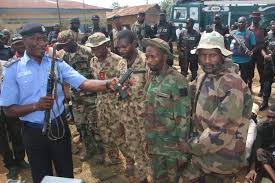
The Rivers State Police Command has arrested a 49-year-old suspected fake soldier, Andrew Atausi, and several other suspects in connection with various criminal activities, including kidnapping, armed robbery, cultism, one-chance robbery and the alleged murder of police officers.
The State Commissioner of Police, CP Olugbenga Adepoju, disclosed this in Port Harcourt, recently during a press briefing at the Command Headquarters, where he said the arrests formed part of the operational achievements recorded by the Command between June and August 2026.
Adepoju said Atausi was arrested on August 10 by police operatives along Ada George, Port Harcourt, while dressed in military uniform and driving a Toyota Hilux painted in Army colours.
The Commissioner said investigation revealed that Atausi was not a member of the Armed Forces, adding that he was suspected to be a serial car snatcher, with three suspected stolen vehicles recovered from him.
He said the recovered vehicles included three Toyota Hilux vehicles without registration numbers and a Toyota Corona Premio with registration number BNY 380 ES, noting that the chassis and engine numbers of the vehicles had allegedly been tampered with.
Adepoju added that an axe and military accoutrements were also recovered from Atausi, as investigation continued into the circumstances surrounding the vehicles and other items recovered from him.
On the June 29 attack on police officers at Aluu Division, the Commissioner said three members of the gang allegedly responsible for the incident had been arrested by operatives of the Violent Crime Response Unit, VCRU-AKU.
The suspects, identified as Maduabuchi Emeka, 34, alleged gang leader; Doctor Chinedu Owhor, 42, and Kamachi Joe, 28, alleged armourer, reportedly led operatives to their hideout at Omagwa where two AK-47 rifles stolen during the attack were recovered.
Adepoju recalled that two police officers were killed during the Aluu attack, while others were wounded and one officer had his leg amputated, stressing that efforts were ongoing to apprehend the fourth suspect.
On kidnapping, the Commissioner said five members of a suspected kidnapping syndicate were arrested in Oyigbo Local Government Area, adding that they allegedly confessed to operations in Kom-Kom, Railway, Obeama and Afam communities.
He said two other suspects from the same network, Anele Ogbogu, 35, alleged to be the gang’s armourer, and Kenneth Eke, 38, were arrested on July 27, with one AK-47 rifle and one SMG rifle recovered.
The Commissioner further disclosed the arrest of suspects in connection with alleged firearm offences, armed robbery, cultism and one-chance robbery, with firearms, ammunition and other exhibits recovered during the operations.
Adepoju assured residents that the Command would sustain intelligence-led, proactive and community-oriented policing in collaboration with other security agencies, while urging members of the public to continue providing credible information that would assist the police in combating crime across Rivers State.
By; King Onunwor
-

 News3 days ago
RSG Targets Nine Million Residents in Mosquito Net Distribution Campaign
-

 Oil & Energy3 days ago
Aiyedatiwa Signs New Electricity Bill
-

 Oil & Energy3 days ago
NLNG Commissions Research And Innovation Centre In RSU
-

 Maritime3 days ago
Marine Minister Commends President Tinubu On NPERA Bill Assent
-

 News3 days ago
KenPoly Holds Eight Convocations, August 29
-

 News3 days ago
RSG Begins Another Phase of Projects Commissioning Today
-

 News3 days ago
RMAFC Completes Revenue Sharing Review, Proposes New Pay
-

 Maritime3 days ago
NAGAFF Petitions IGP Over Alleged Maritime Police Harassment