
Featured
Senate Decries Rising Spate Of Massacre …As Herdsmen Kill 25 In Kogi …Benue Bids Farewell To 26 Amid Tears

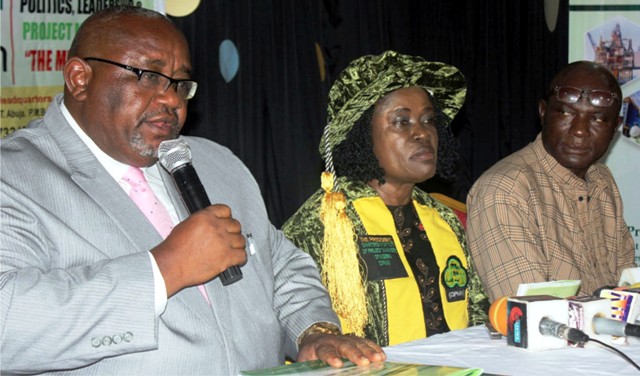
The Senate yesterday decried the spate of violence in the country and urged the Federal Government to deploy security agencies to Kogi to forestall alleged killing of people by suspected herdsmen.
Specifically, the upper chamber said that the security machinery should be sent to Omale and Dekina Local Government Areas in the state.
The resolution followed the adoption of a Point of Order by Sen. Atai Aidoko (Kogi-West) at plenary over alleged killing of 32 persons in the two local government areas on Wednesday.
Raising the order, Adoko said that 20 people were killed in Ogane-Enugu community in Dekina while 12 other lives were lost in Agbejukolo and Agbenema communities in Omale local government area.
He said “in spite of continued condemnation of killings in many parts of the country, perpetrators of this dastardly act have not been arrested.
“I want this Senate to urge President Muhammadu Buhari to direct security agencies to bring the situation under control by arresting the perpetrators and ensure that they are prosecuted.
“This killing is taking another dimension as the killers also amputate people’s hands.’’
In his contribution, Leader of the Senate, Ahmed Lawan, said that it was time that the chamber worked closely with the Executive to enhance the effectiveness of security agencies in combating crime the country.
Noting that security agencies in the country were overstretched, Lawan expressed worry that the number of policemen guarding the communities was inadequate.
According to him, in a population of about five million, you have only 300 policemen guarding the society, and in the same situation, over 300 bandits would attack the people.
On his part, Sen. Dino Melaye urged government at all tiers to demonstrate needed capacity to combat insecurity.
“We are still treating the issue of security with kid gloves. If you see the gory pictures of people that are maimed and we cannot show capacity; do we want to continue complaining?
“It is the poor that is dying. Let us for once call on the president and the governors of these respective states who are the chief security officers to ensure the protection of lives and property of citizens.
“The Federal Government must display capacity to sincerely quell the insecurity threatening the country. “Unfortunately, since the incidents happened in Kogi, the state government has not come up with any official statement or taken an action,’’
Melaye said. Sen. James Manager blamed the situation on non-arrest and prosecution of the perpetrators. According to him, society has evolved and there is law and order; when somebody who commits a crime is caught, he should be punished to serve as deterrent to others.
“The immediate solution to this problem is to arrest and punish offenders otherwise people will continue to kill.
“We are tired of observing one minute silence for these killings; if punishment for offenders is not done, those who cannot protect the society should resign,’’
Manager said. Sen. Adamu Aliero called for the implementation of recommendations of the National Security Summit recently organised by the Senate. He said it would go a long way in addressing the security challenges confronting the country. According to him, the meeting with security agencies three weeks ago revealed that the police are overstretched and there was need to recruit more hands as well as increase the funding.
In his remark, President of the Senate, Dr Bukola Saraki, condemned the killings and said that it was unacceptable. “The Senate would work towards finding solutions to insecurity in the country. “Let us be patriotic because this situation is unacceptable,’’ he said.
Meanwhile, Persons suspected to be Fulani herdsmen have unleashed terror on three communities in Kogi State, leaving 25 people dead.
Oganienugwu and Ikende communities in Dekina Local Government Area were affected; as well as Abejukolo in Omala LGA, all in the Eastern Senatorial district of the state.
As at the time of filing this report, villagers were reportedly moving out of Obakume, Idirisu, and Oji Apata to escape possible attacks.
Our correspondent gathered that 25 people were killed in the sustained attack which started on Tuesday and continued till Thursday.
A detachment of police and soldiers have been drafted to quell the violence.
Eye witness account told our correspondent that the mode of killing employed by the hoodlums was to slaughter the victims after tying them up; while those who attempted to escape alleged received machete cuts.
Similarly, Governor Samuel Ortom has called for a halt to the ceaseless bloodshed in Benue state occasioned by attacks on rural communities of the state by herdsmen lamenting that the bloodbath had become too much.
The Governor spoke yesterday during a state funeral service in honour of the 26 victims of March 5 herdsmen attacks on Omusu community, Ojigo Edumoga held at St. Bernard Primary School Ugwu-Okpoga in Okpokwu Local Government Area of Benue state, amid wailings, cries and tears.
He reiterated his call for the arrest of the leadership of Miyetti Allah Kautal Hore whom he said were the sponsors of the killings in the state based on comments credited to them and published by various media houses.
The Governor while consoling the bereaved families said “the death of the victims and many others would put an end to the massacre of Benue people.
“I will also add that the Open Grazing Prohibition and Ranches Establishment Law of Benue state has come to stay because it is the panacea to the farmers/herders crisis in this country.
“Moreover there is no land for open grazing to take place in our communities and at the same time have crop farming to go on concurrently.”
Governor Ortom who assured of his government’s quick response to every security issue in the state, disclosed that data was being gathered for the compensation of those who suffered losses and damages during herdsmen incursions in the state.
In separate remarks, his Deputy Governor, Mr. Benson Abounu Deputy Speaker of the State Assembly, Mr. James Okefe, representative of of the Otukpo Catholic Bishop Apochi, Rev. Fr. John Attah among others who commended the Governor for his support to the bereaved families urged the people of the state to remain resolute in their support for the grazing law.
On their part, the ethnic leaders of the state, represented by Mr. Amalia Amali and the representative of Movement Against Fulani Occupation, MAFO, Pastor Dave Ogbole both said they saw the attacks coming and reported same to relevant authorities but nothing was done to avert the massacre.
While expressing disappointment with the federal government over its inactions towards the killings, Pastor Ogbole called on the international community to rise up and stop a repeat of Rwanda in Nigeria, warning that the resolve by Benue people to remain law abiding should not be mistaken for cowardice.
In a sermon, Chairman Christian Association of Nigeria, CAN, Benue state chapter, Rev. Akpen Leva prayed God to intervene and save the state from herdsmen incursions and further bloodshed.



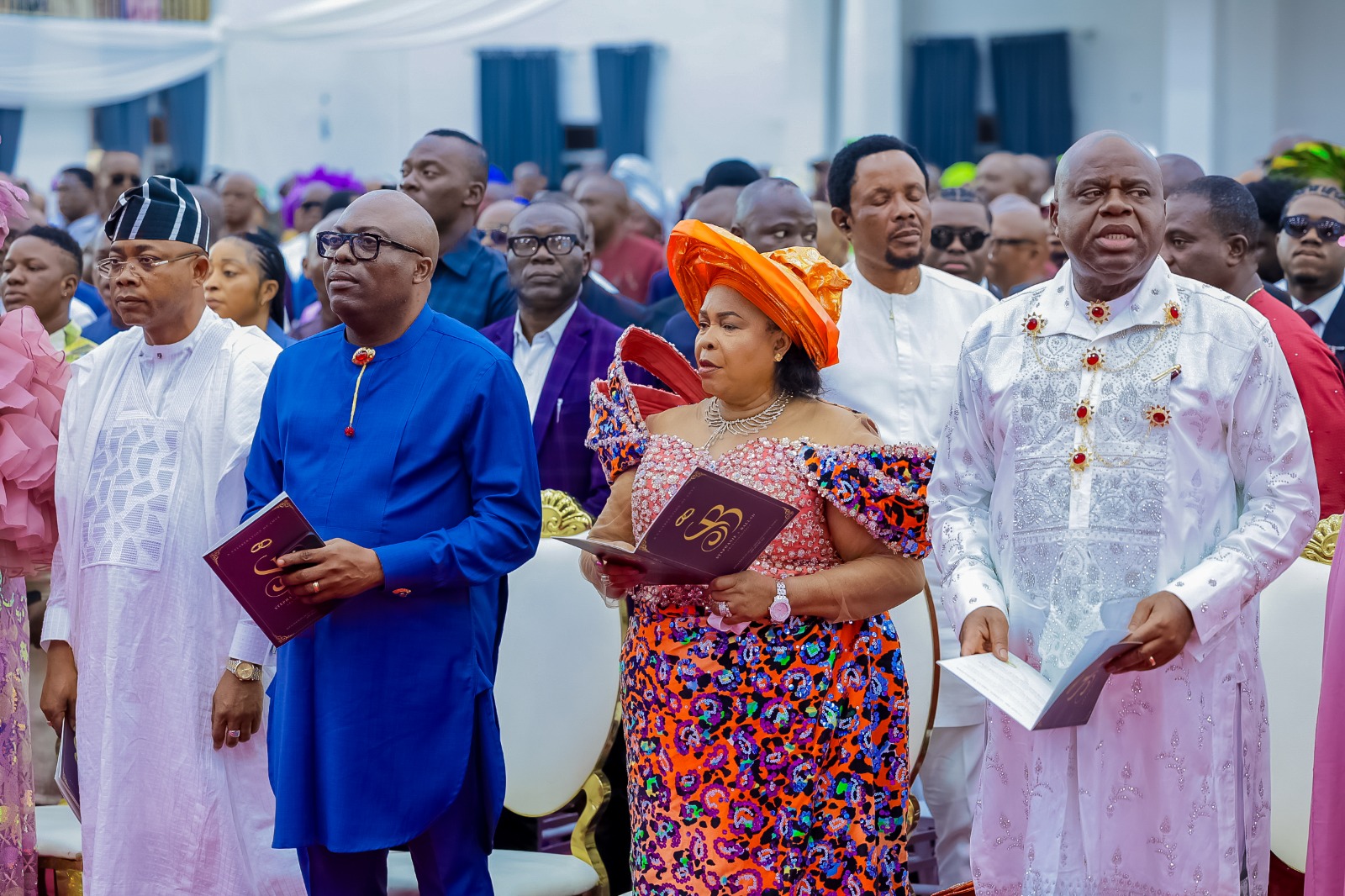
Rivers State, Sir Siminalayi Fubara, has assured members of the National Youth Service Corps (NYSC) of his administration’s commitment to supporting and strengthening the scheme in the State.
Fubara gave the assurance last Friday at the NYSC permanent orientation camp, Nonwa-Gbam, Tai Local Government Area in the State, during the swearing-in ceremony of 2026 Batch B Stream II orientation course.
Represented by the Permanent Secretary, Cabinet Bureau, Office of the Secretary to the State Government, Dr. Promise Oguzie, the governor said the State Government would remain intentional in providing the necessary support to improve the NYSC scheme and enhance the experiences of corps members deployed to the state.
He charged the corps members to be role models and quality nation-builders in their service to the good people of Rivers State in particular, and Nigeria at large.
“I charge you to be exemplary, dedicated and committed in all you do. Take full advantage of all the camp programmes and activities to enrich yourselves”, he said.
In his welcome address, the State Coordinator of NYSC in Rivers State, Mr. Moses Oleghe, urged corps members to see their deployment to Rivers State as a “veritable opportunity to make meaningful contribution to the growth of the State in particular and Nigeria at large.”
He further charged them to serve with all sense of “integrity, discipline, and the fear of God, especially when they will be engaged as INEC ad-hoc staff that will conduct the 2027 general elections.”
A total of 3,584 corps members composed of 1,421 males and 2,163 females were sworn in by the Chief Judge of Rivers State, who was represented by Justice Godspower Aguma.

Governor of Rivers State, Sir Siminalayi Fubara, says Nigeria needs God-fearing leaders for the nation to move in the right direction and make meaningful progress.
The Governor stated this yesterday when he received in audience, the World President of the Seventh Day Adventist Church, Pastor Erton Kohler; his wife, Andriene Marques Kohler; daughter Mariana Marques Kohler and a retinue of ministers of the church at Government House, Port Harcourt.
Fubara who hailed the Seventh Day Adventist Church for its contributions to education and the grooming of future leaders in Nigeria, expressed delight that the Church had over the years, been investing in education at various levels and currently runs two universities in the country.
He commended the church for not only using its institutions to spread the gospel of Christianity but to groom future leaders for the country.
According to him, religion should not be just about defending one’s faith, but also making meaningful impact on the lives of the people.
He said that by floating these educational institutions, the church has demonstrated capacity to support Nigeria in the task of producing not only educated people but a breed of God-fearing leaders.
“Our country is where it is today because we lack the fear of God. If you have the fear of God, there should be a limit to what you can do because you understand the supremacy of God. But when God is not in your equation, you’ll go beyond the line and that is what has brought us to where we are today.
“So, I feel very happy that you are contributing to the development of our future leaders in this country. We need the right people being in the right place; prepared properly with good minds; that is what we need, not just in Nigeria but round the whole world.,” he said.
Governor Fubara further observed that the absence of God-fearing people in high places to take the right decisions that could impact positively on the society, has also given rise to other problems such as social inequality, poverty, corruption and criminality. According to him, Nigeria needs a system where the average parent could afford quality education for their children and a guarantee that upon graduation, the average child will have the capacity to compete favourably with anybody, anywhere in the world.
“If we have a situation where the little money that you’re being paid as wage can also afford you quality healthcare and after working at least for 15-20 years, you have a roof over your head, tell me why you should be involved in any kind of crime? At that point, you’ll feel secured and this attitude of insecurity about the future that leads to all the social vices we have today won’t be there,” he said.
Governor Fubara expressed appreciation to the delegation for the visit and for their prayers for Rivers State, assuring them of his continued support for their programmes in the state.
Leader of the delegation and World President of the Seventh Day Adventist Church, Pastor Erton Kohler said he was in Nigeria for a special conference of the church during which thousands of the church’s ministers will be undergoing an empowerment programme to further equip them for the task of herding their flocks and serving the society.
He expressed gratitude to the Governor for the warm reception accorded his entourage, saying the memory of the visit will linger in his mind for a lifetime.
Kohler disclosed that the Church has over twenty -four million (24,000,000) members and more than 182,000 places of worship, spread across 212 countries of the world.

The Rivers State House of Assembly has approved the 2026–2028 Medium Term Expenditure Framework (MTEF) submitted by Governor Siminalayi Fubara.
This reaffirms the lawmakers’ commitment to enacting laws and taking legislative actions geared towards the overall development of the State.
The Assembly gave the approval during its Second Legislative Sitting of the Fourth Session held last Friday.
Speaking on the MTEF document during plenary, the House Speaker, Rt. Hon. Martin Amaewhule, noted that by the provision of Section 10(1)(b) of the Rivers State Fiscal Responsibility Law No. 8 of 2010, the MTEF ought to have been laid before the House in September 2025.
Amaewhule explained that traditionally, the document is expected to be presented four months before the commencement of the next financial year and immediately after the expiration of every three-year fiscal cycle.
He, however, stated that in the interest of the State and its people, the House considered it necessary to deliberate on the document, describing it as a precursor to the 2026 Budget Estimates.
The Speaker expressed concern that the year had already progressed significantly before the presentation of the framework.
During deliberations on the document, members examined the assumptions and projections contained in the MTEF and observed that strict adherence to the outlined fiscal parameters would ultimately serve the interest of Rivers people.
The lawmakers maintained that effective implementation of the framework would promote prudent financial management and enhance developmental planning across the State.
Following the debate and positive consideration by members, the Speaker put the question to the House and members voted overwhelmingly in support of the approval of the MTEF.
Meanwhile, during the same sitting last Friday, the House also received a petition from the Chairman of Obio/Akpor Local Government Council, Dr. Gift Worlu.
The petition was presented by the member representing Obio/Akpor Constituency II, Hon. Emilia Amadi.
According to the petition, concerns were raised over an imminent security breach, threats to lives, destruction of property and alleged forceful takeover of property by some lawless persons within parts of the Local Government Area.
Presenting the petition before the House, Hon. Amadi appealed to the lawmakers to revisit the matter and take necessary steps aimed at safeguarding lives and property in the affected communities.
The House is expected to further deliberate on the petition and consider measures to address the concerns raised in order to sustain peace and security in the area.
King Onunwor
-

 News2 days ago
RSG Targets Nine Million Residents in Mosquito Net Distribution Campaign
-

 Oil & Energy1 day ago
Aiyedatiwa Signs New Electricity Bill
-

 Oil & Energy1 day ago
NLNG Commissions Research And Innovation Centre In RSU
-

 Maritime1 day ago
Marine Minister Commends President Tinubu On NPERA Bill Assent
-

 News2 days ago
KenPoly Holds Eight Convocations, August 29
-

 News2 days ago
RSG Begins Another Phase of Projects Commissioning Today
-

 News2 days ago
RMAFC Completes Revenue Sharing Review, Proposes New Pay
-

 Maritime1 day ago
NAGAFF Petitions IGP Over Alleged Maritime Police Harassment