Connect with us

Oil & Energy

Total, Egi MoU And Prospects Of Dev

Published

on

Egi Clan in Ogba/Egbema/Ndoni Local Government Area of Rivers State is a major host community to multinational oil giant, Total Exploration and Production Nigeria (TEPNG).
The corporate partners had over the years operated on a well defined policy thrust, driven by Memorandum of Understanding (MoU), a community engagement model in which the basis of their corporate relationship is made explicit.
The implementation of previous MoUs in Egi clan to a large extent impacted positively on the lives of the people through a thriving rural economy in which the people were major determinant of their economic development.
There was relative peace and a strong communal bond that made Egi a centre of social and economic attraction.
Events in the area however assumed a dangerous twist, following the inundation of the entire Egi clan by a growing spree of insecurity resulting to the shattering of the fledgling economic activities in the area.
Homes were deserted and the corporate partnership between Total and Egi stakeholders was threatened. These ugly trends made the downward review of previous MoUs in the area inevitable.
However, the return of peace to Egi clan and ONELGA in general through the concerted effort and instrumentality of critical stakeholders, has again heralded vistas of hope and opportunities for the corporate partners to forge ahead.
A major breakthrough in this direction was the recent signing of a renegotiated Memorandum of Understanding (MoU) between Total Exploration and Production Nigeria (TEPNG) Egi Clan, Oil and Gas at the Corporate Headquarters of Total in Port Harcourt.
The well attended event was a platform for the stakeholders to rekindle faith with the MoU process. Managing Director of NEPNG, Nicolas Terraz expressed hope that the new MoU as a product of mutually acceptable agreements will form the basis of the company’s relationship with the beneficiary communities for the next five years.
The MD thanked all stakeholders, especially the negotiators for “their sacrifices, understanding and incisive contributions which culminated in the agreement.”
He pointed out that the content and depth of the new MoU are quite far reaching especially in its provisions for infrastructural and human capital development, but expressed deep concern on the implementation and management of the MoU process.
While assuring that TEPNG will not hesitate to disburse the needed funds to drive the MoU process, the MD drew attention to critical issues in the implementation process. He said, “basic principles of sustainability need to be integrated sufficiently into community development project choices, while project nominations and development should be to address identified needs and not contract driven.”
The MD also expressed concern over the management of the scholarship scheme, especially the skills acquisition trainings, which he noted were yet to “bring out established entrepreneurs from its horde of beneficiaries.”
Terraz stressed the need for strict compliance among the MoU stakeholders to the companies compliance regime which is in line with the current global anti-bribery and compliance policy.
The Monarch of Egi clan (Eze Egi) MRM, King (Prof.) Anele U. Wokoma who received the signed MoUs on behalf of the Egi stakeholders, expressed joy over the successful signing of the new MoU.
The Egi Monarch emphasised the need for sustainable peace in Egi land, stating that the rigorous endeavours of the negotiators of the new MoU would amount to an exercise in futility without peace in the area.
As the custodian of the culture of the people and a natural ruler, he said the interest of Egi was paramount in his development objectives and called on all stakeholders in the area to support the peace process.
The Eze Egi also urged the management of TEPNG to be faithful and committed in the disbursement of fund for the implementation of the MoU process and the overall development of Egi land.
Also speaking at the event, the Chairman, Caretaker Committee of Ogba/Egbema/Ndoni Local Government Area, ONELGA, Barr Osi Olisah thanked Egi stakeholders for the return of peace in the area, and called for vigilance against anti-peace forces.
The ONELGA Council boss also tasked the management of Total on the development of Egi clan, stating that the company should; “think globally and act locally.” According to the C.T.C. chairman, the company’s community development policy in Egi can only make more meaningful impact in Egi through the domestication of international best practices in its operational policies.
A major negotiator in the MoU process, Prof. Cheta Williams, who spoke with The Tide in an interview shortly after the signing of the new MoU, said the new agreements took care of the shortcomings of previous MoUs.
He said proper consultations were conducted among all concerned stakeholders to address all contentious issue.
The leadership of the Egi People Assembly (EPA) and the Oil and Gas landlords were also represented at the event.
In his remark, President General of Egi People Assembly, Apostle Magnus Elemele said the new MoU would bring lasting peace and development in the area, as the interest of all the stakeholders are taken care of. He said modalities would be put in place to ensure the smooth implementation of the MoU process.
However, a major concern of the Egi people was the retention of the employment clause in the new MoU.
But against the backdrop of a recessed economic environment, the TEPNG MD said, “the scenario doesn’t look good to support a robust pursuit for a marked employment quota at present, but effort will be made to clear out all outstanding employment commitment contained in the previous agreement while looking into the future with hope of improvement in the company’s operations.”
A cross section of the participants at the MoU signing who spoke with our correspondent, expressed conviction over the prospect of economic development in Egi land through the tenants of the new corporate agreement.
But they also expressed reservation over the need for sincerity of purpose, transparency and accountability in the implementation process. They urged the newly inaugurated implementation committee for the MoU to be guided by the virtue of transparency and due process in the discharge of the duties.
The Memorandum of Understanding (MoU) as a community engagement model has been used by multinationals and other corporate organisations in host community relations, but the implementation of such MoU has equally been prone to contentions among the partners.
The negotiated TEPNG/Egi MoU is therefore another platform for the corporate partners to improve on the shortcomings of the past and consolidate on the gains of the future.

Taneh Beemene

Continue Reading

Oil & Energy

Renewable Energy Investment Forum Begins Nov. 25

Published

on

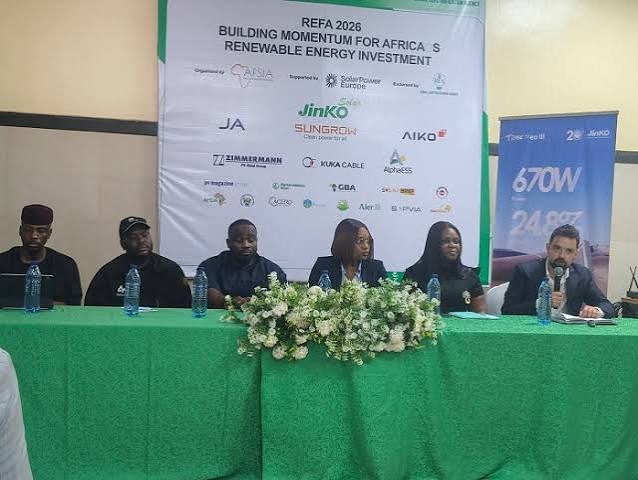
Nigeria’s growing solar market will take centre stage as the Renewable Energy Forum Africa (REFA) 2026 holds in Lagos on November 25-26 with the backing of the Rural Electrification Agency (REA).

Organised by the Africa Solar Industry Association (AFSIA) and supported by SolarPower Europe, the forum would bring together investors, developers, regulators, utilities and policymakers at the Radisson Blu Anchorage Hotel, Victoria Island.

The agency said the forum would strengthen partnerships, attract investment and support Nigeria’s clean energy and local manufacturing ambitions.

REA Managing Director, Abba Abubakar Aliyu, is billed to deliver the keynote address at the opening plenary.

The forum would also examine local manufacturing following the launch of Nigeria’s first privately owned 100MW solar module assembly plant in Ibeju-Lekki, Lagos.
The event would also feature B2B meetings, an exhibition and the AFSIA Awards on November 25.
It would be noted that Nigeria is West Africa’s leading solar market, with about 618MWp operational capacity, ranking first in the region and eighth in Africa, according to AFSIA.

The country also leads the continent in mini-grid capacity with 132MWp, while its commercial and industrial (C&I) solar capacity stands at 385MWp.

The market is receiving fresh support through the $750m World Bank-backed Distributed Access through Renewable Energy Scale-up (DARES) programme, targeting 1,350 mini-grids and electricity access for 17.5 million Nigerians.
Continue Reading

Oil & Energy

CBN Appoints Eight New Pre-shipment Agents For Crude Oil And Gas Exports

Published

on

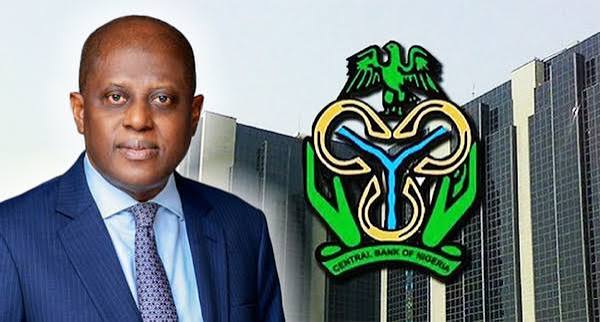
The Central Bank of Nigeria (CBN) has appointed eight pre-shipment inspection agents to monitor crude oil and gas exports, alongside two monitoring and evaluation agents to oversee their activities.
The appointments, announced in a notice signed by Aderinola Shonekan, Director of the CBN’s Trade and Exchange Department, took effect on October 2, 2026, under the Nigerian Export Supervision Scheme.
The notice directs authorised dealer banks, the Nigeria Customs Service, petroleum regulators, terminal operators and oil and gas companies to comply with the revised arrangements.
The CBN assigned the eight inspection agents to specific crude oil and gas export terminals as part of the revised framework.
The allocations are as follows:
Dakee Engineering and Construction Ltd.: LNG, Escravos (Gas), Bonny River Terminal (BRT) and EGTL.
Trexem Energy Services Limited: Egina, Qua-Iboe and Tulja. Geoscape Limited: Escravos, ERHA, Odudu and FSO Cawthorne.
617 Limited: Bonga, Brass, Usan and Eagle.Robinson International Energy Ltd.: Ugo-Cha, Penington, Aje, Ima, Oyo and Nembe. Trobell International Nigeria Limited: Forcados, Bonny and Okwori.
Integrated Shipping Services Nigeria Ltd.: Akpo, Antan, Okoro, Anyala-Madu and Ebok.
Kephren Business Ltd.: Ukpokiti, Utapate, Yoho, Abo, Agbami, Ajapa, Okono, Okwok and additional marginal streams designated by the Nigerian Upstream Petroleum Regulatory Commission (NUPRC).
The CBN also appointed two monitoring and evaluation agents, the Q&Q Control Services Limited and the Arlington Securitas Nigeria Limited to oversee the inspection companies.
The Q&Q Control Services Ltd. would monitor 617 Limited, Trexem Energy Services Limited, Geoscape Limited and Kephren Business Ltd while the Arlington Securitas Nigeria Limited would monitor Dakee Engineering and Construction Ltd., Trobell International Nigeria Limited, Robinson International Energy Ltd. and Integrated Shipping Services Nigeria Ltd.
The latest appointments follow previous changes to the CBN’s monitoring arrangements for crude oil and gas exports.
The latest changes update the companies responsible for inspecting export cargoes and the terminals assigned to them. The notice requires the relevant institutions and operators to comply with the new allocations from October 2, 2026.
The appointments also come amid growth in Nigeria’s gas export earnings.
According to the CBN, Nigeria’s gas export earnings rose to $2.53 billion in the first quarter of 2026, reflecting stronger earnings from the country’s natural gas sector and contributing to its external trade position.
The revised inspection arrangements place designated agents in charge of specified export terminals, while the monitoring and evaluation companies oversee the inspection agents’ activities under the scheme.
Recall that in May 2024, the apex bank appointed 11 pre-shipment inspection and monitoring agents under the export supervision scheme.
The government subsequently reviewed the allocation of oil export terminals in March 2025, assigning additional terminals to nine inspection agents appointed under the scheme.
In July 2026, the CBN also appointed Candid Oil Services Limited as the pre-shipment inspection agent for the Taurus Oil and Gas Depot.
Continue Reading

Oil & Energy

What’s Next for Global Natural Gas Demand?

Published

on

The Iran war and the lack of LNG supply from the Middle East have upended forecasts of near-term natural gas demand and import costs.
So far this year, economies in Europe and Asia have relied more on renewables and coal for power generation to offset reduced gas supplies procured at very high prices.
This year’s crisis has prompted governments to rethink energy policies with energy security the top priority, again, after the 2022-2023 energy crisis.
After the decline in global gas demand this year, due to prices at four-year highs, the obvious question for gas market participants is where demand is going after the current crisis ends. Has the second gas crisis in four years permanently undermined expectations of long-term gas demand growth?
Gas cannot be replaced in many industrial processes, yet. Electricity-generating systems in major economies that have relied on gas for power cannot have a reliable electricity supply without gas.
Still, this year and over the past four years, key gas markets in Europe and Asia have seen the share of gas in their electricity mix decline.
The UK, the Netherlands, and Turkey, and major Asian economies China, Japan, and South Korea, have all seen the share of gas-fired electricity drop, according to data from think tank Ember cited by Reuters columnist Gavin Maguire.
The spike in natural gas prices has accelerated Europe’s renewables rollout, which took off in earnest earlier this decade when Russia invaded Ukraine in 2022 and cut off pipeline gas supply to most of Europe. The share of renewables has surged in the EU and the UK in recent years, gradually sidelining gas as the reliable backup fuel rather than the one meeting growing electricity demand.
Globally, “Gas is losing its share in the global power mix as renewables increasingly meet rising electricity demand,” Ember said in a report earlier this year. The analysis found that the share of gas in the global power mix declined for the fifth consecutive year in 2025, despite a small rise in absolute gas generation. Strong growth in clean power, led by solar and wind, met around 68% of global electricity demand growth over the five years to 2025, reducing the need for a significant rise in gas power generation
Related: Mexico’s Richest Man Sells $1.15 Billion in Oil Stocks
According to Ember, 61 out of 124 economies generating electricity from gas had passed their gas generation peak.
However, these countries accounted for around one-fifth of global gas-fired electricity generation in 2025. So the large gas-generating economies, albeit a smaller group, haven’t seen their peak in gas power generation.
The biggest emerging economies, China, India, and Brazil, have actually met their surging electricity demand without turning to gas, Ember noted.
China’s gas share remained close to 3% of the electricity mix in 2025 despite rapid demand growth, while gas power generation in India and Brazil plays a more limited balancing role, the think tank said.
“The economics and energy security case for electricity are increasingly moving in the same direction,” said Malgorzata Wiatros-Motyka, ?Senior Electricity Analyst at Ember.
“As renewables lower costs and reduce exposure to fuel price shocks and geopolitical disruptions, gas is steadily losing the advantages that once made it the default fuel for power system growth.”
The writing may have been on the wall for natural gas producers and exporters if natural gas was only used in power generation.
But natural gas key uses include as feedstock in industrial manufacturing, including cement and steel, as a chemical feedstock for fertilizer, or as the start of the supply chain of manufacturing plastics, paints, synthetic fabrics, and medicine, to name a few.
And then comes the biggest twist in energy and electricity demand forecasts in recent years—the AI boom. Data centers will drive a large part of the rise in global electricity demand, which has returned to growth even in the U.S. and Europe after a decade or so of flatlining. Renewable energy alone will not meet the surge in power demand, and gas will play a key role in America and in most of Asia, where many countries are positioning to become AI and data center hubs.
The biggest LNG producers, exporters, and traders see long-term gas demand growth intact despite this year’s supply shock that is reducing consumption amid spiking prices.
For example, Shell, the world’s biggest LNG trader, said in its annual LNG Outlook 2026 this summer that surging gas demand in South and Southeast Asia would push global LNG demand up by 65% by 2050 from 2025 levels, although growth this year has been stalled by the Strait of Hormuz crisis.
Shell sees global LNG demand increasing to nearly 700 million tons annually by 2050, up by around 65% from the 2025 levels of 422 million tons.
“The conflict created a system-wide shock with disruption cascading across all segments of the economy, but the LNG industry has proved resilient and able to adapt to changing market conditions,” Cederic Cremers, President of Integrated Gas at Shell, commented in the outlook.
“While more investment in both supply and demand infrastructure is needed, the long-term outlook remains strong and LNG will continue to be a stabilising force in the global energy system.”
The International Gas Union (IGU) said in its 2026 World LNG Report in July that “while LNG industry is not immune from the challenges of operating in an era of heightened geopolitical uncertainty, its unique ability to re-distribute large quantities of clean-burning energy from a broadening supply base only enhance LNG’s role as a ‘shock absorber’ to the global economy.”
By; Tsvetana Paraskova
Continue Reading

Trending