
Nation
THE STATES

Adamawa
Adamawa State Government has spent over N223 million to pay 2009 NECO and WAEC examination fees for students from the state.
The Commissioner for Education, Mr Gabriel Adama, disclosed this in Yola recently at a news conference.
He said: “I want to say that it was, however, a big loss for us because over 90 per cent of the students failed the examination.’’
Describing the situation as unacceptable, the commissioner
said that out of the 28,000 students who sat for the examination, only seven per cent of them got the required credits including English and Mathematics.
Bauchi
A lecturer , Prof. Sulaiman Bogoro of Abubakar Tafawa Balewa University, (ATBU) Bauchi, has said that auditing of public and private agencies was crucial for accountability and promotion of good governance.
Bogoro made the statement in a paper he presented on Tuesday at the Conference of the body of Federal and State Auditors-General in Bauchi.
He said accountability and transparency in leadership are necessary as without them, some leaders or heads of organisations engage in secrecy and corrupt manipulation of the system.
Ekiti
Hundreds of giant-sized posters of President Goodluck Jonathan for President in 2011 have flooded major streets in Ado-Ekiti, the Ekiti State capital.
The Tide’s source reports that the posters carried the message “Dr Goodluck Ebele Jonathan for 2011 Presidential election. Let us encourage him for peaceful co-existence in Nigeria, courtesy of Ekiti New Era Forum”.
The posters are posted on electricity poles, stationery vehicles and some buildings in the metropolis.
The posters, which had PDP logo and the picture of Jonathan are on major streets such as Fajuyi round about, Okesa, Governor’s office road, Iyin road, Okeyinmi, secretariat road among others.
FCT
The Economic and Financial Crimes Commission (EFCC) says it has instituted more than 50 cases and got more than 100 convictions in the last two years.
Mrs Farida Waziri, the Chairman of EFCC, made the statement in Abuja on Monday during an interaction with newsmen.
“ We can conveniently boast that we inherited about 10 profile cases when we took over about two years ago.
“We have not only instituted 50 high profile cases, we have secured over 100 convictions with a record of recovery that towers above 3.5 billion dollars and over 1,200 cases pending in court.”
Jigawa
The Jigawa government has inaugurated a six-man committee to implement its sanitation policies and promote good hygiene, Alhaji Abdulkadir Jinjiri, the Commissioner for Community Development and Rural Infrastructure, said on Friday.
He told newsmen in Dutse that the committee was formed to utilise the 2009 Millennium Development Goals Conditional Grant Scheme for the implementation of sanitation and good hygiene policies.
He explained that the committee would carry out advocacy and sanitation visits to policy makers, political, religious and traditional rulers in order to gain support for sanitation and hygiene promotion at local governments and community levels.
Kaduna
The Christian Community, Ahmadu Bello University (ABU), Zaria, has organised a memorial service in remembrance of the first indigenous Vice Chancellor and Registrar of the university.
A statement issued by the institution’s Information and Protocol Officer Bitrus Galmaka, stated that the duo were late Prof. Ishaya Audu and late Michael Angulu, the first indigenous vice chancellor and registrar respectively
It noted that the memorial service was “to honour these pioneers of the Christian community whose services and sacrifices contributed immensely to the foundation laying of ABU’’.
It indicated that 27 others, whose ages ranged from 70 and above, were also honoured for their meritorious sacrifices in the service of the institution.
Kano
Thousands of Qur’anic pupils, known as “Almajiris,” have moved out of Kano metropolis due to the commencement of the rainy season, Tide’s source reports.
The pupils, majority of whom came from Yobe, Jigawa, Katsina, Bauchi and Kaduna states and parts of Kano states, left the commercial town to engage in farming in their respective communities.
Investigation by the source in Kano shows that the almajiris have deserted most of the areas they were usually seen begging for alms, since the exodus began about two weeks ago.
Such places included restaurants, motor parks, mosques and markets, where only pockets of them could now be sighted loading goods, washing plates and begging.
Kwara
Dr. Hammed Ali, Kwara Attorney-General and Commissioner for Justice, has called for the construction of more prisons as a panacea for decongesting prisons in the country.
Ali made the call on Monday when he paid a courtesy visit to the Comptroller of Prisons in the state, Mr. Olatunde Olayiwola, in llorin.
Ali suggested that private organisations should be involved in the construction and management of prisons.
“If about 227 prison houses in Nigeria accommodate 50,000 inmates and out of these about 42 per cent are awaiting trial suspects, then we need more prison houses”, he said.
Lagos
The Dangote Group says local production of iron rods and steel would reduce the incidence of building collapse and other construction failures in the country.
Mr. Sankasu Balasubramania, Technical Director of the group, disclosed this to journalists who were on a facility tour of Dangote Steel Rolling Mills in Osogbo on Sunday.
He said that the increasing of building collapse and construction failures would be tackled through production of quality iron rods locally.
Balasubramania said that Dangote Steel Rolling Mill, which would commence production in October, this year, would produce over 350,000 tonnes of quality steel products annually.
Osun
Mrs. Omolola Oyinlola, wife of Osun Governor, has expressed concern over the increasing cases of teenage pregnancy among secondary school girls.
She expressed the concern during a sensitisation visit to St. Mary’s Grammar School, Iwo, Osun.
Oyinlola, who is the initiator of Women and Children Development Initiative Foundation (WOCDIF), called on stakeholders to join hands with her to stem the tide.
The Tide’s source reports that the visit is part of her awareness campaign on teenage pregnancy, HIV and AIDS, cancer and maternal/child mortality.
Oyo
The Association of Fish Farmers and Aqua-culturists of Nigeria (AFFAN) in Oyo State, has called on the Federal Governments to create special silos for maize and soya beans.
The Chairman, Mr Peter Farinto, told newsmen on Tuesday in Ibadan that the two crops formed the major raw materials for the production of local fish feeds.
“If government could store the raw materials, an enabling environment would be created for the sustenance of the fish farming business which depended largely on fish feeds, to boost local production,” Farinto said.
Plateau
The Miners Association of Nigeria (MAN) has cautioned against illegal mining, saying the lead poisoning in Zamfara that reportedly killed 163 persons, was regrettable.
The MAN National President, Sani Shehu, told newsmen in Jos, that the incident, which occurred in Anka and Bukkuyum Local Government Areas of Zamfara was “purely a result of illegal mining”.
He said, “most minerals contain one level of impurity or the other. Some of these impurities are radio-active in nature. Some of them release poisonous gases that are not visible.
“That is why when you are operating a formalised form of mining, issues like safety, radioactivity and other poisonous gases will be discussed and addressed”, he cautioned.
Sokoto
The Sokoto State Commissioner for Religious Affairs, Prof. Musa Maitafsir, has said that the government plans to ban begging in the area.
Maitafsir said the plan will come into effect only after all the destitute persons have been brought under a scheme where they would be paid monthly stipend.
The commissioner disclosed that the government was currently spending over N45 milliioon on 7,000 destitute persons every month.
He told newsmen in Sokoto that each of the beneficiaries was being given N6,500 monthly.
“This gesture has been on for about two years and it will be sustained to alleviate the suffering of the less privileged persons.
“More of them will soon be brought under the scheme introduced by Governor Aliyu Wamakko to reduce the menace of begging in the state”, Maitafsir said.



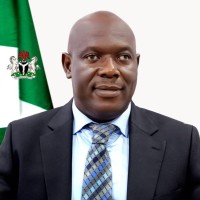
The Hydrocarbon Pollution Remediation Project (HYPREP) has commemorated the 15th anniversary of the release of the United Nations Environment Programme (UNEP) Environmental Assessment Report on Ogoniland, reaffirming its commitment to restoring the environment and improving the livelihoods of affected communities.
In a statement signed by the Project Coordinator, Prof Nenibarini Zabbey, to commemorate the anniversary, HYPREP described the anniversary as a significant milestone in Nigeria’s environmental restoration efforts, noting that the project has made remarkable progress in implementing the recommendations of the landmark UNEP report released on August 4, 2011.
The UNEP report had revealed extensive oil pollution across Ogoniland, severe environmental degradation, and serious public health risks resulting from decades of petroleum operations. It also recommended an initial $1 billion fund to commence the cleanup of the affected communities.
According to HYPREP, the Federal Government formally launched the Ogoni clean-up in 2016, while the Project Coordination Office was established in 2017 to drive the implementation of UNEP’s recommendations.
Zabbey said the current administration has continued to prioritise the project under the Renewed Hope Agenda.
Providing an update on the cleanup, the Project Coordinator disclosed that 30 of the 65 contaminated sites identified by UNEP have been fully remediated, while work is ongoing at several medium- and high-risk locations. It also stated that more than 1.5 million mangrove seedlings have been planted as part of what it described as the world’s largest restoration of oil-degraded mangroves, with over 1,000 hectares of shoreline already rehabilitated.
Zabbey further revealed that 49 Ogoni communities have been connected to potable water schemes through multiple water projects and booster stations aimed at providing safe drinking water across the region.
In the health sector, he said the 100-bed Ogoni Specialist Hospital in Kpite and the 43-bed Cottage Hospital in Buan are nearing completion, adding that several existing health facilities have been upgraded with modern medical equipment, while five ambulances have been donated to improve emergency healthcare services. The Project Coordinator also disclosed that a three-year human health biomonitoring study is being conducted in collaboration with the World Health Organization’s International Agency for Research on Cancer (IARC).
On economic empowerment, Zabbey stated that the Project has created more than 8,000 direct jobs and trained thousands of Ogoni youths and women in various vocational and technical skills, including software development, cybersecurity, aviation, commercial diving, seafaring, mechatronics, and creative arts. The project also reported awarding scholarships to more than 1,000 students, providing grants to small businesses, and supporting persons living with special needs through skills acquisition programmes.
The statement further highlighted ongoing legacy projects, including the Ogoni Power Project and the Centre of Excellence for Environmental Restoration, which it said is about 96 per cent complete. HYPREP also welcomed the recent designation of the Ogoni Wetland as a Ramsar Site of International Importance and pledged to continue promoting biodiversity conservation and sustainable management of the ecosystem.
Marking the anniversary, Zabbey said the progress achieved over the past 15 years demonstrates the collective commitment of government, development partners, stakeholders, and local communities to restoring Ogoniland. He called for renewed collaboration to sustain the cleanup effort, promote environmental sustainability, and support the long-term development of the region. 3
-

 News2 days ago
RSG Targets Nine Million Residents in Mosquito Net Distribution Campaign
-

 Oil & Energy1 day ago
Aiyedatiwa Signs New Electricity Bill
-

 Maritime1 day ago
Marine Minister Commends President Tinubu On NPERA Bill Assent
-

 Oil & Energy1 day ago
NLNG Commissions Research And Innovation Centre In RSU
-

 News2 days ago
KenPoly Holds Eight Convocations, August 29
-

 News2 days ago
RSG Begins Another Phase of Projects Commissioning Today
-

 News2 days ago
RMAFC Completes Revenue Sharing Review, Proposes New Pay
-

 Maritime1 day ago
NAGAFF Petitions IGP Over Alleged Maritime Police Harassment