
Nation
THE STATES

Abuja
Mr Mohammed Adoke, the Minister of Justice and Attorney-General of the Federation (AGF), has charged leaders and Muslims to seek Qur’anic knowledge.
He said that Qur’anic knowledge was necessary to enable the beneficiaries to contribute meaningfully to national development.
The AGF gave the advice on Saturday in Abuja at the 8th Executive Walimatul-Quran graduation and merit award presentation of Al-Habibiyah Academy.
Adoke told reporters at the graduation ceremony that seeking Qur’anic knowledge would guide positively the conduct of leaders in nation building.
Adamawa
Two infants, their mothers and seven other people have been confirmed dead in a ghastly motor accident on the Numan –Gombe road.
The Adamawa Sector Commander of the FRSC, Mr Habu Dauda, disclosed this to newsmen in Yola on Friday.
He said the accident occurred on Thursday at about 2 P.M. at Kwanan Bashokini in Lamurde local government area of the state.
He said the cause of the accident, which involved four commercial buses and one Opel car traveling from Yola to Gombe, was still being investigated.
Dauda said nine people, including the two infants and their mothers, died on the spot while the remaining two gave up on the way to hospital.
He disclosed that 27 wounded persons, 11 women and 16 men, were receiving treatment at the Numan General Hospital.
Bauchi
UNICEF has called on stakeholders to tackle the menace of child labour worldwide.
It is estimated that 150 million children, aged between five and 14 years, find themselves in the unfortunate position.
UNICEF said this in a statement in Bauchi on Friday ahead of Saturday’s 11th World Day against Child Labour.
It said child labour, is caused by poverty, compromised children’s education and safety.
“We know that progress against MDGs in education, poverty, gender and HIV and AIDS are being systematically undermined that no single policy will unilaterally end child labour.
“Evidence has shown that an effective, coherent response to child labour requires a mix of decent work employment measures and child sensitive social protection systems.
Kaduna
Ahmadu Bello University (ABU), Zaria, is to regularise its haphazard academic calendar, the new Vice-Chancellor, Prof. Abdullahi Mustapha, said.
Mustapha made the pledge while addressing the University Senate at its 427th regular meeting, held at the Senate Chambers in Zaria on Friday.
He expressed concern over the manner in which the calendar was being run in the institution, saying: “we shall work assiduously to regularise it.”
Mustapha appealed to the university community to put all hands on deck to take the institution to greater heights.
While describing his appointment as an act of God, he said his mission was to serve the university faithfully and to the best of his ability.
Kebbi
Some farmers in Kebbi have expressed anxiety over the delay in the sale of fertilisers for the current cropping season.
Only two weeks ago the state executive council approved the release of N3.3 billion for the purchase of 33,000 metric tonnes of the commodity for the 2010 farming season.
Mohammed Gula,a resident of Kalgo Local Government Area said the delay in the sale of fertiliser, seedlings and chemicals had forced some farmers to seek for the commodity in neighbouring states.
“The rainfall has commenced in earnest and the more we delay in the application of fertilisers we stand the chance of recording low harvest and the only option now is to purchase from elsewhere,” he said.
Kano
The Kano State Police Command has arrested four suspected armed robbers,who have been terrorising people within and outside the state.
A statement signed by the Police Public Relations Officer(PPRO), SP Baba Azare, gave the names of the hoodlums as Lawal Yahaya and Sani Umar,all of Kurnar Asabe quarters, Kano.
The rest,the release said,were John Sunday from Kaduna State, and Sani Yakubu of Sallare quarters,Kano.
He said that the suspects were arrested in Maiduguri, Borno, by detectives from the Kano State Command on June 9.
Investigation reveals that they masterminded and participated in a series of armed robberies in the recent past in the state,” the statement added.
It said some GSM handsets and a locally-made pistol were recovered from the robbers.
Katsina
Six persons sustained injuries while many buildings were destroyed during a heavy rainfall accompanied by windstorm in Funtua local government area of Katsina State.
Four pupils of Focus Nursery and Primary School sustained injuries while two others were injured at Sa’a Clinics where a roof was blown off.
Areas mostly affected are Tudun Wada, Unguwar Dandaji, Makera and Unguwar Dahiru.
Some victims, Malam Muhammadu Maibindiga, Malam Jailani Zakariya, Malam Rabi’u Hassan and Yahaya Haruna described the incident as “ the will of Allah.’’
They commended the efforts made by the council and the law enforcement agencies to mitigate their suffering and appealed for state government’s intervention.
They also prayed for God’s protection against a recurrence.
Kwara
The Kwara Government has awarded N30 million contract for the construction of a new cemetery and three other projects.
The projects include 16 units of boys’ quarters at the Judges’ Quarters being constructed in Ilorin, the fencing and painting of the office of the state’s Surveyor-General and the revision of the state’s local government maps.
The Commissioner for Housing and Urban Development, Dr Adebayo Ishola, disclosed this in Ilorin on Friday.
He stressed that the need to provide a befitting and secured resting place for departed souls informed the construction of the new cemetery.
Lagos
No fewer than 150 residents of Ajeromi/Ifelodun Local Government Area in Lagos State, have benefited from an empowerment programme initiated by the Deputy Governor, Mrs Sarah Sosan.
Items such as grinding machines, sewing machines and crates of soft drinks were given to the beneficiaries.
Sosan told the beneficiaries in Lagos on Friday, that the gesture was a demonstration of government’s commitment to its economic empowerment programme.
She said the programme, the sixth in the series, was designed to reduce unemployment and bring the dividends of democracy to the grassroots.
“The essence of our empowerment programme is to touch the lives of the people, especially those at the grassroots.
Niger
No fewer than six persons were killed in an auto crash at Farin Doki Village on the Minna-Suleja road on Thursday night.
The Sector Commander of the Federal Road Safety Commission (FRSC) in Minna, Mr Emmanuel Abe, said in a statement that the incident occured when a luxury bus and a Toyota Corolla car collided head on.
The statement said that six of the victims, including a woman died instantly at the scene of the accident while one person sustained injuries.
It attributed the accident to bad weather and dangerous driving, calling on the public to check the Minna General Hospital mortuary for identification and collection of the corpses.
Osun
The Obafemi Awolowo University (OAU) International School, Ile-Ife, has donated N150,000 to an NGO for the care of the mentally ill.
The Principal of the school, Mrs Ronke Adeniyi, presented the money on behalf of the school to the Foundation for the Care and Rehabilitation of the Mentally Ill (CAREMI) on Friday in Ile-Ife.
Prof. Rogers Makanjuola, former OAU Vice Chancellor, established the foundation 10 years ago to assist patients with mental problems.
She appealed to corporate bodies, institutions and the rich to always extend hands of fellowship to the poor and physically-challenged members of society.
Sokoto
Alhaji Abdullahi Wali, the Sokoto State Head of the Civil Service, has warned that the government will soon wield the big stick to curb truancy among civil servants.
Wali issued the warning in Sokoto, on Friday, in an interview with newsmen after paying unscheduled visit to some Ministries, Departments and Parastatal Agencies (MDAs).
He said: “The recalcitrant behaviours of some civil servants are unbecoming and it will no longer be tolerated by the state government.”
“We have to make sure that the workers abide by the rules and regulations of the civil service. The service is being governed by these laws.”
Yobe
The Yobe Chapter of the Water and Sanitation Media Network (WATSANMN), has called on the state government to provide latrine facilities in schools to meet the UNICEF approved ratio of 50 pupils to one latrine.
A communiqué issued at the end of a training workshop for media practitioners, organised by the Water Supply and Sanitation Sector Reform Programme in Damaturu regretted that there were inadequate latrines in schools.
“There is need for Yobe Government to encourage the establishment of public toilets at motor parks, markets and strategic places,’’ the communique said.



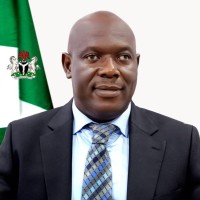
The Hydrocarbon Pollution Remediation Project (HYPREP) has commemorated the 15th anniversary of the release of the United Nations Environment Programme (UNEP) Environmental Assessment Report on Ogoniland, reaffirming its commitment to restoring the environment and improving the livelihoods of affected communities.
In a statement signed by the Project Coordinator, Prof Nenibarini Zabbey, to commemorate the anniversary, HYPREP described the anniversary as a significant milestone in Nigeria’s environmental restoration efforts, noting that the project has made remarkable progress in implementing the recommendations of the landmark UNEP report released on August 4, 2011.
The UNEP report had revealed extensive oil pollution across Ogoniland, severe environmental degradation, and serious public health risks resulting from decades of petroleum operations. It also recommended an initial $1 billion fund to commence the cleanup of the affected communities.
According to HYPREP, the Federal Government formally launched the Ogoni clean-up in 2016, while the Project Coordination Office was established in 2017 to drive the implementation of UNEP’s recommendations.
Zabbey said the current administration has continued to prioritise the project under the Renewed Hope Agenda.
Providing an update on the cleanup, the Project Coordinator disclosed that 30 of the 65 contaminated sites identified by UNEP have been fully remediated, while work is ongoing at several medium- and high-risk locations. It also stated that more than 1.5 million mangrove seedlings have been planted as part of what it described as the world’s largest restoration of oil-degraded mangroves, with over 1,000 hectares of shoreline already rehabilitated.
Zabbey further revealed that 49 Ogoni communities have been connected to potable water schemes through multiple water projects and booster stations aimed at providing safe drinking water across the region.
In the health sector, he said the 100-bed Ogoni Specialist Hospital in Kpite and the 43-bed Cottage Hospital in Buan are nearing completion, adding that several existing health facilities have been upgraded with modern medical equipment, while five ambulances have been donated to improve emergency healthcare services. The Project Coordinator also disclosed that a three-year human health biomonitoring study is being conducted in collaboration with the World Health Organization’s International Agency for Research on Cancer (IARC).
On economic empowerment, Zabbey stated that the Project has created more than 8,000 direct jobs and trained thousands of Ogoni youths and women in various vocational and technical skills, including software development, cybersecurity, aviation, commercial diving, seafaring, mechatronics, and creative arts. The project also reported awarding scholarships to more than 1,000 students, providing grants to small businesses, and supporting persons living with special needs through skills acquisition programmes.
The statement further highlighted ongoing legacy projects, including the Ogoni Power Project and the Centre of Excellence for Environmental Restoration, which it said is about 96 per cent complete. HYPREP also welcomed the recent designation of the Ogoni Wetland as a Ramsar Site of International Importance and pledged to continue promoting biodiversity conservation and sustainable management of the ecosystem.
Marking the anniversary, Zabbey said the progress achieved over the past 15 years demonstrates the collective commitment of government, development partners, stakeholders, and local communities to restoring Ogoniland. He called for renewed collaboration to sustain the cleanup effort, promote environmental sustainability, and support the long-term development of the region. 3
-

 News2 days ago
RSG Targets Nine Million Residents in Mosquito Net Distribution Campaign
-

 Oil & Energy2 days ago
Aiyedatiwa Signs New Electricity Bill
-

 Maritime2 days ago
Marine Minister Commends President Tinubu On NPERA Bill Assent
-

 Oil & Energy2 days ago
NLNG Commissions Research And Innovation Centre In RSU
-

 News2 days ago
KenPoly Holds Eight Convocations, August 29
-

 News2 days ago
RSG Begins Another Phase of Projects Commissioning Today
-

 News2 days ago
RMAFC Completes Revenue Sharing Review, Proposes New Pay
-

 Maritime2 days ago
NAGAFF Petitions IGP Over Alleged Maritime Police Harassment