Connect with us

Opinion

How Amaechi Redefined Governance (I)

Published

on

Some radicals are ‘propelled by nothing more than self-
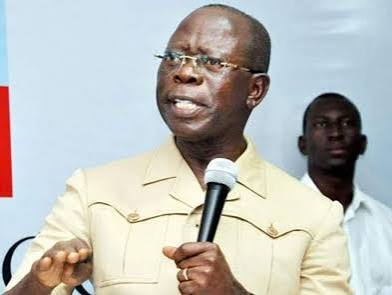
flaunting, a blatant showmanship; others are mere impostors riding on the wave of radicalism to achieve their selfish agenda. But only in rare cases .does radicalism coincide with altruism, with a burning desire to align with the communal spirit, to .advance the common good. Such’ a rare instance is found in Chibuike R. Amaechi. But don’t, take my word for it.’ Send out your  feelers and see’ what they bring back.
A case in point: a young  Man recently returned from overseas studies in Canada and called at his ‘family home in Rumuomasi in Obio Akpor Local Government Area within greater Port Harcourt. It took only the beacon of the Shell Industrial Area and a strong desire not to ask the taxi driver questions for him to finally locate his ancestral home. He stood transfixed, taking in the fresh oxygen from the specie of palms lining the centre pavement portioning the road linking Aba Road/Market  Junction to Nkpogu Junction in Port Harcourt City LGA into ‘to’ and ‘fro’ segments. The young man marveled. He had heard of the term ‘garden city’ in connection with the Rivers state capital but by the time he left on State government scholarship to England three years ago in a programme that ultimately enabled him to earn his doctorate degree in Canada, Port Harcourt and its environs were like’ enclaves emerging from war, and nothing in. them suggested anything close to garden. To complete his marvel, the street lights soon came on as evening approached. At some point it took the motley crowd of black and familiar faces for him to reassure himself he was not back to Ottawa. His interactions on the internet with some friends back in Nigeria had suggested that Amaechi was all about politics and opposition and that nothing was going on in Rivers State. Now he knew better, especially after he discovered that that road which actually connects Peter Odili Road to the east was not an isolated case. Across the State, roads’ with – modern drainage systems were either under . construction or already ‘aglow with walkways, well-marked packing directions, street lights and modern directional signs. Welcome to the garden city.
Unarguably, this is the first time a radical is occupying the Rivers State Government House and his rule, however it ends, has already created a phenomenon in leadership and development. Amaechi clearly knew the circumstances of his emergence as governor – that it was clearly a divinely orchestrated event backed by the people. That must explain why he set out to please only. too constituencies: God and the masses. He had every opportunity to play politics as ‘business as usual’ and ,he knew he stood to gain a lot personally. But he shunned that in favour of the’ road less travelled. In following this option, he obviously knew he would come against a great obstacle, but he probably could not have envisaged the extent of the challenge. He had one ‘masterstroke: aligning with the people, the masses of the people of Rivers State and, the residents.
This has been, and will continue to be his staying power. Across the country, people believe that a governor must ‘chop,’ their main grouse is when all that he has to show for his governance is  ‘chopping’ the state down to dilapidation, a reign of kleptocracy.
This was the scene across the country and more so in Rivers State before Amaechi’s emergence as governor.  The first thing he did was to sweep away the Augean Stable. Gathering a team’ of mostly young
technocrats but also socially conscious bureaucrats, he set about with a clear, unmistakable Vision and Mission. Unfortunately the old aristocrats, the wheelers and dealers who had profited unconscionably from the old order could not read the handwriting on the wall. They did not understand that Amaechi have encircled his thought with positive change of heart.”Drop the last year into the silence limbo of the past let it go .for it was imperfect, and thank God that it can go” Brooks A”tkinson. ‘They thought that he was merely posturing and that he would turn the bend and behave true to type. That was their error. They did not know that the one they were up against was working  ‘under the firm conviction that,’ like Karl Marx’s proletariat, he, together with the Rivers State masses,  ‘have nothing to lose but their chains; they have a world to win.’
It may seem out of place to connect what Amaechi has done in Rivers state, in particular his philosophy and modus operandi with the concept of class suicide, but it  ‘is not a far-fetched’ possibility., Truly, he may have had plebeian roots, but series .of social circumstances had thrust him up as a de facto patriarch right from when he was a two-term Speaker of the Rivers State House of Assembly under the administration of Governor Peter Odili. Did he wheel’ and deal? Maybe. Maybe’ not. But that is now a moot point. The issue is: when he got the opportunity – whether on a platter of gold, silver or wood, did he deliver? You bet. For the first time in recent history, civil servants, in particular, teachers, could proudly claim that they are workers. The children of the poor and downtrodden can afford to -go-to schools and actually handle computers! What the Ubima man has done is to create a level playing field where, to draw a parallel from the evergreen Martin Luther King, one is no longer judged by the circumstances of his birth but by the content of his  ‘character, the degree of greyness of his or her grey matter. The scholarships funds which until recently was managed by the incorruptible icon Elechi Amadi ‘has seen the children of the rich and poor alike scramble for scholarship opportunities with only hard work and brain power as the determinants of who gets what. There is hardly any reason not to believe that the new management will tow that noble line. To ‘furnish the means of acquiring knowledge is the greatest benefit that can  ‘be conferred upon mankind it prolongs life’ itself and enlarges the sphere of existence” John Quincy Adams. The results of such experiments in normalcy in an overall abnormal national setting are not too far away. Soon there will emerge in Rivers State a class of leaders, intelligent, radical, with a pro-people orientation and with an unwavering commitment to the common good but who, unlike before, would not be too poor as to be marginalised or disregarded.
Amaechi’s initial alignment with the downtrodden may have been done out of mere radicalism, but it has proved to be the governor’s ultimate benefit as his Party of convenience, the All People’s, Congress battles with the Peoples. Democratic Party and other entrenched interests for the soul of Rivers State Increasingly, most indicators are pointing to victory to the Amaechi camp in the titanic , battles ahead. “A positive attitude can destroy every negative obstacle” Terry Mark.
Dr. Jackson is Chancellor, International Society for Social Justice and Human Rights.


Omenazu Jackson

Continue Reading

Opinion

Trans-Kalabari  Road:  Work In Progress 

Published

on

Quote:”This Dream project  is one of  the best things that have happened  to the people and residents of Degema, Asari Toru and Akuku Toru Local Government Areas in recent times.”
This is the concluding part of this story featured in our last edition.
Good road network helps farmers to convey their agro-allied products to  commercial hubs where buyers and sellers meet periodically to transact business. Road network engineers and motivates people resident in unfriendly geographical terrains, like riverine areas,  to own property and shuttle home with ease. Some people will prefer living in their own houses in a more serene and nature-blessed communities to living in the city that is fraught with  pollution, and other environmental, social and economic hazards. Prior to the cult epidemic that ravaged parts of Rivers State, the Emohuas, Elemes, Ogonis, and Etches were known for rural dwelling. Most public servants from these areas do their official and private transactions from  their villages. For them it was comparatively easier to live in the village and engage in a diversified economic endeavours through farming, fishing or other lucrative business without outrageous charges and embarrassment associated with doing business in Port Harcourt, where land is as scarce as the traditional needle.
That is why the decision to construct the Trans-Kalabari Road by the administration of Dr. Peter Odili was one of the best decisions that administration took. When Dr. Odili vacated office as the Rivers State Governor, Rt. Hon. Chibuike Rotimi Amaechi took over and awarded contracts for continuation of the road project which in my considered view is the felt need of  the people of Degema, Asari Toru and Akuku Toru Local Government Areas. Unfortunately, Rt. Hon. Amaechi’s efforts to drive the project was sabotaged by some contractors some of whom are Kalabari people. The main  Trans-Kalabari Road is one project that is dear to the people and residents of Degema, Asari Toru and Akuku Toru Local Government Areas of Rivers State. This is because through the road commuters can easily access several communities in the three local government areas. For instance, the road when completed will enable access to eight of the ten communities in Degema Local Government Area,  namely: Bukuma, Tombia,  Bakana, Oguruama, Obuama, Usokun, Degema town  and the Degema Consulate. It will also link 15 of the 16 communities in Asari Toru Local Government Area. The communities are: Buguma, the local government headquarters, Ido, Abalama, Tema, Sama, Okpo, Ilelema, Ifoko, Tema, Sangama, Krakrama, Omekwe-Ama, Angulama. The road will also connect  14  of 17 wards in Akuku Toru Local Government Area, and other settlements. It is interesting to note that It is faster,  and far more convenient and economical for the catchment Communities on the Trans-Kalabari Road network to go to the State Capital than the East West Road.  The people of the three local government areas will prefer  to work or do their transactions in Port Harcourt from their respective communities to staying in Port Harcourt where the house rent and the general cost of living is astronomically high.
 Consequently, development will seamlessly spread to the 28 out of 34 communities of Degema, Asari Toru and Akuku Toru Local Government Areas. The only Communities that are not linked by the road project are Oporoama in Asari Toru,  the Ke and  Bille Communities in Degema Local Government Area and the “Oceania” communities of Abissa, Kula, Soku, Idama, Elem Sangama of Akuku Toru Local Government Area. But because of the economic value of the unlinked Communities to Nigeria, (they produce substantial oil and gas in the area), the Federal, State Governments and the Niger Delta Development Commission (NDDC), can extend the road network to those areas just as Bonny is linked to Port Harcourt and the Lagos Mainland Bridge is connecting several towns in Lagos and neighbouring States.Kudos to previous administrations who  had constructed the Central Group axis.
 However, what is said to be the First Phase of the Trans-Kalabari Road project is actually a linkage of the “Central Group” Communities which consists of Krakrama, Angulama, Omekwe. Ama, Omekwe Tari Ama, Ifoko, Tema, Sangama. It is the peripheral of the Trans-Kalabari Road. The completion of the  Main Trans Kalabari project will free Port Harcourt and Obio/Akpor areas from congestion. It will motivate residents and people of the three local areas to contribute to the development of their Communities. If the Ogonis, Etches, Emohuas, Oyigbos, Okrikas, Elemes can feel comfortable doing business in Port Harcourt from home, residents and people whose communities are linked to Port Harcourt through the Trans-Kalabari Road will no doubt, do likewise. The vast arable virgin land of the Bukuma people can be open for development and sustainable agricultural ventures by Local, State and Federal Government.
It is necessary to recall that the Bukuma community was host to the Federal Government’s Graduate Farmers’ Scheme and the Rivers State Government moribund School-to-Land Scheme under Governor Fidelis Oyakhilome. Bukuma was the only community in Degema, Asari Toru and Akuku Toru Local Government Areas that has the capacity to carry those agricultural programmes. However the lack of road to transport farm produce to Port Harcourt and facilitate the movement of the beneficiaries of the scheme who lived in the community which is several miles away from the farms, hampered the sustainability of the programme. The main Trans-Kalabari Road remains the best gift to the people of Degema, Asari Toru, and Akuku-Toru Local Government Areas. Kudos to Sir Siminilayi Fubara.
By: Igbiki Benibo
Continue Reading

Opinion

That  U.S. Capture of Maduro

Published

on

Quote:”Strategic convenience does not nullify sovereignty. Political frustration does not authorise military abduction.”
The first part of this story was published in our last edition.
 
In Africa and the Middle East, regime change—whether by invasion, proxy warfare, or sanctions—has often left behind fractured states, weakened institutions, and prolonged instability. Washington’s motivations in Venezuela are widely understood: vast oil reserves, alliances with U.S. rivals, and symbolic defiance of American influence in the Western Hemisphere. But none of these reasons confer legal or moral legitimacy. Strategic convenience does not nullify sovereignty. Political frustration does not authorise military abduction. If every powerful nation acted on its grievances in this manner, global chaos would inevitably follow. International law provides mechanisms for accountability. Under the Rome Statute of the International Criminal Court (ICC), individuals accused of crimes against humanity or other grave offences are subject to investigation and prosecution through judicial processes.
Likewise, extradition treaties, mutual legal assistance agreements, and Interpol mechanisms exist to ensure accountability while respecting due process. These frameworks were designed precisely to prevent unilateral enforcement of “justice” by military force. The most profound consequence of America’s action may not be in Caracas, but in the precedent it sets. If the world accepts that a superpower can unilaterally depose another country’s president, then the foundation of the international system is weakened. Sovereignty becomes conditional—no longer a right, but a privilege tolerated at the discretion of the powerful. Going forward, if another country invades its neighbour, will the United States retain the moral authority to impose sanctions or demand restraint? Some analysts already warn that parallels between Russia’s actions in Ukraine and America’s conduct in Venezuela risk further eroding global norms. Selective adherence to international law breeds cynicism and accelerates the drift toward a world governed by force rather than rules.
Power—military, economic, or political—should serve human progress and collective well-being, not domination and destruction. For African nations, many of which emerged from colonial rule through bitter struggle, this precedent is especially alarming. Sovereignty is not an abstract legal concept; it is a hard-won shield against external domination. Any erosion of that principle anywhere weakens it everywhere. Africa’s painful history of foreign interference makes this lesson especially urgent.  For me, the real issue is not whether Nicolás Maduro is a good or bad leader. That judgment belongs, first and foremost, to the Venezuelan people. The larger issue is whether the international system still operates on law—or has quietly reverted to hierarchy. If America insists it is defending global order, it must ask itself a difficult question: can an order survive when its most powerful guardian feels entitled to violate it? Until that question is answered honestly, the capture of a foreign president will remain not a triumph of justice, but a troubling symbol of a world drifting from law toward force.
If the United States felt so strongly about the allegations of terrorism, drug trafficking  against Maduro, were there no other lawful options? Judicial accountability, diplomacy, regional mediation, and multilateral pressure may be slow and imperfect, but they reflect respect for international law and sovereign equality. Military seizure is a blunt instrument. It humiliates institutions, radicalizes populations, and hardens resistance. It may remove a leader, but it rarely resolves the underlying crisis. History teaches that military interventions seldom result in stable democratic outcomes. More often, they breed resentment, resistance, and long-term instability. For the sake of global order and the rule of law, the United States should reconsider this path and recommit to diplomacy, legal cooperation, and respect for the sovereign equality of states. Former U.S. Vice President Kamala Harris reportedly described the invasion of Venezuela as “unlawful and unwise,” warning that such actions “do not make America safer, stronger, or more affordable.” Her words reflect a growing recognition, even within the United States, that force without legitimacy undermines both moral authority and global stability.
Should what happened in Venezuela serve as a wake-up call for corrupt African leaders who undermine the people’s right to choose their leaders? The answer is yes. The capture of Maduro should alarm African leaders who manipulate elections, weaken institutions, suppress opposition, undermine citizens’ rights, or cling to power at all costs. Venezuela faced widespread criticism over disputed elections and repression long before this episode, and that context shaped how the world reacted. This does not justify foreign military intervention, but it highlights an uncomfortable truth: prolonged democratic decay isolates nations and invites external pressure—from sanctions to diplomatic censure. Global opinion matters, and legitimacy at home strengthens sovereignty abroad. The Economic Community of West African States (ECOWAS) and several African leaders have rightly condemned the events in Venezuela, invoking the principles of sovereignty and non-interference enshrined in international and regional law.
Beyond condemnation, however, African leaders must look inward. The continent’s future cannot be built on repression, constitutional manipulation, and personal greed. Leadership must reflect the will of the people, not desperation for power. Two days ago, a social commentator on a radio station argued that Trump’s action—though condemnable—demonstrates how far a leader can go for his country’s interest. According to this view, he did not intervene in Venezuela for personal enrichment, but to strengthen his nation. In stark contrast, many African leaders plunder their own countries. They siphon public resources, impose crushing taxes and harmful policies, and leave their citizens poorer—all for selfish gain. That contradiction is the deeper lesson Africa must confront.True sovereignty is protected not only by international law, but by accountable leadership at home.
 By:  Calista Ezeaku
Continue Reading

Opinion

Kudos  Gov Fubara

Published

on

Please permit me to use this medium to appreciate our able governor, Siminalayi Fubara for the inauguration of the 14.2-kilometre Obodhi–Ozochi Road in Ahoada-East Local Government Area.  This inauguration marks a significant milestone in the history of our communities and deserves commendation. We, the people of Ozochi, are particularly happy because this project has brought long-awaited relief after years of isolation and hardship.
The expression of our traditional ruler, His Royal Highness, Eze Prince Ike Ehie, JP, during the inauguration captured the joy of our people.  He said, “our isolation is over.”  That reflects the profound impact of this road on daily life, economic activities, and social integration of the people of Ozochi and other neighbouring communities. The road will no doubt ease transportation, improve access to markets and healthcare, and strengthen links between Ahoada, Omoku, and other parts of Rivers State.
The people of Ahoada, Omoku, and indeed Rivers State as a whole are grateful to our dear governor for this laudable achievement and wish him many more successful years in office. We pray that God endows him with more wisdom and strength to continue to pilot the affairs of the state for the benefit of all. As citizens, we should rally behind the governor and support his development agenda. Our politicians and stakeholders should embrace peace and cooperation, as no meaningful progress can be achieved in an atmosphere of conflict. Sustainable development in the state can only thrive where peace prevails.
Samuel Ebiye
Continue Reading

Trending