
News
Tinubu Orders Security Chiefs To Restore Peace In Plateau, Benue, Borno

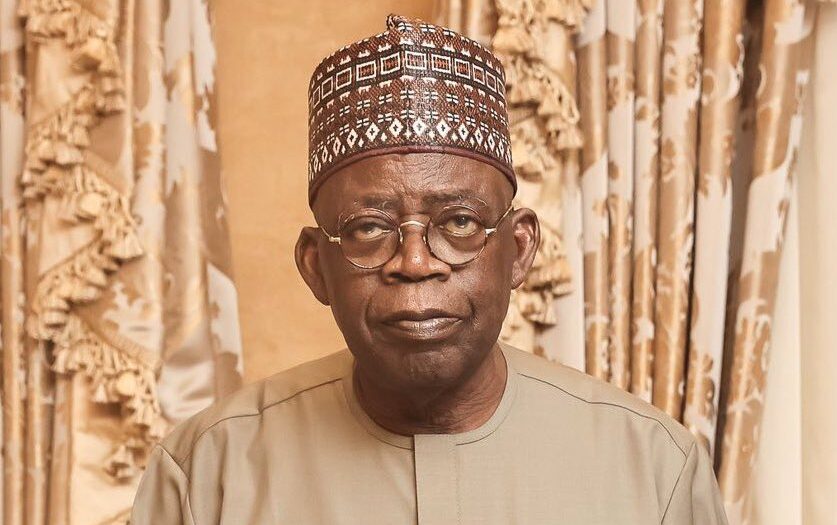
President Bola Tinubu has ordered a security outreach to the hotbeds of recent killings in Plateau, Benue and Borno States, to restore peace to areas wracked by mass killings and bomb attacks.
National Security Adviser, Nuhu Ribadu, disclosed this to State House correspondents after a four-hour security briefing with the President at the Aso Rock Villa, Abuja on Wednesday.
“We listened and we took instructions from him. We got new directives…to go meet with the political authorities there,” Ribadu told reporters, adding that Tinubu directed them to engage state-level authorities in the worst-hit regions.
Director-General, National Intelligence Agency, Mohammed Mohammed; Chief Defence Intelligence of the Nigerian Army, Gen. Emmanuel Undianeye; Director-General, Department of State Services, Oluwatosin Ajayi and Chief of Staff to the President, Femi Gbajabiamila, appeared for the briefing.
The Tide’s source reports that in Plateau State, inter-communal violence between predominantly Christian farmers and nomadic herders spiralled into gory slaughter when gunmen stormed Zikke village in Bassa Local Government early on April 14, killing at least 51 people and razing homes in a single night.
In Benue, at least 56 people were killed in Logo and Gbagir after twin assaults blamed on armed herders.
Meanwhile, in Borno State, eight passengers perished and scores were injured when an improvised explosive device ripped through a bus on the Damboa–Maiduguri highway on April 12.
Ribadu explained that after an extensive briefing, intelligence chiefs received fresh instructions to restore peace, security and stability across Nigeria.
“In particular, Tinubu had ordered immediate outreach to the political authorities in Plateau, Benue and Borno States, and the defence team had gone round those States to carry out his directives and report back.
“We gave him an update on what has been the case and what is going on, and even when he was out there, before coming back, he was constantly in touch. He was giving directives. He was following developments, and we, in charge of the security, got the opportunity today to come and brief him properly for hours. And it was exhaustive.
“We listened and we took instructions from him. We got new directives. The fact is, Mr. President is insisting and working so hard to ensure that we have peace, security and stability in our country. We gave him an update on what is going on, and we also assured him that work is ongoing and continues.
“We also carried out his instructions. We went round, the chiefs were all out where we had these incidents of insecurity in Plateau State, Benue State, even Borno, these particular three states, and we gave him feedback, because he directed us to go meet with the political authorities there,” the NSA explained.
Ribadu described Tinubu as “worried and concerned,” and said he directed that all security arms be deployed around the clock.
The government, he added, believes these steps have already produced measurable improvements, even if the situation is not yet 100 per cent safe and secure.
“He’s so worried and concerned, he insisted that enough is enough, and we are working and to ensure that we restore peace and security and all of us are there. The armed forces are there, the Civil Police, intelligence communities, they are there.
“They are working there 24 hours, and we feel that we have done enough to believe that we are on the right course, and we’ll be able to be on top of things,” Ribadu stated.
The NSA emphasised that combating insecurity was not solely a Federal Government responsibility.
He stated, “The issue of insecurity often is not just for the government. It involves the subunits. They are the ones who are directly with the people, especially if some of the challenges are more or less bordering on community problems.
“Not entirely everything is that, but of course it also plays a significant role. You need to work with the communities, the local governments, and the governors, especially the governors.
“The President will continue to direct that. We should be doing that, and that’s what we are able to. We are very happy and very satisfied with the instructions and directives given by Mr. President this evening.”
In Borno State, the NSA noted that while violence had surged in recent months, the insurgents refused to accept defeat.
He warned that most recent casualties there resulted from improvised explosive devices—”cowardly” IED attacks targeting civilians—and from opportunistic raids that follow any lull in fighting.
“We are getting the cooperation of the leadership at the state level, and everybody. It’s not 100 per cent…but we are going there.
“When you are having peace and you are beginning to get used to it, if one bad incident happens, you forget the periods that you enjoyed peacefully,” he added.
He paid tribute to the “many who do not sleep, who walk throughout, who do not go for any break or holiday”—the soldiers, police and intelligence officers whose sacrifices have created the fragile calm Nigerians now experience.
“They will continue to be there,” he said, adding, “Things have changed in this country…we are on the right track and we will not relent. We will not sit down; we will not stop until we are able to achieve results.”



The Rivers State chapter of the All Progressives Congress Christian Leaders Forum has expressed strong confidence in the capacity of All Progressives Congress (All Progressives Congress) candidates in the state to deliver effective governance if elected into office in the coming elections.
The State Coordinator of the forum, Archbishop Lucky Aroh, made this known during a breakfast and thanksgiving meeting held in Port Harcourt, where leaders gathered to pray for the stability of the party and the safety of its candidates ahead of the 2027 general elections.According to him, the meeting was convened to seek divine intervention for peace, unity, and security among APC candidates across Rivers State.
“Today we are praying for APC stability in Rivers State and the security of our candidates that have been elected to contest the 2027 elections. It is a breakfast meeting,” Aroh said.
He further expressed optimism that the party’s candidates would not disappoint the people if entrusted with leadership responsibilities.
“They will not fail when elected into office. We are here as fathers of the land to let them know, and I must tell you the truth that these are the authentic people that will do well in Rivers State,” he added.
Speaking earlier, the National Chairman of the forum, Professor Olanrewaju Abraham, commended the Rivers State chapter for organizing the programme, noting that the national body of the forum believes strongly in the power of prayer.
He stated that political leadership provides an opportunity to influence society positively, including advancing moral and spiritual values, while expressing confidence that APC candidates at all levels would emerge victorious in the upcoming elections.
Also speaking, the Rivers State Women Leader of the APC, Hon. Darling Amadi, praised the forum for its commitment to prayers for peace, stability, and the protection of party candidates.
Represented by the Deputy Women Leader of the party in the state, she described the initiative as commendable and urged other political and support groups within the party to emulate the gesture in promoting unity and stability.
By: John Bibor, Menebe Emmanuel & Fortune Paibi
Prominent businessman and philanthropist, Elder Anthony Osagwe-Ogo, was celebrated in grand style as he marked his 70th birthday anniversary, with distinguished Nigerians, business leaders, and golf enthusiasts gathering to honour his remarkable contributions to society.
The colourful celebration took place at the Port Harcourt Golf Club, where friends, associates, and well-wishers converged to pay tribute to the revered elder statesman.
Chairman of the occasion, High Chief (Dr.) Ikenna Okafor, described the celebrant as a detribalised Nigerian whose generosity, humility, and commitment to humanity have earned him admiration across different communities and backgrounds.
According to Dr. Okafor, Pa Osagwe-Ogo’s impact on society and the development of his community remains unparalleled. He noted that members of the golfing community are proud to be associated with a father figure who consistently promotes the welfare and well-being of those around him.
He further stated that the history and growth of the Port Harcourt Golf Club cannot be told without acknowledging the significant role played by the celebrant, whose wisdom, encouragement, and leadership have helped sustain the club over the years.
“We are here to celebrate a man who has impacted humanity positively, a peace-loving individual and an epitome of hope for the younger generation. We pray to emulate his virtues. Today, we celebrate a bridge-builder, a trailblazer, and an iconic leader whose life continues to inspire many,” Dr. Okafor said.
He expressed delight at the large turnout of guests from various walks of life, describing it as a testament to the respect and affection Pa Osagwe-Ogo commands within and beyond Rivers State.
In his response, the celebrant, Pa Anthony Osagwe-Ogo, expressed profound gratitude to God for preserving his life and granting him the privilege of attaining the milestone age of 70.
He also thanked members of the Port Harcourt Golf Club, family members, friends, and associates for identifying with him during the celebration and for their unwavering support over the years.
The event featured the cutting of the birthday cake, presentation of awards to deserving members of the club, goodwill messages, and moments of celebration among guests.
The ceremony was attended by notable personalities from the business community, the golfing fraternity, and other sectors, all of whom joined in celebrating the life and legacy of the respected elder statesman.
Rivers State Governor, Sir Siminalayi Fubara, and the Permanent Secretary of the Rivers State Ministry of Information and Communications, Dr. Honour Kuru Sirawoo, have been honoured with awards of recognition in connection with the 2026 Democracy Day celebrations held in Port Harcourt.
The awards, which formed part of activities marking Nigeria’s Democracy Day on June 12, were formally presented on Tuesday at the Ministry of Information and Communications in Port Harcourt.
Presenting the awards was Hon. Abdul Hameed Oladipupo Alli, popularly known as “Mr. Nigeria,” Publisher of Asiwaju Trumpet Magazine and Achievers World International Magazine.
Governor Fubara was recognised for his efforts in sustaining peace, stability, and a conducive political atmospherJohn Bibor / Menebe Emmanuel / Fortune Paibie in Rivers State. The organisers noted that his administration has fostered harmony and strengthened civic participation across the state.
Dr. Sirawoo, on the other hand, was honoured for his exemplary administrative leadership and significant contributions to effective information management within the Ministry of Information and Communications.
Representing Dr. Sirawoo at the presentation ceremony, Dr. Christian Davies received the award on his behalf and expressed gratitude for the recognition. He described the honour as a reflection of Dr. Sirawoo’s unwavering commitment to professionalism, excellence, and dedicated public service.
Dr. Davies assured the organisers that the award would be formally conveyed to the Permanent Secretary.
The event also featured the presentation of commemorative publications highlighting major governance and civic milestones in Rivers State, including Easter celebrations, Workers’ Day activities, the Governor’s third anniversary in office, and Democracy Day programmes.
Organisers of the awards commended the Rivers State administration for what they described as sustained peace, political stability, and improved civic engagement, noting that these achievements have contributed significantly to the state’s continued development.
By: Jessica Sambol