
News
‘Obi Wali’s Contributions Left Indelible Mark On Nigeria’s Political Landscape’

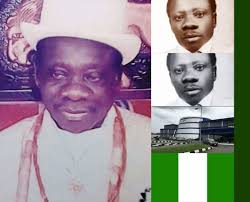
The people of Ikwerre ethnic nationality have maintained that Obi Wali’s contributions to democracy, justice, and the defence of the rights of the people have left an indelible mark on Nigeria’s political landscape.
They spoke under the auspices of Ikwerre Development Association (IDA) during the 2024 Chief Senator Dr. Obi Wali Memorial Lecture which was held last weekend.
The Guest Speaker, Professor O.V.C. Okene, a professor of Law and former dean, Faculty of Law, Rivers State University, Port Harcourt, spoke on the topic: “The State and Democracy Today: Remembering Dr. Obi Wali and the Rights of the People.”
He described Obi Wali as a towering figure in Nigerian politics, academia, and human rights advocacy.
He said: “He is remembered today as a patriot, a defender of minority rights, and a steadfast advocate for equity whose life and legacy remain relevant to the ongoing struggles for justice and development in Nigeria.”
“Chief Senator Dr. Obi Wali is a man whose contributions to democracy, justice, and the defence of the rights of the people have left an indelible mark on Nigeria’s political landscape.
“As an advocate for minority rights, a committed public servant, an intellectual, and a politician, his impact resonates deeply within our society today.
“Dr. Obi Wali fought tirelessly for the rights of marginalised groups, particularly in the Niger Delta, and was a voice of reason during turbulent political times. His assassination in 1993 was a profound loss but his legacy lives on, inspiring new generations to continue the fight for justice and equality.”
Prof. Okenne stated that Late Dr. Obi Wali grew into one of the foremost voices for justice and equity for Nigeria, particularly for the Niger Delta region, adding that Wali’s life was centered on advancing education, defending cultural identity, and fighting for the rights of marginalised communities.
“His academic work became influential in African political thought, particularly through his critique of the dominance of foreign languages in African literature, advocating for the preservation and development of indigenous languages.
“His impassioned defence of the rights of the Niger Delta people, coupled with his broader fight for equitable development across Nigeria, earned him a reputation as a fearless and principled politician.
“A strong supporter of democratic principles, Wali used his position to amplify the voices of the marginalised and to push for policies that promoted fairness and inclusivity. His dedication to justice extended beyond politics into community development, where he worked tirelessly to uplift the underrepresented.
“Remembering Senator Obi Wali’s legacy is crucial in today’s Nigeria, where democracy and human rights are still being contested. His contributions to Nigeria’s democratic journey serve as a reminder of the importance of protecting and expanding democratic spaces, promoting social justice and equality, upholding human rights and the rule of law, and empowering marginalised communities.
“By reflecting on his life and work, we can draw inspiration and lessons for our own efforts to build a more just and equitable society.
“The task before us is to build a state that truly represents the people, a democracy that lives up to its promises, and a society where the rights of every individual are respected. This is the Nigeria that Chief Senator Dr. Obi Wali envisioned, and it is up to us to make it a reality.
“Let us not forget that democracy is not a destination, but a journey – one that requires constant vigilance, participation, and the will to make difficult choices for the common good. As we leave here today, let us be inspired by Chief Obi Wali’s life and legacy to continue the fight for a Nigeria where democracy thrives and the rights of the people are truly respected”, he said.
Highlights of the event was the installation of Omekwa eli Ikwerre XVI and XVII respectively on Hon. Oliver Wolugbom and Eze Dr Esezi Obillor.
Former Protem Senate President Senator, Chief John Azuta Mbata, Hon. Mrs Blessing Chigeru Amadi, representing Port Harcourt Federal Constituency 2 and Chief Charles Wami of Charkins Maritime were given awards for their outstanding roles in Iwhuruohna (Ikwerre) land.
In their separate speeches, the President of Ikwerre Development Association (IDA) Dr Chinogonum Chuku; the Chairman of the Planning Committee, Prof. C. K. Wachukwu; and the Public Relations Officer, Dr Ovuchi J Agwnu extolled the virtues of Dr Obi Wali as a man at home with his people, with Impactful leadership to the youth and entire Iwhuruohna (Ikwerre) ethnic nationality which he also served as President-General and Ochi Ohna Ikwerres III.
The event which held in the Faculty of Law auditorium of the Rivers State University was attended by the President-General of Ogbakor Ikwerre Worldwide, Eze G. W. Onuekwa, Senator Andrew Uchendu, the Chairman of Ikwerre Supreme Council of Government Recognized Traditional Rulers, King Leslie Eke, Henry Chukwu, among others.


The Rivers State Government has commended the Church of Nigeria (Anglican Communion) for its outstanding contributions to the development of Rivers State, particularly in the areas of peacebuilding, education, healthcare, and moral development.
Governor of Rivers State, Siminalayi Fubara, stated that the Church has remained a dependable partner in promoting peace, unity, justice, moral discipline, and social harmony across society.
The Governor, who was represented by the Secretary to the State Government, Dr. Dagogo Wokoma, made the remarks during the thanksgiving service marking the 30th Anniversary and First Session of the 11th Synod of the Diocese of Niger Delta North, held at St. Peter’s Anglican Church on Sunday.
Governor Fubara described the Synod’s theme, “Kingdom Advancement: The Priority of Every Believer,” as timely and relevant, considering the prevailing realities in society.
According to him, the Church continues to play a vital role in shaping societal values and inspiring hope among citizens.
“The Church remains a vital partner in promoting peace, unity, justice, and moral discipline. Its role in shaping values and inspiring hope cannot be overemphasized,” he stated.
The Governor further acknowledged the Anglican Communion’s contributions in education, healthcare delivery, youth empowerment, humanitarian services, and spiritual guidance across communities in Rivers State.
“The Rivers State Government appreciates the invaluable contributions of the Anglican Communion in education, healthcare, youth development, humanitarian support, and spiritual guidance. Your impact across communities in Rivers State continues to strengthen families and promote peaceful coexistence among our people,” he added.
Governor Fubara reaffirmed his administration’s commitment to building a peaceful, united, and prosperous Rivers State where all citizens can thrive irrespective of religion, ethnicity, or social background.
He also urged the Synod to continue praying for sustainable development and progress in Rivers State and Nigeria at large.
Earlier in his sermon, the Guest Minister, Joseph Olushola, spoke on the topic, “Kingdom Investment and Internal Rewards,” urging Christians to remain faithful stewards of God’s blessings and committed to advancing God’s kingdom through service and generosity.
The cleric emphasized that believers are custodians of the virtues and resources entrusted to them by God, stressing that divine rewards are based on faithfulness and impact rather than material possessions.
The Shell Nigeria Gas Limited, in partnership with the Manufacturers Association of Nigeria (MAN), has reaffirmed support for efforts to expand gas distribution infrastructure in Rivers State as part of initiatives aimed at improving access to affordable, cleaner and more reliable energy for industries across the South-South region.
The commitment was highlighted during the SNG–MAN Business Forum held in Port Harcourt, where stakeholders from the industrial and public sectors examined the role of natural gas in driving industrialisation, boosting local production and strengthening energy security.
Speaking at the forum on behalf of the Managing Director of Shell Nigeria Gas Limited, the company’s Head of Gas Distribution, Mr. Chukwuka Amos Ejesi, described natural gas as a critical component of Nigeria’s energy mix and a key driver of sustainable industrial growth.
According to him, Nigeria’s gas development agenda has reached a stage where policy direction must be matched with practical implementation capable of addressing the energy challenges confronting manufacturers.
He noted that pipeline gas offers industries a cleaner, more dependable and cost-effective energy alternative capable of supporting uninterrupted operations, reducing emissions and improving production efficiency.
“Gas is the backbone of manufacturing, and we are encouraged by the growing recognition among stakeholders of the need for cleaner and more reliable energy solutions,” he said.
Ejesi stressed the need for sustained collaboration among energy providers, government institutions and industrial stakeholders to maximise the country’s gas resources for economic development.
He added that improved gas infrastructure would strengthen manufacturing value chains, enhance productivity and promote more competitive industrial operations across Rivers State and the wider South-South region.
Participants at the forum also emphasised the importance of expanding energy infrastructure as a pathway to unlocking industrial capacity, reducing operating costs and promoting sustainable industrial development.
Representing Governor Siminalayi Fubara, the Director-General of the Rivers State Investment Promotion Agency, Dr. Chamberlain Peterside, reaffirmed the state government’s commitment to partnering with private sector investors to revitalise industrial activities in the state.
He identified key projects targeted under the initiative to include the revival of the Ahoada Industrial Park, the New Port City project and the proposed Bonny Industrial Park, all aimed at stimulating economic growth and expanding industrial opportunities along the Bonny corridor.
According to the governor, the long-term vision is to position Rivers State as a leading manufacturing hub in Southern Nigeria through strategic public-private partnerships.
Governor Fubara also commended Shell Nigeria Gas and MAN for sustaining engagements geared towards improving industrial energy access, noting that gas infrastructure development remains central to the state’s economic recovery plans.
He further observed that the gas sector presents enormous opportunities for economic growth, especially as global energy systems continue to shift towards cleaner energy sources.
The governor called on stakeholders to work collectively towards developing a practical and sustainable gas framework capable of supporting the state’s industrial and energy development objectives.
By; Kevin Nengia
Rivers State Deputy Governor, Prof. Ngozi Nma Odu, has charged newlywed couples to build their marriages on the virtues of love and submission as taught in the Word of God.
Prof. Odu gave the charge at the wedding ceremony of Amblessed Favour Sunny-Cookey and Samson Jesuganji at Lifegate Power Ministries, Dominion Cathedral, in Port Harcourt on Saturday, 16th May 2026.
The Deputy Governor congratulated the couple on beginning a new phase of life together and prayed for God’s blessings upon their union, noting that the couple had been raised by godly parents and encouraged them to uphold the Christian values instilled in them.
Referring to the sermon delivered during the ceremony, Prof. Odu emphasized that the principles of love and submission remain fundamental to a successful marriage.
According to her, genuine love reflects the nature of God, stressing that love should remain the foundation of the couple’s relationship as they journey through life together.
Prof. Odu further prayed for enduring peace, happiness, and progress in the home, expressing confidence that the marriage would continue to flourish under God’s guidance.
The Deputy Governor also commended the families of the couple for their support and upbringing, while urging the newlyweds to always remember the significance of the day and the commitment they had made before God and witnesses.
In his sermon at the wedding, the Founder and Presiding Pastor of Salvation Ministries, Pastor David Ibiyeomie, stated that marriage did not originate from Western culture, traditions, or human ideas, but from God, whom he described as the “manufacturer” of marriage.
According to the cleric, couples seeking lasting and peaceful homes must rely on biblical principles rather than societal trends or assumptions.
He explained that many marital crises and rising divorce rates stem from ignorance and failure to apply scriptural teachings in family life.
Drawing from the biblical parable of building a house on a rock, Pastor Ibiyeomie said the Word of God remains the only solid foundation capable of sustaining marriages through challenges and difficult times.
He noted that marriage naturally comes with unexpected realities and pressures, stressing that religious ceremonies or cultural practices alone are not enough to sustain a home without proper understanding of God’s instructions.
The pastor further warned that ignorance of scripture remains one of the greatest weapons against believers, urging Christians to study and practice the Word of God rather than merely attending church services.
It would be recalled that the bride is the daughter of Pastor Sunny Cookey the Founder and Presiding Pastor of Lifegate Ministries. The Ceremony had lots of Ministers in attendance which includes Apostle Zilly Aggrey, Pastor George Izunwa, and Bishop Winston Iwo
-

 Editorial2 days ago
Enough Of Xenophobic Attacks On Nigerians
-

 Nation2 days ago
RSU, Otonti Nduka Foundation Holds Centenary Conference, Unveil Book on Values in Nigeria
-

 Oil & Energy2 days ago
Rivers PETROAN Elects 12-Member Executive
-
Politics2 days ago
APC Group Protests Ex–Presidential Aspirant’s Disqualification From Rivers Senatorial Race
-

 Sports2 days ago
Oparaodu Urges Rivers United To Win Katsina United
-
Politics2 days ago
Reps Speaker Secures APC Return Ticket For Fifth Term
-

 Environment2 days ago
MOSOP – Tinubu Not Sincere With Ogoni People For Oil Resumption
-
Politics2 days ago
Primaries: Diri Lauds APC’s Unity, Cohesion In Bayelsa