
Business
Nigeria’s Public Debt Hits N97.3trn – DMO

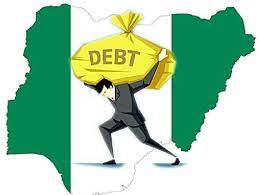
The Debt Management Office (DMO) has hinted that Nigeria’s public debt increased by 10.7 per cent from N87.87 trillion in the third quarter of last year, to N97.34 trillion as at December 31, 2023.
DMO, in an update data released last Friday, said the increase in the debt stock was largely due to new domestic borrowing by the Federal Government to part finance the deficit in the 2024 Appropriation Act and disbursements by multilateral and bilateral lenders.
The office noted that the N97.3 trillion public debt comprises of domestic debt of N59.12 trillion and external debt of N38.22 trillion. The sum of $3.5 billion was used to service external debt during the review period.
“Nigeria’s Public Debt Stock as at December 31, 2023 was N97.34trillion or $108.229 billion. This amount comprises the domestic and external debt stocks of the Federal Government of Nigeria (FGN), the 36 States Governments, and the Federal Capital Territory (FCT).
“There was an increase of N9.43 trillion over the comparative figure for September, 2023, which was largely due to new domestic borrowing by the FGN to part finance the deficit in the 2024 Appropriation Act and disbursements by multilateral and bilateral lenders.
“At N59.12 trillion, total domestic debt accounted for 61 percent of the total public debt stock, while external debt at N38.22 trillion accounted for the balance of 39 percent.
“Consistent with the debt management strategy, Nigeria’s external debt stock was skewed in favour of loans from multilateral (49.77 percent) and bilateral lenders (14.02 percent) or total of 63.79 percent which are mostly concessional and semi-concessional.
“Whilst the DMO continues to employ best practice in public debt management, the recent and on-going efforts of the fiscal authorities to shore up revenue will support debt sustainability”, DMO stated.
By: Corlins Walter



-

 Editorial17 hours ago
Enough Of Xenophobic Attacks On Nigerians
-

 Nation16 hours ago
RSU, Otonti Nduka Foundation Hold Centenary Conference, Unveil Book on Values in Nigeria
-

 News22 hours ago
Fubara, Wife Hail Tinubu’s Renewed Hope Initiative …As Over 6,800 Families Benefit From Largesse In Rivers
-

 Environment18 hours ago
MOSOP – Tinubu Not Sincere With Ogoni People For Oil Resumption
-

 Oil & Energy17 hours ago
Rivers PETROAN Elects 12-Member Executive
-
Politics18 hours ago
APC Group Protests Ex–Presidential Aspirant’s Disqualification From Rivers Senatorial Race
-

 Maritime20 hours ago
Products, Others, To Arrive Lagos Ports Today — MPA
-
Politics18 hours ago
Reps Speaker Secures APC Return Ticket For Fifth Term