
Editorial
Israel-Gaza War: Ending Carnage On Journalists

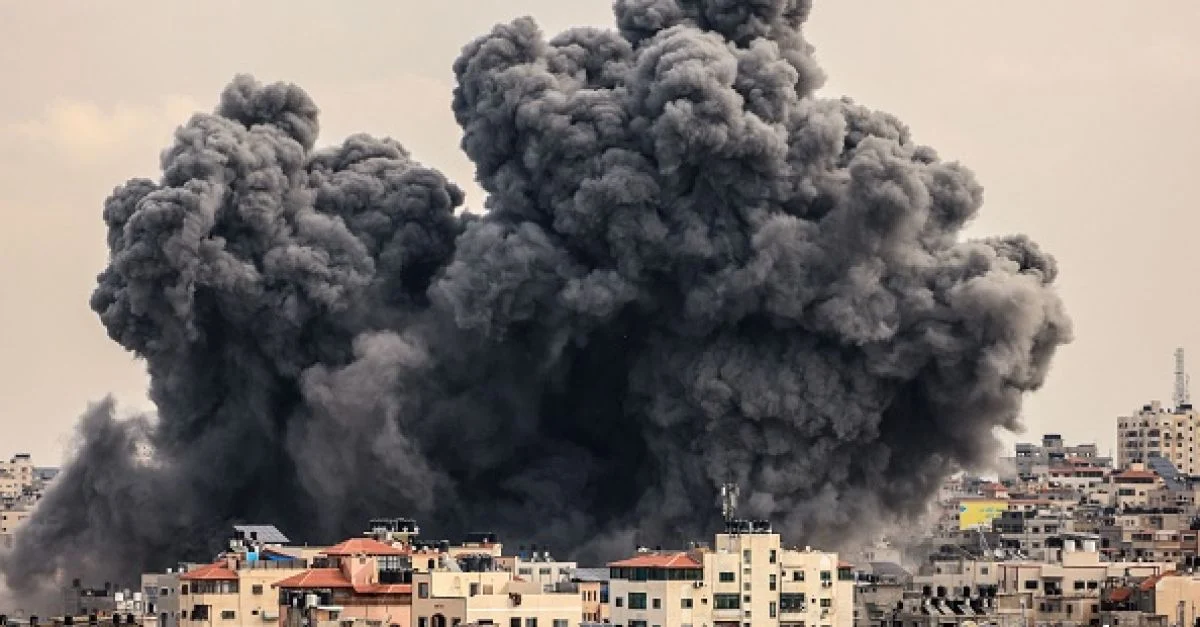
On October 13, 2023, a group of journalists had assembled at the border between Israel and southern
Lebanon with the objective of transmitting real-time updates to the Reuters news agency. They were in the process of reporting on a skirmish between Israeli soldiers and the Lebanese militant organisation, Hezbollah, when an Israeli shell unexpectedly landed close to their location, resulting in the tragic death of a videographer and injuries to six other individuals. This incident is a distressing reminder of the risks that journalists are exposed to in their pursuit of disseminating accurate information to the public.
The above tragedy is now among the numerous instances that exemplify the unparalleled impact that the Israel-Hamas War has had on journalists since its commencement on October 7. As of January 6, 2024, international organisations such as the Committee to Protect Journalists (CPJ) and Reporters Without Borders (RSF) said that a minimum of 77 journalists and media personnel had lost their lives out of the staggering total of over 23,000 casualties since the onset of the conflict, marking more than 22,000 Palestinian fatalities in Gaza and the West Bank, along with 1,200 deaths in Israel.
According to CPJ, the initial weeks of this war had been the most lethal timeframe for journalists reporting on conflicts since 1992, when the organisation commenced monitoring. Journalists stationed in Gaza City, who are covering this conflict, are operating under highly hazardous circumstances attributable to the initiation of Israeli airstrikes and a ground invasion, as well as the presence of power outages and disruptions in communication channels. Moreover, they are exposed to perilous risks such as physical attacks, arrests, censorship, and potential harm to their family members.
In a particular occurrence, a news reporter affiliated with the Qatar-owned television network, Al Jazeera, Wael Al-Dahdouh, was engaged in a live broadcast showcasing the distressed area on the 28th of October, when he received the devastating news of his wife, teenage son, and daughter falling victim to an Israeli airstrike. Shortly thereafter, the live footage captured Dahdouh’s entrance into Al-Aqsa Hospital as he sought to locate his son’s lifeless body in the hospital’s morgue.
Similarly, a journalist and correspondent for the Palestinian Authority-funded broadcaster, Palestine TV, Abu Hatab, along with 11 members of his family, was tragically killed in an Israeli airstrike on their residence in Khan Younis, located in the southern Gaza Strip. These distressing events were reported by the Palestinian Authority’s official news agency, Wafa, and the news outlet, Roya News, based in Amman.
On October 20, it was officially announced by The Times of Israel and the International Federation of Journalists (IFJ) that Israeli journalist, Idan, was found dead after his body was retrieved. Idan, who worked as a photographer for the Israeli newspaper, Ynet, was initially reported as missing following a Hamas attack on Kibbutz Kfar Aza on October 7, which resulted in the tragic loss of his wife and daughter. CPJ has verified that he was indeed working on the day of the attack. The list is endless.
Reporters Without Borders has recently urged the International Criminal Court (ICC) to conduct an investigation into the deaths of eight Palestinian journalists who were allegedly killed during Israel’s bombing of civilian areas in the Gaza Strip. Additionally, the organisation highlighted the death of an Israeli journalist in the surprise attack by Hamas in southern Israel. The complaint also mentions the intentional destruction, either fully or partially, of over 50 media facilities in Gaza since the war began.
The severity of the killings of journalists necessitates the intervention of the ICC for thorough investigation. We earnestly plead with all parties involved in armed conflicts to refrain from deliberately targeting journalists who courageously carry out their essential duties during times of crises. Although journalists have always played a crucial role in war situations, their work holds even greater significance during the Israel-Hamas war because of the surge in disinformation and the ease with which it can be spread and amplified.
In the ongoing conflict between Russia and Ukraine, a total of 17 journalists have lost their lives since the war commenced in 2022. The most recent reported incident occurred in May, claiming the life of French cameraman, Frederic Leclerc-Imhoff.
Regrettably, the US-led invasion of Iraq initiated a series of hostilities that proved especially perilous for journalists, establishing a distressing pattern that persists to this day. According to CPJ, a staggering 283 journalists have met their untimely demise in Iraq since 2003. Notably, this figure includes 11 journalists who perished during the first month of the war, spanning from March to April 2003.
Despite the globally accepted view that journalists ought to operate freely within conflict zones, the Israeli-Hamas ongoing conflict starkly disrupts this assumed privilege. The vicious circle of violence cruises on incessantly, shedding endless innocent blood. All inter-governmental, non-governmental organisations (NGOs), and lobby groups should collaborate and work against the dreadful carnage of journalists. Their voices, condemnation, and advocacy may prove pivotal in pushing both the Israeli government and Hamas towards embracing mutual respect for journalists.
The killing of journalists in the Israel-Hamas war calls for an immediate and aggressive response. The international community, media houses, and governments can bring about the change needed to safeguard journalists’ lives. In the long run, these measures will not only instil a culture of respect for members of the press within conflict zones but also ensure even war scenarios do not obscure the light of journalism. Thus, the world owes a lot to journalists; it is high time we guaranteed their protection and survival amid such turmoil as the Israel-Hamas conflict.




Nigeria stands at a critical juncture as the world marked World Press Freedom Day (WPFD) on May 3. This annual observance is a reminder that a free press is central to democratic life, good governance, and public accountability. For Nigeria, it is also a moment for sober reflection on how far the country has come and how far it still has to go in safeguarding the independence of its media.
World Press Freedom Day exists to highlight the fundamental importance of freedom of expression and to honour journalists who risk their lives in pursuit of truth. It underscores the idea that without a free press, societies cannot function transparently, nor can citizens make informed decisions. In countries like Nigeria, where democracy continues to evolve, the observance carries particular urgency.
This year’s theme, “Shaping a Future at Peace: Promoting Press Freedom for Human Rights, Development and Security”, places journalism at the heart of global stability. It emphasises that a peaceful society cannot be built on silence, fear, or manipulated information. Rather, it depends on the free flow of accurate, timely, and independent reporting.
At its core, the theme highlights the role of journalism in fostering accountability, dialogue, and trust. These are not abstract ideals. In Nigeria, where public confidence in institutions is often fragile, the media remains one of the few platforms through which citizens can question authority and demand transparency. When press freedom declines, so too does public trust.
Journalism serves as a foundation for peace, security, and economic recovery. Countries with robust media systems tend to attract greater investment, maintain stronger institutions, and resolve conflicts more effectively. Nigeria’s economic challenges, ranging from inflation to unemployment, require open scrutiny and informed debate, both of which depend on a free press.
However, the issue of information integrity has become increasingly complex in the digital age. Artificial Intelligence (AI) and online platforms have amplified the spread of misinformation and disinformation. In Nigeria, where internet penetration has grown rapidly, false narratives can travel faster than verified facts. This makes the role of credible journalism more vital than ever.
The challenge is not only technological but also ethical. AI-driven manipulation of information threatens to distort public discourse, influence elections, and deepen social divisions. In such an environment, professional journalism must act as a stabilising force, ensuring that truth prevails over sensationalism and propaganda.
Equally troubling is the safety of journalists. Across Nigeria, reporters face growing levels of online harassment, judicial intimidation, and physical threats. Self-censorship is becoming more common, as media practitioners weigh the risks of reporting sensitive issues. This trend undermines the very essence of journalism.
A particularly alarming incident involved a serving minister in the present administration, who openly threatened to shoot a journalist during a televised exchange. Such conduct, broadcast to the public, sends a dangerous signal that hostility towards the press is acceptable. It erodes the norms of democratic engagement and places journalists in harm’s way.
This year’s theme aligns closely with the United Nations Sustainable Development Goal (SDG)16, which promotes peace, justice, and strong institutions. Freedom of expression is a cornerstone of this goal. Without it, institutions weaken, corruption thrives, and justice becomes elusive. Nigeria’s commitment to SDG 16 must therefore include genuine protection for the media.
Historically, the Nigerian press has been a formidable force. From resisting colonial rule to challenging military dictatorships, our journalists have played a central role in shaping the nation’s political landscape. Today, however, that legacy appears to be under strain, as the media operates under what can best be described as a veneer of freedom.
Beneath this facade lies a troubling reality. Journalists are routinely harassed, detained, and prosecuted for performing their constitutional duties. Reports from media watchdogs indicate that dozens of Nigerian journalists face legal threats or arrest each year, often for exposing corruption or criticising those in power.
The Cybercrimes (Prohibition, Prevention, etc.) Act of 2015 has become a focal point of concern. Originally intended to combat cyber threats, it has increasingly been used to silence dissent. Sections 24 and 27(1)(b), in particular, have been invoked to target journalists, bloggers, and social commentators.
Although amendments introduced in February 2024 were meant to safeguard journalists, concerns persist. The law continues to be wielded in ways that stifle investigative reporting and restrict freedom of expression. Legal reforms must go beyond cosmetic changes to address the root causes of misuse.
To safeguard the future of journalism in Nigeria, decisive action is required. The Cybercrimes Act must be revisited to ensure it cannot be weaponised against the press. Law enforcement agencies must operate free from political influence, upholding the rule of law and protecting journalists’ rights. Civil society and international partners must also strengthen independent media through funding, training, and platforms for wider reach.
In this rapidly evolving world shaped by artificial intelligence and digital innovation, Nigeria faces a clear choice. It can either allow press freedom to erode under pressure, or it can champion a truly independent media landscape. The path it chooses will determine not only the future of journalism, but also the strength of its democracy and the peace it seeks to build.
-
 Editorial2 days ago
Enough Of Xenophobic Attacks On Nigerians
-

 Nation2 days ago
RSU, Otonti Nduka Foundation Holds Centenary Conference, Unveil Book on Values in Nigeria
-

 Oil & Energy2 days ago
Rivers PETROAN Elects 12-Member Executive
-
Politics2 days ago
APC Group Protests Ex–Presidential Aspirant’s Disqualification From Rivers Senatorial Race
-
Politics2 days ago
Reps Speaker Secures APC Return Ticket For Fifth Term
-

 Sports2 days ago
Oparaodu Urges Rivers United To Win Katsina United
-

 Environment2 days ago
MOSOP – Tinubu Not Sincere With Ogoni People For Oil Resumption
-

 Sports2 days ago
” Nigeria’s best domestic players are not in NPFL”