
Politics
Election Litigations Straining Judiciary, Undermining Electoral Process – Senator Jibrin

Though the 2023 elections marked a significant improvement on previous polls, the spate of litigations emanating from the elections has strained the country’s judicial system and threatened to undermine the integrity of the electoral process.
This was the submission of the Deputy Senate President, Senator Barau Jibrin, at the ongoing national conference of the Supreme Council for Shari’ah in Nigeria (SCSN) being held at the National Mosque, Abuja, with the theme, ‘Matters arising from 2023 elections and associated socio-economic challenges’.
According to the Deputy Senate President, “The 2023 general elections, by most accounts, marked a significant improvement over previous polls. In Nigeria, reports indicate that many Nigerians successfully cast their ballots to elect their leaders across the country.
“However, the elections were not without hitches. One major issue arising from the elections is the spate of litigations challenging the outcomes.
“The litigations significantly strain the judicial system and threaten to undermine the integrity of the electoral process.”
Jibrin, who was represented at the event by his Chief of Staff, Professor Bashir Mohammed Fagge, lamented the situation whereby the Independent National Electoral Commission (INEC) allocated part of its budget for legal matters, including the cost of election tribunals and resolution of electoral disputes.
Moving forward, he said the National Assembly would review the country’s electoral legal framework “with a view to limiting frivolous lawsuits.
“The 10th Senate will consider proposals to increase requirements for filing election petitions, impose punitive costs for unmeritorious cases, and expand the time limit for determining petitions, among others,” he assured.
He added that the reforms would aim at ensuring that only genuine grievances proceed to tribunals while maintaining access to justice.
Meanwhile, the Deputy Senate President informed that the 10th Senate was aware of the current economic and security challenges facing Nigerians.
“To address these socio-economic challenges, we hope to develop a detailed roadmap to ensure that the legislature supports, promotes and oversees the strategic objectives of the President of the Federal Republic of Nigeria and Commander-In-Chief, Senator Bola Ahmed Tinubu’s Renewed Hope Agenda. A major thematic area of our agenda is “Economic Growth and Development,” Senator Jibrin said.
He assured that the National Assembly would support government policies and programmes targeted at alleviating poverty, economic restructuring and general social sector reform and development.
The senate, according to him, would focus on budgetary measures to stimulate economic growth, providing oversight on security agencies as well as supporting anti-corruption efforts of the executive.
“Specifically, we will work to expand new policies on social investment programmes, boost infrastructure spending, support MSMEs through access to finance and incentivize investments in agriculture and manufacturing.
“Additionally, we will monitor the deployment of security resources to frontline states and ensure accountability in the procurement of armaments for our troops. We will also fully exercise our confirmation and oversight powers in the fight against corruption,” he added.
While saying the senate understands the depth of Nigerians’ expectations for solutions, the Deputy Senate President assured that the Red Chamber of the National Assembly would vigorously engage with the executive, private sector and civil society groups to deliver socio-economic reforms that restore stability and launch Nigeria towards sustainable development.



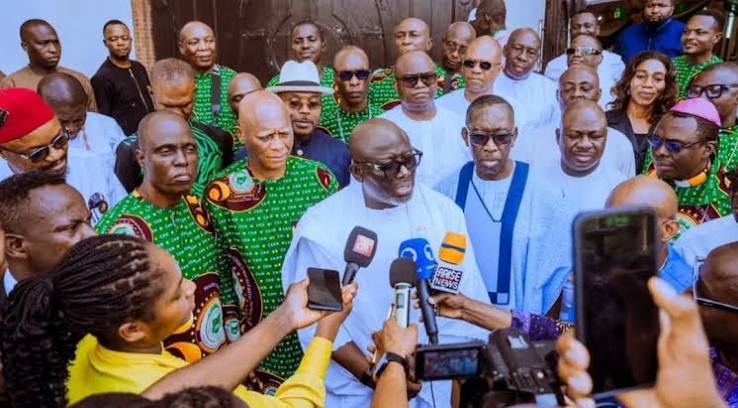
Delta State Governor, Rt. Hon. Sheriff Oborevwori, has urged public office holders to maintain a clear distinction between political responsibilities and service to God, saying the pursuit of political interests should never weaken their commitment to faith and humanity.
Gov. Oborevwori made the call in Abuja, at the weekend, after receiving the Christian Icon Award from the Christian Association of Nigeria (CAN) during the association’s 50th anniversary celebration at the National Christian Centre.
The award was presented by CAN President, Dr Daniel Okoh, in recognition of the governor’s public service, ethical leadership and commitment to Christian values.
Speaking after the presentation, Gov. Oborevwori expressed gratitude to God for the honour, describing it as a reminder of the responsibility to serve humanity with greater dedication.
“We may be involved in politics, but we must be able to distinguish between serving God and playing politics. These are two different responsibilities, and we must never allow politics to undermine our commitment to God,” he said.
The governor explained that his commitment to serving in the church predated his emergence as Speaker of the Delta State House of Assembly. He said he had continued with his ushering duties despite advice at the time that his political position might make the practice inappropriate.
According to him, his conviction that service to God and humanity should remain a sustained responsibility has continued to guide his public life.
Gov. Oborevwori described the recognition by CAN as particularly meaningful because, in his view, the association’s awards reflect not only public service but also character, integrity and the impact of a recipient’s contributions to society.
“When an organisation such as CAN gives you an award, it means a lot because the recognition is based not merely on public service but also on integrity, character and the impact you have made,” he said.
The governor also commended efforts to bring the five blocs within the Christian community together, expressing the belief that greater unity among them would strengthen their contribution to national development.
He said a united Christian community, speaking with one voice on issues of common concern, could contribute to a more cohesive Nigeria.
Gov. Oborevwori added that service to God should be undertaken with sincerity, dedication and a sense of responsibility, rather than for personal gratification or public recognition.
CAN’s 50th anniversary celebration brought together religious leaders, political office holders and other prominent Nigerians to mark the association’s five decades of service.
Those who accompanied the governor included immediate past Delta State Governor, Senator Ifeanyi Okowa; Speaker of the Delta State House of Assembly, Rt. Hon. Emomotimi Guwor; and members of the National Assembly, Hon. Victor Nwokolo, Hon. Nicholas Mutu and Hon. Jonathan Ukodhiko.
Others were the Chief of Staff, Government House, Hon. Johnson Erijo, and the Senior Political Adviser to the Governor, Senator Emmanuel Aguariavwodo, alongside other government functionaries and political leaders.
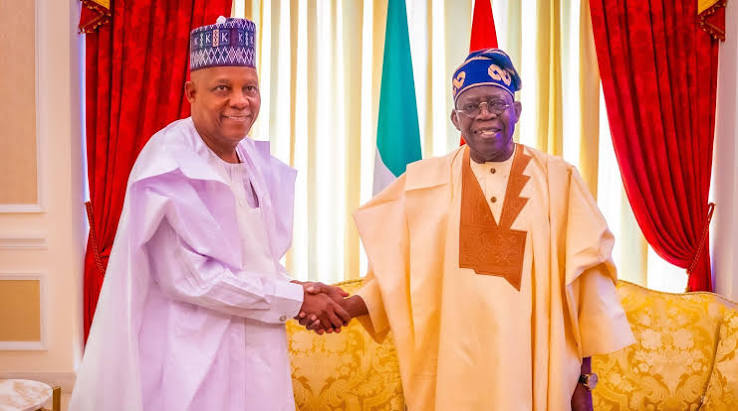
Vice President Kashim Shettima has expressed concern over internal divisions within the ruling All Progressives Congress (APC), warning that disagreements among party members pose a greater threat to its electoral success in 2027 than opposition leaders Atiku Abubakar and Peter Obi.
Vice President Shettima stated this at the weekend, in Abuja, during the unveiling of the campaign headquarters of Arewa for Asiwaju (A4A), a northern political coalition supporting the re-election of President Bola Tinubu.
The Vice President stressed that unity within the APC would be crucial to securing victory in the forthcoming general elections.
Vice President Shettima cautioned party stakeholders against concentrating solely on the presidential election while neglecting governorship and National Assembly contests.
According to him, undermining APC governors or other candidates could weaken the party’s chances of achieving a comprehensive victory.
“There is no point in championing the cause of the presidential election and then undermining the governor in the gubernatorial election. Honestly, it will not go down well with the system,” he warned.
He urged party leaders and supporters to rally behind President Tinubu, APC governors and National Assembly members to strengthen the party ahead of the elections.
Speaking on the political situation in the North, Vice President Shettima declared that the region had already demonstrated its support for President Tinubu’s second-term ambition.
“By now, I believe the North has spoken. We have spoken with a resounding voice and unmistakable conviction. From Adamawa to Zamfara, from Borno to Niger, we have spoken,” he stated.
The Vice President also challenged APC members to confront former Vice President Atiku Abubakar politically but respectfully.
“Go and perform. Go and defeat Baba Atiku. Defeat him respectfully,” he said.
Vice President Shettima maintained that the APC possessed the political structure and grassroots strength required to compete effectively across Nigeria’s polling units.
He disclosed that the party had 361,045 officials across ward and local government structures, compared with the country’s 176,845 polling units.
According to him, the figures demonstrate the party’s organisational capacity to mobilise voters nationwide.
The Vice President further charged political appointees to demonstrate their electoral relevance in their respective wards and local government areas, stressing that political success begins at the grassroots.
“Politics is still local,” he declared.
On the APC’s strength in northern Nigeria, Vice President Shettima claimed that 18 of the region’s 19 states were under the party’s political influence.
He also highlighted defections from the New Nigeria Peoples Party (NNPP) in Kano State as evidence of the APC’s growing political strength.
Addressing Nigeria’s economic challenges, Vice President Shettima acknowledged the hardship facing many households but defended the economic reforms introduced by the Tinubu administration.
According to him, the administration’s reforms have helped stabilise the economy and improve the country’s financial position.
He claimed that Nigeria’s foreign reserves had risen to approximately $58.9 billion, describing the development as evidence of economic recovery.
Vice President Shettima assured northern Nigerians that the region would benefit from President Tinubu’s second term, insisting that the President remained committed to its development.
“For the North, we have absolutely nothing to fear in a Tinubu second term. He has the North at heart,” he said.
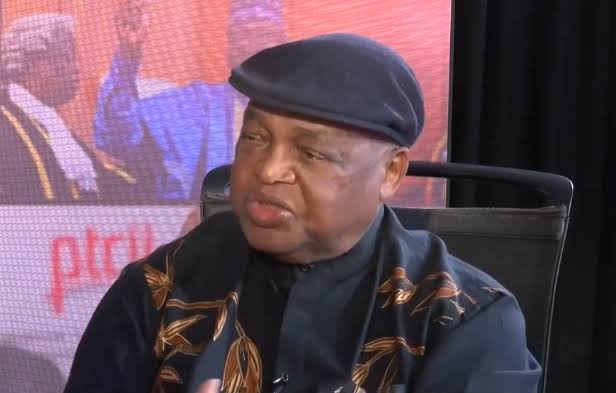
A family source confirmed his death to The Tide source on Saturday, October 17, 2026, disclosing that the former Nigerian ambassador died earlier in the morning following a prolonged period of deteriorating health.
According to the source, Dr Cole had recently been discharged from the intensive care unit (ICU), but his condition continued to worsen.
“He left ICU a few days ago. He had been doing poorly in recent weeks leading to this end,” the source reportedly said.
Born on August 4, 1940, Dr Cole celebrated his 86th birthday in August, barely two months before his death.
He was a prominent figure in Nigeria’s public life, with a distinguished career spanning journalism, diplomacy, public administration and historical scholarship.
Before joining the diplomatic service, Dr Cole established himself in the Nigerian media industry, serving on the editorial board of The Guardian newspaper before becoming Managing Director of Daily Times, one of Nigeria’s most influential media organisations.
His leadership role at Daily Times placed him among the notable figures who shaped the country’s media landscape during a significant period in its development.
Dr Cole subsequently served Nigeria as ambassador to Argentina and Brazil, representing the country in international diplomatic engagements and further broadening his public service experience.
Beyond journalism and diplomacy, he was known for his contributions to discussions on governance, politics and Nigeria’s historical development. His professional engagements reflected a longstanding interest in the country’s political and institutional evolution.
His death marks the end of a career that traversed several important areas of national life, leaving a record of service in journalism, international relations and public affairs.
As of the time of filing this report, the family had yet to announce details of his funeral arrangements.