
Nation
Legal Rights Centre Seeks Abolition Of Corporal Punishment

A Non-Governmental Organisation (NGO), The Centre for Legal Rights Advancement (CLRA), has called for the abolition of the practice of all forms of corporal punishment in the country.
The founder, CLRA, Prof Ben Angwe, made the call in a statement to commemorate the 2023 International Day Against Corporal Punishment of Children in Abuja.
The International Day against Corporal Punishment of Children is observed on April 30 of every year.
Angwe noted that the practice of all forms of corporal punishment in Nigeria was a serious violation of Child’s Rights Act 2003 and the International Convention on the Right of the Child, among other laws.
He insisted that relevant stakeholders should advocate the review of Section 295 of the Criminal Code, Section 55 of the Penal Code and other similar legislations that permit the use of force to correct children.
“These sections undermine the relevant provisions of the Child’s Rights Act and other national laws, as well as related international treaties to which Nigeria is a signatory.
“Corporal punishment is against the Convention Against Torture and other Cruel, Inhuman or Degrading Treatment or Punishment.
“”This ugly practice constitutes an obstacle to the realisation of the right of the child to health, development, safe environment and education.
“Unfortunately, such acts are usually carried out by some parents, guardians, caregivers and teachers, in spite of legal provisions”, said.
Angwe, who is a former Executive Secretary of the National Human Rights Commission (NHRC), expressed regret that Nigeria was not among the 65 countries out of about 199 that currently banned all forms of corporal punishment.
While commending the 36 states of the Federation for passing into Law the Violence Against Children Legislation and the majority of the states for adopting and passing into Law the Child’s Rights Act in their various jurisdictions, he however urged them to ensure their smooth implementation.
He called on government at all levels and other stakeholders to double their collaboration to end corporal punishment in its entirety.
“I use this opportunity to condemn all forms of child rights violations including child trafficking, child labour and child abuse both at home and in school.
“Instead of indulging in such despicable practices, all decisions involving children should be taken in their best interest as enunciated in the Child’s Rights Act.
“There is a need to comply with the relevant national, regional and international laws prohibiting harsh or degrading treatment, and desist from spanking, hitting, punching, kicking, confinement in small spaces and subjecting any child to a fixed posture for long periods.
“Parents and other custodians of children should rather use verbal warning and make references to good moral conduct of persons of reputable character in the society, bearing in mind that an abused child is usually sad and could carry such a mood to adulthood with the attendant unpleasant consequences to the larger society”.
Anger, who revealed that the banning of corporal punishment has been effected in Europe, most parts of East Asia, South America and Zambia, stressed the need for Nigeria and other affected countries to take a queue and adopt best practices in Child’s Rights Protection.


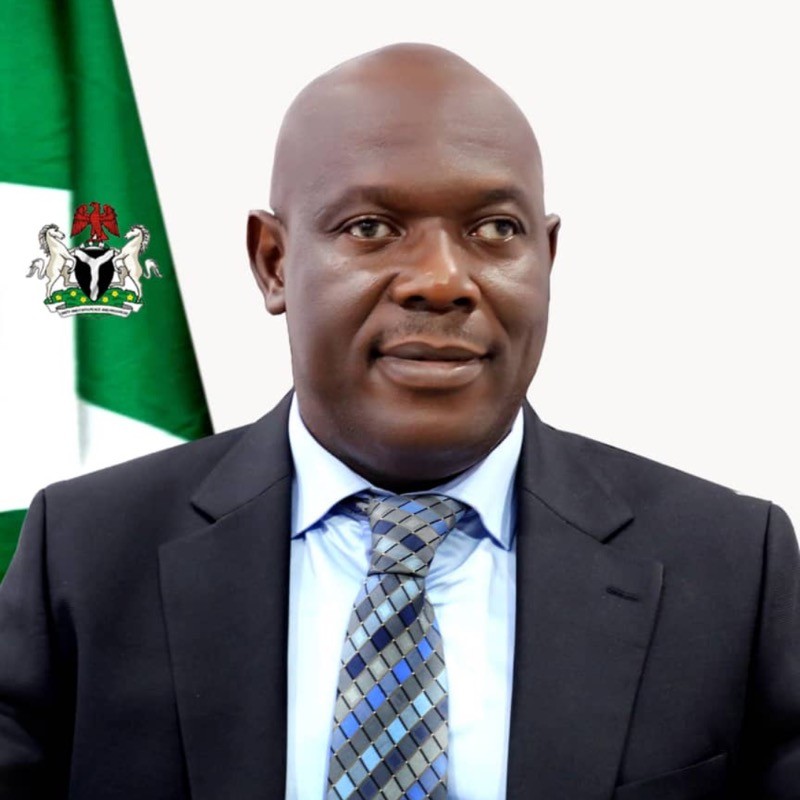
As the world commemorates World Water Day, the Hydrocarbon Pollution Remediation Project (HYPREP) has reaffirmed its commitment to providing potable water across Ogoni communities, in line with the recommendations of the United Nations Environment Programme (UNEP) Report on the Ogoni Environment.
In a statement issued by its Project Coordinator, Nenibarini Zabbey, on March 22, 2026, HYPREP noted that this year’s theme, “Water and Gender,” alongside the campaign slogan, “Where Water Flows, Equity Grows,” underscores its resolve to extend potable water supply beyond oil-impacted communities to all Ogoni communities.
Zabbey emphasized that access to clean water is a fundamental human right, adding that HYPREP remains committed to ensuring inclusive and equitable water access across the region.
He disclosed that the agency has successfully provided potable water to over 43 communities in Ogoni, while ongoing Phase 3 water projects are expected to benefit an additional 17 communities. He also highlighted steady progress on windmill-powered water projects in less populated areas, particularly in Khana Local Government Area.
According to him, the K-Dere Water Project, which is over 99 percent complete, will be commissioned in the coming weeks, even as work continues on other water schemes across Ogoni.
Zabbey further noted that HYPREP’s interventions are aligned with the United Nations Sustainable Development Goal 6, which focuses on ensuring the availability and sustainable management of water and sanitation for all by 2030.
To ensure sustainability, he explained that the agency has adopted a joint management model involving host communities, the Rivers State Ministry of Water Resources and Rural Development, and the Rivers State Small Towns Water Supply and Sanitation Agency (RSSTOWA). He added that Water Consumers’ Associations have been established in communities such as Nchia and Eleme, alongside training programmes conducted in collaboration with non-governmental organisations.
The Project Coordinator stressed the importance of community ownership and protection of water facilities, echoing the call by the Minister of Environment, Balarabe Abbas Lawal, for residents to safeguard the infrastructure provided in their areas.
Zabbey expressed optimism that the ongoing efforts will significantly improve access to safe drinking water, reduce waterborne diseases, and enhance public health outcomes across Ogoni communities.
The Hydrocarbon Pollution Remediation Project (HYPREP) has announced that the mangrove wetlands in Ogoniland have been officially designated a Ramsar Site of International Importance by the Secretariat of the Ramsar Convention on Wetlands.
The designation, according to HYPREP, underscores the global ecological significance of Ogoniland’s mangrove wetlands and highlights ongoing restoration efforts aimed at addressing environmental degradation in the area.
In a press statement issued by the Project Coordinator of HYPREP, Prof Nenibarini Zabbey, the recognition was described as a major milestone for the agency, the people of Ogoni and other stakeholders working towards environmental restoration in the region.
Zabbey explained that the mangrove wetlands, which cover more than 31,700 hectares, consist of islands, tidal creeks, mudflats and mangrove forests that support a wide range of biodiversity. The ecosystem provides habitat for several species including fin fish, shellfish, crustaceans, crocodiles, turtles and the endangered grey parrot.
He noted that beyond biodiversity conservation, the wetland also provides essential ecosystem services such as fisheries production, flood control, water purification and carbon storage. According to him, the international recognition will further support local livelihoods, promote ecotourism and bring global attention to the region.
The HYPREP coordinator disclosed that the designation followed a meticulous process that began in 2024 when the project submitted a memorandum to the National Council on Environment seeking support for the recognition of the Ogoni wetlands as a Ramsar site.
Following the council’s review and approval, the Honourable Minister of Environment and Chairman of HYPREP’s Governing Council, Balarabe Abbas Lawal, formally wrote to the Ramsar Convention Secretariat requesting international recognition of the wetlands.
After a comprehensive ecological assessment, the Ramsar Secretariat granted the designation, officially recognising the Ogoniland wetlands as one of the world’s sites of international importance.
Zabbey said the recognition would strengthen ongoing environmental restoration efforts in the area and encourage stronger conservation measures and sustainable management of the wetlands for the benefit of present and future generations.
He added that the designation also fulfils a key recommendation of the United Nations Environment Programme (UNEP) Environmental Assessment Report on Ogoniland, marking another significant step in the implementation of the report’s recommendations.
The HYPREP project coordinator reaffirmed the agency’s commitment to restoring the Ogoni environment through the remediation of oil-polluted land, shorelines and mangrove ecosystems.
He also called for collective responsibility and stakeholder support to sustain the progress of the Ogoni cleanup programme and facilitate the development of a comprehensive and sustainable management plan for the Ogoni mangrove wetlands.

The Permanent Secretary, Rivers State Ministry of Social Welfare and Rehabilitation, Mrs Lauretta Davies-Dimkpa, has attributed the successes of the 12-day programme organised for adolescent girls aimed at eliminating Female Genital Mutilation(FGM) in some parts of the State to the ability of the respective stakeholders to take ownership of the programme.
Mrs Davies-Dimkpa, who dropped the hint in an interview at the end of the programme in Elele-Alimini Community in Emohua Local Government Area on Saturday, said the event had a buy-in component, an ownership mentality, whereby facilitators, staff, and everyone involved took ownership of the project.
She explained that the Rivers State Ministry of Social Welfare and Rehabilitation, in collaboration with the United Nations Children’s Fund (UNICEF) and the United Nations Population Fund (UNFPA) had packaged a series of training sessions for adolescent girls aimed at ending the practice of Female Genital Mutilation (FGM) in some communities across the State.
According to her, the initiative was designed to educate young girls on the harmful effects of the practice and empower them to become advocates against it within their communities.
She noted that the programme, which lasted for several weeks, targeted adolescent girls from different local government areas where the practice is still prevalent, stressing that
data collected by UNICEF and the Ministry revealed that Female Genital Mutilation is still practised in some parts of the State, prompting the need for intensified sensitisation and community engagement.
Mrs Davies-Dimkpa explained that the programme adopted a “train-the-trainer” approach where adolescent girls were educated on the dangers of the practice and encouraged to share the knowledge with their peers, families and communities.
“This is a programme by the Rivers State Ministry of Social Welfare and Rehabilitation with support from UNICEF and UNFPA to train adolescent girls towards ending Female Genital Mutilation, which is still practised in some local government areas,” she said.
She further explained that each participating local government area had a three-day training session, with the exercise running for a total of 12 days.
The local government areas, where the programme took place, she noted, included Ahoada West, Abua-Odual, and Emohua, adding that the initiative is part of broader efforts by the state government and development partners to eliminate harmful traditional practices and protect the rights and wellbeing of girls.
She revealed that prior to the training of the adolescent girls, the Ministry and its partners had also engaged community facilitators, including older women and men, to sensitise them on the dangers associated with Female Genital Mutilation.
According to her, the involvement of community leaders and adults is essential in addressing the cultural and social factors that sustain the practice.
Speaking on the response of the participants, the permanent secretary expressed satisfaction with the level of engagement and enthusiasm shown by the girls throughout the training sessions.
She noted that many of the participants said they were learning about the harmful effects of Female Genital Mutilation for the first time.
“The girls are between the ages of 12 and 17 and from the interactions we had with them, they were very excited. Some of them are hearing these things for the first time and never knew that the practice is harmful,” she said.
She expressed optimism that the knowledge gained from the training would enable the girls to serve as advocates for change within their communities.
She added that the Rivers State Government, alongside its partners, would continue to intensify efforts and expand community-based interventions aimed at ending the practice across the State.
Meanwhile, the participants for Emohua Local Government Area were drawn from Elele-Alimini, Egbeda, Rumuji, Ibaa, Rumuekpe, Rumuakunde, Eligbarada, and Ogbakiri Communities.
The participants,who spoke in separate interviews described the training as eye-opening, noting that it helped them better understand issues surrounding adolescent health, personal hygiene, reproductive health, and the harmful consequences of Female Genital Mutilation.
Favour Azukwu from Rumuekpe community, said the programme provided a deeper understanding of the dangers associated with the practice, particularly its impact on the health and wellbeing of girls and women.
She explained that the training sessions exposed participants to the medical, social and psychological effects of Female Genital Mutilation, including severe bleeding, infections and complications during childbirth.
She revealed that she personally experienced the practice at the age of 12 and suffered heavy bleeding afterwards, an experience that has strengthened her determination to advocate for its eradication.
According to her, many communities still practise Female Genital Mutilation because it is perceived as a cultural tradition, despite the dangers associated with it.
“I do not support Female Genital Mutilation because there are many dangers involved. I experienced severe bleeding when it was done to me as a child.
Another participant, Glory Ken, a 16-year-old secondary school student from Rumuji community, said the programme broadened her understanding of several important topics affecting adolescents.
She explained that beyond the discussion on Female Genital Mutilation, the training also focused on issues such as personal hygiene, reproductive health, peer education, and self-care.
According to her, the sessions helped participants understand the importance of making informed health decisions and supporting one another as peer educators.
“I learned about many things that affect young people in society and how to take care of myself. I also learned that Female Genital Mutilation is harmful to our health. The message I am taking back to my community is that this practice should stop,” she said.
Also speaking, Goodness Kenjika Nyeche described the programme as very impactful.
She noted that the training equipped participants with the skills and confidence to educate others about the harmful effects of Female Genital Mutilation.
She said she plans to organise sensitisation among adolescents in her community, particularly girls between the ages of 10 and 19, to ensure they understand the dangers associated with the practice.
“I learned many things from this programme and I feel very good about it. I will educate other young girls in my community and help them understand why Female Genital Mutilation should not continue,” she said.
For Queen Dike from Ibaa community, the programme helped clarify misconceptions surrounding the practice.
She explained that in some communities, the practice is still referred to as circumcision and is viewed as part of cultural identity.
She said the training helped participants understand that Female Genital Mutilation involves the cutting or removal of parts of the female genital organs and that it has serious health consequences.
She stressed that awareness and education are key to ending the practice, especially among communities that continue to uphold it as tradition.
“I think the programme is very helpful because many people still believe it is part of culture. More awareness is needed so people can understand why it should stop,” she said.
Another participant, MyJoy Echika Amadi, said the programme provided critical information about adolescent health and the dangers associated with Female Genital Mutilation.
She described the initiative as enlightening and said it encouraged young people to become advocates for change in their communities.
According to her, participants were encouraged to use various platforms such as churches, peer groups, schools and community gatherings to spread awareness about the harmful effects of the practice.
“This programme has enlightened us about the dangers of Female Genital Mutilation. I will do my best to create awareness in my community and encourage people to stop the practice,” she said.
Many of the participants emphasised that the knowledge gained during the programme has empowered them to challenge harmful traditions and promote healthier practices among young people.
They also called on the Rivers State Government, development partners and civil society organisations to sustain the sensitisation campaigns and extend the training to more communities across the State.
According to them, empowering young people with the right information will play a critical role in eliminating Female Genital Mutilation and protecting the rights, health and dignity of girls in Rivers State.
The participants expressed appreciation to the Rivers State Ministry of Social Welfare and Rehabilitation, UNICEF and UNFPA for organising the programme and for investing in the wellbeing and future of adolescent girls in the State.
-

 News4 days ago
Nigeria Recorded Two World’s Deadliest Terror Attacks In 2025 –Report
-

 Politics4 days ago
Eid-el-fitr: INEC Urges Staff Discipline Ahead Ekiti, Osun Guber Polls
-

 Editorial4 days ago
Thumbs Up For Sit-At-Home Reversal
-

 News4 days ago
Explosions Rock Lagos, C’River, Kill One, Injure 40
-

 News4 days ago
Perm. Sec Pats Rivers NUJ On The Back
-

 News4 days ago
Fubara Hails Umah Ukpai’s Contributions To Global Christian Evangelism
-

 Education4 days ago
Opobo Kingdom moves to incorporate Ibani Language Into School Curriculum, Takes Off April
-
News4 days ago
Etche Monarch Alleges Death Threats, Assault