
Featured
Adeleke Takes Office As Sixth Osun Gov … Fires 30 Perm Secs, Others, …Freezes Bank Accounts …Vows To Correct Past Injustices

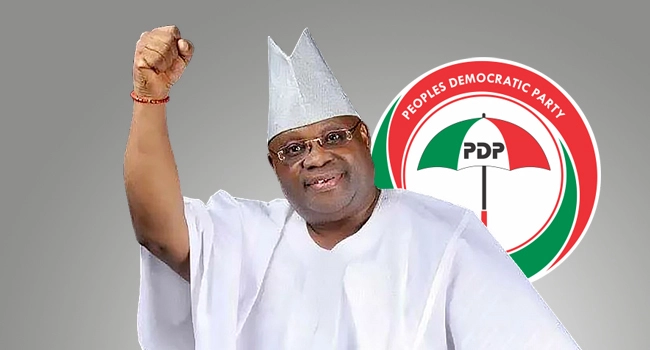
Senator Ademola Adeleke, yesterday, officially took over as the sixth governor of Osun State, at an elaborate inauguration an swearing in ceremony in Osogbo, the state capital.
Adeleke had won the Osun gubernatorial election of July 16, 2022, against the main contender and outgoing governor of the state, Prof Adegboyega Oyetola.
Adeleke won the election as a member of the Peoples Democratic Party (PDP) after loosing out in the same party in the 2018 gubernatorial election.
Chief Judge of Osun, Justice Adepele Ojo, administered the oath of office on Adeleke at the Osogbo City Stadium.
Earlier, Justice Ojo administered the oath of allegiance on Adeleke’s deputy, Mr Kola Adewusi.
Speaking after his inauguration at the Osogbo City Stadium, he said every corrupt acts perpetrated by the past administration would be adequately addressed.
Adeleke immediately ordered the freezing of the state’s accounts in banks and in other financial institutions.
Adeleke directed an immediate return to status quo ante of all appointments, placements and other major decisions taken by Oyetola’s administration from July 17, the day after the governorship election in the state.
He said a panel would be set up to conduct out an inventory of government assets and recover those in wrong hands.
The governor ordered an immediate reversal to the Constitutionally-recognised name of the state as Osun State from former “State of Osun’’.
The penultimate governor of Osun, Ogbeni Rauf Aregbesola, now minister of interior changed the name from Osun State to ‘State of Osun’.
“All government insignia, correspondences and signages should henceforth reflect Osun State, rather than `State of Osun’, which is unknown to the Nigerian Constitution.
“Under my watch as the governor of Osun, I will boldly correct all past injustices, corrupt acts or policies by any previous administration, which are against the collective interest of our people,’’ he said.
He assured that all directives he gave on Sunday would be backed with appropriate executive orders.
Adeleke assured that as governor, he would meet Osun people’s expectations as the Chief Security Officer of the state.
He said his administration would also demonstrate a high sense of urgency, transparency, justice and innovation to tackle and solve the problems of poverty, illiteracy, disease, and poor infrastructure in the state.
“I know that as a product of the collective will of you my people, there is a heavy weight of history on my shoulders and I accept the urgency of your expectations.
“The depth of your aspirations and your conviction in me to build a better state will not be misplaced,’’ he said.
Adeleke said that all policies that were not favourable to the growth and effective local government administration would be reviewed in accordance with the law.
He assured labour unions in the state of his administration’s willingness to protect workers’ interests and to promote their welfare at all times, adding that he would be labour-friendly.
The governor frowned at what he described as mass employment by the immediate past administration without financial backing.
He pleaded with workers to give him a few weeks to review and sort out all “malicious actions and confusions’’ that the immediate past administration had created since July 17.
The governor also promised to fulfil his campaign promises.
The promises included welfare of workers and pensioners; boosting the state’s economy, home-grown infrastructure policy and people-focused policy on education.
Others were affordable healthcare, security, social welfare and agro-based industrialisation for wealth and job creation.
“I hereby extend a strong hand of fellowship to the other arms of government, the Legislature and the Judiciary.
“As a former lawmaker and a graduate of criminal justice, I appreciate the importance of collaboration between the Executive, the Legislature and the Judiciary.
“I call on all political parties to unite in the best interest of the state. Election is over. Now is the time for governance. We are open to fresh ideas in line with our manifesto.
“For the purpose of emphasis, I will be a governor for all Osun people regardless of differences in language, faith, political affiliation or any other considerations,’’ he said.
Adeleke assured residents of the state of his administration’s commitment to correct injustices of the past as he assume mantle of leadership in the state.
This is as he assured the people of Osun of his readiness to meet their expectations as the new administration berths.
“I am well aware of the fact that my responsibility as the Governor and Chief Security Officer of Osun State entails meeting the legitimate expectations of our people.
“Therefore, I promise that those expectations of the workers, traders, artisans, farmers, business owners, students, pensioners, traditional and religious leaders and, indeed, all residents of Osun State will be met by the grace of God and the cooperation of everyone.
“Under my watch as the Governor of Osun State, I will boldly correct all past injustice, corrupt acts or policies by any previous administration, which are against the collective interest of our people.
“Let me state here that from the education, health, mining sectors, agriculture, road infrastructure and supply of potable water, let it be known to all that it is no longer going to be business as usual.
“And, I repeat, it is no longer business as usual.
“Our administration will demonstrate a high sense of urgency, transparency, justice and innovation to tackle and solve the problems of poverty, illiteracy, disease, and poor infrastructure.
“Your Governor will be a people’s Governor.
“I will be accessible, responsive, consultative and proactive in handling small and big matters of state governance,” said.
Dignitaries at the inauguration included Governors Godwin Obaseki of Edo; Udom Emmanuel, of Akwa Ibom; Ifeanyi Okowa of Delta; Aminu Tambuwal of Kano; and Douye Diri of Bayelsa.
Others were PDP’s presidential candidate, Alhaji Atiku Abubakar, his wife, Titi, PDP National Chairman, Dr Iyiorcha Ayu, and former Senate President, Dr Bukola Saraki.
The rest were the Ooni of Ife, Oba Adeyeye Ogunwusi; former Ekiti governor, Ayodele Fayose; Tony Elumelu; and David Adeleke, aka Davido; among others.
Ahead of the ceremony, the Nigerian Police, Osun State Command and other sister security agencies in the state had also assured that security had been put in place to prevent a breakdown of law and order before, during and after the inauguration ceremony.
The state Commissioner of Police, Faleye Sunday Olaleye, while giving the assurance, also warned criminally minded individuals to steer clear of the state as the Osun Police Command was well placed to make the state inhabitable for them.
Parents and guardians were also warned to dissuade their children and wards from being used as tools in the hands of disgruntled politicians.
The security agencies, to back up their resolve, last Saturday, embarked on a show of force around major parts of Osogbo, the state capital.
Meanwhile, in a farewell statement to the residents of the state, the outgone governor, Adegboyega Oyetola, disclosed that his administration is leaving behind ¦ 14billion cash in the state’s coffers, just as it had paid ¦ 97billion of the debts it inherited from the Rauf Aregbesola administration in 2018.
While maintaining that he was stepping aside, he stated that the results of the last gubernatorial election as declared by the Independent National Electoral Commission (INEC) which favoured Senator Ademola Adeleke was already being challenged by him and the All Progressives Congress (APC) at the Osun State Governorship Election Petition Tribunal.
“As I step aside today following the conclusion of the four-year tenure you freely gave me, I thank God and I thank you for your support, cooperation and prayers over the years.
“As we draw the curtains on this first tenure, we are convinced that we neither reneged on our promise nor disappointed you. We kept faith with you and maintained fidelity with our electoral promises. It was our wish to continue to serve you but we are constrained by the outcomes of the July 16 Governorship election which we are already challenging in court.
“As a law-abiding citizen and government, we are stepping aside to allow the law take its course.
“However, we look forward to continue to serve you in no distant future. We have absolute trust in God that we shall be back soon, as we have implicit trust and confidence in the Judiciary to do justice in the case before it.
“We are confident that this period of temporary political eclipse shall pass. The sun shall shine again, brighter and warmer and the sustainable development and participatory governance that we enthroned, which have been applauded by local and international organisations, shall be restored and put on a surer and better footing.
“As we end our first term, we are rest assured that Osun is more stable economically than we met it in 2018 and it remained the most peaceful state in the country under our leadership.”
Meanwhile, loyalists of the new Osun State Governor, Senator Ademola Adeleke, had reportedly slaughtered over 100 cows to mark his inauguration ceremony as the Osun State governor.
It was gathered that celebrations held across the various councils in the state after the official oath-taking.
The PDP members and Adeleke loyalists, it was gathered, bought the cows were bought to celebrate Adeleke’s swearing-in, which they described as ‘the burial of All Progressives Congress (APC) government’ in the state.
According to sources at the party’s secretariat, the cows had been distributed to the 332 wards of the 30 local government areas of the state, while prayers from selected Christian and Muslim leaders would be held to seek God’s blessings for the incoming government.
Aside from the cows that arrived in trailers provided by committed PDP leaders in the state, other party members were said to have contributed money towards their entertainment, while arrangements for musical performances have been made.
It was gathered that in Ede, the country home of Adeleke, the celebration held at different locations of the town.
Celebration also took place at the market square of Ipetumodu, the headquarters of Ife North Local Government Area of the state.
In Ikire, the headquarters of Irewole Local Government Area of the state, 15 cows were reportedly slaughtered, while 20 were used for the celebration in Osogbo, the state capital.
While 20 cows were also slaughtered for the celebration in Ejigbo, the headquarters of Ejigbo Local Government Area of the state, four were slaughtered in Modakeke of Ife East Local Government Area of the state.
One of the organisers and PDP chieftains, Bola Oyebowale, told newsmen that the events took the form of a carnival.
Oyebowale expressed excitement at Adeleke’s victory at the poll, which, according to him, “would lift the state out of backwardness and poverty which the APC forced on it.”
Recall that the Nigeria Security and Civil Defence Corps (NSCDC), Osun State Command said it deployed a total of 3,700 personnel for the inauguration.
Similarly, Osun State Security Network, also known as Amotekun Corps, said the agency had deployed 250 personnel for the inauguration.
On its part, for the inauguration, Osun Sector Commander, Federal Road Safety Corps, Paul Okpe, said 350 personnel would be on duty.













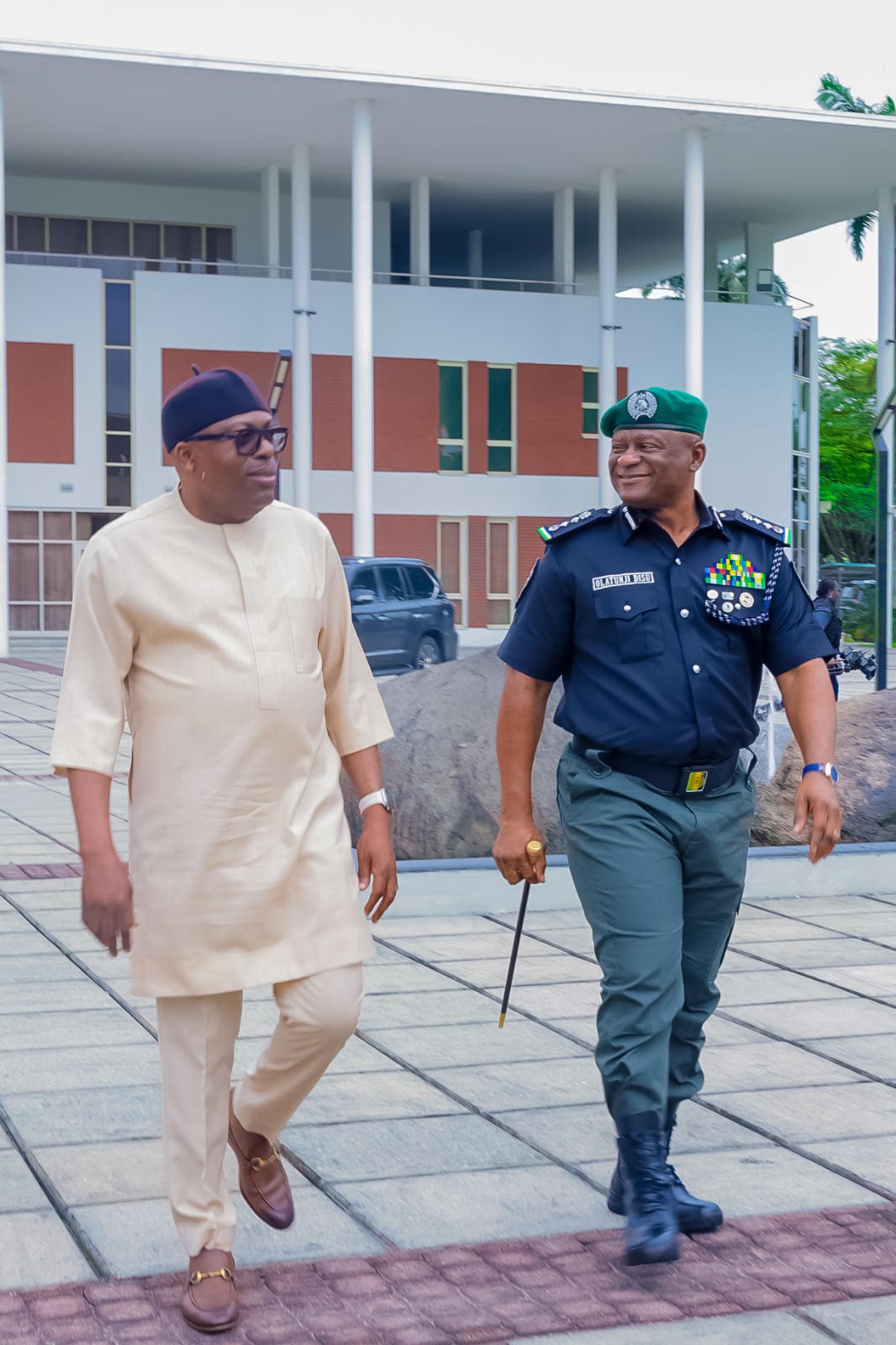
The Rivers State Government has called on stakeholders, community leaders, parents and relevant education authorities to intensify efforts to identify and enrol out-of-school children across Nigeria, stressing that every child deserves access to quality and inclusive education.
Governor Siminalayi Fubara made the call, yesterday, during the regional campaign on engaging community structures to promote the enrolment of out-of-school children and the regional flag-off of the 2026/2027 enrolment drive for southern states, held in Port Harcourt.
Represented by the Secretary to the State Government, Dr Dagogo Wokoma, Governor Fubara reaffirmed that education remains a fundamental pillar of sustainable development and emphasised the need to ensure that no child is left behind because of economic hardship, social background or other barriers to schooling.
He noted that expanding access to education was essential to promoting sustainable development, social inclusion and equal opportunities, enabling children to reach their full potential and contribute meaningfully to society.
The governor urged participating states and communities to translate their commitments into concrete and measurable actions by reaching vulnerable children, strengthening community engagement and encouraging parents and guardians to make their children’s education a priority.
He reiterated the state government’s commitment to initiatives aimed at expanding access to education, particularly for children excluded from formal schooling.
“Rivers State remains committed to supporting initiatives that expand access to inclusive and quality education, particularly for vulnerable children who may have missed the opportunity to attend formal schools,” Fubara stressed.
Also speaking, the Executive Secretary of the Universal Basic Education Commission (UBEC), Aisha Garba, described the growing number of out-of-school children as one of the major challenges confronting the education sector.
She called for a collective and collaborative approach among governments, communities, parents and other stakeholders to address the problem, stressing the need to ensure that no Nigerian child is denied the fundamental right to education.
The programme was organised by the Universal Basic Education Commission in collaboration with the Rivers State Government, as part of efforts to strengthen community participation and promote school enrolment across the southern states for the 2026/2027 academic session.

The Federation Account Allocation Committee (FAAC) has shared the sum of N2.428 trillion among the Federal Government, 36 states government and the 774 Local Government Councils (LGCs) as revenue for the month of September.
The Director, Press and Public Relations, Office of the Accountant-General of the Federation (OAGF), Mr Bawa Mokwa, said this in a statement in Abuja, yesterday.
Mokwa said the allocation was approved by FAAC at its October meeting held in Abuja.
He said the N2.428 trillion distributable revenue comprised of statutory revenue of N1.672 trillion, distributable Value Added Tax (VAT) revenue of N756.587 billion.
Mokwa quoted the FAAC communiqué as saying that total gross revenue of N3.913 trillion was available in the month of September 2026.
He said a total deduction for cost of collection was N131.758 billion while total transfers, refunds and savings of N1.352 trillion.
According to him, a gross statutory revenue of N3.096 trillion was received for the month of September 2026.
“This was higher than the sum of N2.850 trillion received in the preceeding month by N246.384 billion.
“Gross revenue of N816.872 billion was available from the Value Added Tax (VAT) in September 2026.
“This was lower than the N834.843 billion available in the month of August 2026 by N17.972 billion,” he said.
Mokwa explained that the Federal Government received N832.242 billion and the state governments received the sum of N799.872 billion.
He said the LGCs received N560.660 billion, while the sum of N236.049 billion (13% of mineral revenue) was shared to the benefiting state as derivation revenue.
Mokwa said in the N1.672 billion distributable statutory revenue, the Federal Government received N756.583 billion and the State Governments received N383.749 billion.
He said the LGCs received N295.855 billion and the sum of N236.049 billion (13% of mineral revenue) was shared to the benefiting States as derivation revenue.
The director said from the N756.587 billion distributable Value Added Tax (VAT) revenue, the Federal Government received N75.659 billion, the State Governments received N416.123 billion and the LGCs received N264.805 billion.
“In September 2026, Petroleum Profit Tax (PPT), Hydrocarbon Tax (HT), Petroleum Royalties, Import Duty, CET Levies and Excise Duty increased significantly.
“Also, Companies Income Tax (CIT), CGT & SDT, Value Added Tax (VTA), Mineral Royalties, and Gas Flared Penalty, Rental Gas Flared Fee and Misc. Oil Revenue decreased considerably,” he said.
The Nigeria Labour Congress (NLC) has given the Federal Government a two-week ultimatum to reduce the price of petrol, commence renegotiation of the national minimum wage and implement outstanding agreements with workers.
The ultimatum followed a joint meeting of the National Executive Council and Central Working Committee of the NLC held at the Olaitan Oyerinde Hall, Labour House, Abuja.
In a communiqué signed by the NLC President, Joe Ajaero, and made available to newsmen, yesterday, the union said the two-week ultimatum would commence on Friday, October 9, 2026.
It warned that failure by the government to meet its demands would compel the Congress to take further action.
The NLC specifically demanded that the government reduce the price of Premium Motor Spirit to the level it was when the current national minimum wage was signed into law in 2024.
It also demanded the immediate commencement of negotiations for a new minimum wage, implementation of the February 5, 2026, Terms of Settlement reached with the Joint Health Sector Unions and Assembly of Healthcare Professionals, and action on the demands of the Joint Public Sector Negotiating Council.
The Congress further demanded tax relief and immediate wage awards for workers, arguing that the measures were necessary to cushion the impact of rising living costs.
The NLC said, “The current national minimum wage has been rendered worthless by the relentless depreciation of the naira and the astronomical rise in the cost of living.”
It added that workers could no longer meet basic needs, including food, shelter, healthcare, transportation and education, on their current earnings.
The labour body, therefore, demanded that the Federal Government commence renegotiation of the national minimum wage before the end of October.
“NEC-in-session demands that the Federal Government commence the renegotiation of the national minimum wage before the end of this month,” the communiqué stated.
The Congress also linked the erosion of workers’ purchasing power to the high cost of petrol, saying the price of the commodity had continued to drive up transportation costs and the prices of other essential goods.
“The exorbitant pump price of petrol has had a cascading effect on the cost of transportation, food, and other essential goods, further deepening the hardship of workers and the masses,” it said.
The NLC further demanded that the government grant tax relief to workers and immediately introduce wage awards, describing the measures as “the bare minimum required to alleviate the suffering of Nigerian workers and restore a measure of dignity to their lives.”
The latest ultimatum escalates the labour movement’s pressure on the Federal Government after public-sector workers under the Joint National Public Service Negotiating Council embarked on a three-day warning strike earlier in October over rising living costs, petrol prices, wage awards and minimum wage negotiations.
The workers had demanded, among other measures, a reduction in petrol prices and the commencement of negotiations for a new minimum wage.
The NLC had also raised concerns in September over the declining purchasing power of workers, with Ajaero arguing that the N70,000 minimum wage had been overtaken by increases in the cost of food, transportation, housing, education and other essential expenses.
The current minimum wage was approved by President Bola Tinubu in July 2024 after negotiations involving the government, organised labour and the private sector.
Tinubu increased the Federal Government’s offer from N62,000 to N70,000 and agreed that the wage should be reviewed after three years rather than five years.
The NLC’s latest demand comes as the Federal Government announced fresh measures aimed at containing petrol-price pressures.
Yesterday, the Minister of Finance and Coordinating Minister of the Economy, Taiwo Oyedele, said the government was negotiating a ceiling of N1,350 per litre on the ex-gantry or landing cost of petrol, with monthly reviews, as part of measures to reduce price volatility.
The proposed ceiling does not mean petrol would necessarily sell at N1,350 per litre at filling stations.
The government also announced a 30-day discount on petrol dispensed by the Nigerian National Petroleum Company Limited (NNPCL), with priority given to public transporters.
Oyedele said the arrangement was not a return to subsidy but an effort to sell the product at cost.
However, the NLC is seeking a more substantial reduction, insisting that petrol should return to the price level that prevailed when the N70,000 minimum wage was enacted in 2024.
The Congress also called for the implementation of the agreement reached with JOHESU in February, as well as the demands presented by the Joint Public Sector Negotiating Council.
It warned that failure to respond within the two-week period would have consequences.
“Failure of which the NLC will be compelled to take remedial steps as would be directed by the relevant organs,” the communiqué said.
The union consequently directed its affiliates and allies to remain prepared for further action.
“NEC-in-session reaffirms the historical responsibility of the NLC to resist all forms of exploitation and oppression,” it stated, urging its affiliates to remain “on high alert and fully prepared to engage in decisive efforts against all anti-people policies.”
The development also comes amid fresh labour tensions in Abuja, where the FCT Council of the NLC commenced an indefinite strike on Wednesday over disputes with the FCT Administration concerning teachers’ promotion policies.
The council directed workers across public and private establishments to withdraw their services after the expiration of a seven-day ultimatum.
The latest NLC ultimatum puts renewed pressure on the Federal Government to address wage and fuel-price concerns as both sides grapple with disagreements over the implementation of previous labour agreements and measures to cushion the impact of economic reforms.
The NLC said its demands were aimed at protecting workers and the wider population from further deterioration in their standard of living, insisting that Nigerian workers must remain “resolute, organised, and uncompromising” in the struggle for improved living conditions.
-

 Education2 days ago
FCE Yola Graduates 3,555 Teachers , Seeks Upgrade to University
-

 Sports1 day ago
Nigerian Trio Target Titles At PFL Africa Finals
-

 Niger Delta2 days ago
Diri Restates Stance On Lagos-Calabar Coastal Highway
-

 Niger Delta2 days ago
C’River, NUJ Pay Tribute To Late Guardian Editor
-

 News2 days ago
NDLEA Recovers Tons Of Illicit Drug Consignments In Nine States
-

 Opinion2 days ago
Checking Voter Apathy In Nigeria’s Electoral Process
-

 Politics1 day ago
2027: DICKSON’S EX-ALLY VOWS TO WORK AGAINST NDC INTEREST IN BAYELSA
-

 Politics1 day ago
2027: GROUP PLEDGES 40,000 SUPPORTERS FOR COALITION CANDIDATES IN RIVERS