
Politics
2023 Polls: INEC, Women Organisation Engage Critical Stakeholders

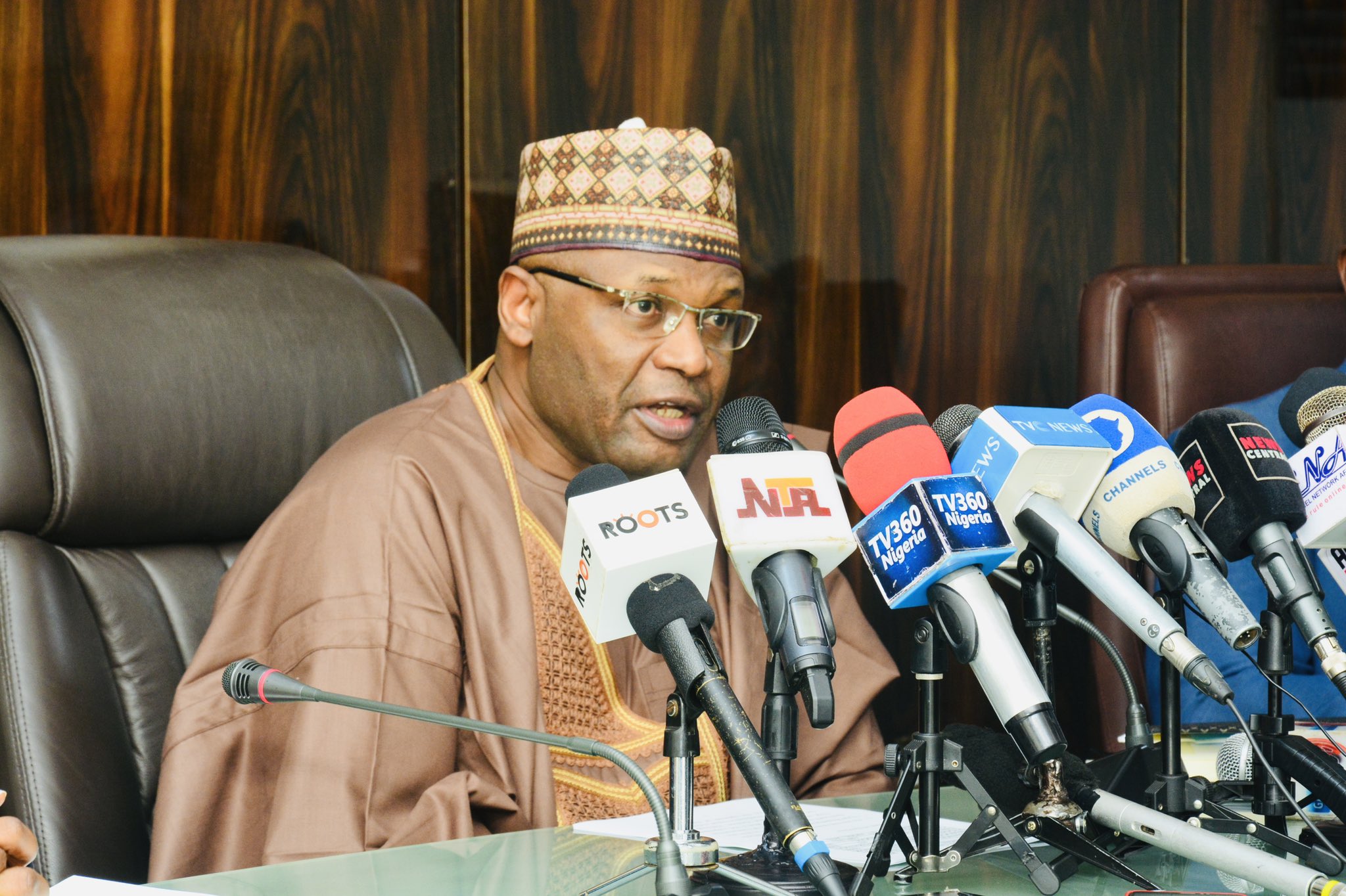
The Nigerian Women Trust Fund (NWTF), in collaboration with theIndependent National Electoral Commission (INEC), have engaged critical stakeholders on effective and gender mainstreaming that will promote equality in the electoral space.
The News Agency of Nigeria (NAN) reports that the engagement meeting for critical stakeholders in Oyo State, held at Owu Crown Hotel in Ibadan, was to enhance more women participation in Nigeria politics ahead of the 2023 elections.
In his goodwill message, Mr Abiodun Amosun, who represented the Resident Electoral Commissioner (REC) in Oyo, said the meeting was a pre-assessment on Gender and Election Watch Programme.
Amosun said the programme was timely and historic, “in the sense that general elections is around the corner, coupled with the fact that INEC accorded high level priority to mainstreaming gender considerations across all areas of its activities”.
He explained that the commission embarked on the review of its Gender Policy for 2021-2025, in line with the commission’s Strategic Plan 2022-2026, geared toward consolidating free, fair, credible and inclusive elections in the country.
According to him, the outcomes of the review process informed the commission’s decision to establish a new department, known as Gender and Inclusivity, with the task of raising awareness on gender sensitivity and improving gender equity.
On the pre-assessment meeting, the Administrative Secretary, said the Election Watch Programme was one of the key performance indicators for pursuing and advancing gender concerns in all electoral activities.
Amosun said the rationale/modalities and how to identify anticipated participants for the next Gender Election Watch Programme would be looked into at the meeting.
“This would be geared toward enhancing women participation; the percentage of women in politics still remains very low and not too encouraging,” he said.
On the meeting’s objectives, Mrs Victoria Eta-Messi, the Deputy Director, Gender Relations, INEC in Abuja, said: “It is basically to sensitise the selected state offices of the commission on intervention that the Nigerian Women Trust Fund intend to do.
“With regards to gender mainstreaming ahead of 2023 general elections and beyond.
“With the European Union funding, Gender Election Watch is going to run for five years, but the main programme which is going to be implemented soonest, before the 2023 elections, is Gender and Election Watch.
“So, the first leg of the programme is the sensitisation of the eight selected states, where we will sensitise critical stakeholders on how to go about implementing activities of the programme that would ensure we have effective and equitable gender mainstreaming.
“We know that elections are under way in a couple of months and campaign would soon begin.
“So, there is going to be monitoring and observation of the campaign practices and processes with a gender lens from gender perspectives,” Eta-Messi explained.
She said that the programme would enable the stakeholders to have information required and what INEC and NWTF plan to do with regard to ensuring that there is increased women participation in 2023 election processes.
On her parts, the Programme Officer, NWTF, Ruth Manu, observed that the marginalisation of women in the nation’s political equation remains the central challenge of democratic governance.
According to her, some of the barriers to women’s participation in Nigeria politics are lack of effective government’ action to domesticate and implement International conventions that promote women’s equal participation in policy and governance processes.
“The systematic exclusion of women from leadership positions within political parties, education system and public spheres of representation, also media, provide less visibility for women in politics,” she said.
Manu further explained that the NWTF objectives were to contribute to the increase participation and greater inclusion of women in politics and pushing for legislation for women and gender to get to the mainstream politics.
She said the organisation was engaging INEC leadership, Women Societies, National Orientation Agency, traditional rulers religious leaders, political parties media and Civil Society Organisations to play their respective roles in actualising its objectives.
Manu urged all participants to ensure they carry out the awareness and sensitisation back to their members.
The programme officer said that this would enable them to be better informed on the needs for women to be more involved in politics.
The participants appreciated NWTF and INEC for the engagement, promising to do more in the sensitisation of the general public through their respective platforms.
NAN reports that theme of the one-day engagement was: “Women’s Political Participation, Inclusion and 2023 General Elections”. (NAN)


The Commission disclosed the figure in its weekly update for week 14 of the second phase of the exercise, which ended on Friday, April 17, 2026.
According to the breakdown, 2,259,288 Nigerians completed their registration through the online pre-registration portal, while 1,489,416 finalized their registration physically at designated centres nationwide.
INEC noted that the figures remain preliminary and are subject to further verification and data cleaning processes to ensure accuracy ahead of the consolidation of the national voter register.
With the conclusion of the registration phase, the Commission has now shifted focus to the display of the Register of Voters for Claims and Objections, a statutory stage aimed at strengthening the credibility and integrity of the voters register.
The display exercise is scheduled to hold from April 29 to May 5, 2026, across designated centres nationwide, providing citizens the opportunity to verify their details and raise objections where necessary.
The Commission urged all registered voters from the concluded phase to take advantage of the exercise to confirm the accuracy of their information and assist in identifying ineligible entries, including duplicate registrations, deceased persons, and non-citizens.
INEC explained that the Continuous Voter Registration exercise is being conducted in phases, with the first phase running from August 18 to December 10, 2025, while the second phase commenced on January 5, 2026 and ended on April 17, 2026.
The Commission further stated that the date for the commencement of the third phase will be announced in due course.
Reaffirming its commitment to credible elections, INEC stressed that maintaining a clean and accurate voter register remains central to ensuring free, fair, and transparent electoral processes in Nigeria.
The Executive Director of IPC, Mr Lanre Arogundade, informed the journalists that the dialogue was sponsored by the European Union, under the auspices of the EU-Support to Democratic Governance in Nigeria (EU-SDGN II), Component 4: Support to Media.
According to the veteran media practitioner, the programme is aimed at strengthening the capacity of the media to promote credible elections through factual, accurate and fair reporting.
He explained that the programme is part of a broader five-year intervention designed to support democratic governance and improve the role of the media in Nigeria’s electoral process, stressing that fact-checking and inclusive reporting are critical responsibilities for journalists, especially during electioneering.
He described the media as a central role agent with regard to upholding transparency and accountability in the democratic process.
A resource person and Director of Journalism Clinic, Lagos, Mr Taiwo Obe, enjoined journalists to embrace the evolving technology so that they would not be in the backwaters in the practice of the profession.
He advised journalists not to downplay Artificial Intelligence (AI) in their bid to remain relevant in the media environment by being abreast of the changing patterns of news consumption.
The journalism teacher explained that with digital transformation of the media industry, it had become imperative for journalists to constantly upgrade and update their skills, stressing the fundamental place of attitude and self-development and underscored the dynamic nature of media consumption in the digital age, thereby compelling journalists to embrace tools and platforms, but without much reliance on AI.
In his lecture, a Professor of Mass Communication at the Federal University Oye-Ekiti (FUOYE), Adebola Aderibigbe, advised journalists in Ekiti State to ensure that coverage of the upcoming governorship poll is issue-based rather than dwelling on personalities.
He added that sensationalism should not occupy the front-burner of any discussions concerning the 2026 election, admonishing that sustenance of democracy is anchored on responsible journalism.
”Journalists must prioritise accuracy, fairness and balance in their reports by verifying facts and giving all parties involved in political matters the opportunity to present their views”, he said.
According to the university don, the election will not be defined by personalities, but by issues. ”Let issues be the pivotal ring upon which every discussion should be made. Sensationalisation of issues should not be the bedrock of discussions in the 2026 election”, he added.
“Do not hear from Party A without hearing from Party B, otherwise the report will be skewed to one side and once issues of elections are skewed, problems will naturally arise”, he stressed.