
Business
NPA Nets N172.286bn In Six Months

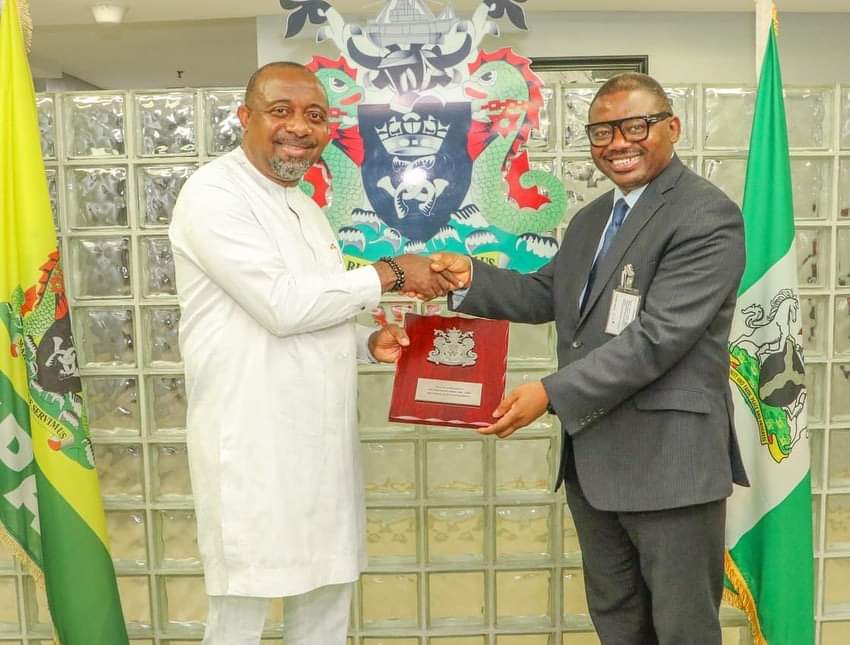
The Nigerian Ports Authority (NPA) has announced a revenue generation of N172.286 billion during the first six months of 2022.
The authority also remitted the sum of N78.497bn to the Consolidated Revenue Fund (CRF) of the federation account during the same period.
A statement made available to The Tide in Lagos, by the Managing Director, Mohammed Bello Koko, indicates that the sum of N50,255,925,779.20 and N28,241,041,083.00 were cash remittances, and compulsory deduction of 25 per cent of revenue generated, as well as other sundry payments for the period under review.
He said the half-year operational statistics is encouraging in view of the global economic meltdown and worrisome inflation trends across nations.
Part of the statement reads: “Global economic and inflation crises, global reduction in household incomes and purchasing power, and scarcity of foreign exchange, all of which have negatively affected business environment, affected government revenue and constrained expenditure.
“The development in the port industry cannot be severed from the macro-economic environment with galloping inflation that has grossly reduced the disposable income of the households, the depreciating exchange rates that stifle business environment, and the dwindling government revenue that constrains expenditure.
“In the face of these harsh macro-economic indices, the NPA has forged on to deliver port and harbour services to the teeming operators in the export and import businesses across the country”.
The Managing Director also said remittances were clear expressions of the operational performance of ports operations as well as attendant current challenges in cargo ship calls and dwell time.
“In the first half of 2022, a total of 1,992 ships calls were recorded and the aggregate of the Gross Registered Tonnage (GRT) of vessels was 60,235,133 tons.
“The Authority achieved total cargo throughput of 38,672,392 metric tonnes and 849,175 teus (twenty-foot equivalent units) of container traffic. Vehicle traffic handled, during the period under review, was 132,543 units.
“Also, the average turn-around-time (TAT) of vessels, indicating port efficiency, stood at 5.16days. This is an improvement and we are strategising to perform better in the second half of the year.
“Port remains the gateway of the national economy, and thus represents the barometer by which we measure the pulse of the economy.
“The Authority remains committed to providing improved services to increase efficiency at the ports that impact on higher revenue generation and economic growth of the nation,” he said.
He also said among improvement in some areas were the deployment of marine crafts at all ports locations; marking/laying of buoys at Calabar and Escravos Channel to improve safe navigation; encouraging the use of Eastern Port by way of incentives to importers on port charges.
‘‘There have also been deployment of security patrol boats to increase safety along the Port Quays; and repairs/ rehabilitation of ports’ access roads to improve cargo evacuation and dwell time,’’ he added.
By: Nkpemenyie Mcdominic, Lagos



