
Editorial
Wike: Seven Years Of Meritable Service

As Nigerians marked 23 years of unbroken constitutional democracy yesterday, May 29, 2022, the self-congratulatory rhetoric and feasting will likely be restricted to the ruling class and their cronies. For the majority, gloom pervades as they confront a harsh present and an uncertain future. Unless Nigerians take back their lives from the political class to whom they have surrendered democracy, the promise of a better life will remain elusive.
Shamefully, 23 years after the return to civil rule, many citizens wonder whether their lot has improved. True, they are freer, no longer restrained by the military’s draconian decrees, squeeze and aggression. But freedom guaranteed on paper means little if not fully practised. As Nigerians protest bitterly against misrule, corruption and exclusion, it is becoming increasingly obvious that the broad feeling of estrangement among the populace lies primarily in their own indifference and inability to make their voices and concerns heard.
Every Nigerian should, therefore, exert pressure, using all legitimate means to demand better governance. Successive administrations have failed on almost all counts, presiding over massive looting, economic mismanagement, and failing to deliver security and life’s basics. Our legislators are reckoned by many to be the worst in the world, yet, perhaps, the highest paid, appropriating resources for themselves and unaccountable to their constituents. The judiciary is adjudged corrupt; swift to impose harsh penalties on the weak but aggressively protective of the rich and powerful who plunder the public treasury.
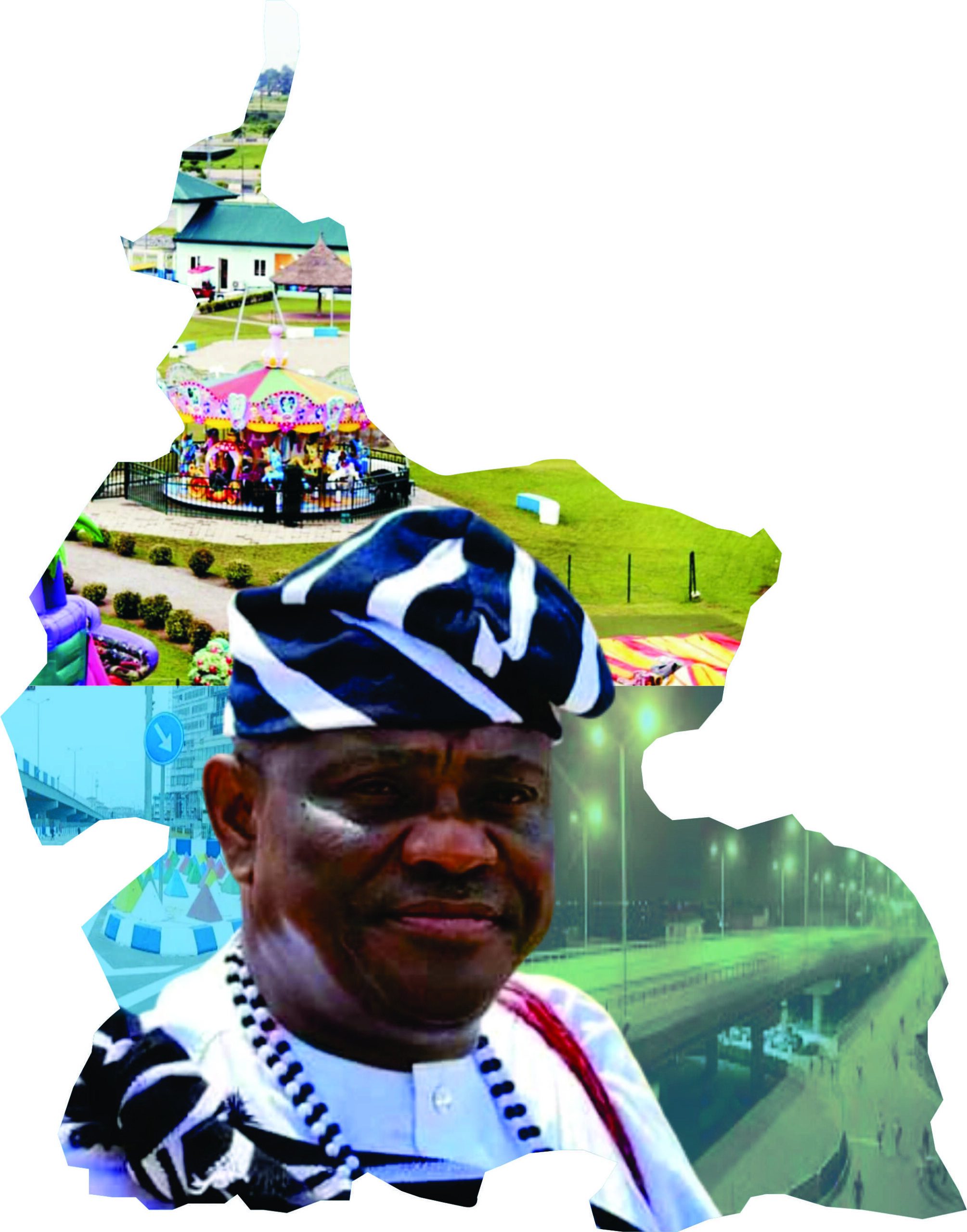
However, despite the apparent hopelessness, we commend the commitment of governors like Chief Nyesom Wike of Rivers State, elected on the platform of the Peoples Democratic Party (PDP) in giving hope to Rivers people through his excellent performance in key sectors despite the daunting challenges. Wike assumed office on May 29, 2015. But the feeling this administration has planted in the minds of many Rivers persons and indeed residents is that of several decades of good works.
Wike mounted the saddle with no one to take over from. He inherited a state completely raped and ripped apart. The state was looted and the Government House violated with human wastes. Many official state vehicles were looted including the ceremonial vans. He took over a civil service that was owed several months salaries and judiciary and legislative structures that were shut down. Port Harcourt was full of garbage because refuse disposal contractors were owed several months
Rivers people must congratulate the Governor on his attainment of seven years in office. Now, it is hard to say whether he is a silent achiever or a bulldozer or a submarine, but everyone seems to agree that he is the emancipator of Rivers State from the hands of those who did everything to make merchandise of it. In seven years, he has made possible some landmark developments that severely confound all including the opposition.
The Governor has constructed no fewer than 150 roads, some inherited from previous administrations while many were initiated by his government. While quite a lot have been commissioned, others are ongoing. This is in addition to 10 flyover projects that have either been completed or are ongoing. Wike has in the last seven years kept his promise to Rivers people on road infrastructure, with a high level of connectivity, which has boosted the economy.
And he is not done yet. In the education sector, the government has been embarking on the revival of decrepit infrastructure to expand access to quality education. He increased budgetary allocation to the sector, strengthened implementation of Universal Basic Education (UBE), rehabilitated and equipped schools and improved infrastructure in tertiary schools. Also, more than 175 primary schools have been built or renovated, including landscaping and provision of water, toilet facilities and power generators.
In the tertiary education sub-sector, the name of the Rivers State University of Science and Technology (RSUST) was altered to Rivers State University (RSU). Mr Projects embarked on improving the infrastructure in the institution. He also enhanced funding to the university which led to the accreditation of all programmes earlier denied the institution, and recruited new staff to fill existing vacancies.
Additionally, the Governor delivered a new Faculty of Law building, Faculty of Management Sciences building, Faculty of Science and Technical Education building, College of Medical Sciences building, and facilities in other state-owned tertiary institutions. He further released N200 million funding interventions each for Captain Elechi Amadi Polytechnic, Port Harcourt; Kenule Beeson Saro-Wiwa Polytechnic, Bori; and the Ignatius Ajuru University of Education, Rumuolumeni.
Since May 29, 2015, the state government has been revitalising the primary health care system, boosting the secondary health infrastructure and fortifying the tertiary health sub-sector, including the establishment of a medical school in the Rivers State University to enhance the training of health personnel for the state. He has upgraded the Schools of Health Science and Technology and that of Nursing and Midwifery and is partnering with the private sector to manage secondary health facilities and ensure efficient health care delivery in the state.
To further animate the government’s policy objective in the health sector, Wike renovated more than 17 existing primary health care centres and built an additional three at Bille, Mgbuosimini and Ogbakiri communities. He strengthened the secondary health care sub-sector with the reconstruction of about 12 existing but abandoned general hospitals. He completed four zonal hospitals inherited from the past administration including the construction of an additional zonal hospital at Omoku. The former Braithwaite Memorial Specialist Hospital was upgraded to a teaching hospital for the Rivers State University.
As a lawyer and a life bencher who understands the implications of having judicial officers work in an unbefitting environment, the Governor completed the Magistrate Court complex abandoned by the previous administration. He also relocated the NBA House from the court complex to Bank Road and gave lawyers a befitting edifice there. He equally rebuilt the Federal High Court complex and the National Industrial Court. The Court of Appeal was rehabilitated while a cluster of modern quarters for judges in the state was built.
Efforts are constantly made to fortify the security architecture of the state and support security agencies, including military and para-military institutions to perform their assigned, legitimate roles seamlessly. Consequently, several patrol vans, communication gadgets, protective vests, among others, are regularly procured for the federal security agencies to guarantee law and order, peace and security in the state. Furthermore, the Rivers State Neighbourhood Safety Corps Agency is now in operation to boost community policing.
The Pleasure Park was built to meet the tourism needs of the state and to provide relief for Rivers people and residents. With this, the much-needed recreation and relaxation are accomplished, while family ties and bonds are promoted to ease economic hardship and emotional traumas. His road projects also communicate vividly aesthetics and beautifications for tourists and residents.
Several projects have been built in other sectors. More than 50 housing units for civil servants were constructed. This is accompanied by other projects such as jetties to boost marine transport, the Produce House on Moscow Road, and the erection of a secretariat for the Nigeria Labour Congress (NLC) and the Trade Union Congress (TUC). The Rumuokoro Market and Park, the Mile 1 Market (Phase 2) at Diobu and the Fruit Garden Market at D/Line have since been completed. This includes the Rex Lawson Cultural Centre initially abandoned by the previous government.
Also, the N150 million ATC Jetty at Okrika was built by the Wike government after years of dereliction. This was followed by the reconstruction of the Bonny/Bille Jetty on Creek Road as part of measures to boost marine transportation in that area. Even in sports, the merger of the state’s two darling teams, Sharks FC and Dolphins FC, into today’s Rivers United Football Club is yet another demonstration of sound economic reasoning which began to yield dividends almost immediately.
On this occasion of his seventh anniversary in office, we can only urge the good people of Rivers State to thank God for giving the state a man like Governor Wike. All we can do is to pray for more wisdom, health and protection to be bestowed upon him for the remaining one year of his tenure. This we must all do because his political opponents are unrelenting and are still hurt that every step against the Governor fails.




Nigeria stands at a critical juncture as the world marked World Press Freedom Day (WPFD) on May 3. This annual observance is a reminder that a free press is central to democratic life, good governance, and public accountability. For Nigeria, it is also a moment for sober reflection on how far the country has come and how far it still has to go in safeguarding the independence of its media.
World Press Freedom Day exists to highlight the fundamental importance of freedom of expression and to honour journalists who risk their lives in pursuit of truth. It underscores the idea that without a free press, societies cannot function transparently, nor can citizens make informed decisions. In countries like Nigeria, where democracy continues to evolve, the observance carries particular urgency.
This year’s theme, “Shaping a Future at Peace: Promoting Press Freedom for Human Rights, Development and Security”, places journalism at the heart of global stability. It emphasises that a peaceful society cannot be built on silence, fear, or manipulated information. Rather, it depends on the free flow of accurate, timely, and independent reporting.
At its core, the theme highlights the role of journalism in fostering accountability, dialogue, and trust. These are not abstract ideals. In Nigeria, where public confidence in institutions is often fragile, the media remains one of the few platforms through which citizens can question authority and demand transparency. When press freedom declines, so too does public trust.
Journalism serves as a foundation for peace, security, and economic recovery. Countries with robust media systems tend to attract greater investment, maintain stronger institutions, and resolve conflicts more effectively. Nigeria’s economic challenges, ranging from inflation to unemployment, require open scrutiny and informed debate, both of which depend on a free press.
However, the issue of information integrity has become increasingly complex in the digital age. Artificial Intelligence (AI) and online platforms have amplified the spread of misinformation and disinformation. In Nigeria, where internet penetration has grown rapidly, false narratives can travel faster than verified facts. This makes the role of credible journalism more vital than ever.
The challenge is not only technological but also ethical. AI-driven manipulation of information threatens to distort public discourse, influence elections, and deepen social divisions. In such an environment, professional journalism must act as a stabilising force, ensuring that truth prevails over sensationalism and propaganda.
Equally troubling is the safety of journalists. Across Nigeria, reporters face growing levels of online harassment, judicial intimidation, and physical threats. Self-censorship is becoming more common, as media practitioners weigh the risks of reporting sensitive issues. This trend undermines the very essence of journalism.
A particularly alarming incident involved a serving minister in the present administration, who openly threatened to shoot a journalist during a televised exchange. Such conduct, broadcast to the public, sends a dangerous signal that hostility towards the press is acceptable. It erodes the norms of democratic engagement and places journalists in harm’s way.
This year’s theme aligns closely with the United Nations Sustainable Development Goal (SDG)16, which promotes peace, justice, and strong institutions. Freedom of expression is a cornerstone of this goal. Without it, institutions weaken, corruption thrives, and justice becomes elusive. Nigeria’s commitment to SDG 16 must therefore include genuine protection for the media.
Historically, the Nigerian press has been a formidable force. From resisting colonial rule to challenging military dictatorships, our journalists have played a central role in shaping the nation’s political landscape. Today, however, that legacy appears to be under strain, as the media operates under what can best be described as a veneer of freedom.
Beneath this facade lies a troubling reality. Journalists are routinely harassed, detained, and prosecuted for performing their constitutional duties. Reports from media watchdogs indicate that dozens of Nigerian journalists face legal threats or arrest each year, often for exposing corruption or criticising those in power.
The Cybercrimes (Prohibition, Prevention, etc.) Act of 2015 has become a focal point of concern. Originally intended to combat cyber threats, it has increasingly been used to silence dissent. Sections 24 and 27(1)(b), in particular, have been invoked to target journalists, bloggers, and social commentators.
Although amendments introduced in February 2024 were meant to safeguard journalists, concerns persist. The law continues to be wielded in ways that stifle investigative reporting and restrict freedom of expression. Legal reforms must go beyond cosmetic changes to address the root causes of misuse.
To safeguard the future of journalism in Nigeria, decisive action is required. The Cybercrimes Act must be revisited to ensure it cannot be weaponised against the press. Law enforcement agencies must operate free from political influence, upholding the rule of law and protecting journalists’ rights. Civil society and international partners must also strengthen independent media through funding, training, and platforms for wider reach.
In this rapidly evolving world shaped by artificial intelligence and digital innovation, Nigeria faces a clear choice. It can either allow press freedom to erode under pressure, or it can champion a truly independent media landscape. The path it chooses will determine not only the future of journalism, but also the strength of its democracy and the peace it seeks to build.
-
 Editorial2 days ago
Enough Of Xenophobic Attacks On Nigerians
-

 Nation2 days ago
RSU, Otonti Nduka Foundation Holds Centenary Conference, Unveil Book on Values in Nigeria
-

 Oil & Energy2 days ago
Rivers PETROAN Elects 12-Member Executive
-
Politics2 days ago
APC Group Protests Ex–Presidential Aspirant’s Disqualification From Rivers Senatorial Race
-

 Sports2 days ago
Oparaodu Urges Rivers United To Win Katsina United
-
Politics2 days ago
Reps Speaker Secures APC Return Ticket For Fifth Term
-

 Environment2 days ago
MOSOP – Tinubu Not Sincere With Ogoni People For Oil Resumption
-
Politics2 days ago
Primaries: Diri Lauds APC’s Unity, Cohesion In Bayelsa