
Editorial
Still On Security In Nigeria

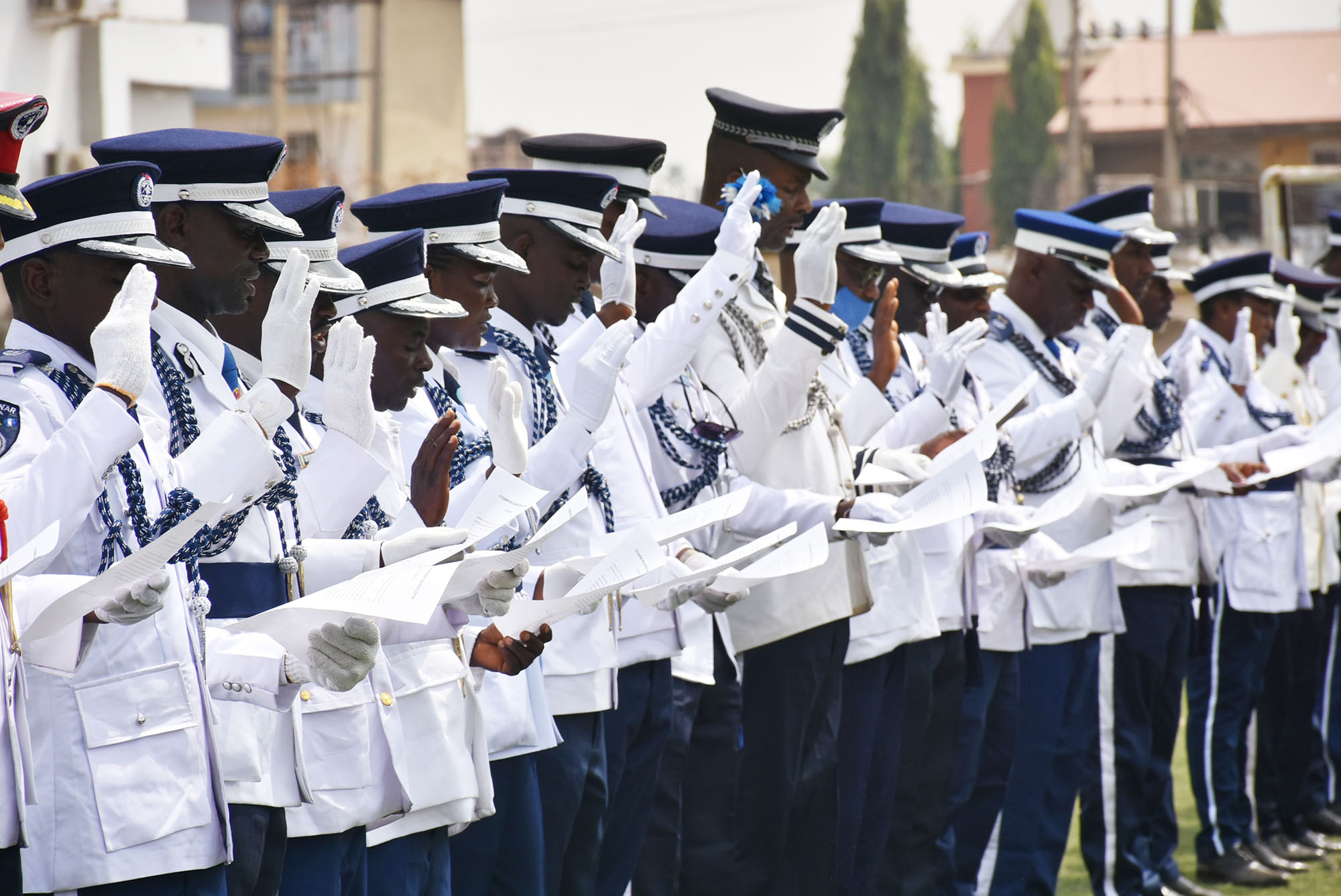
Nigeria, Africa’s most populous nation and the largest economy, has severely suffered ethnic, religious and political violence since its independence from Britain in 1960. It went through a Civil War between 1967 and 1970, the Maitasine crisis in the 1980s, sporadic ethno-pastoral conflicts, particularly in the Middle Belt, and militancy in the oil-producing Niger Delta region in the southern part of the country.
In the past decade, there has been a spate of violent attacks linked to the group notoriously known as Boko Haram in the Northern part of the country where thousands of lives have been lost and extensive property damage suffered, setting the already slow development of the region even further backwards. Agitation by pro-Biafra group in the South-East for the establishment of a Sovereign State of Biafra raises concerns.
Also, the conflict between nomadic herdsmen, cattle rustlers, and farmers has most recently expanded to other parts of the country with an escalation in the spate of violent clashes resulting in several deaths with entire villages being burnt down, and animals and farmlands destroyed. Bandits later appeared as the new bogeyman of insecurity in Nigeria, joining a long list of others.
Exploiting a weak Nigerian security system, bandits/terrorists attacked Kaduna International Airport on 25 March 2022. Over 200 invaders seized navigational equipment, interrupted flights and openly confronted troops. Before they were repelled by the Nigeria Army and Air Force, they had inflicted further massive damage on the national psyche. An official of Nigeria’s Airspace Management Agency was shot and killed in the invasion.
Apparently emboldened by the seeming victory they recorded at the airport, the bandits, on 28 March 2022, tweaked their game plan and moved to lay ambush for the public train that runs between Kaduna and Abuja ferrying millions of passengers daily between the two major cities. The killers successfully and without any challenge, laid tonnes of explosives on the rail track, and they succeeded in their evil scheme.
About a year ago, armed bandits attacked the staff quarters of the Federal Airport Authority of Nigeria (FAAN) at the Kaduna International Airport and abducted about 12 people. Terrorists also carried out large-scale attacks on the United Nations (UN) headquarters in Abuja and Kano, and kidnapped hundreds of students in the North. But a major bandit attack on an airport is out of the ordinary.
In July 2021, an Alpha military airplane was shot down at the border between Zamfara and Kaduna. Amazingly, the military did not respond with the expected ferocity against the insurgents. The feeble response encouraged terrorist operatives to attack the Nigeria Defence Academy (NDA) the following month, when two officers were killed and one abducted. Under Buhari, even the military is unsafe.
These attacks heavily portray Nigeria as a failed state and raises questions about the ability of security agencies, especially the police, military, and the State Security Service to secure strategic assets, lives, and property. As the state is confronted with regular daily incursions by Fulani bandits and militias, security operatives should not be caught napping again.
Security agents must explain how about 200 bandits were able to travel long distances to the airport on 70 to 80 undetected, uninterrupted motorcycles. Does a state under the siege of criminals not have a 24-hour surveillance, patrol, and intelligence system? Shamefully, President Muhammadu Buhari remains in denial and refuses to take control.
Bandits have taken these deliberate killings to the sovereignty of our country, well beyond what is understandable. The Federal Government must accept failure and present a very strong front to ensure that these attacks do not take place any further. And for it to stop, someone needs to be held accountable to act as a deterrent to others.
The airport breach rekindles widespread fear that Nigeria is on the verge of a cliff. Kaduna is host to the elite 1st Division of the Nigerian Army; Nigerian Army Depot, Zaria; Armed Forces Command and Staff College, Jaji; Nigerian Defence Industry, Nigerian Airforce Training School, Nigerian Police College and the Nigerian Navy School of Armament, Kachia.
Other military institutions in Kaduna are: The Nigerian Army School of Legal Services, Bassawa Zaria; the Nigerian Defence Academy; the Nigerian Army School of Artillery, Kachia; the Nigerian Army School of Military Police; Army Operation Base, Southern Kaduna and the Nigerian Army School of Infantry.
With these and other security agencies operating in Kaduna, the state and its environs should have become a veritable military fortress that cannot be easily overrun by bandits or terrorists. But this is not the case. It has paradoxically suffered more attacks by daring bandits and terrorists than many other states in the North or any other part of the country.
These audacious attacks have come in torrents and destructive fashion, leading to the killing of thousands of innocent persons, destruction of key national infrastructure and the kidnapping for ransom of very important Nigerians. Members of the armed forces have also fallen victims to the ravenous elements, which apparently are always on the lookout for top officials to maim, kill or kidnap for pecuniary gains.
Nigerians are playing with fate. Insensitive and entirely selfish politicians are preoccupied by the 2023 elections as the country collapses. To avoid the impending doom, strong voices must demand action from the Buhari regime. Nigeria needs an urgent security reform. States should meet the challenge by organising well-armed security outfits to complement inadequate and failing federal agencies. This war needs to be about intelligence and technology.




Nigeria stands at a critical juncture as the world marked World Press Freedom Day (WPFD) on May 3. This annual observance is a reminder that a free press is central to democratic life, good governance, and public accountability. For Nigeria, it is also a moment for sober reflection on how far the country has come and how far it still has to go in safeguarding the independence of its media.
World Press Freedom Day exists to highlight the fundamental importance of freedom of expression and to honour journalists who risk their lives in pursuit of truth. It underscores the idea that without a free press, societies cannot function transparently, nor can citizens make informed decisions. In countries like Nigeria, where democracy continues to evolve, the observance carries particular urgency.
This year’s theme, “Shaping a Future at Peace: Promoting Press Freedom for Human Rights, Development and Security”, places journalism at the heart of global stability. It emphasises that a peaceful society cannot be built on silence, fear, or manipulated information. Rather, it depends on the free flow of accurate, timely, and independent reporting.
At its core, the theme highlights the role of journalism in fostering accountability, dialogue, and trust. These are not abstract ideals. In Nigeria, where public confidence in institutions is often fragile, the media remains one of the few platforms through which citizens can question authority and demand transparency. When press freedom declines, so too does public trust.
Journalism serves as a foundation for peace, security, and economic recovery. Countries with robust media systems tend to attract greater investment, maintain stronger institutions, and resolve conflicts more effectively. Nigeria’s economic challenges, ranging from inflation to unemployment, require open scrutiny and informed debate, both of which depend on a free press.
However, the issue of information integrity has become increasingly complex in the digital age. Artificial Intelligence (AI) and online platforms have amplified the spread of misinformation and disinformation. In Nigeria, where internet penetration has grown rapidly, false narratives can travel faster than verified facts. This makes the role of credible journalism more vital than ever.
The challenge is not only technological but also ethical. AI-driven manipulation of information threatens to distort public discourse, influence elections, and deepen social divisions. In such an environment, professional journalism must act as a stabilising force, ensuring that truth prevails over sensationalism and propaganda.
Equally troubling is the safety of journalists. Across Nigeria, reporters face growing levels of online harassment, judicial intimidation, and physical threats. Self-censorship is becoming more common, as media practitioners weigh the risks of reporting sensitive issues. This trend undermines the very essence of journalism.
A particularly alarming incident involved a serving minister in the present administration, who openly threatened to shoot a journalist during a televised exchange. Such conduct, broadcast to the public, sends a dangerous signal that hostility towards the press is acceptable. It erodes the norms of democratic engagement and places journalists in harm’s way.
This year’s theme aligns closely with the United Nations Sustainable Development Goal (SDG)16, which promotes peace, justice, and strong institutions. Freedom of expression is a cornerstone of this goal. Without it, institutions weaken, corruption thrives, and justice becomes elusive. Nigeria’s commitment to SDG 16 must therefore include genuine protection for the media.
Historically, the Nigerian press has been a formidable force. From resisting colonial rule to challenging military dictatorships, our journalists have played a central role in shaping the nation’s political landscape. Today, however, that legacy appears to be under strain, as the media operates under what can best be described as a veneer of freedom.
Beneath this facade lies a troubling reality. Journalists are routinely harassed, detained, and prosecuted for performing their constitutional duties. Reports from media watchdogs indicate that dozens of Nigerian journalists face legal threats or arrest each year, often for exposing corruption or criticising those in power.
The Cybercrimes (Prohibition, Prevention, etc.) Act of 2015 has become a focal point of concern. Originally intended to combat cyber threats, it has increasingly been used to silence dissent. Sections 24 and 27(1)(b), in particular, have been invoked to target journalists, bloggers, and social commentators.
Although amendments introduced in February 2024 were meant to safeguard journalists, concerns persist. The law continues to be wielded in ways that stifle investigative reporting and restrict freedom of expression. Legal reforms must go beyond cosmetic changes to address the root causes of misuse.
To safeguard the future of journalism in Nigeria, decisive action is required. The Cybercrimes Act must be revisited to ensure it cannot be weaponised against the press. Law enforcement agencies must operate free from political influence, upholding the rule of law and protecting journalists’ rights. Civil society and international partners must also strengthen independent media through funding, training, and platforms for wider reach.
In this rapidly evolving world shaped by artificial intelligence and digital innovation, Nigeria faces a clear choice. It can either allow press freedom to erode under pressure, or it can champion a truly independent media landscape. The path it chooses will determine not only the future of journalism, but also the strength of its democracy and the peace it seeks to build.
-
 Editorial22 hours ago
Enough Of Xenophobic Attacks On Nigerians
-

 Nation21 hours ago
RSU, Otonti Nduka Foundation Hold Centenary Conference, Unveil Book on Values in Nigeria
-

 Oil & Energy22 hours ago
Rivers PETROAN Elects 12-Member Executive
-

 Environment23 hours ago
MOSOP – Tinubu Not Sincere With Ogoni People For Oil Resumption
-

 News1 day ago
Fubara, Wife Hail Tinubu’s Renewed Hope Initiative …As Over 6,800 Families Benefit From Largesse In Rivers
-
Politics23 hours ago
APC Group Protests Ex–Presidential Aspirant’s Disqualification From Rivers Senatorial Race
-
Politics23 hours ago
Reps Speaker Secures APC Return Ticket For Fifth Term
-

 Maritime1 day ago
Products, Others, To Arrive Lagos Ports Today — MPA