Connect with us

Editorial

For Super Eagles To Fly Again 

Published

on

Tuesday, March 29, 2022, will remain a spectre for most Nigerian soccer enthusiasts as that was the
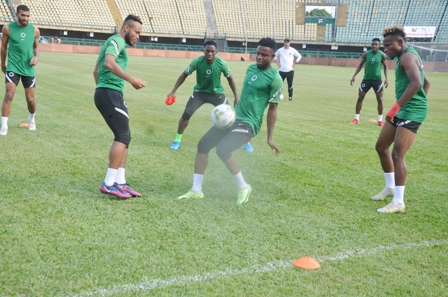
day when their cherished Super Eagles failed to qualify for the 2022 World Cup in Qatar. The Black Stars of Ghana thwarted the Eagles with a superior goal tally. Had the Eagles soared above the Ghanaian Black Stars to Qatar, it would have been their seventh FIFA World Cup appearance and their fourth in a row.
The second round of the match took place at the Moshood Abiola Stadium in Abuja. Nigeria played a scoreless draw with Ghana in the opening round of the playoffs at the Baba Yala Stadium in Kumasi. Unfortunately, the three-time African champions failed to improve their game when it mattered the most, leaving their fans in peril and despair. The Black Stars dictated the pace and depth of the proceedings and put together a dynamic game plan.
Indeed, the loss was so vitriolic that some indignant devotees  instantly voiced their outrage and dissatisfaction as they overran the MKO Abiola Stadium pitch and extirpated  property  when they could not get their  hands  on the  players who inflicted them with searing pain. Although hurtful, we condemn the fans’ infantile and irrational reaction to the disastrous defeat of the Nigerian team.
The  awful  event of March 29  saw Nigeria fail to qualify for the senior World Cup for the second time since 1994. The first mishap happened in 2006  when the Super Eagles lost a Germany 2006 ticket to Angola in Kano on the away goals rule. The loss by the Super Eagles rudely alarmed many Nigerians as in recent times, the team had  not relished the  kind of irresistible support it got  before the must-win clash with the Black Stars of Ghana.
Considering that the first leg of the CAF third round qualifiers in Kumasi had ended 0-0, and the Ghanaians going into the return leg in a more propitious position, the Federal Government and the Nigeria Football Federation (NFF) mobilised Nigerians to come out en masse to upraise the Super Eagles in the second leg of the fixture. To draw fans to the stadium, the authorities had provided more than 100 buses to provide free rides for supporters in Abuja and neighbouring states.
Intriguingly, the technique exploited by the Sports Ministry and the NFF produced favourable results as for the second time since it was launched in 2003, the mainbowl of the MKO Abiola National Stadium was full. It was the right ambience for the team to glide to Qatar. Sadly, the national team reiterated similar blunders in Kumasi that robbed them of at least an away goal that would have made the second leg less unpredictable for them.
Painfully, Nigeria’s technical adviser, Austine Eguavoen, floundered to organise his team to attack and the Black Stars capitalised on this technical drawback to the utmost benefit. The Super Eagles stayed predictable, unable to surprise their rivals. However, Napoli youngster, Victor Osimhen, did his best to save the team’s World Cup yearning, but all his endeavours came to nought as the Black Stars shone to their fourth World Cup.
For Eguavoen, this is nothing more than a dismal record as he was a member of the technical team that failed to qualify Nigeria for the 2006 World Cup in Germany. Therefore, 2022 offered him a rare opportunity to make amends, but he was outsmarted by his opposite number in Ghana’s dugout, Otto Ado, whose tactical tweak at half-time completely confounded the former Super Eagles captain.
In addition to Ghana, other African representatives at the Qatar event scheduled to take place in November/December 2022 include Senegal, Cameroon, Morocco and Tunisia. The absence of the Super Eagles at the Qatar World Cup offers us an opportunity to rethink the state of Nigerian football and chart the best course for the future. This is the time to really assess the nation’s football fortune and the best way to stimulate it in the years ahead.
With the exit of the senior national team from the mundial football event, the NFF and the handlers of the team should commence preparations for the next competition. Our ordeals in AFCON 2021 in Cameroon and the World Cup qualification ties have amply confirmed that we cannot do much without sufficient planning and groundwork. No team can get far in a regional or global football tournament without preparatory work.
The board of directors of the NFF led by Amaju Pinnick should resign honourably and give Nigerian football a chance to breathe. Board members would be doing a great disservice to the nation if they continue to misdirect the country’s football after the latest misadventure. We welcome the decision to terminate the Super Eagles technical team as it will provide a clean break.
The inability of the Eguavoen coaching team to make the necessary impact in Cameroon and World Cup qualification ties has boldly underlined the imperative of rejigging the technical crew to make it more effective and decisive in reading games and preparing the team for tournaments. For all his faults, however, Eguavoen is only a symptom, a manifestation of a broader cultural malaise in Nigerian football.
It is depressing that the NFF has killed the local league to such an extent that no player from the domestic game is deemed capable of playing for the Super Eagles. Nigeria’s football league is a pathetic state. There is no regularity in the league. It is inconsistent and has become a patronage system. Junior national teams no longer produce quality youth because of corruption that has killed age teams. These trends should be reversed immediately.
The government has to take its hands out of football entirely to avoid indiscretion and interference in the administration of the game. The national teams and professional clubs should find their means to be financially stable. It is not good enough for teams to always run to the government, begging for grants. The NFF, the national football teams and professional clubs must attract investors and sponsors to stay alive.


Continue Reading

Editorial

A Fair Wage for Difficult Times

Published

on

The latest demand by the Federal Workers Forum (FWF) for an upward review of the national minimum wage from N70,000 to N300,000 should not be dismissed as another routine labour agitation. Rather, it should be seen as a reflection of the deep economic pain confronting millions of Nigerian workers whose purchasing power has been severely eroded by inflation, rising living costs, and a struggling economy. Whether or not the figure being demanded is attainable, the message behind it cannot be ignored.
The decision of the Forum to proceed with a nationwide protest also underscores the growing frustration among federal workers who believe that repeated appeals have produced little meaningful action. Their complaints over unpaid entitlements, wage awards, promotion arrears, and other outstanding benefits deserve prompt attention from the authorities. A government that expects dedication and productivity from its workforce must also fulfil its obligations to them.
It is significant that the Chief of Staff to the President recently acknowledged that federal workers are poorly remunerated. Such an admission is welcome because it confirms what workers have consistently argued for years. However, acknowledgement alone is insufficient. Nigerians expect practical measures that will improve workers’ welfare rather than statements that only recognise the obvious.
The economic realities confronting workers are doubtlessly harsh. Food prices have climbed beyond the reach of many families, transportation costs have risen sharply, rents continue to increase, and the cost of healthcare and education has become unbearable for many households. Salaries that appeared modest a few years ago have become grossly inadequate in today’s economic environment.
Compounding the hardship is the persistent challenge of insecurity across the country. Many workers travel daily under difficult and sometimes dangerous conditions to earn incomes that barely sustain their families. The emotional and financial burden of this situation has created widespread frustration and anxiety, contributing to the tense atmosphere that now pervades the nation.
Against this background, the call for a living wage is both reasonable and urgent. The purpose of a minimum wage is not just to keep workers employed but to enable them to live with dignity. When full-time workers cannot adequately feed their families, pay school fees, access healthcare, or meet basic living expenses, it becomes clear that existing wage structures require serious review.
The Federal Government should, therefore, approach this matter with the seriousness it deserves. It should immediately commence purposeful discussions with organised labour and representatives of the Federal Workers Forum to examine realistic options for improving workers’ welfare. Delaying action or relying on promises will only deepen public dissatisfaction and erode confidence in the government.
Equally important is the need for the government to honour existing commitments. Reports of outstanding wage awards, unpaid allowances, and promotion arrears should be independently verified and settled without unnecessary delay. Keeping faith with agreements already reached would demonstrate sincerity and rebuild trust between the authorities and their employees.
That said, the workers must also appreciate the importance of sustained dialogue. While peaceful protest remains a constitutional right, industrial disputes are more productively resolved through negotiation than confrontation. Every effort should be made to avoid actions capable of disrupting essential public services or escalating national tension.
The leadership of organised labour also has a crucial role to play. The Nigeria Labour Congress (NLC) and the Trade Union Congress (TUC) must rise and provide united, responsible, and strategic leadership. Workers need strong representation that combines firmness with wisdom and places national interest alongside legitimate labour demands.
There is no doubt that the government faces enormous fiscal challenges. Declining revenues, mounting debt obligations, and competing development needs make public finance increasingly difficult. Nevertheless, these realities cannot become excuses for allowing civil servants to sink deeper into poverty. Sound economic management must ultimately translate into improved living conditions for citizens.
In truth, paying workers a fair and sustainable wage is not only a social obligation; it is an economic necessity. Better-paid workers stimulate consumer spending, enhance productivity, reduce corruption arising from financial desperation, and contribute to greater national stability. Investment in workers is an investment in economic growth.
Nigeria can ill afford another prolonged confrontation between government and labour at a time when insecurity, inflation, and public discontent already threaten social cohesion. Both sides should exercise restraint, avoid inflammatory rhetoric, and demonstrate genuine commitment to finding common ground. Nigerians expect solutions, not endless disputes.
The message from the current agitation is unmistakable. The Federal Government must heed the legitimate demands of workers by urgently pursuing a new living wage that reflects present economic realities and restores hope to millions of households. At the same time, workers should keep engaging the government through peaceful dialogue, mutual respect, and responsible negotiation. At this critical moment in our country’s history, compromise, compassion, and decisive leadership offer the surest path to industrial harmony and national progress.
Continue Reading

Editorial

Getting State Police Right

Published

on

Nigeria appears closer than ever to embracing state police, a transformative reform that has dominated national security discourse for years. Such a move, however, requires constitutional amendment to eliminate existing legal obstacles. The National Assembly deserves commendation for expediting work on the necessary legislation to amend Section 214 of the 1999 Constitution, which currently provides for a single, centralised national police force. Having secured passage in both chambers, the amendment bills should now be transmitted without delay to the state Houses of Assembly for prompt consideration.
The urgency of this reform is indisputable. Nigeria has been grappling with terrorism, banditry, kidnapping, communal violence, and organised crime, all of which have overstretched the existing security architecture. According to the National Bureau of Statistics, Nigerians paid an estimated N2.23 trillion in ransom between May 2023 and April 2024, while about 51.9 million crime incidents affected households during the same period. These disturbing figures underline the necessity of strengthening policing through a more pragmatic and responsive system.
State police could remarkably complement the efforts of the Nigeria Police Force (NPF), bringing law enforcement closer to local communities. Officers recruited from within their areas are often better acquainted with the terrain, languages, and cultural dynamics that shape criminal activity. Such local knowledge could produce a more perspicacious approach to crime prevention, intelligence gathering, and rapid emergency response.
Critics rightly fear that state police could become instruments of political persecution if left unchecked. Unscrupulous governors may be tempted to intimidate opponents, suppress dissent, or influence elections through the misuse of security agencies. Any constitutional amendment must, therefore, establish firm precautions that guarantee operational independence and prevent such capricious abuse of authority.
Another serious concern is finance. Running a modern police organisation requires sustained investment in personnel, equipment, technology, training, and welfare. Many states already struggle to pay salaries and pensions promptly. Without reliable funding, state police could deteriorate into poorly equipped institutions that weaken rather than strengthen public safety. Fiscal prudence must accompany political ambition.
Nigeria’s ethnic and religious diversity also demands careful reflection. Minority communities in several states have legitimate concerns that locally controlled police could be manipulated against them during periods of political or communal tension. Recruitment based on ethnicity, family ties, or political loyalty would further undermine professionalism. Only transparent procedures founded on merit can cultivate an equitable policing culture.
Equally important is the need for a comprehensive legal framework to regulate state police operations. Clear provisions are required to define jurisdiction, disciplinary procedures, civilian complaints, accountability mechanisms, and the limits of operational authority. Without such legal clarity, disputes and uncertainty could quickly overwhelm the new institutions.
The relationship between state police and the Nigeria Police Force also deserves meticulous attention. Cross-border crimes, insurgency, and organised criminal networks rarely respect state boundaries. Unless command structures, operational responsibilities, and emergency coordination are carefully defined, jurisdictional rivalry could produce dangerous ambiguity at critical moments.
A fragmented security system presents another risk. Thirty-six separate police commands operating under different priorities and standards may complicate coordinated national responses to terrorism, banditry, and other transnational threats. Intelligence sharing between federal and state agencies must be seamless, timely, and cohesive, leaving no room for avoidable security gaps.
Human rights protection should occupy a central place in the reform agenda. Nigeria’s experience during the #EndSARS protests exposed deep concerns about police brutality, impunity, and excessive force. Establishing additional police formations may merely multiply opportunities for abuse. Independent complaint commissions, judicial oversight,  and regular human rights training are indispensable guarantees.
Political transitions pose another challenge. Changes in state administrations should never trigger wholesale dismissals of police leadership or politically motivated appointments. Professional continuity, rather than partisan loyalty, must define career progression. Uniform training standards, ethical codes, and promotion procedures will help preserve the integrity of the institution regardless of who occupies government office.
History also offers a critical lesson. Nigeria operated regional police forces before 1966, but their widespread political misuse contributed to their eventual abolition. That experience should not automatically condemn present reforms, yet neither should it be ignored. Policymakers must undertake a judicious assessment of past failures and design institutions capable of preventing their recurrence.
Ultimately, state police represent an opportunity to strengthen security, but only if reform is pursued with wisdom rather than haste. Constitutional amendment alone will not guarantee success. Strong oversight institutions, transparent recruitment, sustainable funding, effective intelligence sharing, respect for human rights, and genuine accountability must accompany decentralisation. If these essential conditions are fulfilled, state police could become a valuable pillar of national security instead of another source of instability.
Continue Reading

Editorial

June 12: The Faltering Democratic Journey

Published

on

Nigeria today marks Democracy Day, an occasion set aside to celebrate the country’s democratic journey and reflect on the sacrifices made by citizens in the struggle for representative government. The day is both a celebration and a reminder that democracy is not merely about periodic elections. It is also about freedom, justice, accountability, security, and the welfare of the people.
June 12 occupies a special place in Nigeria’s political history because it commemorates the presidential election of June 12, 1993, widely regarded as the freest, fairest, and most credible election ever conducted in the country. The election was won by late Chief Moshood Kashimawo Olawale Abiola, but the military government of General Ibrahim Babangida annulled the results, plunging the nation into political turmoil and a prolonged struggle for democratic rule.
For many years, Nigeria celebrated Democracy Day on May 29 because that was the date when military rule ended and power was handed over to a democratically elected government in 1999. However, in 2018, the administration of late President Muhammadu Buhari officially moved Democracy Day from May 29 to June 12. The change was intended to honour the sacrifices of those who fought against military dictatorship and to recognise the importance of the annulled 1993 election.
More than two decades after the return to civilian rule, Nigeria’s democratic record presents a mixture of progress and disappointment. The country has maintained uninterrupted civilian government since 1999, making it the longest democratic period in its post-independence history. Yet, the quality of governance and democratic institutions remains a matter of concern.
On political rights, Nigeria has made modest gains. Citizens have the constitutional right to vote and contest elections, and political parties operate freely. However, concerns have always been about voter apathy, political violence, and the influence of money in politics. In the 2023 general election, fewer than 30 per cent of registered voters cast their ballots, highlighting declining public confidence in the electoral process.
Civil liberties have improved compared with the military era, but challenges persist. Citizens enjoy greater freedom to express opinions, organise groups, and participate in public debates. Nevertheless, reports of unlawful arrests, harassment of activists, and restrictions on peaceful protests raise questions about the full protection of civil freedoms.
Electoral integrity has shown some improvement through the deployment of technology by the Independent National Electoral Commission. Yet disputes over election management, vote buying, rigging, logistical failures, and prolonged litigation undermine public trust. Many Nigerians still believe electoral reforms have not gone far enough to guarantee completely transparent elections.
Freedom of expression and association are relatively vibrant. Traditional and social media platforms provide citizens with avenues to criticise government policies and mobilise public opinion. However, journalists, activists, and media organisations occasionally face intimidation, legal pressures, and threats that create concerns about press freedom and democratic openness.
Security is one of Nigeria’s weakest democratic indicators. Insurgency in the North East, banditry in the North West, farmer-herder conflicts in parts of the Middle Belt, separatist tensions in the South-East, and widespread kidnapping have created a climate of fear. Thousands of lives have been lost in violent attacks over the past decade, while many communities live under constant security threats.
The rule of law and judicial independence present a mixed picture. Nigerian courts have delivered landmark judgments that have strengthened democracy and resolved electoral disputes peacefully. Yet allegations of political interference, delays in the justice system, and concerns over selective application of the law affect public confidence in the judiciary.
Protection of individual rights and checks on executive power are among areas requiring improvement. Although constitutional safeguards exist, enforcement is often inconsistent. Institutions responsible for oversight, including the legislature and anti-corruption agencies, sometimes face accusations of weakness or partisanship. Strong democratic systems require institutions that can operate independently of political influence.
On accountability and transparency, Nigeria has made some progress through public procurement reforms, digital financial systems, and increased access to information. Yet corruption remains a major obstacle. Transparency International’s Corruption Perceptions Index has consistently ranked Nigeria among countries facing serious corruption challenges. The misuse of public resources undermines development and public trust.
Citizen participation in governance has expanded through civil society organisations, community groups, and digital engagement. However, many citizens still feel disconnected from decision-making processes. Economically, democracy has not delivered the level of prosperity many expected. Despite being Africa’s most populous nation, Nigeria has been struggling with high inflation, unemployment, poverty, and a rising cost of living. Effective and responsive government remains a challenge as many Nigerians demand better public services, infrastructure, healthcare, and education.
As Nigeria marks Democracy Day, the path forward is clear. Electoral reforms must be strengthened to improve transparency and public confidence. Security agencies must be better equipped and held accountable. Judicial independence should be protected, while anti-corruption institutions must be empowered to act without fear or favour. Governments at all levels should embrace transparency, respect human rights, and prioritise economic policies that create jobs and improve living standards.
Above all, citizens must actively engage in governance. Democracy flourishes not only through elections but also through continuous participation, vigilance, and accountability. The promise of June 12 will be fully realised only when democratic governance delivers freedom, justice, security, and prosperity to all Nigerians.
Continue Reading

Trending