
News
Insecurity: We Can’t Run Away From Community Policing, Fayemi Admits

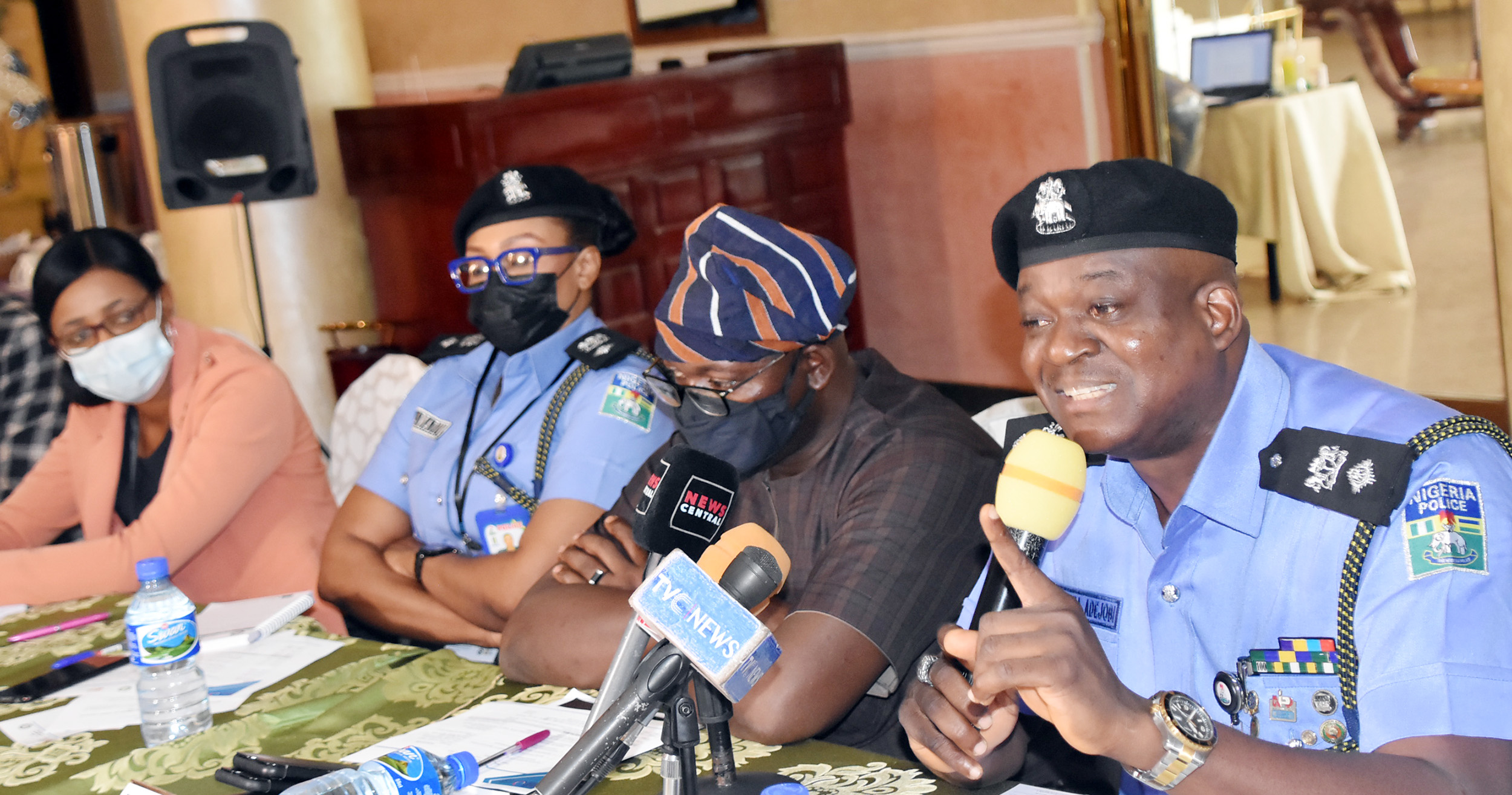
The Chairman of Nigerian Governors’ Forum (NGF) and Governor of Ekiti State, Dr Kayode Fayemi, has said community policing was the way to go but collaboration with the mainstream security agencies was needed to achieve results like western nations.
According to him, vigilante associations like Amotekun were achieving results with local intelligence with proofs to show in his state, Ekiti, adding that it is important to underscore a holistic approach to insecurity, because sitting at the centre of it, was bad government.
Fayemi said this, yesterday, during a panel discussion on overview of security situation across the states at the opening of a two-day multi-stakeholders meeting on the peace and inclusive security initiative organised by the NGF in partnership with the Centre for Democracy and Development (CDD).
He said: “We believe until and unless we begin to look at multi-level policing. That is what is happening in every nation around the world, we will not meet the demands of our people for local security and global protection. And ultimately, until we ensure that we address not just the conflicts and crime, but the causes of these conflicts. And we know some of them, out of school children, poverty in our communities, desperation, amongst the young people in the communities and generally good governance, improving the quality of governance. We may not be totally able to avoid what we are going through. Even when you have all that you will still have crime. But if you don’t have it at all, then it becomes even more problematic for you.”
Fayemi, who disagreed with the argument of a participant that state police would be prone to abuse, said abuses meted on some Nigerians by some security personnel is a proof that both federal or state police would still be prone to abuse.
According to him, as a sitting governor in 2014, he was abused by the police despite his immunity.
He said rather than condemn community policing, an institutional framework should be put in place to guard against abuse.
Fayemi explained “on local authorities who may not subscribe to institutionality rules. This is a perennial excuse that we get. I’m not going to sit here and make an excuse that such powers in the hands of some local actors may not be abused.
“Federal police that we all know abuse the rights of citizens, including the rights of governors, even with immunity, you may not know that. I was abused by federal police in 2014 during my election and I had immunity. Anybody could abuse.
“It could happen, even if you devolve security to the local level. However, what we need to be talking about is, what institutional frameworks should we put in place to ensure that such powers are not abused, not to use it as an excuse not to do the right thing.
“Because at the end of the day, there are mechanisms in our constitution to protect citizens’ rights.”
Fayemi noted that the police, despite having statutory body, the National Police Council recognised by the Constitution, unlike the National Judicial Council, was not effective in meting out punishments etc.
According to him, the National Police Council presided over by the president as chairman, and 36 governors as members, among others,was more or less a rubber stamp in doing the bidding of the executive.
Fayemi said: “Unfortunately, unlike the National Judicial Council, that is very effective in meting out punishments, sanctions, promotions, appointments for judicial officers across the length and breadth of the country.
“The National Police Council has only succeeded since the 1999 Constitution to ratify the appointment of Inspector General of Police. We are only summoned to National Police Council.
“And this is a constitutional body; by the way, check your Constitution you will find it there. It only meets when a new or acting Inspector General of Police is to be confirmed and ratified.
“That meeting is summoned and it meets for 10 or 30minutes. And then we look at the CV of the acting IG, and we approve. You’re not likely to disapprove anyway; the president has already appointed him. But that body has no powers beyond that,” he added.
The Ekiti governor further explained that in most countries where you have multi-level policing, there was a regulatory authority that was responsible for punishment and sanctioning those who go beyond their responsibilities.
“And I think that’s what we should be talking about. Rather than talking about the possibility of abuse, there would always be the possibility of abuse.
“We can’t run away from that. But do we have effective policing now that is federal? And there is no suggestion and that is why I didn’t use the term my brother (a participant) accused me of using, I said multi-level policing. I didn’t say state police, which means local police, state police, federal police, because arguing for multi-level policing does not suggest that we want federal police to go because there are federal crimes.
“There are also crimes that are within the borders of our states in accordance with the statute that’s been promulgated or enacted by our local state assemblies.
“And there are also crimes that are local because they are local jurisdictions by local governments. If you have not paid tenement rate, the local police should deal with you. It shouldn’t be state police, because the tenement rate is the responsibility of the local authority. Not the responsibility of the state. So, that’s my take on that,” he started.
On what states use security votes for, he said “Some states have something called security votes. It is not all states. Security votes have a history. And I will urge you to look for a book by Chief Jerome Ugoji. Serving three masters, that’s what the book is called. And you will find in that book: The origins of security votes in Nigeria.
“You say what do we do with it? Without mincing words, I can’t speak for others. But I also get feedback from other states in my capacity as chairman of the governor’s forum. There are hardly any of these institutions that you are talking about that we don’t fund. We found the police. We found the police more than the federal government, quote me.”
He added “we buy them vehicles. We pay them allowances. In some cases, we even buy ammunition, of course under the authority. And if we are to engage our military in aid to civil authority, which you will find, actually in 36 states in this country today, the military is involved in internal security operations, which is a problem because, for me, its role inflation.
“Now, when you inflate the role of the security institution beyond its primary responsibility, you also have consequences that will come with that that may not be palatable. But that’s where we are because most Nigerians don’t trust the police.
“They will still come and beg governor, governor, please, can you ask the brigade commander to put a roadblock in my area. And these are ordinary citizens insisting that we should put… and you can’t put military roadblocks everywhere. It’s not possible how many do we even have.”
Hinting on the cost of military operations in most states, he said, “But if you engage the military, in civil authority in your state, is only responsible of you to pay for the rations of the men that are engaged in that activity and not expect to have the military also share that burden because that’s not their primary responsibility.
“You’ve taken them out of their primary responsibility; you have to pay for it. So, we pay for that, we pay for civil defense, there is no security institution that you have that states are not responsible for more than the federal government that has primary responsibility for them.”
On why the governors were reluctant to allow local government autonomy to ensure that they play a role in security, he said, “You know, I just talked about multi-level policing. I have no objection to local authority playing a role in local security.
“But the debate about local government autonomy is a different debate. You don’t want us to get into it here because I have my views.
“We have a position in the governors’ forum on it. And it does not suggest that local government autonomy is precisely the way people put it. The principle of federalism is very clear about federating unit.
“Local government, as a federating unit is a unique innovation in Nigeria, I don’t see it in any research work, in any book on federalism. Local government autonomy is the business of the state because the state is the federating unit.
“And most federating countries that you have today have dual federating system. You have the federal and you have the state.
“So, those who are clamouring for local government autonomy is a populist demand, is very exciting to talk about it.
“But I don’t think ultimately it serves the purpose that they want it to serve because we have capacity challenges at that level just as we have at the state level. But the result is what you matter.
“And the result is that you can have Security Council in the local authority. We have in my state, the local government has Security Council almost every month, and they get involved in our security operations. So, it is what they do, it is not the name they are called, that should matter.”
The Deputy Governor of Plateau State, Prof. SonniTyoden, who represented the governor, added that “the existence of vigilantes is an aspect of multi policing. But we have not been able to get the best out of the situation, because the vigilantes have not been really treated as part of the security structure we operate. And I think that’s what we need to do. The existence of these vigilante groups, are manifestations of the disenchantment with the existing security apparatus. And I think if we modelled the vigilantes properly, incorporate them into the security structure, I think we will get something better out of it.”
Political counsellor, British High Commission, Jonathan Bacon, said addressing these security issues was essential for achieving the Sustainable Development Goals (SDGs) and for achieving economic growth and development.
The Director General, CDD, Dr Jubril Ibrahim, noted that the country has not had it so bad in terms of insecurity.
He said: “Our country is at its most terrible level, currently. We have never had it so bad; lots of efforts, lots of ideas are being placed on the table. At our level at the CDD, we are engaged in research to discover what are the real dynamics of this insecurity at the level of the grassroots? What are the actors doing? What are the actors saying? And how are other Nigerians interpreting what is being said and what is being done? It’s because of that we feel partnership with the governor’s forum is extremely important in trying to forge a policy path that will lead us towards confronting in a more adequate manner, these insecurities we are facing.”


The Rivers State Government has commended the Church of Nigeria (Anglican Communion) for its outstanding contributions to the development of Rivers State, particularly in the areas of peacebuilding, education, healthcare, and moral development.
Governor of Rivers State, Siminalayi Fubara, stated that the Church has remained a dependable partner in promoting peace, unity, justice, moral discipline, and social harmony across society.
The Governor, who was represented by the Secretary to the State Government, Dr. Dagogo Wokoma, made the remarks during the thanksgiving service marking the 30th Anniversary and First Session of the 11th Synod of the Diocese of Niger Delta North, held at St. Peter’s Anglican Church on Sunday.
Governor Fubara described the Synod’s theme, “Kingdom Advancement: The Priority of Every Believer,” as timely and relevant, considering the prevailing realities in society.
According to him, the Church continues to play a vital role in shaping societal values and inspiring hope among citizens.
“The Church remains a vital partner in promoting peace, unity, justice, and moral discipline. Its role in shaping values and inspiring hope cannot be overemphasized,” he stated.
The Governor further acknowledged the Anglican Communion’s contributions in education, healthcare delivery, youth empowerment, humanitarian services, and spiritual guidance across communities in Rivers State.
“The Rivers State Government appreciates the invaluable contributions of the Anglican Communion in education, healthcare, youth development, humanitarian support, and spiritual guidance. Your impact across communities in Rivers State continues to strengthen families and promote peaceful coexistence among our people,” he added.
Governor Fubara reaffirmed his administration’s commitment to building a peaceful, united, and prosperous Rivers State where all citizens can thrive irrespective of religion, ethnicity, or social background.
He also urged the Synod to continue praying for sustainable development and progress in Rivers State and Nigeria at large.
Earlier in his sermon, the Guest Minister, Joseph Olushola, spoke on the topic, “Kingdom Investment and Internal Rewards,” urging Christians to remain faithful stewards of God’s blessings and committed to advancing God’s kingdom through service and generosity.
The cleric emphasized that believers are custodians of the virtues and resources entrusted to them by God, stressing that divine rewards are based on faithfulness and impact rather than material possessions.
The Shell Nigeria Gas Limited, in partnership with the Manufacturers Association of Nigeria (MAN), has reaffirmed support for efforts to expand gas distribution infrastructure in Rivers State as part of initiatives aimed at improving access to affordable, cleaner and more reliable energy for industries across the South-South region.
The commitment was highlighted during the SNG–MAN Business Forum held in Port Harcourt, where stakeholders from the industrial and public sectors examined the role of natural gas in driving industrialisation, boosting local production and strengthening energy security.
Speaking at the forum on behalf of the Managing Director of Shell Nigeria Gas Limited, the company’s Head of Gas Distribution, Mr. Chukwuka Amos Ejesi, described natural gas as a critical component of Nigeria’s energy mix and a key driver of sustainable industrial growth.
According to him, Nigeria’s gas development agenda has reached a stage where policy direction must be matched with practical implementation capable of addressing the energy challenges confronting manufacturers.
He noted that pipeline gas offers industries a cleaner, more dependable and cost-effective energy alternative capable of supporting uninterrupted operations, reducing emissions and improving production efficiency.
“Gas is the backbone of manufacturing, and we are encouraged by the growing recognition among stakeholders of the need for cleaner and more reliable energy solutions,” he said.
Ejesi stressed the need for sustained collaboration among energy providers, government institutions and industrial stakeholders to maximise the country’s gas resources for economic development.
He added that improved gas infrastructure would strengthen manufacturing value chains, enhance productivity and promote more competitive industrial operations across Rivers State and the wider South-South region.
Participants at the forum also emphasised the importance of expanding energy infrastructure as a pathway to unlocking industrial capacity, reducing operating costs and promoting sustainable industrial development.
Representing Governor Siminalayi Fubara, the Director-General of the Rivers State Investment Promotion Agency, Dr. Chamberlain Peterside, reaffirmed the state government’s commitment to partnering with private sector investors to revitalise industrial activities in the state.
He identified key projects targeted under the initiative to include the revival of the Ahoada Industrial Park, the New Port City project and the proposed Bonny Industrial Park, all aimed at stimulating economic growth and expanding industrial opportunities along the Bonny corridor.
According to the governor, the long-term vision is to position Rivers State as a leading manufacturing hub in Southern Nigeria through strategic public-private partnerships.
Governor Fubara also commended Shell Nigeria Gas and MAN for sustaining engagements geared towards improving industrial energy access, noting that gas infrastructure development remains central to the state’s economic recovery plans.
He further observed that the gas sector presents enormous opportunities for economic growth, especially as global energy systems continue to shift towards cleaner energy sources.
The governor called on stakeholders to work collectively towards developing a practical and sustainable gas framework capable of supporting the state’s industrial and energy development objectives.
By; Kevin Nengia
Rivers State Deputy Governor, Prof. Ngozi Nma Odu, has charged newlywed couples to build their marriages on the virtues of love and submission as taught in the Word of God.
Prof. Odu gave the charge at the wedding ceremony of Amblessed Favour Sunny-Cookey and Samson Jesuganji at Lifegate Power Ministries, Dominion Cathedral, in Port Harcourt on Saturday, 16th May 2026.
The Deputy Governor congratulated the couple on beginning a new phase of life together and prayed for God’s blessings upon their union, noting that the couple had been raised by godly parents and encouraged them to uphold the Christian values instilled in them.
Referring to the sermon delivered during the ceremony, Prof. Odu emphasized that the principles of love and submission remain fundamental to a successful marriage.
According to her, genuine love reflects the nature of God, stressing that love should remain the foundation of the couple’s relationship as they journey through life together.
Prof. Odu further prayed for enduring peace, happiness, and progress in the home, expressing confidence that the marriage would continue to flourish under God’s guidance.
The Deputy Governor also commended the families of the couple for their support and upbringing, while urging the newlyweds to always remember the significance of the day and the commitment they had made before God and witnesses.
In his sermon at the wedding, the Founder and Presiding Pastor of Salvation Ministries, Pastor David Ibiyeomie, stated that marriage did not originate from Western culture, traditions, or human ideas, but from God, whom he described as the “manufacturer” of marriage.
According to the cleric, couples seeking lasting and peaceful homes must rely on biblical principles rather than societal trends or assumptions.
He explained that many marital crises and rising divorce rates stem from ignorance and failure to apply scriptural teachings in family life.
Drawing from the biblical parable of building a house on a rock, Pastor Ibiyeomie said the Word of God remains the only solid foundation capable of sustaining marriages through challenges and difficult times.
He noted that marriage naturally comes with unexpected realities and pressures, stressing that religious ceremonies or cultural practices alone are not enough to sustain a home without proper understanding of God’s instructions.
The pastor further warned that ignorance of scripture remains one of the greatest weapons against believers, urging Christians to study and practice the Word of God rather than merely attending church services.
It would be recalled that the bride is the daughter of Pastor Sunny Cookey the Founder and Presiding Pastor of Lifegate Ministries. The Ceremony had lots of Ministers in attendance which includes Apostle Zilly Aggrey, Pastor George Izunwa, and Bishop Winston Iwo
-

 Editorial2 days ago
Enough Of Xenophobic Attacks On Nigerians
-

 Nation2 days ago
RSU, Otonti Nduka Foundation Holds Centenary Conference, Unveil Book on Values in Nigeria
-

 Oil & Energy2 days ago
Rivers PETROAN Elects 12-Member Executive
-
Politics2 days ago
APC Group Protests Ex–Presidential Aspirant’s Disqualification From Rivers Senatorial Race
-

 Sports2 days ago
Oparaodu Urges Rivers United To Win Katsina United
-
Politics2 days ago
Reps Speaker Secures APC Return Ticket For Fifth Term
-

 Environment2 days ago
MOSOP – Tinubu Not Sincere With Ogoni People For Oil Resumption
-
Politics2 days ago
Primaries: Diri Lauds APC’s Unity, Cohesion In Bayelsa