Business
Rising Food Prices Fuelling Inflation In Nigeria, Others – IMF
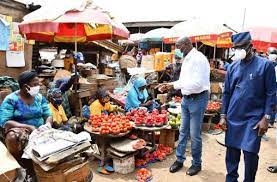
The International Monetary Fund (IMF) says rising food prices is the major factor fuelling inflation in Nigeria and other Sub-Saharan African countries.
IMF made this known in a blogpost on Monday, saying inflation is rising around the world, but because food accounts for about 40 per cent of the SSA’s consumption basket, it plays a major determining role in inflation.
According to the body, “Food inflation increased throughout 2019, on average, across 25 countries in the region where monthly food price data are available.
“After remaining stable around seven to eight per cent (year over year) since the beginning of the pandemic, food inflation started to rise again from April this year to some 10 per cent in October. The chart shows how food inflation is outpacing and contributing to the pick-up in overall consumer price inflation in sub-Saharan Africa, which rose to about eight per cent in October, up from around five per cent in 2019”.
The global body attributed the recent increase in food inflation to rising oil prices (which raise fertilizer prices and transportation costs), droughts and export restrictions imposed by some major food exporters, and stockpiling in some countries.
It said, “In addition, pandemic containment measures disrupted production and imports of seeds and fertilisers and caused labour shortages during planting seasons.
“Importantly, there is diversity across the region—food inflation in Chad is near zero but around 30 per cent in Angola. This suggests that domestic factors such as weather and exchange rates are important contributors to food inflation in sub-Saharan African countries”.
IMF added that food inflation and consumer price index inflation could moderate if commodity prices eased and pandemic-induced global supply chain disruptions were solved.
The international fund body said on the average, inflation would continue to rise in 2021 before dropping in 2022 depending on commodity prices and the resolution of supply-demand mismatches.
It said higher food inflation would worsen the situation for countries already facing food insecurity and shortages, and largely impact poor households.
“The number of undernourished persons in the region is projected to have increased by 20 per cent in 2020, encompassing 264 million people.
“Fighting food insecurity through targeted social assistance and insurance can help populations cope. Avoiding trade barriers and improving access to finance, seed stocks, insecticide, fertilizer, anti-erosion measures, and irrigation are also important”, IMF said.

Business
FIRS Clarifies New Tax Laws, Debunks Levy Misconceptions
Business
CBN Revises Cash Withdrawal Rules January 2026, Ends Special Authorisation
The Central Bank of Nigeria (CBN) has revised its cash withdrawal rules, discontinuing the special authorisation previously permitting individuals to withdraw N5 million and corporates N10 million once monthly, with effect from January 2026.
In a circular released Tuesday, December 2, 2025, and signed by the Director, Financial Policy & Regulation Department, FIRS, Dr. Rita I. Sike, the apex bank explained that previous cash policies had been introduced over the years in response to evolving circumstances.
However, with time, the need has arisen to streamline these provisions to reflect present-day realities.
“These policies, issued over the years in response to evolving circumstances in cash management, sought to reduce cash usage and encourage accelerated adoption of other payment options, particularly electronic payment channels.
“Effective January 1, 2026, individuals will be allowed to withdraw up to N500,000 weekly across all channels, while corporate entities will be limited to N5 million”, it said.
According to the statement, withdrawals above these thresholds would attract excess withdrawal fees of three percent for individuals and five percent for corporates, with the charges shared between the CBN and the financial institutions.
Deposit Money Banks are required to submit monthly reports on cash withdrawals above the specified limits, as well as on cash deposits, to the relevant supervisory departments.
They must also create separate accounts to warehouse processing charges collected on excess withdrawals.
Exemptions and superseding provisions
Revenue-generating accounts of federal, state, and local governments, along with accounts of microfinance banks and primary mortgage banks with commercial and non-interest banks, are exempted from the new withdrawal limits and excess withdrawal fees.
However, exemptions previously granted to embassies, diplomatic missions, and aid-donor agencies have been withdrawn.
The CBN clarified that the circular is without prejudice to the provisions of certain earlier directives but supersedes others, as detailed in its appendices.
Business
Shippers Council Vows Commitment To Security At Nigerian Ports
-
Business2 days ago
Shippers Council Vows Commitment To Security At Nigerian Ports
-
Business2 days agoCBN Revises Cash Withdrawal Rules January 2026, Ends Special Authorisation
-
Business2 days agoNigeria Risks Talents Exodus In Oil And Gas Sector – PENGASSAN
-
Business2 days ago
NCDMB, Others Task Youths On Skills Acquisition, Peace
-
Business2 days agoFIRS Clarifies New Tax Laws, Debunks Levy Misconceptions
-
Politics2 days agoTinubu Increases Ambassador-nominees to 65, Seeks Senate’s Confirmation
-
Sports2 days ago
Obagi Emerges OML 58 Football Cup Champions
-
News2 days agoTinubu Swears In Christopher Musa As Defence Minister