
News
New Record As 24 Journalists Killed, 293 Imprisoned Globally -CPJ

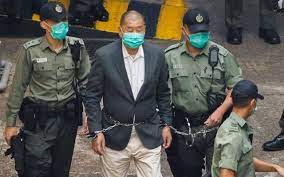
The number of journalists behind bars reached a record high in 2021, with 293 behind bars as political upheaval and media crackdowns reflect increasing intolerance for independent reporting around the world.
At the same time, targeted killings of journalists persist, with 24 documented by the Committee to Protect Journalists (CPJ) in its annual prison census and survey of attacks on the press.
China continues to be the world’s worst jailer, with CPJ’s 2021 prison census documenting 50 behind bars as the country prepares to host the Beijing Winter Olympics in February 2022.
It is followed by Myanmar (26), which arrested scores of reporters in a wave of repression following its February 1 military coup, then Egypt (25), Vietnam (23) and Belarus (19).
For the first time, CPJ’s census includes journalists jailed in Hong Kong, such as Apple Daily founder, Jimmy Lai, who was honored with CPJ’s 2021 Gwen Ifill Press Freedom Award.
In Ethiopia, an escalating civil war prompted new media restrictions that saw it emerge as the second-worst jailer of journalists in sub-Saharan Africa, after Eritrea.
“This is the sixth year in a row that CPJ has documented record numbers of journalists imprisoned around the world. The number reflects two inextricable challenges — governments are determined to control and manage information, and they are increasingly brazen in their efforts to do so,” said CPJ Executive Director, Joel Simon.
“Imprisoning journalists for reporting the news is the hallmark of an authoritarian regime. It’s distressing to see many countries on the list year after year, but it is especially horrifying that Myanmar and Ethiopia have so brutally slammed the door on press freedom.”
Rounding off the top ten were Turkey, Eritrea, Saudi Arabia, Russia and Iran, where leaders routinely weaponise tech and security laws to stifle dissent and continue to flout international norms without consequence.
Globally, anti-state charges remain the most common, but this year CPJ also documented at least 17 jailed journalists charged with cybercrimes, which in some cases can result in criminal prosecution for anything published or distributed online.
In Europe, Belarus, which infamously diverted a commercial flight from to arrest journalist Raman Pratasevich, now has 19 journalists behind bars – the country’s highest since CPJ started keeping data on imprisoned journalists in 1992.
In Latin America, which historically has had fewer numbers in prison, journalists were jailed in Cuba (3), Nicaragua (2) and Brazil (1), and threats to press freedom intensified across the region.
No journalists were jailed in North America at the time of the census deadline.
However, the U.S. Press Freedom Tracker, a partner of CPJ, recorded 56 arrests and detentions of journalists across the U.S. during 2021, with the vast majority occurring during protests.
While countries like Turkey and Saudi Arabia seemingly bucked the trend of putting more journalists in prison than in previous years, this does not signal an improved climate for press freedom, but rather a diversification of censorship, with authorities using tools like surveillance and internet shutdowns along with prisoner releases under conditions that deny the very notion of freedom.
Globally, India had the highest number – four – of journalists confirmed to have been killed in direct retaliation for their work, and another killed while covering a protest.
Mexico, however, remained the Western hemisphere’s deadliest country for journalists, with three murdered for their reporting and the motives for six other killings under investigation.
Of journalists killed worldwide this year, nearly 80% were murdered.
In democratic and authoritarian regimes alike, the cycle of impunity remains, sending a chilling message that perpetrators will not be held accountable.
This week the Summit for Democracy, a new foreign policy centerpiece of the United States, includes participation by at least seven countries on CPJ’s prison census, several of which also have a record of impunity, including Brazil, India, Iraq, and the Philippines, where authorities continue to retaliate against independent journalists like this year’s Nobel Peace Prize winner Maria Ressa, issuing yet another trumped up charge against her this week.
Despite the grim picture painted by the report, CPJ continues to fight against censorship. CPJ advocacy contributed to the early release of at least 100 imprisoned journalists worldwide in 2021.
Recently, as part of A Safer World For The Truth, CPJ and partners launched a People’s Tribunal to address impunity in journalist killings.
The tribunal, a form of grassroots justice, relies on investigations and high-quality legal analysis involving specific cases to provide a framework for justice and accountability.
CPJ’s prison census is a snapshot of those incarcerated at 12:01 a.m. on December 1, 2021.
It does not include the many journalists imprisoned and released throughout the year; accounts of those cases can be found at CPJ’s analysis of journalists killed for their work is based on data as of December 1, 2021.
CPJ’s website is continually updated at cpj.org/data/killed/
CPJ is an independent, nonprofit organisation that works to safeguard press freedom worldwide.



The Rivers State chapter of the All Progressives Congress Christian Leaders Forum has expressed strong confidence in the capacity of All Progressives Congress (All Progressives Congress) candidates in the state to deliver effective governance if elected into office in the coming elections.
The State Coordinator of the forum, Archbishop Lucky Aroh, made this known during a breakfast and thanksgiving meeting held in Port Harcourt, where leaders gathered to pray for the stability of the party and the safety of its candidates ahead of the 2027 general elections.According to him, the meeting was convened to seek divine intervention for peace, unity, and security among APC candidates across Rivers State.
“Today we are praying for APC stability in Rivers State and the security of our candidates that have been elected to contest the 2027 elections. It is a breakfast meeting,” Aroh said.
He further expressed optimism that the party’s candidates would not disappoint the people if entrusted with leadership responsibilities.
“They will not fail when elected into office. We are here as fathers of the land to let them know, and I must tell you the truth that these are the authentic people that will do well in Rivers State,” he added.
Speaking earlier, the National Chairman of the forum, Professor Olanrewaju Abraham, commended the Rivers State chapter for organizing the programme, noting that the national body of the forum believes strongly in the power of prayer.
He stated that political leadership provides an opportunity to influence society positively, including advancing moral and spiritual values, while expressing confidence that APC candidates at all levels would emerge victorious in the upcoming elections.
Also speaking, the Rivers State Women Leader of the APC, Hon. Darling Amadi, praised the forum for its commitment to prayers for peace, stability, and the protection of party candidates.
Represented by the Deputy Women Leader of the party in the state, she described the initiative as commendable and urged other political and support groups within the party to emulate the gesture in promoting unity and stability.
By: John Bibor, Menebe Emmanuel & Fortune Paibi
Prominent businessman and philanthropist, Elder Anthony Osagwe-Ogo, was celebrated in grand style as he marked his 70th birthday anniversary, with distinguished Nigerians, business leaders, and golf enthusiasts gathering to honour his remarkable contributions to society.
The colourful celebration took place at the Port Harcourt Golf Club, where friends, associates, and well-wishers converged to pay tribute to the revered elder statesman.
Chairman of the occasion, High Chief (Dr.) Ikenna Okafor, described the celebrant as a detribalised Nigerian whose generosity, humility, and commitment to humanity have earned him admiration across different communities and backgrounds.
According to Dr. Okafor, Pa Osagwe-Ogo’s impact on society and the development of his community remains unparalleled. He noted that members of the golfing community are proud to be associated with a father figure who consistently promotes the welfare and well-being of those around him.
He further stated that the history and growth of the Port Harcourt Golf Club cannot be told without acknowledging the significant role played by the celebrant, whose wisdom, encouragement, and leadership have helped sustain the club over the years.
“We are here to celebrate a man who has impacted humanity positively, a peace-loving individual and an epitome of hope for the younger generation. We pray to emulate his virtues. Today, we celebrate a bridge-builder, a trailblazer, and an iconic leader whose life continues to inspire many,” Dr. Okafor said.
He expressed delight at the large turnout of guests from various walks of life, describing it as a testament to the respect and affection Pa Osagwe-Ogo commands within and beyond Rivers State.
In his response, the celebrant, Pa Anthony Osagwe-Ogo, expressed profound gratitude to God for preserving his life and granting him the privilege of attaining the milestone age of 70.
He also thanked members of the Port Harcourt Golf Club, family members, friends, and associates for identifying with him during the celebration and for their unwavering support over the years.
The event featured the cutting of the birthday cake, presentation of awards to deserving members of the club, goodwill messages, and moments of celebration among guests.
The ceremony was attended by notable personalities from the business community, the golfing fraternity, and other sectors, all of whom joined in celebrating the life and legacy of the respected elder statesman.
Rivers State Governor, Sir Siminalayi Fubara, and the Permanent Secretary of the Rivers State Ministry of Information and Communications, Dr. Honour Kuru Sirawoo, have been honoured with awards of recognition in connection with the 2026 Democracy Day celebrations held in Port Harcourt.
The awards, which formed part of activities marking Nigeria’s Democracy Day on June 12, were formally presented on Tuesday at the Ministry of Information and Communications in Port Harcourt.
Presenting the awards was Hon. Abdul Hameed Oladipupo Alli, popularly known as “Mr. Nigeria,” Publisher of Asiwaju Trumpet Magazine and Achievers World International Magazine.
Governor Fubara was recognised for his efforts in sustaining peace, stability, and a conducive political atmospherJohn Bibor / Menebe Emmanuel / Fortune Paibie in Rivers State. The organisers noted that his administration has fostered harmony and strengthened civic participation across the state.
Dr. Sirawoo, on the other hand, was honoured for his exemplary administrative leadership and significant contributions to effective information management within the Ministry of Information and Communications.
Representing Dr. Sirawoo at the presentation ceremony, Dr. Christian Davies received the award on his behalf and expressed gratitude for the recognition. He described the honour as a reflection of Dr. Sirawoo’s unwavering commitment to professionalism, excellence, and dedicated public service.
Dr. Davies assured the organisers that the award would be formally conveyed to the Permanent Secretary.
The event also featured the presentation of commemorative publications highlighting major governance and civic milestones in Rivers State, including Easter celebrations, Workers’ Day activities, the Governor’s third anniversary in office, and Democracy Day programmes.
Organisers of the awards commended the Rivers State administration for what they described as sustained peace, political stability, and improved civic engagement, noting that these achievements have contributed significantly to the state’s continued development.
By: Jessica Sambol