
Women
Women’s Participation In The Nigerian Project, 61 Years After

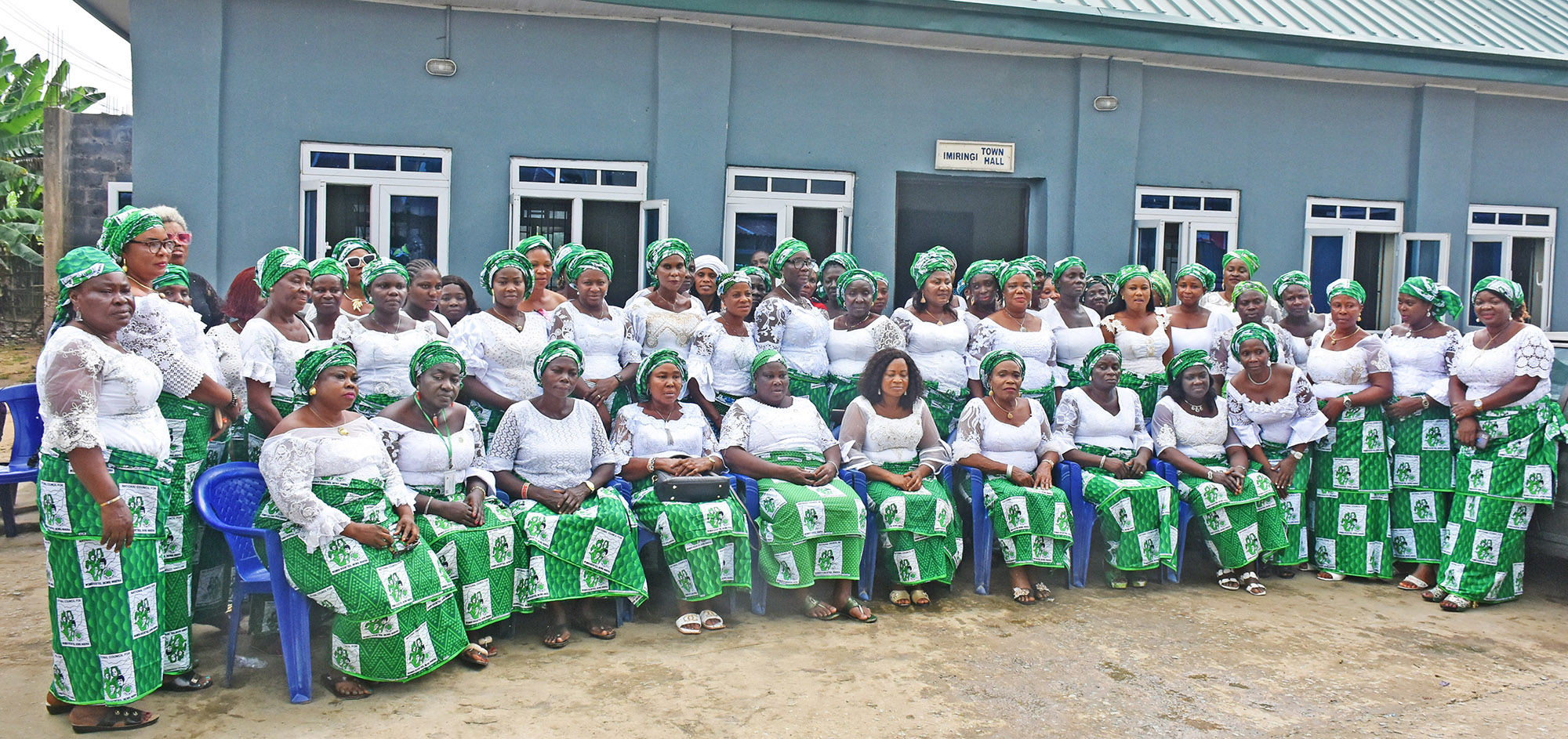
Women constitute an indispensable force in the quest for national development of any nation. In the developed nations, women have been able to play this important role. However, in Nigeria, where women were originally relegated to the background, due largely to some religious and traditional restrictions, women seem now to be evolving in their contribution to national development.
61 years after the declaration of Nigeria, the giant of Africa, as an independent state, one can only fairly assess the participation of women in the Nigerian project by reminiscing on their background, their past, so we can measure their level of involvement in the project called Nigeria
A lot has been said and written about the efforts of the Nigerian woman at grappling with barriers, obstacles to her overall advancement in life. As one found in a social system in which men hold primary power and predominate in roles of political leadership, moral authority, social privilege and control of property, the Nigerian woman’s story is distinct as she had to leverage on the only permissible space granted her by her male counterpart to make impact.
Though no less in status to her male counterparts but was found relegated to the second class position orchestrated by tradition and religion which created a glass ceiling, an invisible but strong barrier that stands in the way of women. The result was an obvious lack of educational, economic and political power necessary to actualise their innate potentials.
The “gender status belief” which claimed that men are more competent and intelligent than women, a reason for which they have higher positions in career hierarchy, as well as the allusion that women are inferior and better suited in their biological roles as mothers and spouses, did not help matters. They hindered women’s success and their rights in every aspect. Although gender inequalities affect women disproportionately, the entire society pays a price for them.
Needless to assert that she came from a background of one designed to be seen and not heard, her saving grace were series of interventions especially by the United Nations (UN) and some non-governmental organisations which were highly instrumental in announcing her as one not only with a voice, but one with remarkable impact on the society if given the atmosphere to operate.
Nonetheless, women have worked hard and relentlessly over the years to break those barriers and earned their deserving place in leadership roles. Thus, by improving their status and assisting in total development, women now enjoy integration into the global economy.
At different times in history, some concerned minds took pains to assemble data of women development, especially in the third world countries, Nigeria most importantly. Their finding revealed that though gender inequality still exists in Nigeria, there’s currently a great awareness that women have great potentials, unharnessed for nation building, if given the required enabling environment.
However, the re-introduction of democratic governance has witnessed once again an increase in women political participation both in elective and appointive offices. The extant National Gender Policy (NGP) recommended 35 percent affirmative action instead and sought for a more inclusive representation of women with at least 35 percent of both elective political and appointive public service positions respectively.
This ofcourse, isn’t a bad start for a folk that had been relegated to the background over the years.The Rivers State example where the position of the local government vice chairman is exclusively reserved for women is a demonstration of the confidence of the people in the women’s ability to deliver in leadership mandate. It is also an expression of willingness of the people to experiment their trust in the leadership prowess of the women. And like a student under the tutelage of his master, having served as a vice, can make an ultimate leader.
At 61, Nigeria womcan boast of having produced a state governor in Dame Virginia Ngozi Etiaba, an impressive woman and record breaker, who was the Governor of Anambra State, from November 2006 to February 2007. She is the first female governor in Nigeria’s history. She became governor following the impeachment of the previous governor, Peter Obi, for alleged gross misconduct. Although her tenure was brief, it was quite impactful.
Nigerian women in this dispensation also produced deputy governors for Rivers , Anambra, Enugu, Lagos, Kaduna, These distinguished women, carved a niche for themselves as accomplished grassroots politicians with passion for the emancipation of the womenfolk and youth development, especially girl-child education.
Their passion and determination to render quality public service that will impact the lives of the people, especially vulnerable members of the society, saw some of them being re-elected or appointed into other offices after their first tenure.
As a mother, one of the deputy governors was inspired to sponsor motions and bills that would lift people with special needs. She also played vital roles in seeing that women and youths were empowered in the state. Another interesting motion she moved while in the house was to ensure that drivers undergo driving examinations in order to reduce the high rate of accidents in the state.
For appointive positions, nigerian women have done so well in defence of their appointment. The likes of Dr Ngozi Okonjo-Iweala, served first as cordinating minister for the economy under Obasanjo, 15 July 2003 – 21 June 2006 minister of foreign affairs, 21 June 2006 – 30 August 2006, Minister of finance 17 August 2011 – 29 May 2015 under Goodluck Jonathan. Her prowess in financial matters endeared her to the Buhari-led administration where she was nominated and subsequently became the director general of the world trade organisation
In the area of health, although Nigeria has the highest number of maternal deaths in Sub-Saharan Africa and high rates of under-5 child mortality. Female health workers are particularly important in the north of the country because social norms in rural communities can prohibit women from receiving care from male health workers. For this reason, the Foreign, Commonwealth and Development Office (FCDO) has trained women to be service providers in six states in northern Nigeria through its Women for Health (W4H) programme.
Since November 2012, W4H increased the number and capacity of female health workers in Borno, Jigawa, Kano, Katsina, Yobe, and Zamfara, while at the same time supported women’s empowerment, promoted gender equality, and tackled trauma. It improved women’s access to and use of health services in northern Nigeria and advanced Nigeria’s journey toward universal health coverage.
W4H worked closely with other health and education programs in the states, and took a “building back better” approach in conflict and humanitarian emergency-affected areas of Borno and Yobe states and ensured the sustainability of progress in Jigawa, Kano, Katsina, and Zamfara.
A national team, led by Dr Fatima Adamu, provided technical support to state-level teams, backed by a senior technical advisory group. The programme was led by DAI Global Health in partnership with Save the Children. W4H worked closely with 22 midwifery, nursing, and community health extension worker training institutions and state ministries of health to support the training of female health workers and their deployment to rural health facilities.
The list of their sample activities include; “Improving the capacity of colleges of nursing and midwifery and colleges of health technology to train female health workers, improving the accreditation status and training capacity of health training colleges, and increasing graduation rates.
Improving the recruitment, deployment, and retention of midwives in rural facility while implementing a Foundation Year Training Programme, or access course, for rural women to improve their academic credentials, study skills, and confidence to enter health worker training.
Engaging with community, religious, and training institutions to create a gender-friendly environment for women to pursue health careers, and facilitating locally led scale-up.
Institutionalising short-term courses and modules in the curriculum to prepare health workers for deployment in conflict settings and humanitarian programming.
Recently, the National Centre for Women Development embarked on the collection of a national data on involvement and participation of women in politics in Nigeria, one of the objectives of the data collection is to provide a baseline for the implementation of the new Sustainable Development Goals (SDG). Hopes are high that the result will show the progress steadily made to achieving the affirmative declaration and determine how the gap that erstwhile existed has been closed as well as measure the variation between where we are and the affirmative action of 35 percent. Also, it will improve evidence-based planning and programming involving women in decision making; increase the support of key stakeholders on measures to increase representation of women in decision-making and further improve awareness of new advocacy tools among stakeholders to support the campaign for increased representation of women in the decision making in Nigeria.
As partaining to education, although Nigeria continues to face struggles getting its young females to enter and remain in school, the nation has made considerable progress in recent years. According to the World Bank’s Education Data, the number of girls enrolled in primary school increased from 79 percent to 92.3 percent between 2008 and 2013.24. The highest literacy rates in Nigeria were registered in the southern regions of the country. In the South West, 89 percent of males and 80.6 percent of females were literate as of 2018.
As more women pursue higher education and enter careers, younger girls will have role models to show them that higher education is attainable for females. Also, these role models will demonstrate that pursuing education opens doors to opportunities otherwise forever unavailable to girls. Many schools in Nigeria hoping to increase female attendance have begun peer mentorship programmes in which older girls connect with younger ones, giving the former an immediate sense of meaning for their education (helping younger kids) and the latter both academic and social role models to hopefully encourage them to keep coming to school.
Women at Nigeria’s Universities. Increased participation of women in the education sector is also visible at the university level — when Nigeria gained independence in 1960, only 7.7 percent of Nigeria’s college students were female. By 2001, that number had skyrocketed to 41.7 percent and it continues to rise. In 2009, 45 percent of all university students in Nigeria were female.
Engineering and computer science have remained heavily male dominated. Only 21% of engineering majors and 19% of computer science majors are women. This is one field women need to be encouraged to explore.
By: Sylvia ThankGod-Amadi



-
Maritime3 days ago
Nigeria To Pilot Regional Fishing Vessels Register In Gulf Of Guinea —Oyetola
-
Maritime3 days ago
Customs Declares War Against Narcotics Baron At Idiroko Border
-

 Sports3 days ago
Gombe-Gara Rejects Chelle $130,000 monthly salary
-
Maritime3 days ago
NIMASA,NAF Boost Unmanned Aerial Surveillance For Maritime Security
-

 Sports3 days ago
TEAM RIVERS SET TO WIN 4×400 ” MORROW” …Wins Triple jump Silver
-
Maritime3 days ago
NIWA Collaborates ICPC TO Strengthen Integrity, Revenue
-

 Sports3 days ago
NPFL Drops To 91st In Global League Rankings
-

 Sports3 days ago
NSC eyes international hosting rights