
News
Banditry: Report Indicts Two Ex-Govs, 10 Military Officers, 17 Emirs

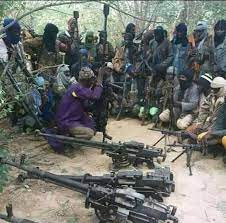
The Zamfara State Government panel set up to investigate activities of bandits in the state has submitted its report, with two former governors indicted of the culpability in the crime.
Also indicted are 10 military officers and 15 emirs in the state.
The report confirmed that 6,319 persons were arbitrarily and wilfully killed; 3,672 kidnapped; N2, 805,049,748 paid as ransom; 6,483 widows and 25,050 orphans left behind by slain victims.
The report also indicated that 215,241 cows, 141,404 sheep, 20,600 of other animals (such as camels and donkeys) rustled; and 3,587 houses, 1,487 motor vehicles and motorcycles burnt.
A footnote to the report stressed that bandits operated 105 camps from which they launched deadly attacks on Zamfara, kill and steal the people’s properties at will; their leaders identified.
But this is just a small segment of the chilling report of the high-wire banditry raging in Zamfara, but has now spilled into several states across the country, and consequently putting national security in jeopardy.
Other segments of the report include the indictment of several members of the traditional institution, top government officials and security forces.
As of the time the report, last week, some of the men who engaged in the bloodletting Zamfara banditry had moved further North-West and North-Central, wreaking unprecedented havoc in Katsina, Sokoto, Kaduna and Niger states.
No white paper on the far reaching recommendations of the committee that wrote the report has been issued two years after the report was submitted to Zamfara State Government.
The slightest hint yet that something was being done on the implementation of the recommendations was made during the celebration of Democracy Day on June 12, 2021, about one and a half years after the 279 page report had been submitted, when Governor Mohammed Bello Matawalle said, in a broadcast, that he had demonstrated commitment to the implementation of the report with the suspension of the emirs of Maru, Dansadau and Zurmi, who, among several others, had been indicted in the report of the panel for allegedly colluding with bandits to kidnap, collect ransom or even kill their people.
The report was submitted in October, 2019, but the recommendations have largely not been implemented.
Had it been implemented, at least, one former governor should be facing trial for alleged murder while several emirs, not just three who have been suspended, would have been deposed.
10 Army officers would also have faced court martial.
A source close to the Government House, Gusau, however, said a panel was raised to review the recommendations and report back to government.
The committee, tagged Zamfara Committee for Finding Solution to Armed Banditry in the State, had been raised by Matawalle on his assumption of office in May, 2019 to investigate the banditry that had blown into full scale war between indigenous Hausa farmers and Fulani herders in the state.
Specifically, the terms of reference included investigation of wilful killings, kidnappings, destruction of properties and other related matters in Zamfara and to make recommendations to the state government on the appropriate actions to take, and investigation of the remote and immediate factors responsible for the unprecedented and wide-spread killings, maiming, kidnappings, rape, cattle rustlings, destruction of crops/grains and displacement in the state.
The investigation covered the period between June 1, 2011 and May 29, 2019.
The panel was headed by a former inspector general of police, MD Abubakar, and had diverse membership which included Senator Saidu Muhammed Dansadau, Hon. Justice Nasiru Umar Gummi (rtd), Alh. Sani Abdullahi Shinkafi (Wamban Shinkafi), CP Mamman Anka (rtd), Mamuda Aliyu Maradun (ex-Permanent Secretary), Alh. Ibrahim Bawa (Fulani representative), Alh. Mohammed Adamu, Permanent Secretary, Home Affairs, Committee Secretary, and Barrister Aliyu Abdullahi Gusau, Director Public Prosecution, Assistant Secretary.
Co-opted members were DIG Mamman Ibrahim Tsafe (rtd), DSP Hardo Abubakar Abdulkadir, Alh. Imrana Ibrahim Aliyu, and Usman Saidu Dansadau.
When the committee was submitting its report in October, 2019, Matawalle had promised to implement the recommendations, assuring that he would not be diverted by any sentiment.
The governor was said to be in the entourage of President Muhammadu Buhari, who was visiting the United States to attend the United Nations General Assembly, last week, and his spokespersons could not be reached to speak on the status of the report.
To be sure, the Zamfara banditry, according to the report, started in a village called Dansadau.
Although there are conflicting accounts of how banditry turned deadly in the state, everyone quoted by the report seemed to agree it all began in the Dansadau village where the Hausa who, in their quest for farmlands, reportedly indiscriminately encroached into cattle routes and grazing reserves and that triggered friction between them and Fulani residents.
A member of the committee, quoted by the report, narrated that about 19 years ago, a former District Head of Dansadau, Alh. Shafiu Salihu, ignited the problem after he authorized a self-defense outfit called ‘Yan Sakai’ to kill any thief even if it was a goat he stole.
The report went on, “He (committee member) cited an example where a person was discharged and acquitted by a law of court but on getting back to Dansadau, this freed man was killed together with his father.
“This member further informed the committee that, out of brutality and inhumanity of man-to-man, he (victim) was asked to dig the grave where he was eventually killed and buried.
“The Emir of Birnin Gwari was also high handed and further fuelled friction and disharmony when he directed his subjects and other vigilante groups or ‘Yan Sakai’ to kill anybody that was found to have stolen anything.
“According to this member, that ugly scenario where people were allowed to take the law into their hands compounded the problems of mistrust and rivalry among Hausa and Fulani. In the same development, he stated that one Alh. Ishe, a Fulani man who championed the cause of Fulani, made the Fulani in Dansadau Emirate to rally behind him.
“This member added that about five or six years after Alh. Ishe took a seemingly leadership of Fulani in the area made ‘Yan Sakai’ aggrieved.
“The rivalry between ‘Yan Sakai’ and Fulani in the area under the leadership of Alhaji Ishe became so intensified and eventually Alh. Ishe was killed and his corpse was put on his car and burnt to ashes.
“Thereafter, the Fulani started launching reprisal attacks around Sangeku and Kabaro villages.
“According to the member, close relations of Alh. Ishe emphatically stated that the life of Alh. Ishe is equivalent to 1, 000 souls of Hausa men.
“Therefore, from that time, Fulani in the area started attacking Hausa communities especially in the rural areas and ‘Yan Sakai’ killing Fulani indiscriminately”.
This narration corroborated the committee finding that the first armed banditry took place late in 2009 in Anka/Maru Local Government along Anka/Dansadau Emirates’ border.
The report found several causes as responsible for the Zamfara banditry.
The remote causes include institutional failure and blatant betrayal of trust by unscrupulous political leaders, traditional rulers, security officers and judicial officers; poverty, unemployment, indolence and frustration that led many youths to drug abuse and involvement in crime; influx into and settlement of illegal alien Fulani from neighbouring countries in Zamfara who initially behaved and related with both indigenous Fulani and Hausa harmoniously and peacefully but later exhibited their true criminal tendencies by starting small scale armed robbery, followed by rustling of non-Fulani and indigenous Fulani cattle, and when herds of the locals were grossly depleted, they had no option but to join the gang of criminals to make a living and a means of replenishing their lost herds of cattle; proliferation of traditional rulers at all levels by successive governors with no regard to rules and regulations/due process; proliferation and widespread consumption of dangerous drugs; and high level corruption on the part of bad eggs in the security, judicial and law enforcement services.
On immediate causes, the report found indiscriminate allocation of virgin forest, forest reserves, game reserves, Fulani grazing areas, home settlement as farmlands to farmers by successive Zamfara governments from May 29, 1999, a situation which pushed the Fulani in the state to the wall and left with no option but to take the law into their hands for survival; attacks and counter attacks, reprisal and counter reprisal between Fulani and farmers on one hand and Fulani v. ‘YAN SAKAI’ on the other; injustice by some traditional rulers in land dispute management; and indiscriminate release of suspects by security agencies played varying degree of roles.
The report is unsparing of some former governors over the roles they allegedly played during their tenures which escalated banditry in Zamfara
On the alleged role of former Governor Ahmed Sani Yarima Bakura (May 1999 – May 2007), the report said, “When small scale armed robbery began to rear its ugly head in different parts of the state, he directed allocation of farmlands in government forest reserves along the major highways in order to create clear view for motorists and make it difficult for armed robbers to escape easily from the thick forest reserves.
“This policy sparked off agitation by farmers across the state for allocation of farmlands in forest reserves nearest to their respective areas.
“The governor bowed to the pressure, thus indiscriminate allocation of farmlands with no regard to Fulani interest began.
“Unscrupulous civil servants in the ministry of environment abused the policy, connived with some fraudulent traditional rulers and allocated almost as much as what was allocated officially by the state government”.
On former Governor Mamuda Aliyu Shinkafi (May 2007 – May 2011), the report has this to say, “During his four-year tenure, fraudulent civil servants enjoyed a field day.
“They allocated farmlands in government forest reserves at will without the knowledge of government.
“He too allocated some farmlands especially to some high profile individuals both within and outside the state of between 100 to 700 hectares per person.
“191 beneficiaries include legislators, political appointees and party officials”.
In the case of former Governor Abdulaziz Yari Abubakar (May 2011 – May 2019), the committee wrote, “The seed of security crisis planted during Governor Ahmed Sani Yarima Bakura’s tenure watered and nursed all through germinated fully three months into the tenure of Gov. Abdul’Aziz Yari Abubakar.
“Governor Abdul’Aziz Yari’s failure or refusal to address the security crisis in the state at a very early stage, however, provided a fertile ground and enabling environment for the influx of bandits from other parts of the country and neighbouring countries.
“This situation complicated and up scaled the armed banditry in the state to the extent of covering the entire 14 local governments of the state and spilling over to neighbouring states of Kaduna, Katsina, Kebbi, Niger and Sokoto.
“The governor’s nonchalant attitude and unflinching absence from the state provided golden opportunity to fraudulent security agencies, judicial officers and department of public prosecution in the ministry of justice to compromise the call of their statutory duties in favour of extraneous personal benefits.
“Management of security is time bound and expensive.
“The constant absence of former Governor Abdul’Aziz Yari rendered security agencies orphans with no master to report to on urgent security intelligence issues and with no source of funding to avert impending attacks.
“Failure to attend to urgent and important memos on security matters from relevant ministries and departments of government was one of the factors responsible for the inability of government to tackle the security challenges.
“His administration, like those of his predecessors, allocated farmlands to big time politicians in government forest reserves which worsened the predicament of the Fulani access to grazing areas.
“His deliberate refusal to receive report from a committee he personally set up that worked for two years on ways of finding solution to the unprecedented security challenges in the state is the peak of lack of concern for lives and property in the state.
“The preponderance opinion of witnesses, complainants, traditional rulers, security agencies and civil servants showed lack of attention to security issues brought before the former governor including formal and informal intelligence.
“In spite of the human and material losses, it could literarily be said that no aid was provided to the surviving victims (IDPs) or families of the deceased.
“In spite of his ardent opposition to the Yan-Sakai group (self-defense outfit) from the beginning of the security challenges up to October, 2018, when 2019 elections were fast approaching, the state government formally registered and employed 8,500 of them as informal security outfit in the name of assisting the military in their fight against bandits but with the alleged motive of using them as political army to rig the 2019 elections in the state.
“This notorious group used their new status as a license to kill and extort people especially Fulani and political opponents in broad day light on market days throughout the state.
“There is in fact literarily no witness or complainant that appeared before the committee that did not lament the atrocities of the self defense group.
“They were mainly responsible for the escalation of killings, kidnappings and extortions in Zamfara State from November, 2018 (when they were registered and employed) to May, 2019.
“One of them was alleged to have killed not less than 30 innocent people within the period under review”.
According to the report, while all the abracadabra of illegal land allocation was going on at the state level from 1999 to 2019, local government council chairmen connived with some traditional rulers to allocate as farmlands all available forest reserves, grazing areas, and Fulani settlements under their jurisdictions to few farmers, largely to politicians and high profile personalities in the affected localities.
“This is the last stroke that broke the camel’s back which pushed the Fulani to the wall with no option but fight the battle of their lives for survival”.
Arising from the alleged roles of the former governors in fuelling banditry in Zamfara, the report said, “The committee recommends that the immediate past Governor Abdul’Aziz Yari Abubakar and his aides (immediate past Commissioner for Local Government and Chieftaincy Affairs, Hon. Bello Dankande Gamji, and Alhaji Sani Gwamna Mayanchi) be arrested and prosecuted for alleged multiple culpable homicide due to his acts of commission and omission”.
The committee established that whereas some traditional rulers were complicit in the escalation of banditry in Zamfara, many were negligent in their responsibility of ensuring security in their respective domains.
In fact, were the recommendations of the committee to be implemented to the letter, no less than 15 of the 17 emirs in the state would be deposed.
The story of the alleged collaboration of the Emir of Maru and a District Head with bandits was told by the Zamfara SSG, Alhaji Bala Bello Maru, in his testimony before the committee.
The report, quoting the SSG, narrated, “The Secretary to the State Government informed the committee that, they received a report that armed bandits had planned to attack some villages within the emirate and security operatives were informed accordingly.
“He further stated that, in that night, Rayau, Mahuta, Talli and Dutsin Gari villages of Kanoma District in Maru Emirate were attacked by armed bandits and 17 people were killed and many others injured.
“On the following day (5th June, 2019), all the Emirs in the State paid Sallah homage to Governor of Zamfara State, Hon. Bello Muhammad Matawallen Maradun.
“Thereafter, the Executive Governor stated that a visit to the affected villages which were all under Kanoma District should be made in company of the Honourable Member, Zamfara State House of Assembly representing Maru North, Hon. Yusuf Alhassan Kanoma, Alh. Bala Bello Maru, the Secretary to the State Government and all the security heads among other entourage.
“On arrival of the Executive Governor and his entourage, they headed to a primary school where the IDPs were accommodated.
“Thereafter, the District Head of Ancient Kanoma on the hill made a welcome address and finished his speech accordingly.
“Then the suspended District Head of Kanoma below the hill was invited to make his own welcome address as his counterpart on hill made.
“As he started making his own welcome address, there were a lot of grumblings and shouting by the villagers.
“In the same development, the Emir was to make his speech and welcome address but there were a lot of shouting and disorder by the villagers and all efforts made to allow the Emir to speak failed woefully.
“On seeing the disorderly crowd, the governor addressed the gathering of the villagers and there was a lot of applauds and chanting of goodwill messages to him.
“After the governor and his entourage left for Gusau, the crowd of villagers attacked the District Head of Kanoma and injured him badly.
“It was for the timely intervention of the Hon. Member House of Assembly representing the area, the mob would have killed him.
“Simultaneously, security operatives started shooting in the air and throwing teargas canisters to disperse the mob.
“The mob also started throwing stones at the Emir’s official car with a lot of commotion.
“When the governor arrived Gusau with his entourage, people started to allege that the Emir was collaborating with the suspended District Head of Kanoma and armed bandits.
“Therefore, according to the Secretary to the State Government, there were strong suspicions among public opinions that the Emir of Maru and the suspended District of Kanoma are in complicit in cases of armed banditry activities being perpetrated in the area.
“Already, in the governor’s entourage, there were the Commissioner of Police, Director of State Service, Brigade Commander who the governor sought for their advice of what to do in such ugly circumstance, which they unanimously pointed out that the episode was a big embarrassment to the government and there was the urgent need to take decisive action by suspending the duo (the Emir of Maru and the District Head of Kanoma South) pending the determination of investigation to be carried out.
“Three days after the killing of 17 people mentioned earlier, the armed bandits returned and burnt down the village.
“There was also the issue of 5 million naira ransom which was allegedly paid to the Emir of Maru through the District Head of Kanoma South.
“However, the Secretary to the State Government informed the committee there was no formal reports or petitions against the Emir from any quarter, but an isolated information from a member of the State House of Assembly, Hon. Yusuf Alhassan Kanoma, and other unspecified sources”.
The Zamfara State Commissioner of Police, Usman Nagogo, also indicted the Emir of Karu in his testimony to the panel, according to the report.
The report quoted him as saying that in 2016 when CP Shettima Istifanus was the Zamfara State Commissioner of Police while he (Nagogo) was the Zamfara State Deputy Commissioner of Police (Finance and Inspection), then government appointed him as the Peace Ambassador and Chairman to head Amnesty Committee.
“According to him, he visited Dokani forest where he saw arms and ammunitions with over 1, 000 bandits. Buhari Daji surrendered 13 AK-47 assault rifles and a rocket launcher as a sign of his confidence in the amnesty programme”, the report said.
“He stated that his concern was not to wage war against the bandits but to enter into dialogue and reconciliation because even if government should deploy one million soldiers, they would not be able to defeat the bandits as they were so many with sufficient and sophisticated weapons to counter any attack on them.
“The bandits had informants everywhere and could pay as much as N500, 000 to an informant.
“He then advised then governor of Zamfara State that the government should direct the release of Buhari’s wife.
“According to him, then State Director, State Service truncated all efforts put in place by the Amnesty Committee.
“In his view, the main cause of the crisis was the Yan Sakai, Civilian JTF and vigilante groups in that whenever a Fulani man was killed, Fulani would attack the whole village killing several people and leaving scores injured.
“Finally, when he met with the Ardos and other Fulani leaders, their complaints were that they were deprived of attending markets, mosques etc. and whenever Fulani were killed, government did not visit and console them.
“However, whenever the Hausas were killed, the government visited and consoled them”.
Also testifying, DSP Hardo Abubakar Abdulqadir, Sector Commander in charge of Zamfara, Sokoto, Kebbi, Katsina and Kaduna states, according to the report, revealed that there was infiltration of Boko Haram and ISIS elements in Dangulbi and Dansadau forests.
“He informed the committee that his squad arrested an armed bandit at Danjibga village who had an ISIS head band and who informed the squad that there were 15 in number and were invited from Niger Republic”, the report said.
“According to the armed bandits, some of them had since moved to Sokoto, Tangaza, Gudu, Illela etc”.
The report found most of the 17 emirs in Zamfara and several of their District Heads either neck deep in banditry activities or negligent in their responsibility of securing their people while others were interdicted for absenteeism.
In fact, one of them was accused of being away while 840 of his subjects were killed; two others to answer murder charge.
Only two of the monarchs got a clean bill, according to the report.
Whereas one was recommended for national honours in appreciation of his efforts to secure his subjects despite raging banditry, another was asked to be commended by the President for similar feat.
And to sanitise the traditional institution in Zamfara, the report recommended an overhaul and restructuring in such a manner that it will reflect the true tradition of the institution and be at par with its peers in north-western states with no regard to individual, group or political interests. The panel also recommended that emirates in the state be compressed from 17 to three.
The report has no good words about the police as it noted that there was no witness that appeared before the committee who was asked about the cause of the escalation of the security crisis in Zamfara that did not point accusing fingers at the police for lack of diligence and thorough investigation, conspiracy to cover up suspects and indiscriminate and rampant releases of suspects.
It also slammed the military. It said, “It is ironic that when President Muhammadu Buhari deployed additional 1, 300 troops to Zamfara State early 2017 under the command of a Major General assisted by a number of Brigadier Generals in addition to 350 troops under the command of a Lt. Col, the security situation in Zamfara State worsened and became more complicated.
“A month before the deployment of the additional troops, a little over 100 people were kidnapped in Zamfara, while one month after their deployment, over 200 were kidnapped with owners of livestock complaining of the worst situation they ever found themselves. “Many Fulani and owners of livestock accused the troops of attacking, killing and impounding livestock of innocent Fulani and claiming success over bandits and recovering stolen cattle from them.
“Traditional rulers at different levels had complained bitterly about the sarcastic attitude of the soldiers that whenever they were directed to the point of potential attack by bandits, they deliberately divert to a different direction and attack innocent Fulani or give excuses of they had not been given order from above.
“This unpatriotic and unprofessional behaviour, according to the accounts of many witnesses and complainants, complicated and worsened the security situation.
“There are also a number of complaints and allegations against the military personnel of fraudulent management of redeemed livestock from bandits and those impounded from innocent owners.
“The committee received many reports and allegations of conspiracy between some fraudulent military personnel, traditional rulers and Civilian JTF members of missing redeemed livestock; there abound, as well, complaints of fraudulent military personnel releasing bandits arrested by vigilante groups or Civilian JTF that were handed over to them.
“Such complaints and allegations came before the committee from across all the strata of the society”.
The report mentioned the case of one army captain who was handed over four arrested bandits by the vigilante group from a village in Zurmi local government Area, saying two days later, the handed-over bandits attacked the village of the vigilante group.
It noted another officer who witnesses in Zurmi accused of collecting regular levies of about N2million per bandit according to the account of a traditional ruler.
“He is obviously one of those officers accused of attacking innocent Fulani, killing, arresting some of them and commandeering some of their herds of cattle and claiming success in the fight against bandits”.
The report listed 10 military officers for “dirty involvement in escalating the menace of armed banditry, mismanagement of recovered livestock and unholy relationship with criminals”.
It identified three categories of bandits as (a) Hardened criminals who, years before the advent of armed banditry in Zamfara, had been involved in armed robbery on the highways and other heinous crimes, (b) Those who have been forced into banditry by different circumstances, such as depletion of their herds of cattle and poverty, those whose herds of cattle had been rustled and had nothing for livelihood, those who had been pushed to the wall by atrocities of fraudulent traditional rulers, court officials and security agencies who regard banditry as easy means of building large herds of cattle, (c) Those invited from neighbouring countries to assist indigenous Fulani in their battle for survival, saying about 90% of (b) above, have repented and very much desirous of integrating with their various communities to resume their normal and legitimate life and over 90% of (c) have since returned to their various countries.
“However, only a negligible number of (a) have or are willing to repent”, the report said.
It recommended the design of a special programme for rehabilitation of bandits and other repentant criminals in order to integrate them into the society and make them adopt legitimate means of livelihood while waging a serious war against unrepentant bandits/criminals.
Under its general observations and recommendations, the committee made 16 notable observations among which is that the usurpation of local government funds by state governors is substantially responsible for high level of poverty and unemployment at the grassroots level, adding, “This phenomenon has been identified as one of the major causes of drug abuse and armed banditry”.


The Rivers State Government has commended the Church of Nigeria (Anglican Communion) for its outstanding contributions to the development of Rivers State, particularly in the areas of peacebuilding, education, healthcare, and moral development.
Governor of Rivers State, Siminalayi Fubara, stated that the Church has remained a dependable partner in promoting peace, unity, justice, moral discipline, and social harmony across society.
The Governor, who was represented by the Secretary to the State Government, Dr. Dagogo Wokoma, made the remarks during the thanksgiving service marking the 30th Anniversary and First Session of the 11th Synod of the Diocese of Niger Delta North, held at St. Peter’s Anglican Church on Sunday.
Governor Fubara described the Synod’s theme, “Kingdom Advancement: The Priority of Every Believer,” as timely and relevant, considering the prevailing realities in society.
According to him, the Church continues to play a vital role in shaping societal values and inspiring hope among citizens.
“The Church remains a vital partner in promoting peace, unity, justice, and moral discipline. Its role in shaping values and inspiring hope cannot be overemphasized,” he stated.
The Governor further acknowledged the Anglican Communion’s contributions in education, healthcare delivery, youth empowerment, humanitarian services, and spiritual guidance across communities in Rivers State.
“The Rivers State Government appreciates the invaluable contributions of the Anglican Communion in education, healthcare, youth development, humanitarian support, and spiritual guidance. Your impact across communities in Rivers State continues to strengthen families and promote peaceful coexistence among our people,” he added.
Governor Fubara reaffirmed his administration’s commitment to building a peaceful, united, and prosperous Rivers State where all citizens can thrive irrespective of religion, ethnicity, or social background.
He also urged the Synod to continue praying for sustainable development and progress in Rivers State and Nigeria at large.
Earlier in his sermon, the Guest Minister, Joseph Olushola, spoke on the topic, “Kingdom Investment and Internal Rewards,” urging Christians to remain faithful stewards of God’s blessings and committed to advancing God’s kingdom through service and generosity.
The cleric emphasized that believers are custodians of the virtues and resources entrusted to them by God, stressing that divine rewards are based on faithfulness and impact rather than material possessions.
The Shell Nigeria Gas Limited, in partnership with the Manufacturers Association of Nigeria (MAN), has reaffirmed support for efforts to expand gas distribution infrastructure in Rivers State as part of initiatives aimed at improving access to affordable, cleaner and more reliable energy for industries across the South-South region.
The commitment was highlighted during the SNG–MAN Business Forum held in Port Harcourt, where stakeholders from the industrial and public sectors examined the role of natural gas in driving industrialisation, boosting local production and strengthening energy security.
Speaking at the forum on behalf of the Managing Director of Shell Nigeria Gas Limited, the company’s Head of Gas Distribution, Mr. Chukwuka Amos Ejesi, described natural gas as a critical component of Nigeria’s energy mix and a key driver of sustainable industrial growth.
According to him, Nigeria’s gas development agenda has reached a stage where policy direction must be matched with practical implementation capable of addressing the energy challenges confronting manufacturers.
He noted that pipeline gas offers industries a cleaner, more dependable and cost-effective energy alternative capable of supporting uninterrupted operations, reducing emissions and improving production efficiency.
“Gas is the backbone of manufacturing, and we are encouraged by the growing recognition among stakeholders of the need for cleaner and more reliable energy solutions,” he said.
Ejesi stressed the need for sustained collaboration among energy providers, government institutions and industrial stakeholders to maximise the country’s gas resources for economic development.
He added that improved gas infrastructure would strengthen manufacturing value chains, enhance productivity and promote more competitive industrial operations across Rivers State and the wider South-South region.
Participants at the forum also emphasised the importance of expanding energy infrastructure as a pathway to unlocking industrial capacity, reducing operating costs and promoting sustainable industrial development.
Representing Governor Siminalayi Fubara, the Director-General of the Rivers State Investment Promotion Agency, Dr. Chamberlain Peterside, reaffirmed the state government’s commitment to partnering with private sector investors to revitalise industrial activities in the state.
He identified key projects targeted under the initiative to include the revival of the Ahoada Industrial Park, the New Port City project and the proposed Bonny Industrial Park, all aimed at stimulating economic growth and expanding industrial opportunities along the Bonny corridor.
According to the governor, the long-term vision is to position Rivers State as a leading manufacturing hub in Southern Nigeria through strategic public-private partnerships.
Governor Fubara also commended Shell Nigeria Gas and MAN for sustaining engagements geared towards improving industrial energy access, noting that gas infrastructure development remains central to the state’s economic recovery plans.
He further observed that the gas sector presents enormous opportunities for economic growth, especially as global energy systems continue to shift towards cleaner energy sources.
The governor called on stakeholders to work collectively towards developing a practical and sustainable gas framework capable of supporting the state’s industrial and energy development objectives.
By; Kevin Nengia
Rivers State Deputy Governor, Prof. Ngozi Nma Odu, has charged newlywed couples to build their marriages on the virtues of love and submission as taught in the Word of God.
Prof. Odu gave the charge at the wedding ceremony of Amblessed Favour Sunny-Cookey and Samson Jesuganji at Lifegate Power Ministries, Dominion Cathedral, in Port Harcourt on Saturday, 16th May 2026.
The Deputy Governor congratulated the couple on beginning a new phase of life together and prayed for God’s blessings upon their union, noting that the couple had been raised by godly parents and encouraged them to uphold the Christian values instilled in them.
Referring to the sermon delivered during the ceremony, Prof. Odu emphasized that the principles of love and submission remain fundamental to a successful marriage.
According to her, genuine love reflects the nature of God, stressing that love should remain the foundation of the couple’s relationship as they journey through life together.
Prof. Odu further prayed for enduring peace, happiness, and progress in the home, expressing confidence that the marriage would continue to flourish under God’s guidance.
The Deputy Governor also commended the families of the couple for their support and upbringing, while urging the newlyweds to always remember the significance of the day and the commitment they had made before God and witnesses.
In his sermon at the wedding, the Founder and Presiding Pastor of Salvation Ministries, Pastor David Ibiyeomie, stated that marriage did not originate from Western culture, traditions, or human ideas, but from God, whom he described as the “manufacturer” of marriage.
According to the cleric, couples seeking lasting and peaceful homes must rely on biblical principles rather than societal trends or assumptions.
He explained that many marital crises and rising divorce rates stem from ignorance and failure to apply scriptural teachings in family life.
Drawing from the biblical parable of building a house on a rock, Pastor Ibiyeomie said the Word of God remains the only solid foundation capable of sustaining marriages through challenges and difficult times.
He noted that marriage naturally comes with unexpected realities and pressures, stressing that religious ceremonies or cultural practices alone are not enough to sustain a home without proper understanding of God’s instructions.
The pastor further warned that ignorance of scripture remains one of the greatest weapons against believers, urging Christians to study and practice the Word of God rather than merely attending church services.
It would be recalled that the bride is the daughter of Pastor Sunny Cookey the Founder and Presiding Pastor of Lifegate Ministries. The Ceremony had lots of Ministers in attendance which includes Apostle Zilly Aggrey, Pastor George Izunwa, and Bishop Winston Iwo
-

 Editorial5 days ago
Enough Of Xenophobic Attacks On Nigerians
-

 Sports5 days ago
Oparaodu Urges Rivers United To Win Katsina United
-

 Education5 days ago
UNIPort Senate Grants Two-Year Amnesty to U2010–U2018 Students
-

 Nation5 days ago
RSU, Otonti Nduka Foundation Holds Centenary Conference, Unveil Book on Values in Nigeria
-

 Oil & Energy5 days ago
Rivers PETROAN Elects 12-Member Executive
-
Politics5 days ago
APC Group Protests Ex–Presidential Aspirant’s Disqualification From Rivers Senatorial Race
-

 Sports5 days ago
” Nigeria’s best domestic players are not in NPFL”
-
Politics5 days ago
Reps Speaker Secures APC Return Ticket For Fifth Term