
Politics
Previewing Nigeria’s New Democracy Day

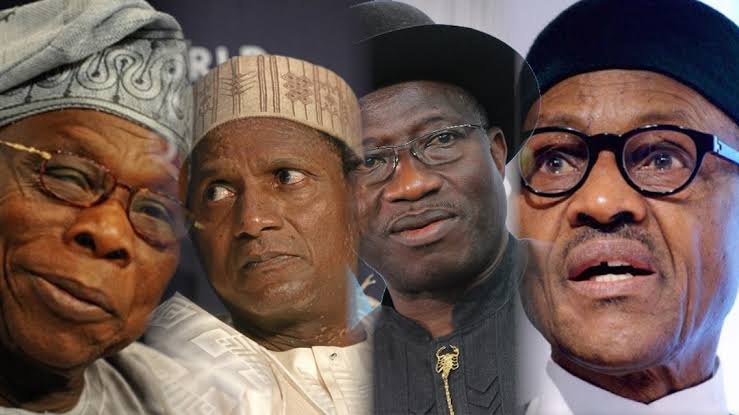
Since 1960, Nigeria has been on a faltering democratic journey. Some believe that the series of military intervention into the political landscape of the country, the first occurring barely six years after Independence, has dealt a big blow to democracy in the country, influencing democratic practices, maintenance of peace and tranquility and Nigeria’s democratic trajectory.
The democratic journey was truncated many times (1966 – 1979, 1979 – 1983, 1983 – 1985, 1985 – 1993, 1993 – 1999) but the journey continued in 1999 with the election of General Olusegun Obasanjo (rtd) as civilian president of the country heralding the current Fourth Republic. Remarkably, the military handed over to the newly elected leader on May 29, 1999.
The presidential elections of June 12, 1993 which was widely adjudged to be the fairest and freest election in the country’s history was annulled by the then leader of the military junta, General Ibrahim Babangida and the acclaimed winner, late Chief Moshood Abiola, was never declared. Rather, he was arrested and imprisoned for declaring himself the winner and subsequently died in prison.
It is now 22 years into the Fourth Republic and the journey is still sauntering. To commemorate the democratic election of Abiola, the federal administration of President Muhammadu Buhari had, in 2018, declared June 12 Nigeria’s new Democracy Day as against the former date of May 29, which marks the day the military handed over power to an elected civilian government in 1999, symbolising the beginning of the longest continuous civilian rule since Nigeria’s Independence from colonial rule in 1960, and ending the many decades of military rule in the country.
Buhari’s action was in recognition of the fact that Abiola actually won the 1993 presidential election and was therefore entitled to be seen as such, even if post-humously. The late Aare Onakakanfo of Yorubaland was also conferred with the national honour of Grand Commander of the Federal Republic (GCFR) in addition to having the national stadium in Abuja named after him.
The brief history is important in letting us know how the journey started and how it has been. But most importantly, it should help us assess the success of the movement so far and chart a way forward. To do so, we may need to ask the basic question, ”What is Democracy?” Of course, there are millions of answers to the question but I like the definition by an American Sociologist, Larry Diamond. He described democracy as a system of government with four key elements: i) A system for choosing and replacing the government through free and fair elections; ii) Active participation of the people, as citizens, in politics and civic life; iii) Protection of the human rights of all citizens; and iv) A rule of law in which the laws and procedures apply equally to all citizens.
Can we comfortably say that these key elements can be found in the democratic practice in Nigeria? Can elections in the country be considered to be free and fair? How about the killings, shootings, ballot box snatching, rigging and other crimes associated with elections in the country? In a truly democratic nation, the citizens participate in the election process, convinced that their votes will count and that, through the ballot, the necessary changes will be made in the society. Is that the case with Nigeria?
Another feature of democracy, according to Diamond, is protection of human rights of all citizens. Chapter five of the 1999 Constitution of Nigeria deals with the fundamental human rights of citizens vis a vis the right to life, right to dignity of human person, right to freedom of expression and the Press, right to peaceful assembly, right to freedom of movement and many more. Are Nigerian citizens enjoying these rights? Last year, some Nigerian youth organised a protest against police brutality and other ills in the land. The #EndSARS protest was peaceful until the government allegedly infiltrated the groups with political thugs, leading to violence, massive destruction, looting, killing and many more.
A similar scenario played out a few weeks ago in Kaduna State during the just-suspended Labour strike. The workers embarking on a legitimate protest over some scores they have to settle with the state government were seen being stoned by miscreants allegedly hired by the government all in a bid to shut the people up and put an end to the protest. The president of the Nigeria Labour Congress, Ayuba Waba, was even declared wanted by the Kaduna State Government. What about the ongoing feud between the social media giant, Twitter and the federal government which resulted in the ban of the microblogging platform in the country irrespective of the effect of such action on the citizens?
The issue of the protection of lives and properties of the citizens is also a big one. Human lives don’t seem to matter anymore in the country. People are being killed every day by bandits, killer herdsmen, unknown gunmen in different parts of the country, yet all the tiers of government whose primary responsibility is to protect the lives of the citizens appear helpless. Politics and other selfish interests seem more important to them than the safety and welfare of the people.
The issue of rule of law is a no-go area because, in Nigeria, it appears there is a set of rules for some people and another set for the rest people. Some have argued that the principle of rule of law, equality before the law, and separation has taken the back stage in the country. And I think this argument has some merit especially in view of the recent happenings in the country – the invasion of homes of judges, those in authority choosing the court ruling to obey and follow, the age-long denial of financial autonomy to the Judiciary which is the crux of the matter in the on-going judiciary workers strike and many more.
The truth is that democracy in the country which is currently under a serious threat can only be saved and entrenched when we as a people and government in Nigeria deliberately strive to adhere to the tenets of the popular government. The United States of America and other exemplary democratic countries in the world did not get to where they are today if rule of law and other principles that make democratic government tick and gratifying were jettisoned.
Suffice it to say that as Diamond’s definition of democracy indicates, the citizens have a big role to play in a democracy. They are expected to participate actively in politics and civil life. As citizens, we cannot continue to sit on the fence and allow a handful of people to determine our fate. The media, civil societies groups, various arms of government, academic institutions, trade unions, the youth, students, faith-based and traditional institutions all have roles to play in making our fragile democracy strong. Most importantly, we have to carry out our obligations as citizens. As John Kay admonished, “The people who own the country ought to govern it”.
Also Fernando Cardoso posits, “Democracy is not just a question of having a vote. It consists of strengthening each citizen’s possibility and capacity to participate in the deliberations involved in life in society”.
Over the years, Democracy Day had been dominated by events marking the inauguration of the President and state governors during which they recount their yearly milestone achievements. Other than lectures, talk shows and street processions by pro-democracy groups which are often very few and far between, there is hardly anything in the form of celebrating attainments in democratic governance.
Being the first time the Day will be celebrated separate from the May 29 Inauguration Day, it is expected that more colour will be added to the occasion. But again, that is if the current security situation and the attendant movement restrictions in many parts of Nigeria permit.
By: Calista Ezeaku

Politics
Alleged Coup: Protests Rock N’Assembly As Detained Officers’ Children, Wives Demand Justice

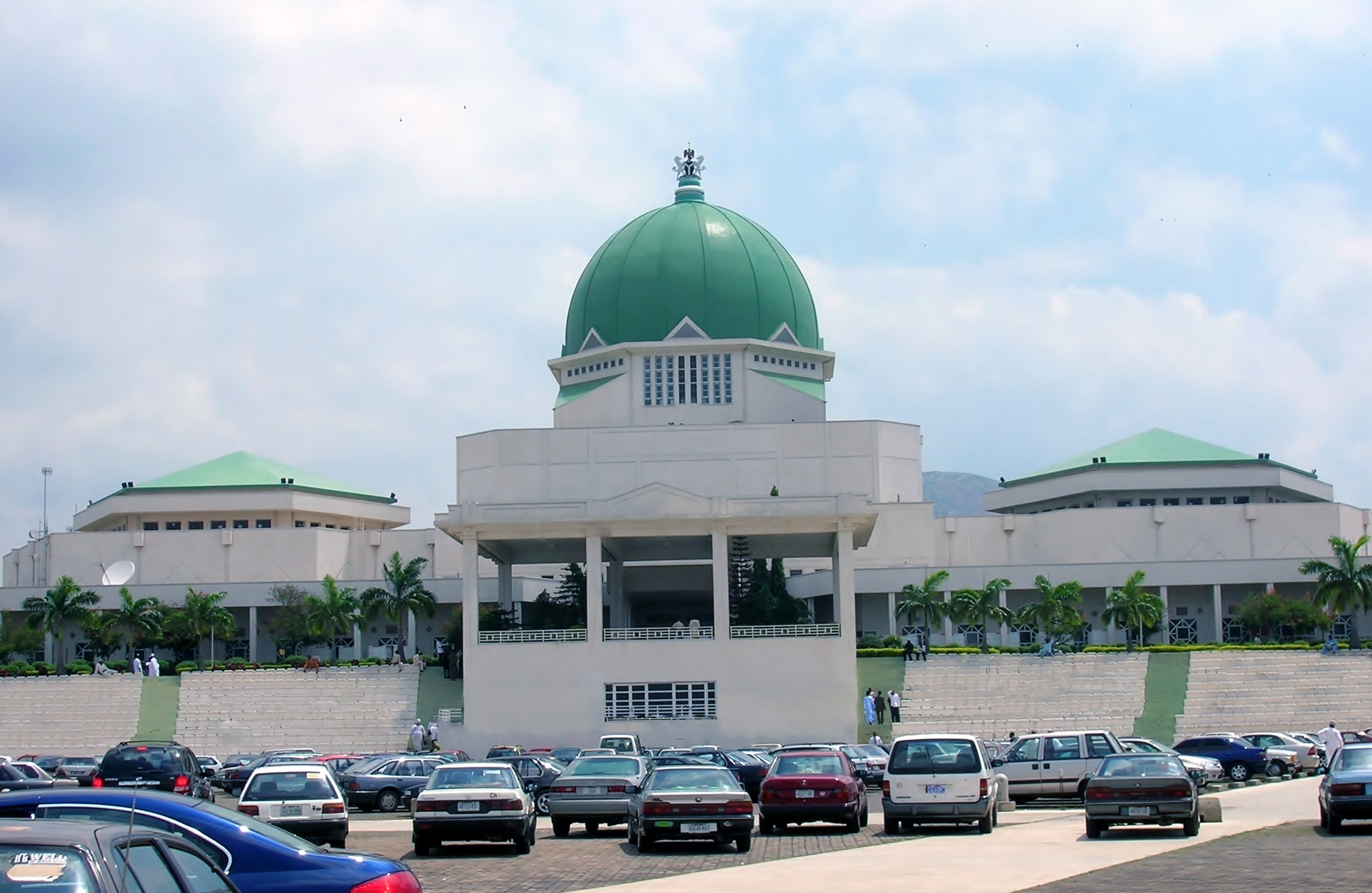
Scores of children and wives of military officers detained over an alleged coup plot yesterday staged a peaceful protest at the National Assembly, demanding a speedy trial and the release of the accused officials.
The protesters who gathered at the entrance of the National Assembly complex, moved in a slow procession while clutching placards with inscriptions such as “Don’t Kill Our Daddies,” “Detention Without Trial is Injustice,” and “Six Months of Torture: Enough Is Enough.”
Amid tears and trembling voices, the children appealed for justice and access to their detained fathers, many of whom they said they had not seen for months.
The appeal was made during a press briefing in Abuja attended by no fewer than 20 wives and several children of the detained officers, including a two-month-old baby.
The families were accompanied by human rights lawyer, Deji Adeyanju and activist Omoyele Sowore.
At the briefing, the families lamented that the officers had been held for over 160 days without trial or contact with their relatives, describing the situation as a violation of their fundamental rights.
Speaking on behalf of the families, Memuna Bashiru said the prolonged detention had thrown their households into uncertainty and emotional distress, noting that while allegations had been widely publicised, families remained in the dark about the fate of their loved ones.
The arrest of the indicted officers was first announced on October 4, 2025, by the then Director of Defense Information, Brigadier General Tukur Gusau, who disclosed that 16 officers were taken into custody for alleged breaches of military regulations and acts of indiscipline.
However, an interim investigation later suggested the existence of a clandestine network of officers, allegedly coordinated by a senior Army officer, which had begun preliminary planning for a coup.
According to the report, the alleged plot involved surveillance of key national assets, including the Presidential Villa, Armed Forces Complex, Niger Barracks in Abuja, and major international airports, with October 25, 2025, cited as the planned date for the operation.
Those reportedly in custody include Brig Gen M. A. Sadiq, Col M. A. Maaji, Lt Col S. Bappah, Lt Col A. A. Hayatu, Lt Col P. Dangnap, Lt Col M. Almakura, Maj A. J. Ibrahim, Maj M. M. Jiddah, Maj M. A. Usman, Maj D. Yusuf, Capt I. Bello, Capt A. A. Yusuf, Lt S. S. Felix, Lt Cdr D. B. Abdullahi, Sqn Ldr S. B. Adamu and Maj I. Dauda.
The alleged plot, according to findings, targeted senior government officials, including President Tinubu and Vice President Kashim Shettima.

In a statement issued yesterday, the party’s National Publicity Secretary, Mr Felix Morka, said the exercise would take place in all wards and designated centres nationwide.
He called on existing members to update their records, while encouraging new entrants to join the party through the digital platform.
“As the electronic membership registration exercise resumes in all wards and designated locations nationwide, we urge existing members to validate their membership while new members are encouraged to register and join the progressive family,” Mr Morka said.
According to him, eligibility for registration is limited to individuals aged 18 and above who possess a valid National Identification Number (NIN).
The party said the initiative is part of efforts to modernise its operations by transitioning to a digital database that would enhance record accuracy and accessibility.
Mr Morka noted that the e-registration would “digitise the party’s membership register, ensure the integrity of records, and enhance efficient access to membership data for planning and management decisions.”
He added that the move is also aimed at promoting internal democracy within the party and strengthening its commitment to democratic innovation.
The APC had previously introduced electronic registration as part of broader reforms to streamline its membership system and improve organisational efficiency.
-
 Editorial4 hours ago
Domesticate FG’s Exit Benefit Scheme
-
 News4 hours ago
DHQ Confirms Deaths Of Terrorists, Soldiers In Borno Attack
-
Rivers3 hours ago
Dep Gov Seeks Collaboration, Transparency Between RIVCHPP, PHCMB
-
 Featured3 hours ago
FG Reaffirms Nigeria’s Stability As US Embassy Suspends Visa Appointments In Abuja Office
-
Business5 hours ago
NPF Disburses ?21.68m To Fallen Heros’ Families …Reinforce Welfare Commitment
-
Rivers3 hours ago
Experts Converge To Tackle N’Delta Business Challenges
-
Business5 hours ago
NPA Targets N1.489tn Revenue In 2026
-
Business5 hours ago
IGR Firm Applauds Akpe’s Appointment As New D’Gov