
Editorial
No To Abolition Of NYSC

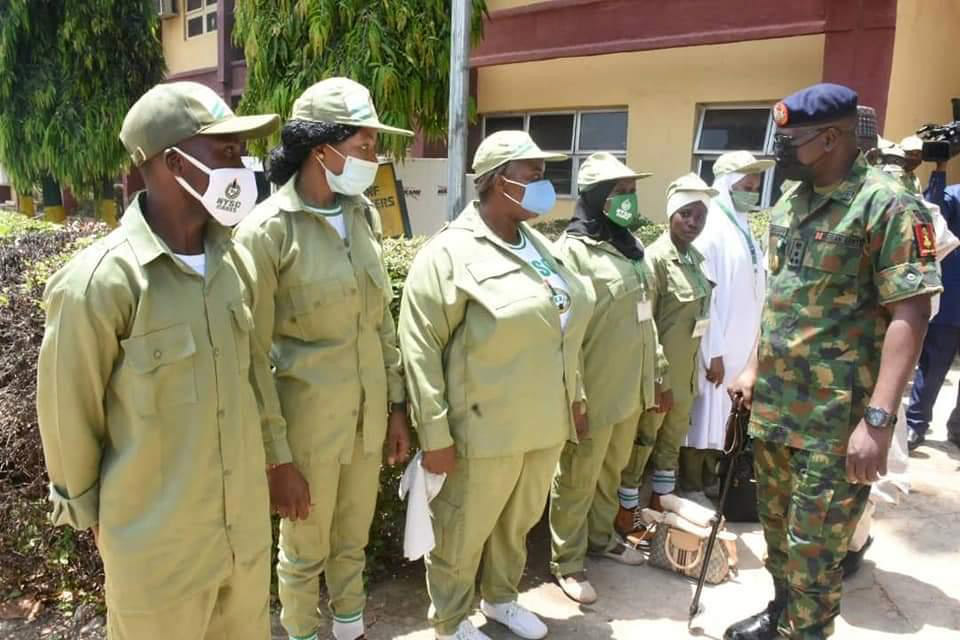
A bill to alter the 1999 Constitution to abolish the National Youth Service Corps (NYSC) scheme has been initiated by a member of the House of Representatives, Hon. Awaji-Inimbek Abiante (PDP, Rivers). The intent of this bill is to invalidate Section 315 (5a) of the 1999 Constitution and the National Youth Service Act.
The Youth Corps programme, which started on May 22, 1973, was established during the military regime of Gen Yakubu Gowon under Decree No. 24 of 1973 to reconcile and reintegrate Nigerians after the Civil War. It was also created to bridge ethnic and religious divisions across the country and promote the spirit of nationalism through understanding and appreciating others’ cultures and religions.
At the initial stage, it was compulsory for all graduates of tertiary institutions to be part of the service, but the age was later pegged at 30 years in 1984, while holders of the National Certificate in Education (NCE) were excluded perhaps to reduce the number of participants in the service to save costs.
Despite the goals of the NYSC, many Nigerians believe it is time for the scheme to be abandoned or reviewed, contending that it has lost its pertinence. Abiante’s suggestion to abolish the scheme undoubtedly strengthens this argument that the objectives of the NYSC should be reviewed or updated following the present realities of modern Nigeria.
Abiante, in his explanatory statement to the proposal, gave reasons for abandoning the NYSC. He noted the incessant killings of corpers and their frequent rejection by some public and private organisations as some of the justifications.
Furthermore, the lawmaker said public and private agencies are no longer recruiting qualified and skilled young Nigerians. Rather, they rely heavily on the availability of corps members who are not well remunerated and get discarded with impunity at the end of their service year, without any hope of being gainfully employed.
Available records show that in 2011, seven corpers were killed in the post-election violence that broke out in some parts of the country specifically after the presidential election. Regardless of these glaring problems, the question of whether NYSC has surpassed its usefulness remains controversial.
First and foremost, we must address the raison d’être of the Youth Corps programme, which aims to promote national unity and integration, among other things. Forty eight years after the scheme was established, can we say that this key objective has been achieved? Have we become more integrated than before? Certainly not.
Another significant objective of the NYSC is to make the members self-reliant. But since employment is hardly available in Nigeria because of the current economic challenges, this goal is scarcely achievable. The majority of industries have closed and the remaining ones are operating at less than 50% capacity.
Though the scheme has in one way or the other benefited Nigerian youths such as exposing them to diverse groups, persons and cultures, promoting inter-ethnic marriages and discipline, it is inundated with numerous problems that if nothing is done urgently and differently would contribute less to the unity of the nation, especially in these troubled times.
As could possibly be seen by many Nigerians, insecurity appears to threaten the scheme in a way that affects its sustainability. In the light of this, we question the appropriateness of posting corps members to places that are subject to serious security threats. Maybe, the government can examine this issue and allow everyone to serve in their comfort zone.
Any system that creates a disparity between the rich and the poor cannot accomplish its purpose. Even before the security problems, corps members were already influencing where they wished to be posted, especially children and wards of the elites. That alone has thwarted the objective the NYSC was established to achieve. The system itself is very skewed and grafted. Huge amounts of money are sometimes offered to influence postings.
Notwithstanding these shortcomings, we reject the view that the NYSC should be eliminated or scrapped. Rather, there may be a type of restructuring to make it more efficient. New ideas need to be injected into the scheme while the government should review its goals and focus training on self-defence, vocational skills and entrepreneurship.
Several Nigerians are highly tribalistic and believe in ethnic supremacy, which clearly goes against the objectives of the project and has made it almost worthless today. Hence, we believe that NYSC should become zonal and each geo-political zone should be allowed to accommodate its corps members, sharing them in their areas as they deem best. This would solve a lot of problems since many Nigerians are no longer enthusiastic about serving in specific parts of the country.




Nigeria stands at a critical juncture as the world marked World Press Freedom Day (WPFD) on May 3. This annual observance is a reminder that a free press is central to democratic life, good governance, and public accountability. For Nigeria, it is also a moment for sober reflection on how far the country has come and how far it still has to go in safeguarding the independence of its media.
World Press Freedom Day exists to highlight the fundamental importance of freedom of expression and to honour journalists who risk their lives in pursuit of truth. It underscores the idea that without a free press, societies cannot function transparently, nor can citizens make informed decisions. In countries like Nigeria, where democracy continues to evolve, the observance carries particular urgency.
This year’s theme, “Shaping a Future at Peace: Promoting Press Freedom for Human Rights, Development and Security”, places journalism at the heart of global stability. It emphasises that a peaceful society cannot be built on silence, fear, or manipulated information. Rather, it depends on the free flow of accurate, timely, and independent reporting.
At its core, the theme highlights the role of journalism in fostering accountability, dialogue, and trust. These are not abstract ideals. In Nigeria, where public confidence in institutions is often fragile, the media remains one of the few platforms through which citizens can question authority and demand transparency. When press freedom declines, so too does public trust.
Journalism serves as a foundation for peace, security, and economic recovery. Countries with robust media systems tend to attract greater investment, maintain stronger institutions, and resolve conflicts more effectively. Nigeria’s economic challenges, ranging from inflation to unemployment, require open scrutiny and informed debate, both of which depend on a free press.
However, the issue of information integrity has become increasingly complex in the digital age. Artificial Intelligence (AI) and online platforms have amplified the spread of misinformation and disinformation. In Nigeria, where internet penetration has grown rapidly, false narratives can travel faster than verified facts. This makes the role of credible journalism more vital than ever.
The challenge is not only technological but also ethical. AI-driven manipulation of information threatens to distort public discourse, influence elections, and deepen social divisions. In such an environment, professional journalism must act as a stabilising force, ensuring that truth prevails over sensationalism and propaganda.
Equally troubling is the safety of journalists. Across Nigeria, reporters face growing levels of online harassment, judicial intimidation, and physical threats. Self-censorship is becoming more common, as media practitioners weigh the risks of reporting sensitive issues. This trend undermines the very essence of journalism.
A particularly alarming incident involved a serving minister in the present administration, who openly threatened to shoot a journalist during a televised exchange. Such conduct, broadcast to the public, sends a dangerous signal that hostility towards the press is acceptable. It erodes the norms of democratic engagement and places journalists in harm’s way.
This year’s theme aligns closely with the United Nations Sustainable Development Goal (SDG)16, which promotes peace, justice, and strong institutions. Freedom of expression is a cornerstone of this goal. Without it, institutions weaken, corruption thrives, and justice becomes elusive. Nigeria’s commitment to SDG 16 must therefore include genuine protection for the media.
Historically, the Nigerian press has been a formidable force. From resisting colonial rule to challenging military dictatorships, our journalists have played a central role in shaping the nation’s political landscape. Today, however, that legacy appears to be under strain, as the media operates under what can best be described as a veneer of freedom.
Beneath this facade lies a troubling reality. Journalists are routinely harassed, detained, and prosecuted for performing their constitutional duties. Reports from media watchdogs indicate that dozens of Nigerian journalists face legal threats or arrest each year, often for exposing corruption or criticising those in power.
The Cybercrimes (Prohibition, Prevention, etc.) Act of 2015 has become a focal point of concern. Originally intended to combat cyber threats, it has increasingly been used to silence dissent. Sections 24 and 27(1)(b), in particular, have been invoked to target journalists, bloggers, and social commentators.
Although amendments introduced in February 2024 were meant to safeguard journalists, concerns persist. The law continues to be wielded in ways that stifle investigative reporting and restrict freedom of expression. Legal reforms must go beyond cosmetic changes to address the root causes of misuse.
To safeguard the future of journalism in Nigeria, decisive action is required. The Cybercrimes Act must be revisited to ensure it cannot be weaponised against the press. Law enforcement agencies must operate free from political influence, upholding the rule of law and protecting journalists’ rights. Civil society and international partners must also strengthen independent media through funding, training, and platforms for wider reach.
In this rapidly evolving world shaped by artificial intelligence and digital innovation, Nigeria faces a clear choice. It can either allow press freedom to erode under pressure, or it can champion a truly independent media landscape. The path it chooses will determine not only the future of journalism, but also the strength of its democracy and the peace it seeks to build.
-
 Editorial1 day ago
Enough Of Xenophobic Attacks On Nigerians
-

 Nation1 day ago
RSU, Otonti Nduka Foundation Holds Centenary Conference, Unveil Book on Values in Nigeria
-

 Oil & Energy1 day ago
Rivers PETROAN Elects 12-Member Executive
-

 Environment1 day ago
MOSOP – Tinubu Not Sincere With Ogoni People For Oil Resumption
-
Politics1 day ago
APC Group Protests Ex–Presidential Aspirant’s Disqualification From Rivers Senatorial Race
-

 News1 day ago
Fubara, Wife Hail Tinubu’s Renewed Hope Initiative …As Over 6,800 Families Benefit From Largesse In Rivers
-
Politics1 day ago
Reps Speaker Secures APC Return Ticket For Fifth Term
-

 Maritime1 day ago
Products, Others, To Arrive Lagos Ports Today — MPA