
Health
‘WAD’s Theme Confirms Wike’s Commitment To Healthcare Dev’

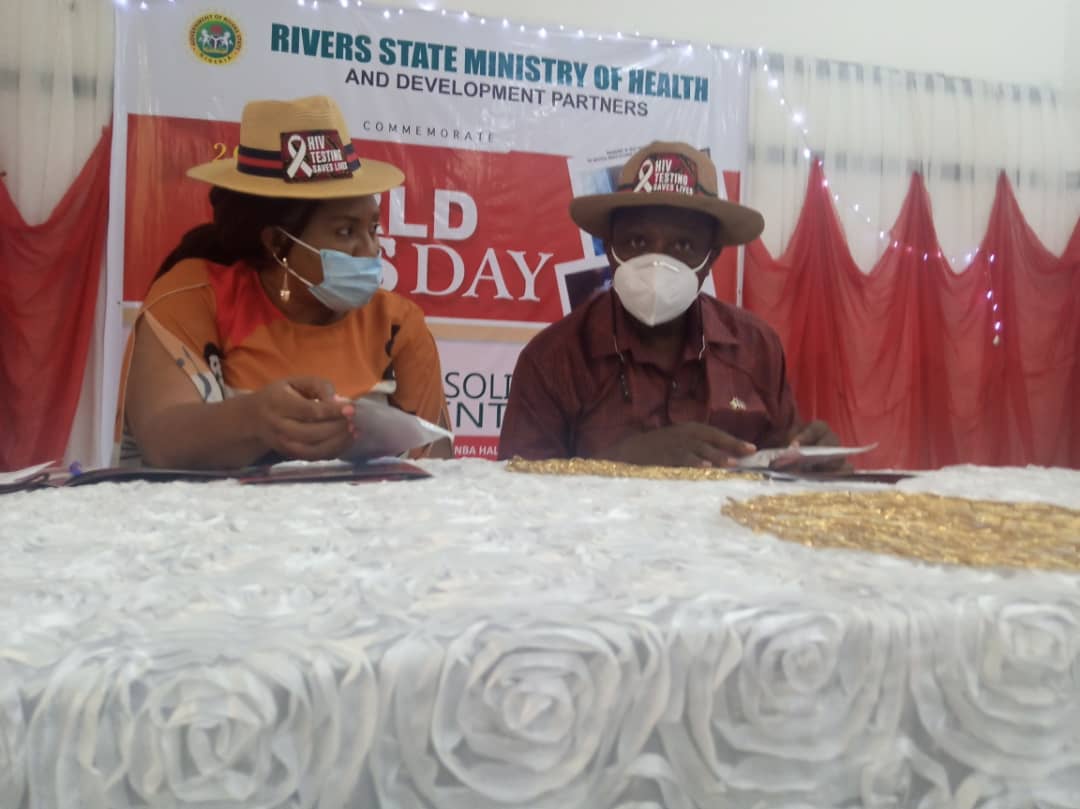
Rivers State Commissioner for Health,Prof Princewill Chike, has stated that the theme of the 2020 World AIDS Day (WAD) is in line with the commitment of the State Governor, Nyesom Wike, in terms of improving healthcare delivery in the State.
Noting the theme, “Global Solidarity, Resilient Services”, by the World Health Organisation (WHO), the Commissioner said, “this year’s theme actually underscores the commitment of this administration to improving the health service delivery to be resilient and sustainable through global partnerships and collaborations”.
Consequently, he said, as the State marks the 2020 WAD, “it is partinent to underscore the huge effort by government to strengthen healthcare delivery frameworks for better services delivery”.
The Governor, the Commissioner continued, “is committed to the NEW Vision of repositioning of the Primary Health Care centres, upgrading of the secondary health care facilities, and standardising care in the State-owned Teaching Hospital to meet international best practices.
“The establishment of the State-owned medical school at the Rivers State University, and the Mother and Child Hospital are age-long promises fulfilled for resilient and sustainable delivery of health care services to the people of Rivers State”, he said.
Prof Chike used the opportunity to enumerate some significant progress made by the State Government in confronting HIV/AIDS in recent times.
According to him, this include “significant improvement in linkage and retention as a result of user-free waiver for Persons Living With HIV/AIDS (PLWH) receiving services in the State”, adding that the State has also approved payment for Ante-Natal Care (ANC) for Positive Pregnant Women (PPW).
“As part of on-going programmes and highlights for the WAD commemoration, the State AIDS and Sexually Transmitted Infections (STIs) Control Programme, in conjunction with supporting partners, have already embarked on massive case-finding and linkage to care of identified positives in all Local Government Areas in an effort to pursue epidemic control”, he said.
The State Health boss stated further that “multi-month dispensing of drugs was adopted, especially during the outbreak of COVID-19 to ensure increased access to treatment.
“These are clear indications of our commitment to improving access to health services for HIV and ultimately improving patient outcome. Patients are living happier lives, receiving quality care without stigma in convenience and ambience of confidentiality”, he said.
While urging everyone to be advocates of HIV preventive behaviours in wherever they find themselves, the Commissioner concluded that “achieving an HIV-free generation is a task this administration is proud to pursue”.
The WAD is commemorated globally on December 1 annually.
By: Sogbeba Dokubo


To address the increasing number of rape and defilement cases in Lagos communities, the State Ministry of Health has trained healthcare workers on the prevention and management of sexual assault cases.
The Director, Public Affairs in the ministry, Tunbosun Ogunbanwo, in a statement on Monday said the training equipped health workers with the knowledge and skills to provide professional, compassionate, and timely care to survivors.
Dr Folasade Oludara, Director, Family Health and Nutrition, State Ministry of Health, said the growing number of rape and defilement cases in Lagos communities necessitated the upskilling of healthcare workers who are often the first responders to survivors.
Oludara, represented by Dr Oluwatosin Onasanya, Deputy Director, Child Health, said the government recognised the critical role of health professionals in both clinical management and legal documentation of sexual assault cases.
She explained that the training was designed to ensure healthcare workers are adequately equipped to identify, document, and manage sexual assault cases effectively.
According to her, the training will strengthen Lagos’ coordinated health system response to gender-based violence.
She disclosed that the state government had already provided equipment and specimen collection tools to health facilities, noting that the training complemented this investment by building the competence of personnel handling such sensitive cases.
Oludara explained that doctors and nurses at the primary, secondary, and tertiary levels who serve as first contact points for survivors were carefully selected from all 57 LGAs and LCDAs, particularly from areas with higher incident rates.
The SGBV Programme Manager, Lagos State Ministry of Health, Dr Juradat Aofiyebi, emphasised that the capacity-building initiative was a strategic step toward improving survivor-centred healthcare delivery and prosecution outcomes.
Aofiyebi added that the training underscored the government’s commitment to reducing the prevalence of sexual assault through a robust, multi-sectoral approach.
“The training provides healthcare workers with the knowledge to properly identify survivors, document findings accurately, and provide comprehensive care, all of which contribute to justice delivery and prevention of repeat offences.
She said the ministry would sustain such training to ensure that every survivor who presented at a Lagos health facility received quality, non-judgmental care.
Mrs Adebanke Ogunde, Deputy Director, Directorate of Public Prosecutions (DPP), Lagos State Ministry of Justice, highlighted the importance of medical documentation in sexual assault trials.
She explained that most convictions hinge on the quality of medical reports and forensic evidence provided by healthcare professionals, noting that medical reports served as vital corroborative evidence in court, particularly in cases involving children.
“Your medical reports are crucial; they can determine whether justice is served or denied,” she said.
Ogunde reminded health workers of their legal duty to report suspected sexual assault cases to the police or the Lagos State Domestic and Sexual Violence Agency (DSVA).
Similarly, Dr Oluwajimi Sodipo, Consultant Family Physician, Lagos State University Teaching Hospital (LASUTH), underscored the importance of timely medical attention, psychosocial support, and non-stigmatising care for survivors.
Sodipo explained that immediate presentation within 72 hours of assault improved chances of preventing infections and collecting viable forensic evidence.
He commended Lagos State for sustaining its inter-agency collaboration and continuous professional training on SGBV.
Sodipo, however, called for the strengthening of DNA and forensic capacities, improved insurance coverage, and better remuneration for healthcare workers.
“We must sustain motivation and continuous retraining if we want to retain skilled professionals and enhance justice outcomes,” he added.
Also, Mrs Margret Anyebe, Claims Officer, Lagos State Health Management Agency (LASHMA), said domestic and sexual violence response had been integrated into the ILERA EKO Health Insurance Scheme.
Anyebe explained that survivors of sexual and domestic violence are covered for medical treatment, investigations, and follow-up care under the state’s Equity Fund for vulnerable groups.
“Hospitals are to provide first-line care, document, and refer survivors appropriately, while LASHMA ensures prompt reimbursement and oversight,” she said.
The technical session of the ongoing National Council on Health (NCH) meeting on Monday reviewed 35 out of the 82 policy memos submitted ahead of full Council deliberations scheduled for later in the week.
Dr Kamil Shoretire, Director of Health Planning, Research and Statistics, disclosed this on Tuesday during the Technical Session of the 66th Regular meeting of the NCH ongoing in Calabar, Cross River.
He said that 10 of the memos considered were recommended for Council’s approval, eight were noted, and 18 stepped down for further work.
According him, two additional memos were deferred and will be re-presented after revisions are made.
At the reconvening of the session, Ms Kachallom Daju, Permanent Secretary, Ministry of Health and Social Welfare, said that there were five memos from the Coordinating Minister of Health, adding that they were all related to the Department of Food and Drugs.
Daju said that the memos were stepped down on Monday and scheduled for re-presentation.
She also provided clarification on the previously contentious healthcare waste-management memo, explaining that the N3.5 million requests tied to the proposal had already been repurposed by the Global Fund.
“I have followed up, and I am informed that the funds have been reprogrammed. Just so we put it to rest, we will not be discussing that memo anymore,” she said.
She also said that the final memo considered on Monday was the proposal for the inclusion of telemedicine services under the National Health Insurance Authority (NHIA).
“The next memo scheduled for presentation is the proposal for the establishment of Medipool as a Group Purchasing Organisation (GPO) for medicines and health commodities in Nigeria.
Meanwhile, Dr Oritseweyimi Ogbe, Secretary of the Ministerial Oversight Committee (MOC), formally notified the Council of the establishment of Medipool, a new public-private GPO created to strengthen the procurement of medicines and health commodities nationwide.
Presenting an information memorandum at the technical session, Ogbe explained that Medipool was the first nationally approved GPO designed to leverage economies of scale, negotiate better prices, and ensure quality-assured medicines.
He said this was beginning with primary healthcare facilities funded through the Basic Health Care Provision Fund (BHCPF).
According to him, Medipool was established after a proposal to the Ministry of Health, followed by appraisals and endorsements by the Project Implementation and Verification Committee (PIVAC) and the Ministry of Finance Incorporated (MOFI).
“It subsequently received Federal Executive Council approval, with MOFI now owning 10 per cent of the company’s shares. The Infrastructure Concession Regulatory Commission has also approved its operations.
“Under the model, Medipool will work with Drug Management Agencies (DMAs) in all states to aggregate national demand and negotiate directly with reputable manufacturers to obtain competitive prices and guaranteed-quality supplies.
“The platform will function as a one-stop shop for DMAs, who will then distribute medicines to health facilities through existing state structures.”
Ogbe added that while Medipool will initially focus on BHCPF-supported primary healthcare centres, it was expected to expand to other levels of care nationwide.
“The organisation will provide regular reports to the ministry of health and participate in national logistics working groups to ensure transparency, oversight, and technical guidance,” he said.
The News Agency of Nigeria (NAN) reports that Day One of the 66th NCH technical session opened with a call reaffirming the Ministry’s commitment to advancing Universal Health Coverage under the theme “My Health, My Right”.
“The delegates also adopted the amended report of the 65th NCH, setting the stage for informed deliberations.
The implementation status of the 19 resolutions from the previous Council was also reviewed, highlighting progress and gaps.
The authorities of Police Clinic in Port Harcourt have reported high cases of Malaria in its facility.
The revelation was made by Mrs Udoh Mba Robert, a Chief Superintendent of Police and senior medical personnel in the Clinic.
She told The Tide that,”the Hospital admits sixty (60) to seventy (70) patients in a month”.
On how the facility runs, she stated that the hospital is under the National Health Insurance Scheme as most patients are treated almost free.
She maintained that staff of the hospital have been trained professionally to manage health issues that come under the purview of the National Health Insurance Scheme.
Mrs. Robert explained that malaria treatment also falls under NHIA, as patients are expected to pay only 10 per cent for their treatment while the government takes care of the outstanding bills.
NHIA, she further stated covers treatment and care for uniform personnel like the police force, military men, civil servants and all others working for the government.
Urging the public to seek professional medical attention, Mrs. Robert said the facility is open to workers in the federal services, especially police staff.
Favour Umunnakwe, Victory Awaji, Excel Nnodim