
Business
IMF Tasks Nigeria On Monetary Policy Reforms

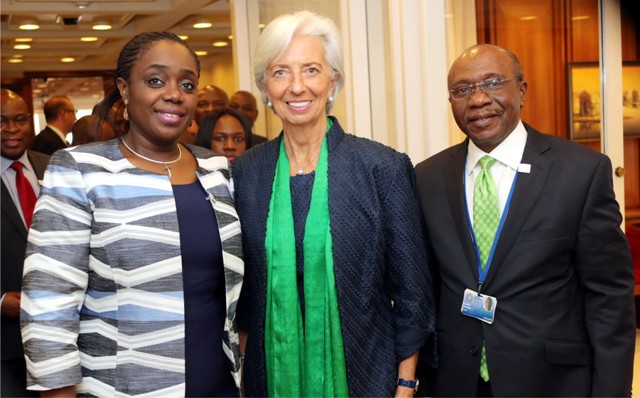
The International Monetary Fund (IMF) mission to Nigeria says exchange rate and monetary policy reforms, increased revenue mobilisation and structural reforms will unlock Nigeria’s growth potential.
The team lead, Ms Jesmin Rahman, said this in a statement issued on Friday in Washington D.C at the conclusion of the virtual mission.
The mission was conducted from October 30 to November 17, in the context of the 2020 Article IV Consultation with Nigeria.
Rahman said that the COVID-19 pandemic was exacting a heavy toll on Nigerian economy, already experiencing falling per capita income and double-digit inflation, with limited buffers and structural bottlenecks.
According to her, low oil prices and sharp capital outflows have significantly increased Balance Of Payments (BOP) pressures; together with the pandemic-related lockdown, led to a large output contraction and increased unemployment.
She said that under the current policies, the outlook was challenging as real Gross Domestic Product (GDP) was projected to contract by 3.4 per cent in 2020.
“The recovery is projected to start in 2021, with subdued growth of 1.2 per cent and output recovering to its pre-pandemic level only in 2022.
“In spite of an expected easing of food prices, inflation is projected to remain in double-digits and above the Central Bank of Nigeria’s (CBN) target range and absent monetary policy reforms,’’ she said.
Rahman, however, acknowledged the efforts of the Federal Government in rising to the challenges, adding that it undertook commendable and timely measures to counter the pandemic’s impact on lives and livelihoods.
Accordign to her, the government adopted a revised budget in July which removed fuel subsidies and prioritised spending to make room for a support package.
She also said that the government has also taken courageous steps to remove costly and untargeted subsidies in the power sector, which were largely benefiting better-off households.
“However, more needs to be done. Major policy adjustments embracing broad market and exchange rate reforms are needed to address recurrent BOP pressures and raise the medium-term growth path.
“A durable solution to Nigeria’s recurrent BOP problems requires recalibrating exchange rate policies to reduce it risks, instill market confidence and facilitate private sector planning,” Rahman said.
“The adjustments in the official exchange rate made earlier this year are steps in the right direction and the mission recommended a multi-step transition to a more unified exchange rate regime, with a market-based, flexible exchange rate,’’ Rahman said.
She further said that significant revenue mobilisation, including through tax policy and administration improvements, was required to create space for higher social spending and reduce fiscal risks and debt vulnerabilities.
She, however, commended some other policies, noting that the mission welcomed this year’s reduced dependence on CBN’s financing of the budget and recommended its complete removal in the medium term.



