
News
Buhari Extends PTF Mandate Until March, 2021

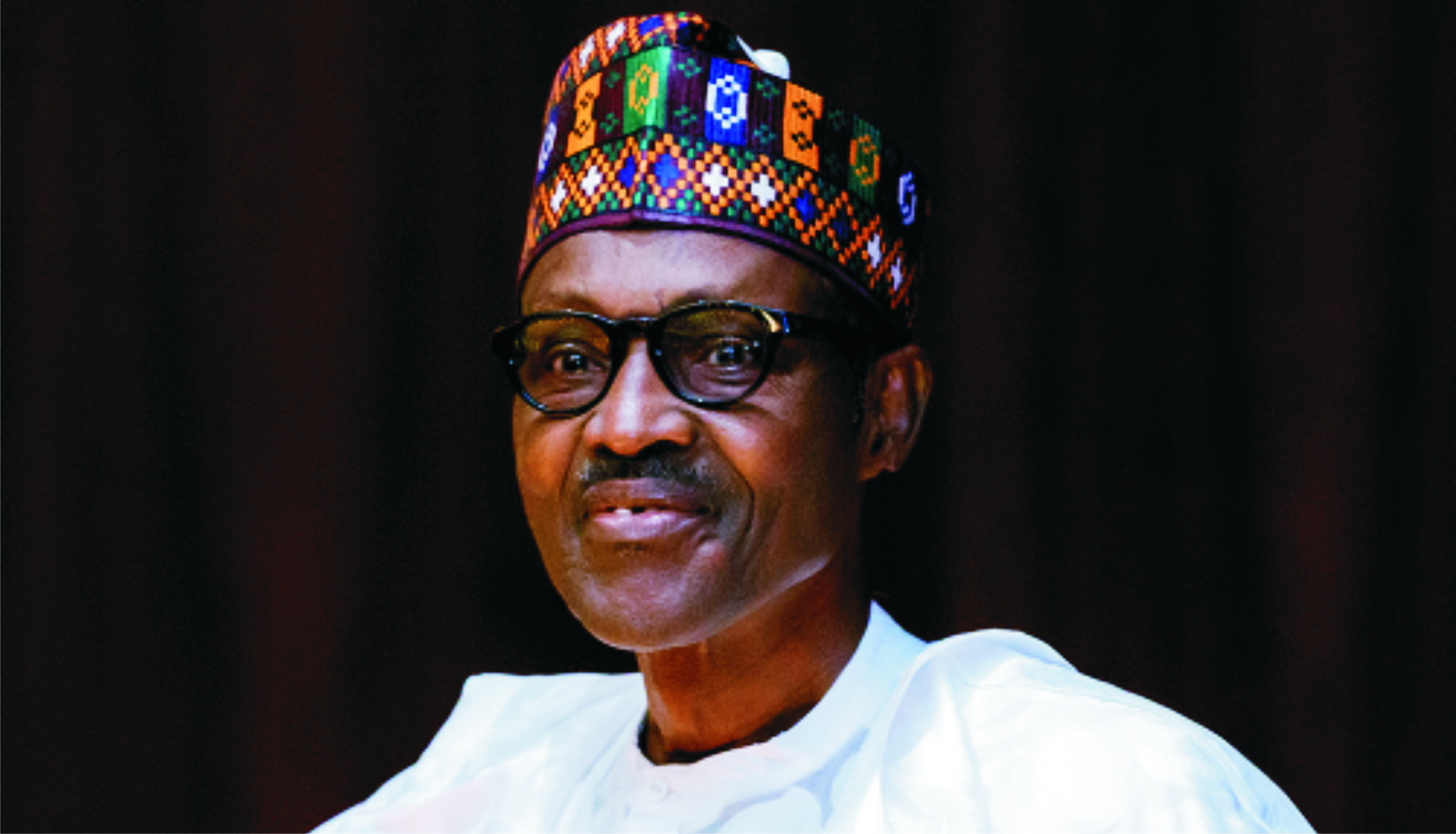
In view of the second wave of the Coronavirus pandemic and in a bid to secure vaccines, President Muhammadu Buhari has extended the mandate of the Presidential Task Force on Covid-19 until March, 2021.
According to the President, the country cannot afford to lose the gains of the past nine months in the fight against the pandemic.
Buhari, who said he has received a total of eight interim reports along with one mid-term report, in the past nine months of the PTF work, apprising him progressively of developments on the Covid-19 pandemic, announced the extension, yesterday, in Abuja while receiving the End-of-Year Report of the task force.
The President said he has extended the mandate of the Presidential Task Force (PTF) on Covid-19 ‘for a further period till the end of March, 2021 bearing in mind the new surge in the number of cases and the bid for vaccines.’
According to him, “recent reports reaching me indicate that Nigeria is now facing a rise in confirmed Covid-19 cases nationwide which is similar to the second wave of infections occurring in other countries across the world.
“New epicentres have been identified and the nation cannot afford to lose the gains of the last nine months. I have critically evaluated the situation and remain convinced that urgent measures have to be taken to halt the spread and the attendant fatalities.
“Closely associated with the foregoing is the need to speedily and strategically access and administer the Covid-19 vaccine in a safe, effective and timely manner. This is an important obligation that we owe Nigerians as we go into the year 2021 and it must be carried out through efficient machinery.”
The President added that “the nation is clearly in a perilous situation given the virulent nature of this second wave and we must act decisively to protect our people. I, therefore, urge all sub-national entities, traditional rulers, religious and leaders of thought to collaborate with the PTF by taking up the responsibility for risk communication and community engagement at all levels. Now is the time for collective efforts to be intensified.
“As the festive season approaches, I urge all Nigerians to remain vigilant and stay safe. Non-essential trips and large social gatherings should be avoided or shelved completely.”
Buhari reiterated that he has authorised that the PTF should coordinate the process for planning and the strategy for accessing, delivery and administration of the vaccines using the existing health structures that have worked in the past in vaccine administration; authorised the PTF to engage with the states for them to assume full ownership of the current stage of the response by deploying legal structures and resources, including enforcement to manage the pandemic within their jurisdictions.
He has also authorised the PTF and the Nigeria Immigration Service to ensure that all in-bound passengers who failed to show up for post-arrival Covid-19 test are sanctioned within the ambit of the law, for breaching the public health protocols.
Buhari noted that the impact of the Covid-19 on global and national economies cannot be fully assessed, adding that no nation of the world has been spared the experience of different degrees of the economic downturn as several countries, including Nigeria went into negative growth territories.
He said during the period of the lockdown, the National Social Register was expanded to accommodate 3.6 million beneficiaries across 36 states, support provided to 8,827,129 households through the 70,000MT food grains released from the Strategic Reserve; and support to 1,289,405 vulnerable households that benefitted from the Conditional Cash Transfers across 34 states.
Buhari further noted that the pandemic also revealed “the vulnerabilities in our health system which compelled our determination to ensure that its support is given top priority in terms of infrastructure, human and institutional capacities, legislative support, etc.
“It must be emphasised that this administration recognises that an effective and efficient health sector represents a significant component of our security and economic growth strategy.
“It is in this regard that I am pleased to note the legacy improvements made in the health sector in the areas of laboratory infrastructure, treatment centres, training of health care personnel, improvement in surveillance and Port Health capacities, etc.”
The President, thanking the private entrepreneurs who sourced and installed impressive healthcare facilities in some strategic places as their contribution to this National Emergency, added that there was more work to be done.
He said: “There is still more work to be done in the health sector to help us cater for our citizens and minimise the drain on our foreign exchange and trained manpower through medical tourism. For Nigeria to enjoy a lasting legacy from the huge investment in the health sector, a comprehensive Health Sector Reform that will achieve the following, amongst others, must be instituted.
“The objectives include to, build the human and institutional capacity to provide a world-class 21st-century health care system, capable of responding effectively to future pandemics; develop a viable strategy for our primary and tertiary healthcare system; re-align institutional mandates and functions within the health sector for effectiveness and efficiency; distinguish policy and coordination from implementation responsibilities; and strengthen the statutory and regulatory capacities within the health sector.”



The Project Coordinator of the Hydrocarbon Pollution Remediation Project (HYPREP), Prof. Nenibarini Zabbey, has been named Social Impact Man of the Year 2025 by Daily Independent Newspapers.
The award was presented at the Independent Awards 2025 Silver Jubilee Edition held at Eko Hotels and Suites, Lagos, as part of activities marking the organisation’s 25th anniversary of editorial excellence.
Managing Director and Editor-in-Chief of Independent Newspapers, Steve Omanufeme, said the award recognises individuals who have demonstrated exceptional leadership and transformative impact in their respective fields. He explained that recipients emerged through a rigorous process involving public voting, editorial board scrutiny, and assessment by a panel of judges.
Omanufeme noted that Zabbey’s selection reflects his outstanding contributions to environmental restoration and community development in Ogoniland through the Ogoni cleanup project.
With over two decades of experience spanning research, advocacy, capacity development, and administration, Zabbey has, within three years of leading HYPREP, implemented people-focused initiatives aimed at improving livelihoods and restoring degraded ecosystems.
Under his leadership, the project has reportedly created more than 7,000 direct jobs and facilitated the training of thousands of youths and women in high-demand skills, including mechatronics, cybersecurity, commercial diving, underwater welding, and data analytics.
HYPREP has also trained over 5,000 beneficiaries across 21 vocational skill areas, providing start-up kits to support entrepreneurship and economic empowerment.
In the area of environmental sustainability, the agency has established 31 environmental clubs in secondary schools and trained 2,500 youths with International Maritime Organization (IMO) certification to support shoreline cleanup and mangrove restoration efforts.
The project has recorded significant ecological milestones, including the cleanup of over 1,000 hectares of shoreline and restoration of 560 hectares of mangroves. This progress contributed to the designation of Ogoni mangrove wetlands as a Ramsar Site of international importance.
Beyond environmental remediation, HYPREP has expanded its social intervention programmes to include educational grants and scholarships for over 1,000 students, support for small and medium-scale enterprises, and skills training for persons living with special needs.
Infrastructure and healthcare development have also featured prominently, with ongoing projects such as the Ogoni Specialist Hospital, a Cottage Hospital, the Ogoni Power Project, and the Centre of Excellence for Environmental Restoration. The agency has further strengthened emergency healthcare delivery by donating five ambulances to medical facilities in the region.
Additionally, potable water has been provided to more than 40 communities, alongside the construction of wind-powered water systems in underserved areas.
Speaking on the award, Zabbey described it as a validation of HYPREP’s integrated approach to environmental restoration, healthcare improvement, and economic empowerment.
“We remain committed to delivering a cleanup that not only restores the environment but also improves livelihoods in line with the Renewed Hope Agenda of President Bola Ahmed Tinubu,” he said.
HYPREP, in a statement, expressed appreciation to the management of Independent Newspapers for the recognition, the Federal Ministry of Environment for its oversight role, and the Ogoni communities for their continued support and collaboration.
The agency was established by the Federal Government of Nigeria to implement the recommendations of the United Nations Environment Programme (UNEP) report on Ogoniland and restore areas impacted by oil pollution.
By: Donatus Ebi

The Supreme Court of Nigeria has awarded a total cost of ¦ 2 million against High Chief Cassidy Ikegbidi and other appellants in the protracted Eze Igbu Akoh II chieftaincy dispute, citing abuse of judicial process and disobedience of subsisting court orders, in a ruling that underscores growing judicial intolerance for procedural delays in long-running traditional leadership cases.
The decision, delivered on March 16, 2026, in Abuja by a five-man panel of the apex court led by Justice Mohammed Lawal Garba, arose from a series of applications filed by High Chief Cassidy O. W. Ikegbidi and others against HRH Eze Godspower Okorobia Okpagi and seven others, in a dispute over the rightful occupant of the Eze Igbu Akoh II stool in Igbu Akoh Kingdom of Ekpeye ethnic nationality in Ahoada East Local Government Area of Rivers State.
Court proceedings revealed that the appellants had filed multiple motions before the Supreme Court, including an application seeking injunctive relief and another seeking leave to amend a ground of appeal. However, both applications were later withdrawn by the appellants after the respondents had already filed responses and appeared in court on several occasions.
Although counsel to the respondents did not oppose the withdrawal of the applications, they strongly urged the court to award costs, arguing that the appellants’ conduct had led to unnecessary delays and avoidable legal expenses. The respondents maintained that the repeated filing and subsequent withdrawal of applications amounted to a deliberate attempt to frustrate the judicial process.
In its ruling, the Supreme Court struck out the withdrawn applications but took a firm stance on the conduct of the appellants, holding that their actions constituted an abuse of court process. The court further noted that the appellants had acted in violation of subsisting injunctive orders earlier issued by the High Court and upheld by the Court of Appeal, a development that weighed heavily in its decision to impose sanctions.
Consequently, the apex court awarded a lump sum cost of ¦ 2 million against the appellants in favour of the 1st to 5th respondents as a punitive and deterrent measure, reinforcing the principle that litigants must approach the court with sincerity and respect for existing judicial orders.
The ruling, however, is strictly procedural and does not resolve the substantive issue of who is the rightful Eze Igbu Akoh II. Rather, it deals only with interlocutory applications that were brought before the court and subsequently withdrawn, leaving the core dispute to be decided at a later date.
The chieftaincy tussle, which has lingered for years, can be traced back to a judgment delivered on March 14, 2018, by the High Court sitting in Ahoada, presided over by Justice T.S. Oji, which reportedly ruled in favour of Eze Godspower Okorobia Okpagi. Dissatisfied with the outcome, the opposing parties pursued appeals, leading to a prolonged legal battle that moved through the Court of Appeal in Port Harcourt and eventually to the Supreme Court.
While Eze Okpagi has consistently maintained that he is the only duly elected candidate for the Eze Igbu Akoh II stool, according to the customs and traditions of the Ekpeye ethnic nationality, as well as based on favourable court rulings, High Chief Cassidy Ikegbidi has continued to lay claim to the stool, a situation that has deepened tensions and prolonged uncertainty within the kingdom.
The immediate implication of the Supreme Court’s ruling is that the appellants have lost all pending interim reliefs, having withdrawn their applications, and now have no active motion before the apex court capable of altering the current legal position. More importantly, the injunctions granted by the High Court and affirmed by the Court of Appeal remain valid and binding, as they were neither set aside nor suspended by the Supreme Court.
This effectively places the respondents in a stronger position for now, as they continue to benefit from the subsisting judgments of the lower courts pending the final determination of the appeal. In contrast, the appellants must comply with the ¦ 2 million cost order and face a prolonged wait before the substantive issues in the case are heard.
Following the resolution of all pending applications, the Supreme Court adjourned the substantive appeal to March 19, 2029, a development that has generated mixed reactions among stakeholders, given the already lengthy duration of the dispute. The adjournment means that the final determination of the rightful occupant of the traditional stool will not be made for several more years, further extending a legal battle that has spanned nearly a decade.
Reacting to the ruling, Eze Godspower Okorobia Okpagi maintained that the decision reinforces the validity of earlier judgments in his favour, particularly as the Supreme Court declined to grant any relief that would have altered the status quo. He argued that the dismissal and withdrawal of the appellants’ applications confirm that the orders of the lower courts remain in full effect.
He further alleged that the appellants had taken steps inconsistent with those orders and accused them of employing delay tactics to prolong their hold on the situation, insisting that High Chief Ikegbidi should desist from parading himself as the Eze Igbu Akoh II pending the final determination of the appeal.
Legal observers note that chieftaincy disputes in Nigeria often become protracted due to their sensitive nature and the high cultural and political significance attached to traditional institutions, as well as the frequent filing of appeals and interlocutory applications that slow down the judicial process.
A support group, Peter Obi Our President (PETOOP), has inaugurated its members and state executives from Rivers, Bayelsa and Cross River States in Port Harcourt, the Rivers State capital, with a renewed call to mobilise grassroots support ahead of the 2027 general elections.
The inauguration ceremony, held on Saturday, drew a large crowd of supporters and stakeholders from different walks of life, underscoring the growing political engagement around the group’s activities.
PETOOP said its core objective is to galvanise Nigerians across regions to support the presidential ambition of former Anambra State governor, Peter Obi, in the 2027 elections.
Chairman of the occasion, Dr. Okelechukwu Benjamin Okuolu, a former senatorial candidate for Rivers East under the Labour Party, described the group as a broad-based movement open to all Nigerians seeking good governance, stressing that it is not a political party.
Represented by Christian Ojukwu, Okuolu urged members to remain committed and make necessary sacrifices toward achieving credible leadership in the country. He expressed optimism about Obi’s chances in the next election cycle, citing what he described as the former governor’s leadership qualities.
Referring to the 2023 general elections, Okuolu encouraged members not to be discouraged by past challenges, but instead remain resolute and vigilant in future electoral processes.
He also commended the National Convener of PETOOP, Chief Magnus Oraka, for his mobilisation efforts aimed at fostering a better Nigeria.
In his remarks, Oraka called on members to remain courageous and steadfast, linking Nigeria’s economic challenges to what he described as leadership deficiencies.According to him, effective governance requires competence, foresight and experience in managing resources, urging Nigerians to prioritise these qualities in future leadership choices.
Also speaking, the Rivers State Coordinator of PETOOP, Mrs. Becky Napoleon, said the group represents a collective movement driven by conviction and a shared vision for national transformation.
She noted that the initiative is focused on inspiring action and generating practical solutions to the country’s challenges through unity and purposeful engagement.
“Our coming together is based on personal conviction and a shared belief in a better future for our country and generations to come,” she said, adding that meaningful transformation requires collective effort.
The Bayelsa State Coordinator, Mr. Ijaja Alabi, also addressed participants, aligning with the group’s message of unity and commitment to national development.
The event marks a significant step in PETOOP’s expansion efforts across the South-South region as it intensifies mobilisation activities ahead of the 2027 elections.
-
Politics3 days ago
ADC ELECTS NEW EXECUTIVES IN RIVERS LGA
-
Politics3 days ago
Ekiti 2026: IPC Trains Journalists On Election Coverage
-
Sports3 days ago
WAN Mourns Ex-NFF President Galadima
-
Politics3 days ago
INEC To Display Voters Register April 29 As CVR Phase II Closes Nationwide
-
Sports3 days ago
Brentford Miss Chance To Move Up
-
Sports3 days ago
NBA PlayOff: Lakers Make Winning Start
-
Sports3 days ago
NSF champion Osaretin wins at Tour du Faso
-
Politics3 days ago
GROUP BLASTS ATIKU CRITICAL COMMENTS AGAINST JONATHAN … SAYS EX-VP CAREER ASPIRANT