
News
We Need Monarchs’ Support To Address Demands Of Youths -Buhari

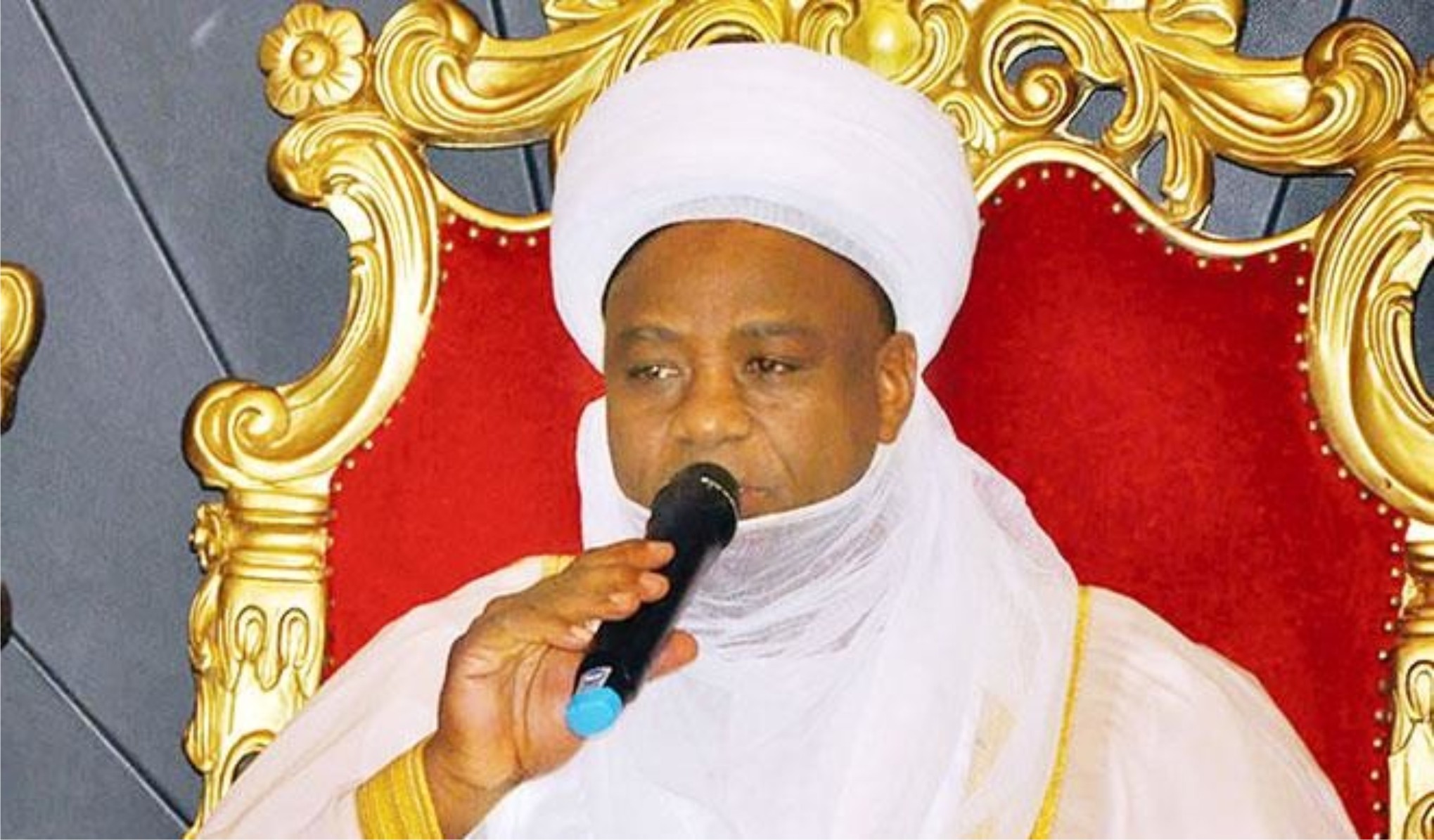
President Muhammadu Buhari has emphasized the imperative of support of traditional rulers in the administration’s determination to address the demands of the country’s youths.
The president made the call at a meeting with a delegation of the National Council of Traditional Rulers of Nigeria led by the Sultan of Sokoto, Alhaji Sa’ad Abubakar III, at the State House, Abuja, yesterday.
Buhari told the royal fathers that “we have heard the loud cries of our youth and children, and we are attending to their concerns.
“To succeed in all of this, we would require your support and voice to help amplify the message.
“Your proximity to the people places you in a unique position to communicate and ensure that our response is targeted and impactful.”
While describing their “role as guardians of our traditional values and culture” as most critical, the president urged them not to compromise their neutrality “because this is what significantly confers on you, your moral authority and legitimacy.”
He revealed that his Chief of Staff, Prof. Ibrahim Gambari, would lead senior government officials to various parts of the country “and directly engage with you as part of this process. He will be reporting back to me on your various perspectives.
“I want to once again thank you for the role you all have played to calm down our youth with wisdom and authority. By instilling hope and keeping the peace, you have rendered the country great service.”
While warning that “we cannot allow anybody or group to threaten the peace or sabotage these efforts,” Buhari restated that “strong, transparent efforts are underway to address those rogue elements of the Nigerian Police Force.
“Simultaneously, the Nigerian Police Force will also undergo much needed reform that covers welfare, working conditions, and code of conduct. That will usher in a more professional workforce.
The president acknowledged the primary and important role of the monarchs in helping maintain peace and security in the country, and expressed delight at their visit “given all that has happened recently in our country.”
While receiving the recommendations of the traditional rulers, he promised to study them and take appropriate action.
Buhari had earlier drawn the attention of the eminent delegation to the challenges of Covid-19 pandemic on the world.
“We find ourselves in very turbulent times, with a global health pandemic that has been incredibly challenging.
“Economies have been crippled as the response to the pandemic has forced businesses to shut down or devise new means of transacting.
“For a country like ours, with a large informal economy, our citizens have been particularly hit,” he added.
He noted, however, that his administration had designed various schemes and taken many measures to soften the impact, “despite our own revenue struggles as government.’’
He recognized that “more needs to be done to cater to our fellow citizens, not just those in the urban areas but also those in rural areas.
“I am also fully aware that our strong farming belts have been impacted by floods. While we have seen record levels of farm outputs and increased level of fertilizer utilization, government through the Ministry of Agriculture and Rural Development and its agencies is working on how to help bring these farmers some relief.”
While admitting the enormity of these challenges and “our growing youth population,” the president declared: “There is no hiding place regarding how we should address insecurity concerns, youth unemployment, job creation, boosting industrialization and preparing for a transition into a digital economy.”



The Africa Global Development For Positive Change Initiative (ADIAfrica), in collaboration with Stephen Igwe and Judith Igwe International Educational System, has concluded a free eye screening outreach for residents of Rivers State.
The outreach, which was flagged off in Port Harcourt, targeted more than 300 individuals with various eye conditions. Speaking at the event, the International President of ADIAfrica, Prince Dan Mbachi, said the initiative was designed to provide access to essential eye care services for underserved communities.
According to him, the first phase of the exercise commenced in Obio/Akpor Local Government Area and is expected to extend to Etche and Ikwerre Local Government Areas, while the second phase will cover other parts of the state.
Mbachi described the outreach as part of the organization’s commitment to promoting quality healthcare, equity, human dignity, and sustainable development. He emphasized that vision challenges go beyond medical concerns, noting their impact on education, economic productivity, and family wellbeing.
“At ADIAfrica International, we recognize that vision is not merely a medical issue; it is also economic, educational, and social. A child who cannot see clearly struggles to learn. A trader with impaired vision struggles to work. When sight is compromised, opportunity is limited,” he said.
He explained that the exercise provided eye tests, medications, visual field assessments, eyeglasses, contact lenses, and related accessories, stressing that the intervention was aimed at transforming lives rather than serving as a mere charitable gesture.
Mbachi further noted that the initiative aligns with ADIAfrica’s broader mission of advancing sustainable development through practical and people-centered solutions.
Also speaking at the event, a chief from Rumueme Kingdom in Obio/Akpor Local Government Area, Chief Livingston Akaninwo, commended the organisation and its partners for supporting vulnerable members of society. The traditional ruler expressed concern that many people with eye conditions suffer silently due to poverty and limited access to healthcare.
He called on the government and well-meaning individuals to support ADIAfrica’s efforts to enable the outreach to reach more communities across the state.Some beneficiaries, including Mrs. Veronica Peters Olera Pere, expressed gratitude to the organizers for the initiative and appealed for the programme to be extended to other parts of Rivers State to benefit more residents.
By: John Bibor

A three-day intensive training programme aimed at empowering adolescent girls with knowledge, life skills, and advocacy tools to eliminate Female Genital Mutilation (FGM) and promote their wellbeing has ended at Okogbe Community in Ahoada West Local Government Area of Rivers State.
The programme, which held from February 26 to February 28, 2026, was organised by the United Nations Children’s Fund (UNICEF) in partnership with the United Nations Population Fund (UNFPA) and the Rivers State Ministry of Social Welfare and Rehabilitation. It brought together adolescent girls aged between 10 and 19 years drawn from five communities in the area, including Ubeta, Okogbe, Okaki, Akinima, and Akoh.
The training was designed to reactivate and strengthen girls’ clubs across Ahoada West, Abua/Odual, and Emohua Local Government Areas, with a strong focus on ending harmful traditional practices and equipping participants with knowledge to improve their health, safety, and social wellbeing.
Throughout the three days, facilitators engaged the girls in interactive sessions covering a wide range of topics such as menstrual hygiene, puberty education, communication skills, gender-based violence, child rights, personal hygiene, emotional intelligence, and the importance of empathy and peer support. Particular attention was given to the dangers and long-term consequences of FGM, which experts described as a serious violation of the rights of women and girls.
One of the facilitators, child protection advocate, Inyingi Irimagha, specifically of the Child Protection Network(CPN), emphasised the need to challenge harmful cultural practices that negatively affect girls, noting that culture should evolve when it threatens human dignity and health.
UNICEF Desk Officer at the Rivers State Ministry of Social Welfare and Rehabilitation, Victor Iseberetonma, also stressed that empowering young girls with knowledge and confidence remains one of the most effective strategies for eliminating FGM.
He attributed the successful organisation of the programme to the doggedness and commitment demonstrated by UNICEF, the Permanent Secretary of the Ministry, Mrs Lauretta Davies-Dimkpa, and others in making sure that no stone was left unturned for the smooth take-off of the programme, and particularly thanked UNICEF for the great work it is doing in the State.
Other facilitators, including Mr Unah Uchenna and Miss Lucy Uzodinma shared similar sentiments, and called for total elimination of FGM in the society.
Many of the participants described the training as enlightening and transformative, saying, it exposed them to important life lessons they had never received before. One of the girls said the programme helped her understand not only the dangers of FGM but also how to support others emotionally.
“It has educated us about what is wrong, especially about FGM and other issues affecting girls.
“We learned how to talk to people, how to empathise, how to console someone, and how to make others feel relaxed and understood,” Morrow Onisokien Burebure said.
Another participant explained that the programme went beyond discussions on harmful practices to include personal development and daily living skills.
“We learned about our values and how we should live our lives,” she said. “They taught us about menstrual hygiene, how to use sanitary materials properly, how to keep our bodies clean, wash our hands, and how to be friendly even with people we don’t know,” said Dowel Victory Bakewari of Community Secondary School, Akinima.
The participants also pledged to become advocates for change in their communities. One of them stated that she would share the knowledge gained during the training with others back home.
“I will tell people about the effects of FGM and how to stop it.We need to create awareness so that people will understand why it should not continue,” Ake Beauty enthused.
Another participant noted that the training gave her a better understanding of her body and the responsibilities that come with adolescence.
“It is good because we were taught what we need to know about our bodies as girls,” she said. We learned things we should do and things we should not do, and the dangers of FGM. I will tell people in my community that they should stop practising it,” Ebere Testimony Kenneth of Akala-Olu Community Secondary School, Ula-Upata said.
Some participants also expressed appreciation to the organisers for bringing the programme to their in communities, describing it as a life-changing opportunity. One of them simply said, “We thank the organisers for what they have done so far. They have helped us learn things that will protect our future.”
Facilitators at the programme explained that FGM remains deeply rooted in cultural traditions in some communities, which makes sustained awareness and community engagement essential. They noted that while culture plays an important role in society, harmful practices must be abandoned once they are recognised as dangerous.
According to the organisers, the programme successfully met its objectives by equipping participants with practical knowledge, leadership skills, and the confidence needed to speak out against harmful practices. They emphasised that the girls trained would serve as peer educators and change agents within their communities.
The organisers furthermore reaffirmed their commitment to continuing advocacy in efforts, strengthening girls’ clubs, and expanding grassroots awareness campaigns across Rivers State.
As the programme came to a close, the atmosphere was filled with optimism and determination. For the young participants, the training was not just an educational exercise but a call to action — one that has placed them at the forefront of effort to protect the rights, health, and future of girls in their communities.
By: Donatus Ebi

The Rivers State Government has officially opened the Dr Peter Odili Cancer and Cardiovascular Centre in Port Harcourt for public use, commencing free screening for cancer and various cardiovascular diseases.
The disclosure was made by the Permanent Secretary of the Rivers State Ministry of Health, Professor Justinah Jumbo, during a cancer awareness walk held in Port Harcourt to mark the 2026 World Cancer Day.
The awareness walk, which began at the centre located in Rumuepirikom, formed part of activities to celebrate World Cancer Day and to sensitise residents about the availability of cancer screening and treatment services at the newly opened facility.
Professor Jumbo explained that the event was designed to inform the public that the centre is now fully operational for cancer screening and treatment. She noted that the facility, constructed by the immediate past administration in the state, is aimed at reducing the need for residents to travel abroad for cancer diagnosis and treatment.
Also speaking at the event, Permanent Secretary-designate and Director of Medical Services at the Ministry of Health, Dr. Vincent Wachuku, said the walk was not only to commemorate World Cancer Day but also to draw attention to the centre’s readiness to serve patients within and outside Rivers State.
“We are here today because it is World Cancer Day. Beyond the walk, we want to let everyone know that this centre is open and ready to provide services to people suffering from any form of cancer, whether they are from within the state, outside the state, or anywhere in the world,” he said.
Dr. Wachuku added that, as part of the launch activities, the government has approved free screening for breast cancer, cervical cancer, prostate cancer and other related conditions for an initial period. He noted that while the free services may not be permanent, future charges would be highly subsidised.
According to him, the government is also putting measures in place to support patients who may not be able to afford treatment at the centre.
The Chief Executive Officer of the facility, Tony Rahme, assured residents that the centre would provide services comparable to global standards. He stated that the hospital currently has 65 bed spaces and is staffed by a multidisciplinary team of experts from different countries, including Filipino nurses, to manage cancer and cardiovascular cases.
Rahme explained that the centre is equipped to handle advanced oncology surgeries, cardiovascular procedures, kidney treatment, cardiothoracic surgery, and a wide range of nephrology services.
He disclosed that over 70 to 100 individuals had already been screened as part of the commencement activities, reaffirming the hospital’s commitment to delivering quality healthcare services to all segments of society.
By: John Bibor
-

 News5 days ago
Amend Constitution To Accommodate State Police, Tinubu Tells Senators
-
 Politics5 days ago
Senate Urges Tinubu To Sack CAC Boss
-
Business5 days ago
Crisis Response: EU-project Delivers New Vet. Clinic To Katsina Govt.
-
Business5 days ago
President Tinubu Approves Extension Ban On Raw Shea Nut Export
-

 News5 days ago
Disu Takes Over As New IGP …Declares Total War On Corruption, Impunity
-
Business5 days ago
President Tinubu Extends Raw Shea Nuts Export Ban To 2027
-
Business5 days ago
Fidelity Bank To Empower Women With Sustainable Entrepreneurship Skills, HAP2.0
-
Sports5 days ago
NDG: Rivers Coach Appeal To NDDC In Talent Discovery