
Featured
Coronavirus: Over 40 Health Workers Test Positive -FG …Mulls Local Vaccines For Prevention, Cure …CACOVID Strategises To Curb Community Spread …AS NCDC Ramps Up 10,000 Tests

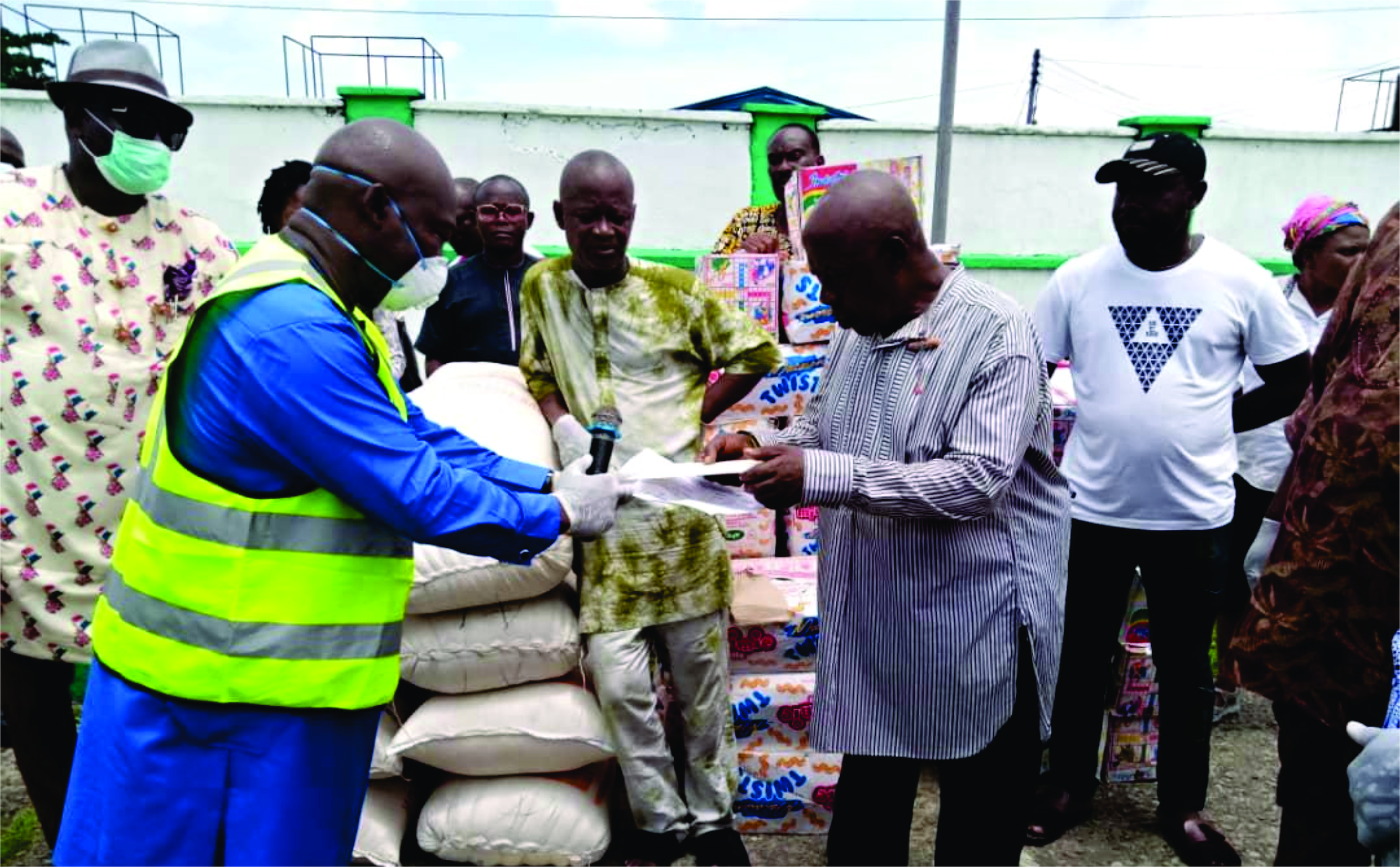
The Minister of Health, Dr Osagie Ehanire, yesterday, said that over 40 health workers in the country have tested positive for Coronavirus (COVID-19), as a result of exposure.
He stressed that it has become critically important for health workers to maintain a high index of suspicion and protect themselves adequately with personal protective equipment (PPE) in the line of duty.
Ehanire, who made this known at the daily briefing of the Presidential Task Force (PTF) on COVID-19 in Abuja, said that: “I applaud our health workers on the frontlines of the COVID-19 pandemic, the government will continue to provide you with the necessary personal protective equipment (PPE) and I urge you to take all necessary precautions for your own safety.
“Please, do not treat any patient without using adequate PPE, frontline health workers must undertake refresher training on IPC at intervals.
“This advice became necessary due to the number of health workers who have tested positive, over 40 now, for COVID-19 or been quarantined, in the last two weeks due to exposure, and therefore not being able to contribute to the health sector effort. I urge you all to remain vigilant in the line of duty and maintain a high index of suspicion for COVID-19.
“We are still on hazard allowance for frontline health workers, as proposals have to be validated by the PTF. They also have to be validated by other authorities like the Minister of Finance, etc. Therefore, there are other processes that will take place before it is announced. It is a work in progress and will not be hidden.”
The minister decried the underutilisation of the ‘excess’ testing capacity of the country, explaining that even though Nigeria has the capacity to test 1,500 persons daily, daily testing still averages around 600.
According to him: “Today, Nigeria Centre for Disease Control (NCDC) laboratories have capacity to test 1,500 samples per day in 13 laboratories across the country. However, we are testing on average 600 samples per day because that is all the samples collected and sent for testing. This means that there is a certain underutilisation.
“Factors implicated in the process may include surveillance sample collection and mode of transportation, which can be improved to increase operational efficiency.
“In fact, we have excess capacity for the 13 laboratories that are functioning, but our own strategy is that of smart testing, that is, testing where you feel you will have yield. We have to be very careful about our reagents.
“We are also trying to use our resources as wisely as possible because we have an estimated population of 200million people, so we have to be ready to cater for all of them.
“This is where a little investment can help. The results of such intensification of efforts can be seen, especially in Lagos where improved logistic management increased sample collection and significantly reduced turnaround time.
“As we further increase our testing capacity and accredit more laboratories, an even more robust sample transportation infrastructure will be in place, to promptly convey samples to any of the 13 labs activated so far.
“Nigeria’s strategy is to admit all persons who test positive for Covid-19 into designated accredited treatment facilities to contain the spread of the virus and ensure prompt management to forestall complications.”
Also, the Federal Government has said that it will not rule out homegrown vaccine towards the prevention and cure of the Coronavirus (Covid-19).
The Minster of Health, Dr Osagie Ehanire, said this while fielding questions from Journalists at the Presidential task force on Covid-19 daily press briefing against the backdrop of some countries coming up with locally manufactured vaccines for Covid-19.
Speaking on who was eligible to go a Covid-19 test, the minister said: “Nigerians living in an area that has clusters of people who have the disease are eligible to be tested for the virus.
“The structure of the response, is: Test, Treat, Trace and Isolate for Covid-19, the idea is to test people based on set criteria,” he said.
These, he said, are travel history, contacts or symptoms or clusters for the best prospects of high yield then; place those with positive test in treatment and isolation; trace all their contacts and quarantine them for 14 days.
“Today NCDC laboratories have capacity to test 1,500 samples per day in 13 laboratories across the country. However, we are testing on average of about 600 samples per day because that is all the samples collected and sent for testing.
“Factors implicated in the process may include surveillance, sample collection and mode of transportation, which can be improved to increase operational efficiency. This is where a little investment can help,” he said.
According to him, the results of such intensification of efforts can be seen especially in Lagos where improved logistic management increased sample collection and significantly reduced turn-around time.
Ehanire said that efforts were ongoing to further increase the testing capacity and accredit more laboratories.
“A robust sample transportation infrastructure in place, to promptly convey samples to any of the 13 laboratories activated so far.
“This mitigates the need for urgent establishment of a PCR laboratory, as well as the valuable time and personnel needed to prioritise case findings.
“The recommended global best practice is to admit all persons who test positive for Covid-19 into designated accredited treatment facilities to contain the spread of the virus and ensure prompt management of cases to avoid complications,” he said.
The minister said that some persons who have tested positive for Covid-19 in Nigeria, were not in any of the designated accredited isolation and treatment centres.
“This is a significant threat to public health and national security as the ministry cannot account for such persons and ascertain the containment of their infection.
“States are strongly encouraged to ensure that all persons who test positive for Covid-19 are admitted at the designated centres,” he noted.
He said that contact tracing was the key to containing the infection. As persons were confirmed positive for Covid-19, he said that the government must trace all contacts they had in the previous 14 days.
“This aims to arrest transmission by corralling positive cases and potential cases before further transmission occurs.
The Nigeria Centre for Disease Control (NCDC) had finalised contact tracing guidelines with all states to actively aid case finding.
As of April, 23, 873 people in 25 states and the Federal Capital Territory (FCT) have been confirmed to have Covid-19 from 9,522 tests.
The 91 additional confirmations are as follows: 74 in Lagos, five in Katsina, four in Ogun, two each in Delta and Edo, one each in Adamawa, Kwara, Oyo and FCT.
The NCDC said 197 persons have been successfully treated for Covid-19 and discharged home, while 28 deaths have sadly been recorded.
Meanwhile, as part of its plans to handover isolation centres it built for some states, the Private Sector-led Coalition Against Covid-19 (CACOVID) is to commence capacity development for Healthcare Personnel in the areas of Infection Prevention and Control (IPC) to reduce community transmission.
The CACOVID said in Lagos that it would engage National Centre for Disease Control and other Resource Partners like CHAI, DRASA and others to define scope of work and training curriculum.
Speaking on behalf of Leaders of the coalition, Ms Zouera Youssoufou, who is the Chief Executive Officer of Aliko Dangote Foundation (ADF) disclosed that CACOVID would start implementing training for the healthcare personnel first across four states – Kano, Rivers, Enugu, and Borno and then extend to other states of the federation.
She stated that the coalition would tap into the expertise of the National Primary Health Care Development Agency (NPHCDA) to organise a systematic training programme for all primary health workers to help reduce the rate of community transmission of Coronavirus (Covid-19) in the country.
Youssoufou explained that the private sector group is to handover some isolation centres it has concluded building to the state governments and commence distribution of food stuffs to the vulnerable during the period of lockdown in Nigeria.
According to her, in order to curb community transmission and educate the medical personnel on proper handling of the Covid-19 cases, CACOVID would partner relevant agencies for capacity building and that in that regard the primary healthcare sector remained one of the top priorities of the coalition.
She said, “training of health workers is one of the most important things we need to do to help curb the spread of the virus within the community health care system. Giving them the tools, knowledge and understanding is critical to the fight against this pandemic.
“The training became necessary because the health workers need to know what to do when they encounter anyone with Coronavirus. Right now, we are working with the National Primary Health Care Development Agency to organise a systematic health care training programme for all primary health workers, such as nurses and doctors to properly train them on how to handle Covid-19 cases.”
She disclosed that CACOVID was also involved in the provision of Personal Protective Equipment (PPEs) to help the Federal Government’s effort in curbing the spread of the scourge.
“Right now, our priority is to be as effective as we can in helping to curtail this Covid-19 threat. We are working on more comprehensive health intervention, which is around improving the quality of our Primary Health Care system in Nigeria. We have had a very big conversation with the Primary Health Care Development Agency and we want them to do as much as they can to make sure the heath care sector is able to attend to people’s needs”, she added.
According to her, CACOVID has also been in the forefront of galvanizing individual entrepreneurs and corporate bodies to contribute to the Coalition.
Youssoufou reiterated that plans have been concluded to provide food relief packages for all the states in the federation, covering 5% of the population, or 1.7 million households in Nigeria.
She described this gesture as a palliative by the private sector operators to cushion the effects Covid-19 on the vulnerable during nationwide lockdown.
The agreed food package by CACOVID contains 10kg rice, 5kg Garri, 1 carton Pasta (20 packs), 1 carton noodles (40 packs), 5kg sugar and 1 Kg salt.
She added that the isolation centres, which are being set up by CACOVID, would be well equipped with beddings, medical equipment, Personal Protective Equipment and other necessary tools needed for the treatment of Coronavirus.
In a related development, the Nigeria Centre for Disease Control (NCDC) has revealed that till date, 10,000 persons have been tested for Coronavirus (Covid-19) in the country.
The Director-General of the NCDC, Dr Chikwe Ihekweazu, who disclosed this at the daily briefing of the Presidential Task Force on COVID-19, yesterday, in Abuja, urged people to stop playing the game of numbers by comparing Nigeria’s testing capacity with that of countries like South Africa, Ghana etc.
According to him, “We have a very good strategy around testing. Until recently, we had about 5,000 test but last week, we have moved from 5,000 to 10,000 tests. We are going to continue to scale up our testing rapidly. We have just got our first set of reagents for high throughput testing.
“We know that the numbers are always thrown around comparing us with South Africa and Ghana, but we are not playing the game of numbers here, these are people’s lives – human beings. Before we test anyone, we go through a risk assessment to make sure it is appropriate to test the person.”
Concerning the situation in Kano State, the NCDC boss said: “We need time. We have reports that there have been deaths. Our first line of action is to verify if it is true and what will be our next line of action if that is the case.
“We have a team that is working with the government of Kano state to verify the incident and make sure that what is going on is actually what is being reported. Then, we will carry out control measures and see if it is an infectious disease, Covid-19, or something else.
“Unlike Lagos that has a gradual increase in cases, the cases are really increasing rapidly in Kano state. Kano state situation is not a very simple thing to manage. We are working with them to increase the organisational efficiency of response. Also, the treatment centre in Kano State has a capacity of about 300.”
The Minister of Health, Dr. Osagie Ehanire, in his address, added: “Every country has its own strategy to combat the Coronavirus. In Nigeria, we are not flattening the curve but we are pushing the curve to one side so that we have enough time to prepare our ‘not very strong’ health system.
“Also, in the beginning, we did not have enough re-agents, in fact, we carried-out our tests in South Africa. But two months down the line, we can carry out our own tests with the 13 existing NCDC laboratories across the country.
“Concerning the use of rapid test kits, the World Health Organisation (WHO), has not validated any of it. They believe that the results are not reliable but it probably gives you a direction. Therefore, there is not enough faith in rapid diagnostic test.”
Meanwhile, the Nigeria Centre for Disease Control and the World Health Organisation have redeployed 17 persons to Kano State to support the fight against Coronavirus in the state.
The National Coordinator, PTF, Dr. Sani Aliyu, said this during the daily Presidential Task Force on COVID-19 briefing in Abuja, yesterday.
According to him, additional lab equipment were sent to Kano, yesterday, though fumigation and disinfection of the Kano molecular laboratory continue “for the next few days.”
Aliyu said, “The PTF has directed and, in line with the directive, the NCDC has already redeployed at least 17 persons, including seven from the WHO, to Kano to deal with the current issues that have arisen.
“In addition, the director-general, NCDC has worked with the state emergency operating centre to reorganise the way it functions and a joint team, together with that from the state government, is currently investigating the concerns with regard to this.”
The PTF coordinator noted that some states continued to record a low level of testing.
“You will not have a case if you have never tested for it.
“We are encouraging the state emergency operating centres to actively look for cases in the community, especially those presenting symptoms consistent with Covid-19 or those who have unusual respiratory illnesses in hospitals and actively go out to test these people.
“This is the only way we can interrupt transmission. The earlier we do this, the better overall,” he said.
The Chairman of the PTF and Secretary the Government of the Federation, Boss Mustapha, in his remarks, said the task force continued to monitor and modify its strategy in states as development unfolds.
He said, “Our assessment of the impact of the lockdown is still ongoing and I wish to confirm to you that the DG NCDC and the WHO representative have returned from their tour of nine states and their report will be received and evaluated, preparatory to making the appropriate recommendations.
“The situation in Kano is still being assessed and monitored closely.
“Based on preliminary findings, the PTF has directed the NCDC to send an enhanced support team, mobilise resources for contact tracing and immediately ensure necessary steps are taken, in conjunction with the state government, to contain the spread of the pandemic in Kano and stop the city from becoming the next epicentre.”



Rivers State Governor, Sir Siminalayi Fubara, has charged the newly appointed Secretary to the State Government (SSG) and Chief of Staff (CoS) to carry out their duties with discipline, loyalty and a firm commitment to the success of the administration and the wellbeing of the people of Rivers State.
The governor warned that any involvement in unauthorised nocturnal meetings or any conduct capable of embarrassing the government will attract immediate dismissal.
Fubara gave the warning yesterday shortly after the newly appointed Secretary to the State Government (SSG), Dr Dagogo S.A. Wokoma and the new Chief of Staff (CoS), Barrister Sunny Ewule, were sworn in at the Executive Council Chambers of Government House, Port Harcourt.
As part of the ceremony, the Chief Registrar of the State High Court, David Ihua-Maduenyi administered the Oath of Allegiance and Oath of Office on the duo before the governor gave his charge.
Addressing the appointees, Fubara reminded them that their elevation to the new positions was a call to service and not a platform for political grandstanding or the pursuit of personal ambition.
He stressed that their foremost responsibility should be to themselves and to the people of Rivers State, stressing that their conduct must always reflect integrity, restraint and dedication to public good.
Speaking directly to Dr. Wokoma, whom he described as an accomplished academic and mathematician, the governor expressed confidence in his intellectual depth and capacity to deliver on the new assignment.
The office of the Secretary to the State Government, Fubara stressed, demands thoroughness, discipline and a deep sense of responsibility. He charged the SSG to represent the State with honour at all times.
“Your duty includes representing the state government. You need to represent us in a way and manner that will bring honour to us.
“What is important to this administration is to see that the good works that we started and the ones that we met, are concluded in a way that will bring progress and development to our dear state,” he stated.
Turning to the new Chief of Staff, the governor explained that he is expected to ensure smooth administrative coordination, managing official engagements effectively and safeguarding the image of the Government House.
He underscored the sensitive and personal nature of the role and emphasised that the position operates strictly under the authority of the governor.
Fubara stressed that the role does not permit independent political engagements or private strategy meetings without his knowledge and consent.
“Let me sound it here very clearly. Your duty is to make sure that you handle the administrative duties and image making roles perfectly well, liaising with whoever is coming for any official assignment here.
“If you involve yourself in nocturnal meetings and all those things, I will sack you. I’m very serious. What is important to me today is peace, progress and prosperity of this state. I’m not going to compromise anything for it,” he said.
The governor cautioned that involvement of the new appointees in any action capable of bringing the government or his office to disrepute would attract appropriate sanctions.
While congratulating the new appointees, Fubara expressed optimism that they would justify the confidence reposed in them.
He called on all public officials to work together in unity, observing that collective success is stronger and more enduring than individual achievement.
The governor who also addressed the Permanent Secretaries present at the ceremony, directed those of them who have reached retirement age to start preparing their handover notes without delay.
The notice, he said, was not intended to scare anybody but to prepare their minds towards the inevitability of exiting the service one day and to pave way for an orderly transition.
He warned against any attempt to engage in financial misconduct or last-minute irregularities, stressing that he was closely monitoring the system to ensure strict enforcement of accountability rules.

Rivers State Governor, Sir Siminialayi Fubara, has dissolved the State Executive Council.
The governor announced the cabinet dissolution yesterday in a statement titled ‘Government Special Announcement’, signed by his new Chief Press Secretary, Onwuka Nzeshi.
Governor Fubara directed all Commissioners and Special Advisers to hand over to the Permanent Secretaries or the most Senior officers in their Ministries with immediate effect.
He thanked the outgoing members of the State Executive Council for their service and wished them the best in their future endeavours.
The three-paragraph special announcement read, “His Excellency, Sir Siminalayi Fubara, GSSRS, Governor of Rivers State, has dissolved the State Executive Council.
“His Excellency, the Governor, has therefore directed all Commissioners and Special Advisers to hand over to the Permanent Secretaries or the most Senior officers in their Ministries with immediate effect.
“His Excellency further expresses his deepest appreciation to the outgoing members of the Executive Council wishing them the best in their future endeavours.”

The Independent National Electoral Commission (INEC) yesterday told the National Assembly that it requires N873.78bn to conduct the 2027 general elections, even as it seeks N171bn to fund its operations in the 2026 fiscal year.
INEC Chairman, Prof Joash Amupitan, made the disclosure while presenting the commission’s 2026 budget proposal and the projected cost for the 2027 general elections before the National Assembly Joint Committee on Electoral Matters in Abuja.
According to Amupitan, the N873.78bn election budget covers the full conduct of national polls in 2027.
An additional N171bn is needed to support INEC’s routine activities in 2026, including bye-elections and off-season elections, the commission stated.
The INEC boss said the proposed election budget does not include a fresh request from the National Youth Service Corps seeking increased allowances for corps members engaged as ad-hoc staff during elections.
He explained that, although the details of specific line items were not exhaustively presented, the almost N1tn election budget is structured across five major components.
“N379.75bn is for operational costs, N92.32bn for administrative costs, N209.21bn for technological costs, N154.91bn for election capital costs and N42.61bn for miscellaneous expenses,” Amupitan said.
The INEC chief noted that the budget was prepared “in line with Section 3(3) of the Electoral Act 2022, which mandates the Commission to prepare its election budget at least one year before the general election.”
On the 2026 fiscal year, Amupitan disclosed that the Ministry of Finance provided an envelope of N140bn, stressing, however, that “INEC is proposing a total expenditure of N171bn.”
The breakdown includes N109bn for personnel costs, N18.7bn for overheads, N42.63bn for election-related activities and N1.4bn for capital expenditure.
He argued that the envelope budgeting system is not suitable for the Commission’s operations, noting that INEC’s activities often require urgent and flexible funding.
Amupitan also identified the lack of a dedicated communications network as a major operational challenge, adding that if the commission develops its own network infrastructure, Nigerians would be in a better position to hold it accountable for any technical glitches.
Speaking at the session, Senator Adams Oshiomhole (APC, Edo North) said external agencies should not dictate the budgeting framework for INEC, given the unique and sensitive nature of its mandate.
He advocated that the envelope budgeting model should be set aside.
He urged the National Assembly to work with INEC’s financial proposal to avoid future instances of possible underfunding.
In the same vein, a member of the House of Representatives from Edo State, Billy Osawaru, called for INEC’s budget to be placed on first-line charge as provided in the Constitution, with funds released in full and on time to enable the Commission to plan early enough for the 2027 general election.
The Joint Committee approved a motion recommending the one-time release of the Commission’s annual budget.
The committee also said it would consider the NYSC’s request for about N32bn to increase allowances for corps members to N125,000 each when engaged for election duties.
The Chairman of the Senate Committee on INEC, Senator Simon Along, assured that the National Assembly would work closely with the Commission to ensure it receives the necessary support for the successful conduct of the 2027 general elections.
Similarly, the Chairman of the House Committee on Electoral Matters, Bayo Balogun, also pledged legislative support, warning INEC to be careful about promises it might be unable to keep.
He recalled that during the 2023 general election, INEC made strong assurances about uploading results to the INEC Result Viewing portal, creating the impression that results could be monitored in real time.
“iREV was not even in the Electoral Act; it was only in INEC regulations. So, be careful how you make promises,” Balogun warned.
The N873.78bn proposed by INEC for next year’s general election is a significant increase from the N313.4bn released to the Commission by the Federal Government for the conduct of the 2023 general election.
-
 Politics3 days ago
Senate Urges Tinubu To Sack CAC Boss
-

 News3 days ago
Amend Constitution To Accommodate State Police, Tinubu Tells Senators
-

 News3 days ago
Disu Takes Over As New IGP …Declares Total War On Corruption, Impunity
-
Business3 days ago
President Tinubu Extends Raw Shea Nuts Export Ban To 2027
-
Business3 days ago
Crisis Response: EU-project Delivers New Vet. Clinic To Katsina Govt.
-
Business3 days ago
President Tinubu Approves Extension Ban On Raw Shea Nut Export
-
Sports3 days ago
NDG: Rivers Coach Appeal To NDDC In Talent Discovery
-
Business3 days ago
Fidelity Bank To Empower Women With Sustainable Entrepreneurship Skills, HAP2.0