
News
October 1: The Changing Face Of A National Day

From inception in 1960 through to the 1990s, except for the years of the civil war, October 1, in Nigeria was largely celebrated as a national carnival. It was arguably the biggest event on the calendar of national event, in the country. The National Day was usually observed much like a religious festival that commanded enthusiastic participation from its adherents. Nigerian was the deity and Nigerians, irrespective of tribe or tongue, religious, political or sectional learning, were the devotees.
In those days, Nigeria’s call to obey the dictates of self determination and national cohesion through allegiance to the corporate entity was acceded by all and sundry in jubilant participation in the activities of October 1 at all levels of our national life. Spearheaded by the Federal Government, governments at other cadres, ethnic nationalities, socio-cultural groups, religious organizations, corporate entities, institutions and even individuals struggled to outperform one another in rolling out the drums to celebrate our nationhood.
Regrettably, the times have since changed. The drums don’t sound as loud anymore. The echoes of the lowering of the union jack and the hoisting of the Green-White-Green 59 years ago have since receded. And all, including to Central administration in the country, have progressively relegated October 1 to just one of the dates of commemorative activities to fulfill all righteousness.
Exchanging views with The Tide in Port Harcourt on the changing face of the celebration of National Day, a senior citizen of Rivers State, Amaopuseribo BoboSofiri Brown went down memory lane to give a perspective of the situation.
According to him, at the heart of the general mood of the country towards October 1 at any given time was largely the prevalent economic fortune of the country. He said while Nigerians were united by a common fate in economic circumstances at the beginning, they have since been torn apart by inequities and inequality introduced by successive governments that have made some super rich and others desperately poor.
“In the 1960 environment, Nigeria meant a lot of hope to Nigerians; it meant possibilities of progress; it meant a challenge to be the best we could be”, Amaopusenibo Brown said, adding that the competition among the regional governments at independence was dictated by their desire to achieve economic prosperity for their people.
In the 1970s, he said “Independence meant a national day of significance to Nigerians because after the war the new states that were created focused on growing their economies. Children went to school without delay and those who wanted jobs queued up jobs while those who wanted skills development had opportunity to do so”.
Brown who is a managing consultant and Chief Executive Officer of Grain Consulting regretted that “Today, Nigeria has become a country where we’re creating a few millionaires and hundreds of millions of poverty-stricken population. Such divide did not exist in the sixties and the seventies.
“Today, the divide is so sharp, those Nigeria works for, you could count them by the number of private aircraft at the airport. Those Nigeria doesn’t work for; you could count them by the number of human beings stranded by the road whose faces portray the agony of a country without an economy. That is what is affecting the celebration of Nigeria’s Independence Day”.
He emphasized that “Nigeria needs to work for everybody, not for a few which has been the case since 1999 (and) it is the economy that gives prosperity and happiness to people”.
On whether we have made sufficient effort at attaining nationhood, the veteran journalist expressed the view that the most important element of political independence was economic freedom and that political self determination would probably be meaningless if it does-not translate into economic wellbeing for the generality of the people.
“Different groups have different understanding of what Nigeria’s political independence means. For instance, those who are becoming millionaires, the cabal that manufacturing millionaires from our sufferings by taking away public resources and appropriating it for their own self benefit will say to you our nation is fantastic, Nigeria is great. But those of us who have been emasculated as a result of the blood taken out of us to make a few millionaires will say to you ‘Nigeria is not working’ “political independence doesn’t make the same sense to us because every year we see our quality of life diminishing”.
On how to change the narrative, Amaopusenibo Brown said “first and foremost, we have to come to an understanding that we the dispossessed, we the deprived, we the cheated must begin to assert ourselves and to say government must work for all of us and not for a few who have power.
“We must no longer be deceived by the issue of fake party identity. This matter is not about APC or PDP or ACC or whatever party name. The political elite recycle themselves. We the deprived must also rise and see through their cover. So we must begin to demand that whatever government we have, there are needs that must be placed as priorities.
“In terms of public agenda: first is for the deprived people to assert themselves by making their demands known. Second is that demand must draw public attention to the need to build an economy that will create jobs; that will create business opportunities. We must invest in industry in the economy and then education will fall into place.
“Our people must refuse to be hoodwinked by the differentiation of party labels. All the parties are the same political elite. They have kept us in poverty since 1999. That is why all of us must join hands to say any party must give us an economic agenda which we must enforce; that it places the Nigerian citizen first.
The critical thing for Nigerians today at this Independence, and in the future, is to demand from every state government, from every federal government that we have five years of fundamental investments in the industries in our economy to give our people life, to give our people meaning and to give them freedom which was what 1960, October 1 meant to our people”.
In his own response, Dr Emmanuel Iruayenama, a Chattered Arbitrator and Management Consultant in the Rivers State capital opined that the warning glory of the October 1 celebration may not be unconnected to successive governments ‘inability to deliver good governance and an-enhanced standard of living to the people.
According to DrIruayenama, the dwindling emphasis on the National Day celebration is not only an indication of the widening gap between government and the people but also a sign of the breaking of the bond between them.
He said even though he could not understand why the usual elaborate celebration has shrunk, “one thing I can get from it is an attempt by government to continuously run away from the people”, adding that the development has adversely affected the patriotic level of the people.
“It has reduced patriotism to a large extent. The looking up to October 1 was a stimulant to patriotism”, he said, adding that the opportunity for a robust demonstration of attachment to the nation by citizens should not be allowed to slide and urged the federal government to quickly bring back the days of elaborate celebration of the independence day.
He said for a country that has incrementally been divided along ethnic, religious and political lives, “an opportunity like October 1 celebration is one of such strong ties that gave people the opportunity to show their attachment to the nation, and except we do something about it, we will keep moving away from being together”.
DrIruayenama urged the government to give priority to the National Day of Independence over such other later day events as Democracy Day and Inauguration Day because of the centrality of the former to the very foundation and unity of the country.
October 1 is more central to all of us”, he declared while commending Pastor Chris Oyakhulome and his congregation for their effort at maintaining a robust celebration each year.
In his own view, a university don and acting Director of the Prof Claude Ake School of Governance, University of Port Harcourt, Dr. SofiriPeterside said the lull in celebration does have some implication for the country, especially for the younger generation; even as he went down memory lane.
“In our time it was the liberation stadium, then you go to where you have the Isaac Boro Park. And it is something that every pupil look forward to.
“I attended St John’s State School at Bishop Johnson Street, Port Harcourt. You know carrying that kind of flag and every person looking forward to go into the stadium. So there is that enthusiasm in the minds of the young people and we watch military parade and all that.
“But now there is this argument that you know there is so much economic crisis and security issues too. So why do we spend that kind of money? No! We need to celebrate it because in that kind of celebration it creates the spirit of oneness.
Peterside, who is a Senior Lecturer, Department of Sociology at the University of Port Harcourt told The Tide that the celebration is key to accentuate the spirit of solidarity, nay inculcate in the minds of her citizens, especially the younger generation the spirit of patriotism.
Dr. Peterside says, “It creates the spirit of solidarity and patriotism and young people now know that yes this is our country and the need to love her. And a lot of people who paid some sacrifice, some of them supreme sacrifice to get us to where we are.
“So that kind of celebration with pump and pageantry is very necessary because it has to do with nationhood, celebration of nationhood and of course government also charting a direction and a part to where we are going.”
Taking it all round therefore, for a country still grappling with a myriad of problems and challenges chiefly of which are security and the economy, yet peering into the future with high hopes of achieving greatness, slowing down an independence celebration is not the way to go.
Dr. Peterside insisted that for nothing else that the country is still together despite contending with several glitches over the years, her 59th Independence Anniversary is worthy of celebration; noting that coming up with excuses over time for not celebrating is in itself a major problem.
“But when you slow down all those, it is a fundamental problem sociologically speaking. I think that there is no excuse for government for not celebrating. For one thing, particularly for our country that we are still one irrespective of our very fundamental challenges that we have.
“That we have not gone our separate ways. I think that is worth celebrating,” the senior university lecturer explained.
For Mr. Adeola Ikuomola, bad governance, poor economy, insecurity among others are responsible for the waning patriotism and lukewarm attitude towards the celebration of Independence Day by Nigerians.
He made the assertion in a chat with The Tide in Port Harcourt.
MrIkuomola noted that many Nigerians had even forgotten about the Independence Day celebrations, arguing that the celebration has been reduced to mere frivolity by the perceived government insensitivity to the plight of the people and have consequently lost its importance.
He said people prefer to fight for their daily livelihood than attend to Nigeria’s affairs. “Those to celebrate Independence have no clothes to put on, no food to eat and are generally hopeless about the state of the nation, how do you expect them to celebrate?” Ikuomola queried.
Describing the situation as unfortunate, the poet stated that hunger, poverty, unemployment and infrastructural problems should be tackled by the government, saying that when the citizens have job and food security, they would serve the nation. They would also have the sense of patriotism to take part in national celebrations.
“Independence Day celebration has lost its relevance due to bad governance “,he said.
The Ondo State born writer posited that the Independence Day is like the birth day of the country and insisted that efforts should be made by relevant authorities to revive the celebrations, saying it is part of national identity and heritage.
“Nigerian independence day celebrations must be organized regularly with the funfares it requires despite our predicament”, he added.
He equally noted that he grew up and saw Nigerians, irrespective of tribe, status, creed, religion and political affiliations embraces one another and celebrated Independence Day.
According to him,” the independence day used to be a memorable day that united Nigerians, fostering love and togetherness “.
The prolific writer of poems alerted that the dreams of the founding fathers have been betrayed by successive governments for not doing things right.
He called on the leaders of the country to always put the people first in all they are doing.” They should reinvigorate the spirit of the NigerianIndependence especially in our schools and show commitment of purpose in all governmentbusinesses,” Mr. Ikuomola reiterated.
Opaka Dokubo, Dennis Nakus & Tamunoiminabo Fynaface


News
Rivers DPOs Receive Awards For Outstanding Performance In Crime Prevention …As Students, Media Group Honour CSP Worgu, CSP Yusuf

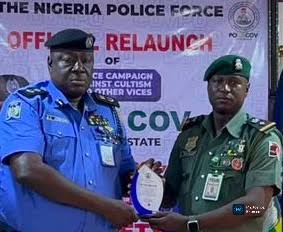
Two Divisional Police Officers (DPOs) in Rivers State have been honoured by separate groups for their contributions to security, crime prevention and improved community-police relations in their respective areas of responsibility.
The beneficiaries are the DPO of Afam Police Division, CSP Endurance Worgu and his counterpart at Oyigbo Police Division, CSP Bello Yusuf.
CSP Worgu was honoured by a group of students under the aegis of Rivers State Graduate Students Associations for what they described as his commitment and outstanding performance in the discharge of his duties.
The students, led by Chidi John Enyie, Esq. said CSP Worgu was selected based on his track record and status as one of the longest-serving young DPOs of Rivers State origin.
According to the group, CSP Worgu has made significant contributions to the protection of lives and property in the area since assuming office following the #EndSARS period.
The students said they were particularly impressed by the improvement in community-police relations under his leadership, noting that professionalism had remained a key feature of his service.
Enyie represented by Comrade Briggs Soku, said the students community was pleased to identify with a Rivers indigene who had distinguished himself in the police force.
He said the students considered it necessary to encourage and celebrate CSP Worgu because of his achievements as a young Rivers man excelling in a profession that many people from the state were often reluctant to join.
Receiving the award at his office in Afam, CSP Worgu expressed gratitude to God and the students for finding him worthy of the honour.
The DPO said the recognition had boosted his morale and encouraged him to sustain his efforts towards maintaining peace and security in the area.
He said he least expected the honour, particularly because it came from the students, adding that the recognition would further motivate him to serve the people better.
CSP Worgu assured residents of Afam that the police would sustain the existing peace in the area.
He appealed to members of the public to support the police by providing credible and timely information, stressing that useful information from residents would make the job of security personnel easier.
Meanwhile, the Ikwerre/Etche Media Association has also honoured the DPO of Oyigbo Police Division, CSP Bello Yusuf, for his efforts in tackling criminal activities in the area.
The media group presented the award following the swift tracking and arrest of five suspected kidnappers who had allegedly terrorised residents of the Kom-Kom axis and other parts of Oyigbo.
The group commended CSP Bello for what it described as his determined efforts to restore confidence and security in the affected communities, particularly Kom-Kom and Obeama.
According to the group, the arrest of the suspects demonstrated the DPO’s commitment to tackling criminality and safeguarding residents.
The media association said residents had received the development with relief, noting that the police action had sent a strong message to criminal elements operating in the area.
Responding, CSP Yusuf appreciated the group for the recognition and reaffirmed that there would be no room for criminality in Oyigbo.
He also commended the media for its role in disseminating credible information to the public, saying the media had remained supportive of the police in the fight against crime.
CSP Yusuf warned criminal elements operating in Oyigbo to leave the area or be prepared to face the full weight of the law.
He assured residents that the police would continue to pursue criminals and work to dismantle their hideouts, regardless of where they might be operating.
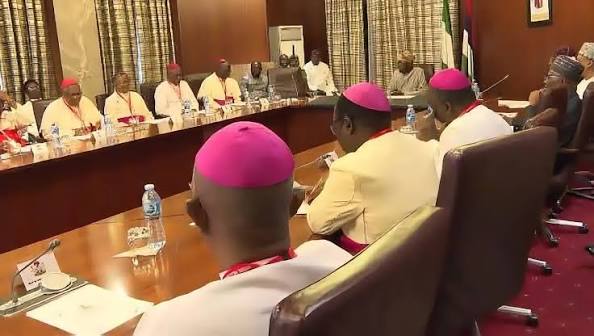
The 5000 Achievers Christian Forum and Colleges of Bishops, Archbishops and Apostles, a Christian interdenominational organisation, has endorsed President Bola Ahmed Tinubu and all candidates of the All Progressives Congress (APC) in Rivers State for the 2027 general elections.
International President of the forum, Archbishop Lucky Aroh, disclosed this during the ordination and consecration of three new Bishops, as well as an award ceremony held in Port Harcourt.
Aroh said the performance of the APC-led Federal Government had endeared the party to the organisation, prompting the forum to declare its support for President Tinubu and other APC candidates in Rivers State.
He said the forum would support all APC candidates in the state during the 2027 elections and urged Nigerians to vote for the party.
Aroh, who is also the General Overseer of Caring Peoples Church, Port Harcourt, charged the newly consecrated Bishops to see their new positions as a great responsibility and dedicate themselves to the advancement of the kingdom of God.
He cautioned them against conduct capable of bringing their offices into disrepute, stressing that their activities would be closely watched by members of the public.
“As Bishops, the eyes of the public are on your activities. You must therefore conduct yourselves in a manner worthy of your calling,” he said.
Also speaking, the International Coordinator of the forum, Bishop Saint Robinson, urged the newly consecrated Bishops to work diligently towards winning souls for the kingdom of God.
Robinson, who was the guest speaker at the event, stressed that the activities of Bishops must at all times be guided by godly principles.
He also called on members of the church to support and cooperate with the newly consecrated Bishops in the discharge of their responsibilities.
The Secretary of the College, Apostle Elizabeth Ayadi Abaye, said the organisation was established to advance the kingdom of God and promote spiritual development.
According to her, the forum has organised several crusades, conferences, prayer meetings, ordinations, consecrations, enthronements, empowerment programmes and other spiritual development activities across the country as part of efforts to win souls for Christ.
Abaye said the organisation has members across the world and disclosed that more programmes had been scheduled to promote the spiritual development and wellbeing of humanity.
The three Bishops consecrated at the ceremony were Prince Alban Chike, Testimony Omenihu Shedrach and Prince Ifemena.
Among those honoured at the event were the Chairman of the Community Development Committee (CDC), Abali Community, Port Harcourt City Local Government Area, Manuchimso Prince Lemmy Wopara, and Clifford Oko Jaja, Coordinator of the 5,000 House-to-House for President Tinubu.
By: John Bibor
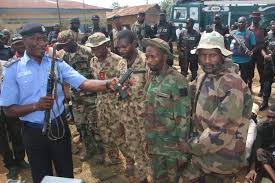
The Rivers State Police Command has arrested a 49-year-old suspected fake soldier, Andrew Atausi, and several other suspects in connection with various criminal activities, including kidnapping, armed robbery, cultism, one-chance robbery and the alleged murder of police officers.
The State Commissioner of Police, CP Olugbenga Adepoju, disclosed this in Port Harcourt, recently during a press briefing at the Command Headquarters, where he said the arrests formed part of the operational achievements recorded by the Command between June and August 2026.
Adepoju said Atausi was arrested on August 10 by police operatives along Ada George, Port Harcourt, while dressed in military uniform and driving a Toyota Hilux painted in Army colours.
The Commissioner said investigation revealed that Atausi was not a member of the Armed Forces, adding that he was suspected to be a serial car snatcher, with three suspected stolen vehicles recovered from him.
He said the recovered vehicles included three Toyota Hilux vehicles without registration numbers and a Toyota Corona Premio with registration number BNY 380 ES, noting that the chassis and engine numbers of the vehicles had allegedly been tampered with.
Adepoju added that an axe and military accoutrements were also recovered from Atausi, as investigation continued into the circumstances surrounding the vehicles and other items recovered from him.
On the June 29 attack on police officers at Aluu Division, the Commissioner said three members of the gang allegedly responsible for the incident had been arrested by operatives of the Violent Crime Response Unit, VCRU-AKU.
The suspects, identified as Maduabuchi Emeka, 34, alleged gang leader; Doctor Chinedu Owhor, 42, and Kamachi Joe, 28, alleged armourer, reportedly led operatives to their hideout at Omagwa where two AK-47 rifles stolen during the attack were recovered.
Adepoju recalled that two police officers were killed during the Aluu attack, while others were wounded and one officer had his leg amputated, stressing that efforts were ongoing to apprehend the fourth suspect.
On kidnapping, the Commissioner said five members of a suspected kidnapping syndicate were arrested in Oyigbo Local Government Area, adding that they allegedly confessed to operations in Kom-Kom, Railway, Obeama and Afam communities.
He said two other suspects from the same network, Anele Ogbogu, 35, alleged to be the gang’s armourer, and Kenneth Eke, 38, were arrested on July 27, with one AK-47 rifle and one SMG rifle recovered.
The Commissioner further disclosed the arrest of suspects in connection with alleged firearm offences, armed robbery, cultism and one-chance robbery, with firearms, ammunition and other exhibits recovered during the operations.
Adepoju assured residents that the Command would sustain intelligence-led, proactive and community-oriented policing in collaboration with other security agencies, while urging members of the public to continue providing credible information that would assist the police in combating crime across Rivers State.
By; King Onunwor
-

 News2 days ago
RSG Targets Nine Million Residents in Mosquito Net Distribution Campaign
-

 Oil & Energy2 days ago
Aiyedatiwa Signs New Electricity Bill
-

 Oil & Energy2 days ago
NLNG Commissions Research And Innovation Centre In RSU
-

 Maritime2 days ago
Marine Minister Commends President Tinubu On NPERA Bill Assent
-

 News2 days ago
KenPoly Holds Eight Convocations, August 29
-

 News2 days ago
RSG Begins Another Phase of Projects Commissioning Today
-

 News2 days ago
RMAFC Completes Revenue Sharing Review, Proposes New Pay
-

 Maritime2 days ago
NAGAFF Petitions IGP Over Alleged Maritime Police Harassment