
Oil & Energy
Energy Conservation: Lessons For Posterity

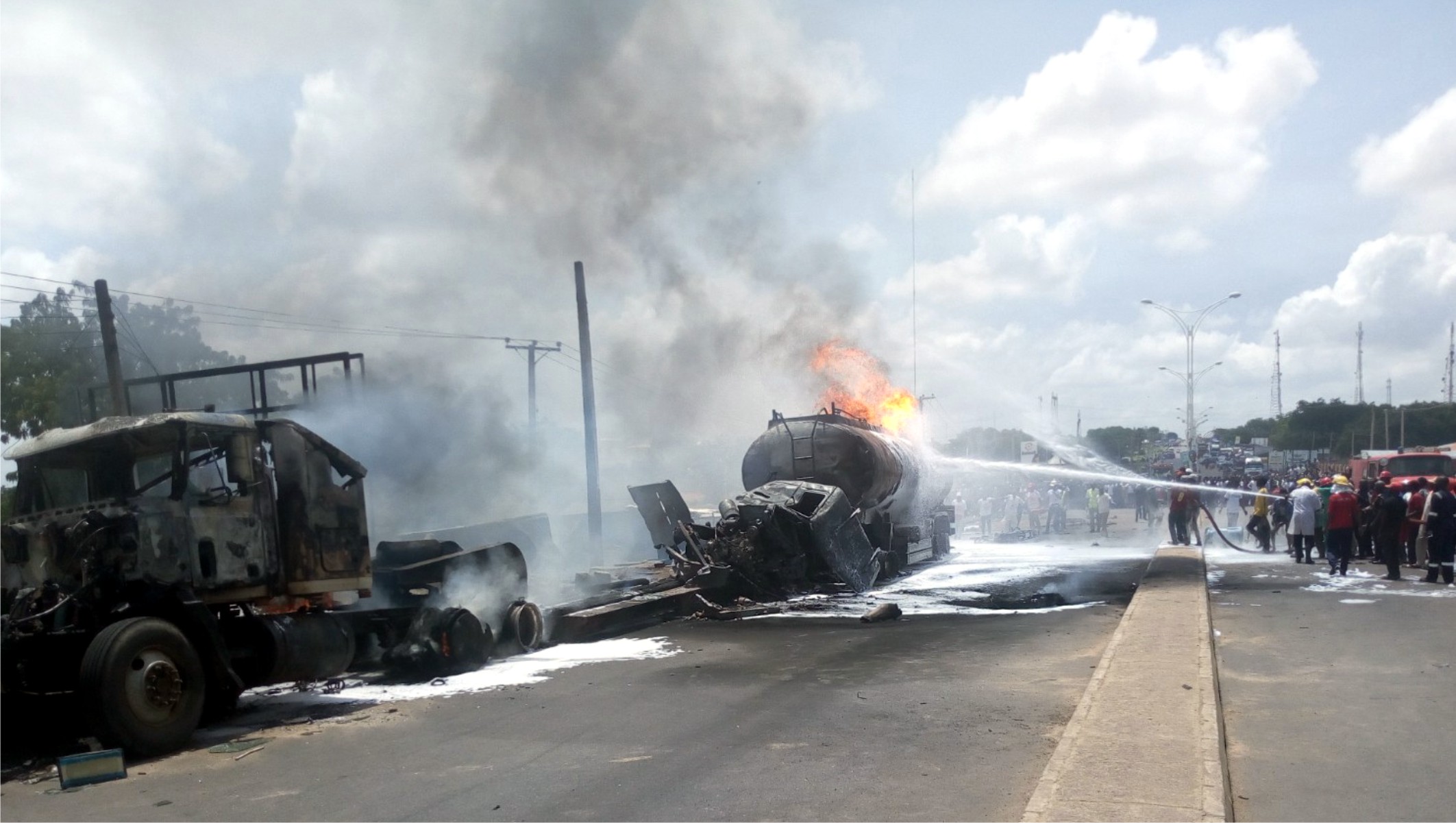
Kozo community, a coastal habitation in Bodo, Gokana Local Government Area of Rivers State once hosted over four thousand inhabitants that earned their livelihood, predominantly from the natural treasures of the area.
The teeming inhabitants of the coastal settlement were mostly fishermen and women who eased out their daily existence on the natural ambience of the area which satisfied their craving for game and stalking for daily survival.
This was indeed their most cherished possession and inheritance.
Today the once thriving rural economy is extinct. The barest shred of human existence is gone.
The inhabitants have been rendered homeless and have migrated out of their abode in search of a new home and alternative means of livelihood.
They are the victims of reckless oil exploratory activities which has brought colossal damages to the natural environment, stripping the people of their means of livelihood.
A visit to Kozo community recently revealed the extent of devastation of the natural environment. There was visibly no sign of life but desolation.
The sprawling creeks where the fishermen launched their daily expedition was laden with thick layers of spilled crude oil.
The mangrove reserve that harboured the sea shell food was completely burnt off.
A former resident of the displaced community, Mr Peter Ledisi, who now lives in Bodo Town, in Gokana Local Government Area, told The Tide correspondent that he was born in Kozo community and grew up in the area until the sad experience of oil pollution displaced his family.
Ledisi, who is now 37 years old said his parents took care of him and his siblings through the proceeds of fishing but today life has become so difficult for the family as their means of livelihood is destroyed.
“That place you see (Kozo community) used to be our home for the past decades, we grew up there and pursued life with happiness, we were contented with what the simple life we lived, we enjoyed fishing and swimming in the clean rivers because it provided fun for us and filled our desire and passion for game and we also made money from it. To we have been displaced out of our home by oil pollution and life is so difficult,” he lamented.
Another displaced inhabitant of the community, Miss Tornubari Sakpugi told The Tide correspondent in an interview that life has become so unbearable for her as a result of the pollution and eventual displacement of the natural environment.
Sakpugi, a fish seller said her bussines has collapsed as her customers can no longer go on their fishing expedition due to the pollution of the rivers.
“I used to buy fish in larger quantities from fisherman and sell, the bussines helped me a lot and I was able to provide for my needs, but today things are very hard for me, it’s a very sad experience for you to move out of a place where you earn a living without any alternative means of livelihood, we want the polluted area to be cleaned so that we can return home. They are talking about UNEP report, but we have not seen any development, the damage is too much,” she declared.
The story of Kozo community is similar to that of other oil bearing communities in the Niger Delta. These communities suffer wanton depletion of their natural environment and resources through oil spillages and gas flaring.
The land, plants, animals and marine life are badly impacted through the resultant pollution, making life meaningless for the inhabitants of the affected areas.
Fishermen at some major water fronts in Port Harcourt also have similar story to tell. Iyalla, a fisherman who reside at lbadan water front in Part Harcourt, told The Tide correspondent during a visit to the area that fishing bussines is no longer lucrative compared to the past.
Asked the reason for the decline in the bussines, Iyalla, a middle aged man said the river has been contaminated with spilled crude from oil bunkering.
He said years back fishermen did not have to go to the deep sea before they were rewarded with good catch.
But today, he said they have to paddle hard and wander up sea amidst wreckages of boats and badges and sometimes return home with little or no catch.
He explained that illegal refining of crude oil and activities smear the rivers with wasted crude, making bloated dead fishes to float on top of the rivers.He added that; “ The fish we catch these days are tasteless because of the pollution of the rivers. “
Experts have however identified this trend as an indication of the total lost of aquatic life which is the hallmark of coastal habitation.
A Chemical Engineer, Prof Ujile Uwajiogag said the burning of our natural reserves, especially through the “cooking of oil” put. the lives of the present generation and that of posterity at risk.
Speaking in an interview with The Tide, the Professor of Chemical Engineering at the Rivers State University, disclosed that it takes over 50 years for a polluted site to regain it lost reserves.
Using the experience of the Nigeria Civil war as an example, the University teacher said, the bombing of oil facilities in the Niger Delta during the war left in its wake devastating effects on the creeks and coastal channels of the region.
He said after 50 years of the war, nothing has grown in the impacted sites rather the flourishing mangrove is replaced by nypa palm that has no economic value.
“The indulgence of criminal elements in the cooking of crude oil is very destructive to our ecosystem and also has health implications. Research has shown that illegal bunkering will increase cancer in the Niger Delta. What is the sense in taking a few components of products and wasting the rest on aquatic life? Our environment was preserved and bequeathed to is by our forebears, but today we are destroying it. Uninitiated to the wonders and possibilities western technologies, they lived longer and happier than the present generation, the average life span of a Niger Delta person is 50 years, this is indeed pathetic. “
In the views of an Environmental Sociologist, Dr Steve Wodu, said, human insensitivity to the protection of his natural environment has worsened the problems of environmental degradation. To him, some of man’s actions are tempered insanely on ignorance or delibrate obstinacy billed to ruin his very existence;
“Otherwise what could be the rationale behind the indiscriminate burning of natural energy reserves or bad sanitation habits and waste disposal” he asked rhetorically.
The Environmental Sociologist pointed out that; “a new era of posterity can only blossom when we begin to treat our environment with the same sanctity with which we treat our lives.”
The Director Institute of Conflict and Gender Studies, University of Port Harcourt, Prof Fidelia Allen also on the need for conservation of natural energy reserves without gross abuses.
Prof Allen, who is an environmental crusader, said a blighted environment portrayed the nakedness of our civilisation and human orgy for self destruction.
He advocated for effective environmental awareness campaign to curtail; “the ethical violation of environmental rights and enhance a healthy and sustainable environment in the Niger Delta”
He added that to achieve a better objective in environmental management, “the exploitation of resources, the direction of investment, the orientation of technological development and institutional change should be in harmony to enhance both present and future potentials to meet human needs and aspirations.”
The University Don called on multinationals operating in the Niger Delta to carry out their activities with a sense of social responsibility by adopting international best practices and save the Niger Delta environment from further destruction.
He described the Ogoni clean up exercise as critical to the eventual remediation of other impacted sites in the Niger Delta, and called on all affected stakeholders to expedite action to make the clean up exercise a success.
Also, as part of its advocacy campaign for better environmental management in the Niger Delta, the Nigeria Association of Women Journalists(NAWOJ) recently expressed its deepest concern over depletion of the Niger Delta energy reserves.
Speaking at a public function organized by the Rivers State Chapter of NAWOJ, the State Chairperson, Mrs Lilian Okonkwo said reckless exploratory activities in the Niger Delta has exposed the inhabitants, especially women to complex environmental and health issues for which they are not equipped to contend with.
She called on the federal government to; “ensure speedy clean up of the Niger Delta as well as implement existing environmental legislation and plan for a low carbon energy system and economy”
The NAWOJ boss also emphasised the need to review obsolete laws in the Nigeria oil and gas sector to address issues of gas flaring and indiscriminate dumping of industrial wastes prevalent in the Niger Delta.
Realising the importance of the natural environment, the American novelist, Henry Beston warned; “ do not do dishonour to the earth lest you dishonour the spirt of man.”
The implication of Beston’s warning is that by destroying his natural environment, man sets to consume himself in an inescapable catastrophe, the possibilities of which are too obvious to be ignored.
However, the production and consumption of energy is today a major indicator of the modernisation process.
Our modern civilization is fueled by energy sector, particularly oil and gas, and this involves exploratory activities, attendant pollution problems and significant local and global implications.
It is therefore suicidal to see that the very natural ingredients that nourishes our lives are washed away in the name of technology or industrialization.
It is left for us therefore to heed to Beston’s warning or perish.
Taneh Beemene


Researchers in Hong Kong and China have developed a new form of battery that is more eco-friendly and longer lasting than lithium ion batteries – and it runs on tofu brine. The new water battery is still in research phases, but if the technology proves to be scalable enough to hit commercial markets, it could be a game-changer for the energy and tech sectors.
“Compared with current aqueous battery systems … our system delivers exceptional long-term cycling stability and environmental friendliness under neutral conditions,” the research team, composed of scientists from the City University of Hong Kong and Southern University of Science and Technology in Shenzhen, Guangdong, said in a paper published this month in Nature Communications.
The researchers found that their battery model can be recharged over 120,000 times. “At over a hundred thousand cycles, this could mean a single water-based battery could last at least a decade or so,” states a recent report on the breakthrough from Interesting Engineering. “For applications like grid storage (solar farms, wind balancing), that’s extremely valuable,” the article went on to say.
This kind of lifespan would represent a drastic improvement over the battery technologies that dominate today’s market. Lithium-ion batteries degrade after between 1,000 and 3,000 charge cycles. This could prove revolutionary, as finding an alternative to lithium-ion batteries to power rechargeable devices is a major priority for Big Tech and the global energy sector.
Moreover, these tofu-brine batteries could prove safer and more environmentally friendly than lithium-ion batteries. According to the study authors, the full cells are environmentally benign and nontoxic and can be directly discarded to environments according to various standards.” Water based (also called aqueous) batteries can also potentially be cheap to produce as they rely on ingredients that are less rare in addition to being less hazardous.
Lithium is environmentally harmful to extract, prone to fires, and its supply chains are geopolitically fraught. Currently, China alone controls half of the global lithium market, and is rapidly increasing its stake. In 2024, more than eight in ten battery cells on the planet were made in China. This means that finding a battery model that can compete with lithium-ion batteries in applications like grid-scale energy storage and electric vehicles would have revolutionary implications for global markets.
Researchers around the world have been racing to develop battery models that could diversify the market and make it more competitive and resilient. These models range widely in size, components, and application, with models currently under development for next-gen sodium-ion batteries, quantum batteries, nuclear batteries, and even sand and dirt batteries.
Of course, the irony is that the leading alternatives to lithium-ion batteries are also being developed in Chinese labs. If this new tofu-brine battery proves scalable and applicable outside of a laboratory environment, it could just be another step toward Beijing’s goal of near-total domination of clean energy technology value chains and status as the world’s first and premiere ‘electro-state.’
China’s extreme advantage in global battery making gives it a major point of leverage in global economies as the world continues to electrify at a rapid pace. It is estimated that European demand for lithium in batteries will reach kilo tonnes (thousands of tonnes) of Lithium Carbonate Equivalent by next year, and North American demand will reach 250 kit LCE. it’s all but certain that the vast majority of that demand will be supplied by China.
Other nations are aware of the risk of this dependency, and are taking pains to protect and promote domestic battery manufacturing, but these efforts may be too little, too late. “For globally competitive battery manufacturing industries to emerge outside of Asia over the next ten years, companies will need to do far more than ensure regulatory compliance,” summarizes a McKinsey & Company report released in January. “Challenges will need to be overcome on multiple fronts spanning supply chains, talent management, operations and technology.”
By: Haley Zaremba

The Rural Electrification Agency (REA) says it will spend N100 billion in 2026 to deploy hybrid mini-grids for government agencies within and outside Abuja.
The Managing Directors, REA, Abba Aliyu, disclosed this while addressing newsmen on the sidelines of the 2026 budget defence session
The approved funds form part of the National Public Sector Solarisation programme, a component of the agency’s broader N170 billion budget proposal for 2026.
The initiative is designed to improve electricity reliability for public institutions while reducing operational costs and easing pressure on the national grid.
Aliyu explained that the agency’s total proposed budget for 2026 stands at N170 billion, with N100 billion of the amount dedicated specifically to the solarisation initiative targeting government agencies.
He said the hybrid mini-grid systems combine solar power with complementary energy sources to ensure an uninterrupted electricity supply.
“The total budget size for 2026 operations is N170 billion, out of which N100 billion had been approved for National Public Sector Solarisation.
Aliyu cited the National Hospital in Abuja as an example where similar infrastructure had been deployed to ensure stable power and cut operational expenses.He added that beyond the Solarisation
Recall that earlier in February 2026, REA signed a Memorandum of Understanding with the Economic Community of West African States (ECOWAS) to deploy solar power systems to 15 public institutions across Nigeria.
The project will be implemented under the Regional Off-Grid Electricity Access Project (ROGEAP), a World Bank-supported initiative aimed at expanding off-grid electricity access across West Africa and the Sahel.
ECOWAS will provide a $700,000 grant to fund the installation of solar photovoltaic systems in selected rural health centres and schools in the Federal Capital Territory, Niger, and Nasarawa States.
Oil & Energy
PIA: TotalEnergies Transfers OLO Oilfield HCDT Obligation To Aradel ……Says HCDT Enabled Completion of 100 Projects In 2 years


In his remarks, the Community Affairs Manager, Aradel Holdings Plc, Blessyn Okpowo, affirmed the company’s commitment to honouring all PIA obligations and continuing Total Energies’ community engagement approach.“We want to say that in line with the PIA, we will honour commitments and duties required of the settlor and we want to work very smoothly with the way TotalEnergies has worked with them,” he stated.
He recognised the Commission’s role in approving the Community Development Plan (CDP) before project start, underscoring regulatory excellence.The parties noted that between 2023 and 2025, the trust has enabled the completion of more than 100 community projects, spanning water supply, electricity, road infrastructure, education, and healthcare with a further 40 projects currently ongoing.
-
Politics5 days ago
2027: NIGERIANS FAULT INEC ON DIGITAL MEMBERSHIP REGISTER DIRECTIVE
-
Politics5 days ago
LP Crisis: Ex-NWC Member Dumps Dumps Abure Faction
-

 Politics5 days ago
Umahi Dismisses Allegations On Social Media, Insists On Projects Delivery
-
Politics5 days ago
NATASHA ELECTRIC VEHICLES INITIATIVE IN KOGI CENTRAL
-
Politics5 days ago
IT’S A LIE, G-5 GOVS DIDN’T WIN ELECTION FOR TINUBU – SOWUNMI
-
Sports5 days ago
La Liga: Yamal Records First Career Hat-trick
-

 Sports5 days ago
PSG Extend Lead In Ligue 1
-

 Sports5 days ago
City Survive Leeds’ Challenge At Elland Road