
Politics
Still On Edo, Bauchi States Assembly Crises

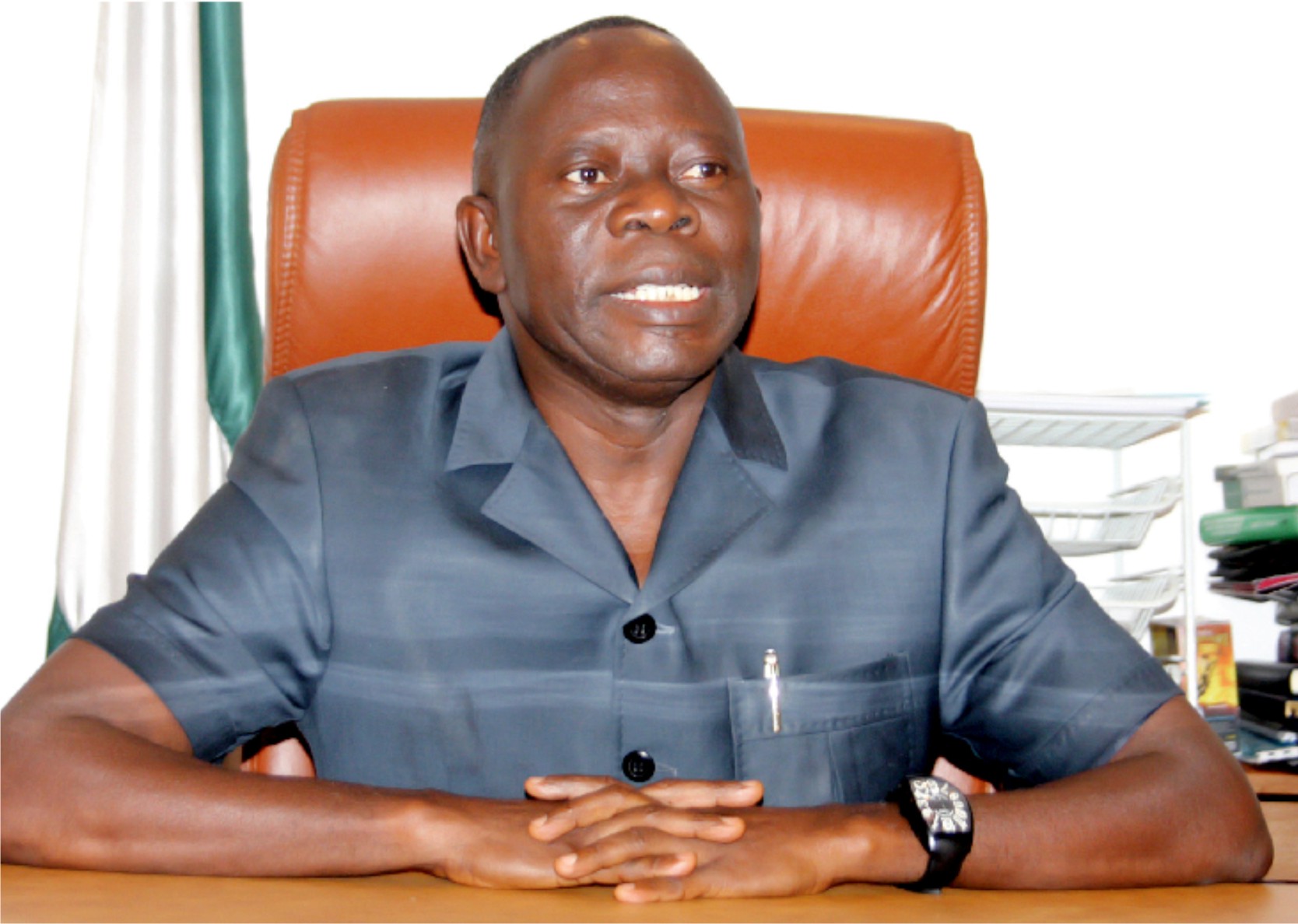
In Political lexicon, especially in the African concept, power is either won or captured whether it is a so-called democratic setting or military rule. Both under democratic and military rule, the desire to win at all costs and maintain that status quo involves not only intrigues but also some level of ruthlessness and intimidation of opponent.
Most times those who lose out in the power game do not just cry foul, but also behave as if they are saints. This behaviour cuts across party lines as there is hardly any and politician in Nigeria who does not exhibit this behaviour.
Prior to the inauguration of the 8th National Assembly, the power play that brought Dr Bukola Saraki and Yakubo Dogara zx Senate President and Speaker House of Representatives respectively is well known as the godfathers who felt that it was their sole right to appoint the senate President or Speaker of the House of Representative lost out. However, the shame they brought to the country was of no consequence as they believed it was only their will that must be done.
Today, the situation is not all that different even at the state level, where individuals still prefer the speaker or Deputy Speaker of a house of Aassembly.
Recently, states like Edo and Bauchi were in the news a lot of house trading, scheming and shouting took place in these legislatures following the emergence of some honourable members as speakers and deputy speakers.
In Edo State, there was a running battle between the governor Mr Godwin Obaseki and the National Chairman of the All Progressives Congress, Comrade Adams Oshiomhole, on who becomes a principal officer of the Edo State House of Assembly, and at the end of the tussle, the Godwin Obaseki faction emerged victorious with his preferred candidates emerging Speaker and Deputy Speaker.
Here, the Nigerian incumbency factor played a very crucial role as 8 out of the 24 members won outright, indicating that in this country anything is possible as no Governor will allow his opponents to outwit him in the game of thrones and patronage.
This same game of power was just a replica of what happened in 2014, when the house of assembly was ingulfed in crisis over who became the Speaker. over that situation was a bit different as the power equation in the assembly was evenly balanced, between the APC and the PDP. But, sadly in 2019, all the gladiators belong to the APC, yet there was still infighting.
The major question is, why is the APC, which has both the executive and legislative arms in its pocket, still behaving as if they belong to two different political parties? Reacting to the crisis, the immediate past National Chairman of the All Progressives Congress, John Odigie-Oyegun, accused his successor, Comrade Adams Oshiomhole, of trying to undermine the Obaseki’s administration.
However, the 15-member-elect, who were absent during the Monday night inauguration, are still insisting on proper inauguration, arguing that the house was not properly inaugurated and that the government has no right to foster a leadership on them.
This same scenario also played out in Bauchi State where II out of the 33 members elected a speaker and deputy speaker. But the difference here is that the APC has a majority of 22-member-elect but were clearly outwitted by their opponents.
How did we get here? Under the 1999 constitution, section 92 (1), Chapter V, states that there shall be a speaker and a Deputy Speaker of a State House of Assembly, who shall be elected by the members of the House from among themselves.
Section 98 (1 and 2) clearly stipulates that voting must be by a simple majority. The question is, were those guidelines followed? In any power tussle in Nigerian politics, it has always been to outwit the opponent remained outwit your opponents, then let them fight you from the This has always been the case at whatever level of election, as nobody likes losing out in elections.
Here, people do not ask whether there is right or wrong, but who won at the end. If the losing camp had the day, they would have attributed such success to the will of God. So, to whom will they attribute their failure, if not God?
What most people in politics don’t take into cognizance is that in every power play, it is usually ‘dribble your opponent, using every weapon at your disposal. Politics is war, don’t give excuses for your failures’.
Today, Rt Honourable Frank Okiye of Edo State and Abubakar Suleiman are Speakers but the situation can change anytime as no condition is permanent. That is why the utterances of Comrade Oshiomhole should be condemned by all lovers of democracy. Oshiomhole even had the effrontery to give directives to the Inspector-General of Police “Not to provide security to the Houses of Assembly in Bauchi and Edo State”. So it is the great Comrade that is now controlling the Nigerian Police. Tin god syndrome has no place in Nigeria democracy.
Since every State House of Assembly is independent and autonomous, let the members sort themselves out and the least interference in the system the better.
We can always disagree to agree why sometimes people begin to question the quality of representation we get at the legislature. Most executives from the Presidency down to the state level, want absolute loyalty and are afraid of the unknown. That is why they want a rubber stamp legislative arm. That is also why most houses of assembly are not robust in lawmaking.
In the Second Republic under the late President Shehu Shagari, the quality of representation was very high at both the national and state assemblies. We never heard or read in the papers about midnight or 6am inauguration of the legislative arm or even factional Speakers. Today, even within the same political party there is always fighting, violence and court injunctions.
Nigeria did not vote honourable members to fight among themselves but to render serve to the populace; all those elected as state legislators should start exhibiting some sense of maturity and stop running to Abuja to seek support when they eventually lose out in their ambition to clinch a particular position. After all, in politics in those parts of the world, is either a game of numbers or using every means to outfox your opponent.
Governors Godwin Abaseki and Bala Mohammed will be savouring their victory as Kingmakers. If they had failed in their first task as Chief Executives, their swearing-in, then it would have shown that they did not have clout and that they lack the scheming skills as politicians in Nigeria.
The losers in the this first round should also learn that there is always real power at the hand of the governors, who at all times can grant favour. You just don’t toy with the executive as a legislator and if in doubt, ask Bukola Saraki.
Tonye Ikiroma-Owiye



The Independent National Electoral Commission (INEC) has extended the deadline for political parties to submit the list of candidates for the 2027 governorship and state Houses of Assembly elections from Saturday, August 8, to Tuesday, August 11, 2026.
The commission announced the extension in a statement issued on Saturday and signed by the National Commissioner and Chairman of its Information and Voter Education Committee, Mohammed Haruna.
According to INEC, the decision followed appeals by political parties for additional time to complete the submission process through the dedicated online portal.
“The submission window, which according to the revised Timetable and Schedule of Activities for the General Election was originally scheduled to close on Saturday, 8th August, 2026, has been extended to Tuesday, 11th August, 2026,” the commission said.
In a a related development, INEC announced the suspension of PVC collection in Osun State ahead of the August 15 governorship election.
The commission said voters who applied for replacement of lost, damaged or defaced Permanent Voter Cards would have until midnight on Sunday, August 9, to print downloadable copies of their cards.
The electoral body explained that the deadline was necessary to enable it compile data on downloaded PVCs and produce final statistics on the total number of cards collected ahead of the election.
INEC said PVC collection in Osun commenced at the Registration Area level from July 22 to 28, 2026, but was extended to July 31 following complaints about large crowds and difficulties experienced by voters at collection centres.
The exercise subsequently moved to the local government level and ran from August 1 to 7.
The commission also disclosed that replacement downloadable PVCs had been made available to voters in Odo-Otin and Ife Central Local Government Areas following the theft of cards during attacks on the two collection centres.
It stressed that the stolen cards could not be used to vote.
INEC reassured Osun residents of its preparedness for the August 15 governorship election.
“The commission reiterates that the stolen cards cannot be used to vote.
“INEC reassures the people of Osun State of its readiness to conduct a free, fair, credible and inclusive governorship election on 15th August, 2026,” the statement said.
The commission said the deadline, initially set for Saturday, 8 August, has been extended to Tuesday, 11 August 2026, following appeals from political parties for more time.
INEC also announced that the window for voters who applied to replace lost, damaged or defaced PVCs to download their replacement cards will close at midnight on Sunday, 9 August.
The move is to enable the commission compile final PVC collection figures ahead of the 15 August Osun governorship election.
INEC said replacement downloadable PVCs have also been provided to affected voters in Odo-Otin and Ife Central Local Government Areas after hoodlums carted away cards from two collection centres, stressing that the stolen cards cannot be used to vote.
The commission reaffirmed its readiness to conduct a free, fair, credible and inclusive election in Osun State.
Gov. Kefas made the remarks over the weekend at the Federal Medical Centre (FMC), Jalingo, during the flag-off of the second phase of the Renewed Hope Medical Outreach in Taraba State, organised as part of activities marking Prof. Yilwatda’s 58th birthday.
The governor commended Prof. Yilwatda for choosing to mark his birthday by providing medical care to people in need.
“What Professor Nentawe did is a powerful demonstration of what leadership should be,” Gov. Kefas said.
He assured that his administration would continue to support initiatives that complement government efforts to improve healthcare delivery and the wellbeing of residents.
Speaking at the event, Prof. Yilwatda called on Nigerian leaders to embrace the culture of giving and use their positions to touch the lives of the less privileged.
He said his decision to celebrate his 58th birthday in Taraba State was deliberate and informed by the needs of underserved communities, particularly people who face difficulties accessing healthcare because of distance and financial constraints.
According to him, the intervention followed a needs assessment and was extended across the three senatorial districts of the state.
He said the exercise commenced on August 3 at Takum General Hospital and covered the Federal University Teaching Hospital, Wukari; First Referral Hospital, Sunkani, Ardo-Kola Local Government Area; General Hospital, Bali; General Hospital, Gembu; and FMC Jalingo.
Prof. Yilwatda said the intervention provided medical services to thousands of beneficiaries, including people who required surgical procedures.
He said sustainable national development could only be achieved when strong institutions placed Nigerians at the centre of development.
“Leadership is about service,” he said, urging political and public leaders to make giving back to society an important part of their responsibilities.
He reaffirmed his commitment to serving Nigeria and its people, saying his personal vision was to make every day of his life useful to humanity.
“Every day that I live, the vision is: let it be useful to humanity,” he said.
The Taraba State Commissioner for Health, Dr. Bordiya Buma, commended the initiative, saying it was consistent with the Renewed Hope agenda and efforts to strengthen healthcare delivery in the state.
Dr Buma said the second phase followed the successful completion of the first phase, which was conducted simultaneously in six local government areas, with two LGAs selected from each of the three senatorial districts.
According to him, more than 10,000 patients were attended to during the first phase, including people with medical and surgical conditions.
He disclosed that 327 general surgeries, 71 eye surgeries and 575 dental procedures were carried out during the exercise.
The commissioner expressed appreciation to President Bola Tinubu for the Renewed Hope Medical Outreach and thanked Prof. Yilwatda for supporting the initiative and choosing Taraba State as a beneficiary.
The Minister of Health and Social Welfare, Prof. Muhammad Ali Pate, also commended Prof. Yilwatda for choosing Taraba State to mark his 58th birthday through a medical outreach.
Prof. Pate said making healthcare the centrepiece of the birthday celebration was significant because health affects everyone.