
News
Insecurity: Army Bans ‘Okada’ In Seven Northern States …Situation May Get Out Of Control -Britain …As Buhari Comes Under Fire Over Zamfara Killings

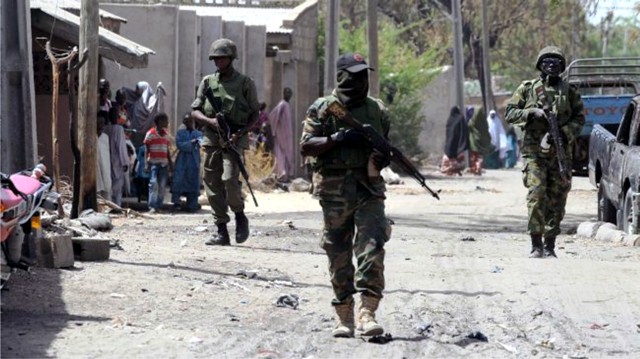
In furtherance of its efforts at curtailing the murderous activities of armed bandits and kidnappers in Northern states, the Nigerian Army under its Exercise Harbin Kunama 111 has banned the use of motorcycles in seven states of the North, noting that perpetrators of these criminal acts made use of the Okada.
A statement titled ‘Enforcement of Ban on the use of Motorcycles in Ex-Harbin Kunama Area of Responsibility’, signed by Col Sagir Musa, Acting Director, Army Public Relations, made the disclosure in Abuja, yesterday. It said.
“The Nigerian Army (NA) over time has observed the use of motorcycles by armed bandits, kidnappers, criminal elements and their collaborators as enablers to perpetrate their heinous crimes especially in the states within the north west geopolitical zone of the country.
“This informed the decision and directive to ban the use of motorcycles within the hinterland particularly around the Forests where the armed bandits, criminals and kidnappers hibernate and all around where troops are conducting operations alongside other security agencies.
“While this may cause some inconveniences to some law abiding citizens in the area, the need to use all means possible to stop the dastardly activities of these bandits across the North West part of Nigeria needs no emphasis.
“The general public, particularly in the North West and some parts of North Central in Nigeria where Ex Harbin Kunama is ongoing are enjoined to bear with the NA as concerted efforts are being made to combat the insecurity menace ongoing within the area.
“In this wise, it is hereby reiterated that the use of motorcycles remain banned within the forest areas in Kano, Katsina, Zamfara, Sokoto, Kaduna, Kebbi and Niger States..
“ Anyone caught using motorcycles within the named areas will be taken for an armed bandit, criminal and kidnapper with dire consequences. “The respective State Governments are enjoined to please disseminate the ban on the use of motorcycles in the named areas and enforce the ban in conjunction with the Security Agencies”.
Meanwhile, the British government has warned that the security condition of Nigeria has the potential of spiralling out of control if necessary measures are not taken immediately.
It therefore, said it is considering stepping up its military efforts to help the Nigerian government defeat Boko Haram, following a rise in terrorist activity in the country’s north-east in the past year, Jeremy Hunt has said after a visit to the region.
The UK foreign secretary Jeremy Hunt said that he would be discussing what more the British government can do in terms of aid and military support to combat the terrorist group, warning the crisis had the potential to trigger a humanitarian catastrophe on the scale of that in Yemen.
Britain provides £240m in aid to Nigeria, of which £100m goes to the north-east, making it the second-largest donor after the US, and giving the UK a sizeable stake in what happens in the region.
Boko Haram and Islamic State in west Africa have terrorised the region for several years, but their activities came to the world’s attention when hundreds of Nigerian schoolgirls were kidnapped in 2014.
British military personnel in Abuja and the wider region are giving strategic advice to Nigerian forces on how to run counterinsurgency operations, with their advice focused on combining humanitarian and military activities.
The Nigerian military has been repeatedly criticised by humanitarian groups for running brutal campaigns that make little effort to win over hearts and minds.
The 120,000-strong army is structured on very traditional lines but sends troops to highly hostile areas for as long as four years. Operating on a small budget, soldiers are often underpaid and morale is low.
Speaking on a visit to Maiduguri as part of a week-long trip to Africa, Hunt said: “It has got all the hallmarks of something that if you do not nip in the bud, it will get a lot worse. Conversely, it feels like a situation that it is something that could be dealt with if there was appropriate action by the government of Nigeria with international support.”
He said the crisis had spread to Niger, Chad and Cameroon. “There is a potential solution here … Nigeria is huge country and it is very stretched,” Hunt added.
Asked if he supported an increase in military action in the region, the UK foreign secretary said: “I think the crucial deciding factor is the willingness and enthusiasm of the Nigerian government and the Nigerian army to work closely with us – we would like to support and help them, but they are a sovereign nation and they have got to want our help.”
He said Britain wanted to bring holistic solutions, suggesting by implication that the Nigerian army has focused too heavily on militaristic solutions. “I think our approach is potentially a very significant one, because we could bring not just the British army but also DfID [the Department for International Development] and our experience in holistic solutions to these kind of situations,” Hunt added.
“This is a region of Africa that is being massively destabilised by conflict. These things can escalate quite quickly and get out of control. We know from Sri Lanka that Daesh [Isis] are looking to make their presence felt now they have lost their territory. We have to be vigilant.”
He said Sri Lanka was not on anyone’s radar, and showed how threats can escalate. Nigeria was “an area where all the warning signs are there”, he said, adding that not all the conflict was driven by religion.
“The feedback I got from NGOs on the ground is that lack of trust between the authorities and local people is one of the things that is fuelling the problem at the moment. The Nigerian army strategy is largely about herding people into towns and saying if you are not in a secure area, we are going to assume you are Boko Haram and/or Islamic State west Africa,” he said.
“Such an approach was understandable in the short term, but the long-term risk is that you are depriving people of their livelihoods and their farms. There are 2 million people displaced living there at the moment in pretty horrific circumstances.
“Both NGOs and military analysts fear the recent increase in violence reflects changes in the terrorist leadership, and a failure by the Nigerian military to establish humanitarian plans to follow the military clearances of areas. The brutal methods only lead to a loss of support for the military.”
In another development, Human Rights Writers Association of Nigeria, HURIWA, has described as a constitutional crime and an unmitigated evil tantamount to an impeachable offence the decision of President Muhammadu Buhari administration to go into dialogue in Zamfara State with armed fulani militia and bandits.
HURIWA frowned at an alleged planned to appease “these mass murderers” with the whooping sum of N100 billion from the tax payers under the guise of setting up cattle ranches for their totally privately owned businesses of herders.
Besides, the group also carpeted the Acting Inspector General of Police, AlhajiAdamu Mohammed, for gleefully announcing the ‘truce’ reached in Zamfara between the Federal Government’s delegation made up largely of Hausa/Fulani Muslem dominated internal security team of the current administration and the Miyetti Allah cattle owners Association- a group that supports the activities of armed fulani Herdsmen over the past few years.
HURIWA expressed disappointment that a supposed chief law enforcement officer of the Country can descend so low as to beg persons suspected to have been carrying out persistent armed banditry and attacks across Zamfara, Kaduna, Niger, Katsina, to stop attacking Nigerians when it is the constitutional obligation of the Nigeria police force to enforce law and order and bring all criminal suspects to face the legal consequences of their crimes against humanity and against the Nigerian State.
In a statement issued to newsmen over the weekend against the backdrop of the purported meeting between the Federal Government and the leadership of Miyetti Allah cattle owners association, the group said the only possible reason the current administration could enter into dialogue with armed bandits is because the offenders share the same Ethno-religious affiliations with the holders of the top security portfolios who make up the exclusive Hausa/Fulani dominated Internal Security architecture.
The statement added, “The members of the current national security team made up of mostly one Ethnicity and persons of one Religious affiliations same with the armed fulani herdsmen and bandits have always made decisions that reflects their biasness and inclination to pamper and protect these armed bandits who ought to be dealt a heavy blow in line with the constitutional provisions.
“The other time the minister of Defence who is from Zamfara state was the person who rather than condemn and order the arrest and prosecution of armed fulani herdsmen unleashing mayhem and violence in Benue state was the one who tried to provide some kind of justification for these dare devil blood cuddling attacks on Benue communities by blaming the properly passed state legislation banning open grazing of cattle which has been at the core of much of the bloodshed.
“The minister of interior who is Fulani Moslem has on many occasions belittled the gravity of the armed fulani violent attacks and dismissed it not as a terror campaign but as a mere law and order issue which the police can handle.
“These members of the internal security team including Mr President have openly made statements that are obviously ambiguous and have failed to decisively treat these attacks by armed bandits and armed fulani attacks as a major national security challenge.
“This is why there is the urgency of the now for President Buhari to obey the constitution and appoint persons of diverse Ethno religious affiliations to make up the national security team and professionally and clinically tackle the rising waves of insecurity and national paralysis.
“As a group of committed patriots, we are shocked to read that this government has entered into a communion of the devil with the armed bandits and armed fulani herdsmen who have wreaked havoc and unleashed devastation across many communities in Nigeria.
“Why do we have laws and why do we have institutions of law enforcement? This shameful piece of bad news of seeking to bribe outlaws and terrorists by this government must be seen for what it is. It is treason that must be seen as an immediate impeachable offence.
“All those who communicated with bandits and outlaws must be arrested and prosecuted for high treason because the laws must not be a respecter of any person.”
HURIWA recalled that in a bizarre twist, the Federal Government practically offered monumental bribe against pur laws to the Miyetti Allah Cattle Breeders Association of Nigeria, MACBAN, by offering it N100 billion over two years to stop kidnapping in the country.
The Federal Government delegation was led by the Minister of Interior, Abdul-Rahman Dambazau, and met with MACBAN leaders on Friday.
HURIWA quoted the media as reporting that this satanic meeting was a closed door event which lasted for over five hours as monetary negotiations according to a source dragged on until N100 billion was accepted.
MACBAN had said it would take nothing less than N160 billion.
But briefing news men after the meeting the exhausted Minister said, the “gathering is part of steps we have taken to tackle insecurity and clashes between herdsmen and farmers.”
“You should not forget the fact that we have extended the meeting as a regional one when the Economic Community of West African Countries hosted a conference on this,” it added.
HURIWA quoted the media as saying that General Danbazau affirmed as follows: “These issues were discussed, and part of the dialogue was to provide a national action plan on security challenges and solutions by all members of the ECOWAS commission, and to present it to the commission for consideration.
“That is the main reason we have come to Kebbi State, to dialogue with leaders of herdsmen as part of the process.”



The Africa Global Development For Positive Change Initiative (ADIAfrica), in collaboration with Stephen Igwe and Judith Igwe International Educational System, has concluded a free eye screening outreach for residents of Rivers State.
The outreach, which was flagged off in Port Harcourt, targeted more than 300 individuals with various eye conditions. Speaking at the event, the International President of ADIAfrica, Prince Dan Mbachi, said the initiative was designed to provide access to essential eye care services for underserved communities.
According to him, the first phase of the exercise commenced in Obio/Akpor Local Government Area and is expected to extend to Etche and Ikwerre Local Government Areas, while the second phase will cover other parts of the state.
Mbachi described the outreach as part of the organization’s commitment to promoting quality healthcare, equity, human dignity, and sustainable development. He emphasized that vision challenges go beyond medical concerns, noting their impact on education, economic productivity, and family wellbeing.
“At ADIAfrica International, we recognize that vision is not merely a medical issue; it is also economic, educational, and social. A child who cannot see clearly struggles to learn. A trader with impaired vision struggles to work. When sight is compromised, opportunity is limited,” he said.
He explained that the exercise provided eye tests, medications, visual field assessments, eyeglasses, contact lenses, and related accessories, stressing that the intervention was aimed at transforming lives rather than serving as a mere charitable gesture.
Mbachi further noted that the initiative aligns with ADIAfrica’s broader mission of advancing sustainable development through practical and people-centered solutions.
Also speaking at the event, a chief from Rumueme Kingdom in Obio/Akpor Local Government Area, Chief Livingston Akaninwo, commended the organisation and its partners for supporting vulnerable members of society. The traditional ruler expressed concern that many people with eye conditions suffer silently due to poverty and limited access to healthcare.
He called on the government and well-meaning individuals to support ADIAfrica’s efforts to enable the outreach to reach more communities across the state.Some beneficiaries, including Mrs. Veronica Peters Olera Pere, expressed gratitude to the organizers for the initiative and appealed for the programme to be extended to other parts of Rivers State to benefit more residents.
By: John Bibor

A three-day intensive training programme aimed at empowering adolescent girls with knowledge, life skills, and advocacy tools to eliminate Female Genital Mutilation (FGM) and promote their wellbeing has ended at Okogbe Community in Ahoada West Local Government Area of Rivers State.
The programme, which held from February 26 to February 28, 2026, was organised by the United Nations Children’s Fund (UNICEF) in partnership with the United Nations Population Fund (UNFPA) and the Rivers State Ministry of Social Welfare and Rehabilitation. It brought together adolescent girls aged between 10 and 19 years drawn from five communities in the area, including Ubeta, Okogbe, Okaki, Akinima, and Akoh.
The training was designed to reactivate and strengthen girls’ clubs across Ahoada West, Abua/Odual, and Emohua Local Government Areas, with a strong focus on ending harmful traditional practices and equipping participants with knowledge to improve their health, safety, and social wellbeing.
Throughout the three days, facilitators engaged the girls in interactive sessions covering a wide range of topics such as menstrual hygiene, puberty education, communication skills, gender-based violence, child rights, personal hygiene, emotional intelligence, and the importance of empathy and peer support. Particular attention was given to the dangers and long-term consequences of FGM, which experts described as a serious violation of the rights of women and girls.
One of the facilitators, child protection advocate, Inyingi Irimagha, specifically of the Child Protection Network(CPN), emphasised the need to challenge harmful cultural practices that negatively affect girls, noting that culture should evolve when it threatens human dignity and health.
UNICEF Desk Officer at the Rivers State Ministry of Social Welfare and Rehabilitation, Victor Iseberetonma, also stressed that empowering young girls with knowledge and confidence remains one of the most effective strategies for eliminating FGM.
He attributed the successful organisation of the programme to the doggedness and commitment demonstrated by UNICEF, the Permanent Secretary of the Ministry, Mrs Lauretta Davies-Dimkpa, and others in making sure that no stone was left unturned for the smooth take-off of the programme, and particularly thanked UNICEF for the great work it is doing in the State.
Other facilitators, including Mr Unah Uchenna and Miss Lucy Uzodinma shared similar sentiments, and called for total elimination of FGM in the society.
Many of the participants described the training as enlightening and transformative, saying, it exposed them to important life lessons they had never received before. One of the girls said the programme helped her understand not only the dangers of FGM but also how to support others emotionally.
“It has educated us about what is wrong, especially about FGM and other issues affecting girls.
“We learned how to talk to people, how to empathise, how to console someone, and how to make others feel relaxed and understood,” Morrow Onisokien Burebure said.
Another participant explained that the programme went beyond discussions on harmful practices to include personal development and daily living skills.
“We learned about our values and how we should live our lives,” she said. “They taught us about menstrual hygiene, how to use sanitary materials properly, how to keep our bodies clean, wash our hands, and how to be friendly even with people we don’t know,” said Dowel Victory Bakewari of Community Secondary School, Akinima.
The participants also pledged to become advocates for change in their communities. One of them stated that she would share the knowledge gained during the training with others back home.
“I will tell people about the effects of FGM and how to stop it.We need to create awareness so that people will understand why it should not continue,” Ake Beauty enthused.
Another participant noted that the training gave her a better understanding of her body and the responsibilities that come with adolescence.
“It is good because we were taught what we need to know about our bodies as girls,” she said. We learned things we should do and things we should not do, and the dangers of FGM. I will tell people in my community that they should stop practising it,” Ebere Testimony Kenneth of Akala-Olu Community Secondary School, Ula-Upata said.
Some participants also expressed appreciation to the organisers for bringing the programme to their in communities, describing it as a life-changing opportunity. One of them simply said, “We thank the organisers for what they have done so far. They have helped us learn things that will protect our future.”
Facilitators at the programme explained that FGM remains deeply rooted in cultural traditions in some communities, which makes sustained awareness and community engagement essential. They noted that while culture plays an important role in society, harmful practices must be abandoned once they are recognised as dangerous.
According to the organisers, the programme successfully met its objectives by equipping participants with practical knowledge, leadership skills, and the confidence needed to speak out against harmful practices. They emphasised that the girls trained would serve as peer educators and change agents within their communities.
The organisers furthermore reaffirmed their commitment to continuing advocacy in efforts, strengthening girls’ clubs, and expanding grassroots awareness campaigns across Rivers State.
As the programme came to a close, the atmosphere was filled with optimism and determination. For the young participants, the training was not just an educational exercise but a call to action — one that has placed them at the forefront of effort to protect the rights, health, and future of girls in their communities.
By: Donatus Ebi

The Rivers State Government has officially opened the Dr Peter Odili Cancer and Cardiovascular Centre in Port Harcourt for public use, commencing free screening for cancer and various cardiovascular diseases.
The disclosure was made by the Permanent Secretary of the Rivers State Ministry of Health, Professor Justinah Jumbo, during a cancer awareness walk held in Port Harcourt to mark the 2026 World Cancer Day.
The awareness walk, which began at the centre located in Rumuepirikom, formed part of activities to celebrate World Cancer Day and to sensitise residents about the availability of cancer screening and treatment services at the newly opened facility.
Professor Jumbo explained that the event was designed to inform the public that the centre is now fully operational for cancer screening and treatment. She noted that the facility, constructed by the immediate past administration in the state, is aimed at reducing the need for residents to travel abroad for cancer diagnosis and treatment.
Also speaking at the event, Permanent Secretary-designate and Director of Medical Services at the Ministry of Health, Dr. Vincent Wachuku, said the walk was not only to commemorate World Cancer Day but also to draw attention to the centre’s readiness to serve patients within and outside Rivers State.
“We are here today because it is World Cancer Day. Beyond the walk, we want to let everyone know that this centre is open and ready to provide services to people suffering from any form of cancer, whether they are from within the state, outside the state, or anywhere in the world,” he said.
Dr. Wachuku added that, as part of the launch activities, the government has approved free screening for breast cancer, cervical cancer, prostate cancer and other related conditions for an initial period. He noted that while the free services may not be permanent, future charges would be highly subsidised.
According to him, the government is also putting measures in place to support patients who may not be able to afford treatment at the centre.
The Chief Executive Officer of the facility, Tony Rahme, assured residents that the centre would provide services comparable to global standards. He stated that the hospital currently has 65 bed spaces and is staffed by a multidisciplinary team of experts from different countries, including Filipino nurses, to manage cancer and cardiovascular cases.
Rahme explained that the centre is equipped to handle advanced oncology surgeries, cardiovascular procedures, kidney treatment, cardiothoracic surgery, and a wide range of nephrology services.
He disclosed that over 70 to 100 individuals had already been screened as part of the commencement activities, reaffirming the hospital’s commitment to delivering quality healthcare services to all segments of society.
By: John Bibor
-
 Politics4 days ago
Senate Urges Tinubu To Sack CAC Boss
-

 News4 days ago
Amend Constitution To Accommodate State Police, Tinubu Tells Senators
-

 News4 days ago
Disu Takes Over As New IGP …Declares Total War On Corruption, Impunity
-
Business4 days ago
Crisis Response: EU-project Delivers New Vet. Clinic To Katsina Govt.
-
Business4 days ago
President Tinubu Approves Extension Ban On Raw Shea Nut Export
-
Business4 days ago
President Tinubu Extends Raw Shea Nuts Export Ban To 2027
-
Business4 days ago
Fidelity Bank To Empower Women With Sustainable Entrepreneurship Skills, HAP2.0
-
Sports4 days ago
NDG: Rivers Coach Appeal To NDDC In Talent Discovery